
Watch straps and bracelets are essential components that combine functionality with personal style, transforming timepieces into versatile accessories for any occasion. Understanding the different materials and styles available helps in selecting the perfect strap that matches both lifestyle needs and aesthetic preferences.
Key Takeaways
- Leather straps offer classic elegance and work best for formal occasions
- Metal bracelets provide durability and timeless sophistication
- Rubber and silicone straps excel in sports and water activities
- NATO straps deliver versatility with easy interchangeability
- Canvas and nylon options combine casual style with comfort
- Proper strap selection enhances both watch functionality and appearance
Understanding Watch Strap Materials
Leather Straps
Leather remains the most popular material for dress watches and professional settings. This natural material develops character over time, creating a unique patina that reflects individual wear patterns.
Common leather types include:
- Calfskin – smooth, refined texture ideal for formal watches
- Alligator – premium material with distinctive scale patterns
- Crocodile – luxury option featuring larger, more prominent scales
- Ostrich – unique bumpy texture with quill marks
- Suede – soft, velvety finish for casual elegance
Pro-Tip: Avoid exposing leather straps to water regularly. When moisture does occur, allow the strap to dry naturally at room temperature rather than using heat sources, which can crack and damage the material.
Metal Bracelets
Metal bracelets offer exceptional durability and require minimal maintenance compared to other materials. These straps integrate seamlessly with watch cases, creating cohesive designs that work across multiple settings.
Popular metal options include:
- Stainless steel – corrosion-resistant and affordable
- Titanium – lightweight yet extremely durable
- Gold – luxurious appearance in yellow, white, or rose tones
- Two-tone – combines stainless steel with gold accents
Rubber and Silicone Straps
Rubber straps excel in active environments and water-based activities. Modern manufacturing techniques produce high-quality rubber that resists degradation from UV exposure, saltwater, and chemicals.
Silicone represents a synthetic alternative that offers similar benefits with enhanced flexibility. These straps maintain their properties across extreme temperature ranges, making them ideal for outdoor adventures and sports timing using an online stopwatch for precision tracking.
NATO Straps
NATO straps feature a single piece of nylon that slides under the watch case, providing extra security. Originally designed for military use, these straps have become fashion staples due to their versatility and easy swapping capability.
The simple construction allows quick changes to match different outfits or occasions throughout the day.
Canvas and Fabric Straps
Canvas straps deliver casual comfort with breathable construction perfect for warm weather. The woven material allows air circulation, reducing perspiration buildup during extended wear.
Fabric options range from rugged canvas to sophisticated textile weaves, each offering distinct visual appeal and wearing characteristics.
Watch Strap Styles and Designs
Bracelet Styles
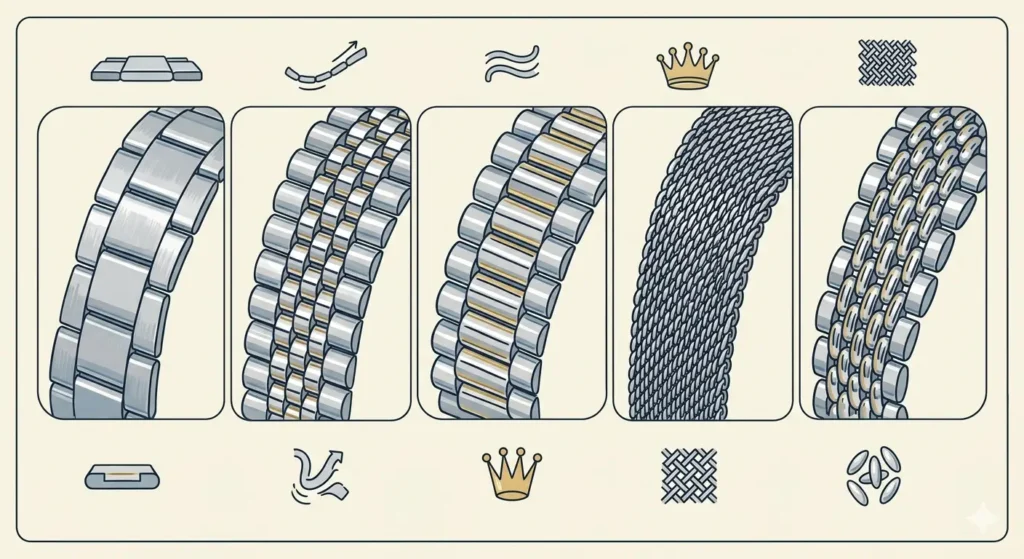
Metal bracelets come in several distinctive link patterns:
- Step 1: Oyster bracelet – three-piece links creating flat, smooth appearance
- Step 2: Jubilee bracelet – five-piece links offering flexible, elegant drape
- Step 3: President bracelet – semi-circular three-piece links for luxury watches
- Step 4: Mesh/Milanese bracelet – woven metal creating sleek, vintage aesthetic
- Step 5: Beads of rice bracelet – rounded links resembling rice grains
Leather Strap Styles
Leather straps vary in construction and finishing:
- Single-pass – one piece of leather with buckle closure
- Two-piece – traditional strap with separate long and short sections
- Padded – additional cushioning for enhanced comfort
- Rally – perforated holes for sporting aesthetic and ventilation
- Bund – wide cuff protecting watch case back from skin contact
Deployment Clasps vs Tang Buckles
Closure mechanisms significantly impact wearing experience and strap longevity.
Tang buckles represent traditional pin-through-hole closures found on most leather straps. These simple mechanisms prove reliable but create stress points that can eventually wear through the leather.
Deployment clasps fold and lock into place, distributing pressure more evenly. These clasps reduce wear on leather and provide more secure attachment, though they add bulk and cost.
Selecting the Right Strap for Different Occasions
Formal Events
Black or brown leather straps complement dress watches for formal occasions. Alligator or crocodile leather elevates sophistication, while calfskin offers refined simplicity.
Metal bracelets in solid gold or polished stainless steel also work well for formal settings, particularly with classic round cases.
Business and Professional Settings
Professional environments call for understated elegance. Dark leather straps in black, brown, or burgundy pair effectively with suits and business attire.
Stainless steel bracelets provide versatile options that transition seamlessly between meetings and casual Friday settings. When managing schedules across locations, tools like the world time comparison tool help coordinate timing with different time zones.
Casual Wear
Casual settings allow greater experimentation with colors and materials. NATO straps in bold patterns, canvas straps with contrasting stitching, or light-colored leather create relaxed aesthetics perfect for weekends.
Suede straps offer textured alternatives that pair well with denim and casual button-down shirts.
Sports and Active Pursuits
Athletic activities demand straps that withstand sweat, water, and physical impact. Rubber and silicone straps prove ideal, maintaining integrity during intense workouts or water sports.
NATO straps also perform well in active contexts, with quick-drying nylon recovering rapidly after exposure to moisture.
Strap Width and Lug Compatibility
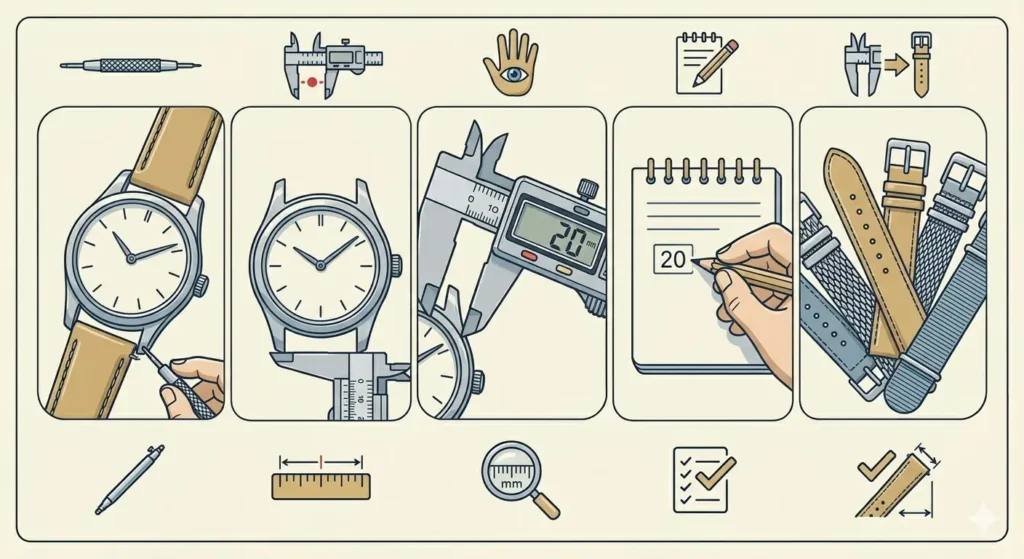
Watch straps must match the lug width – the distance between the spring bar attachment points on the case. Common measurements include 18mm, 20mm, 22mm, and 24mm, though vintage and specialty watches may require different sizes.
Measuring lug width accurately ensures proper fit:
- Step 1: Remove the existing strap from the watch
- Step 2: Use a caliper or ruler to measure the distance between the inner edges of the lugs
- Step 3: Record the measurement in millimeters
- Step 4: Select a replacement strap matching this exact width
Installing straps requires spring bar tools or careful manipulation with small flathead screwdrivers. The spring bar compresses to fit between lugs, then expands to secure the strap in place.
Caring for Different Strap Materials
Leather Strap Maintenance
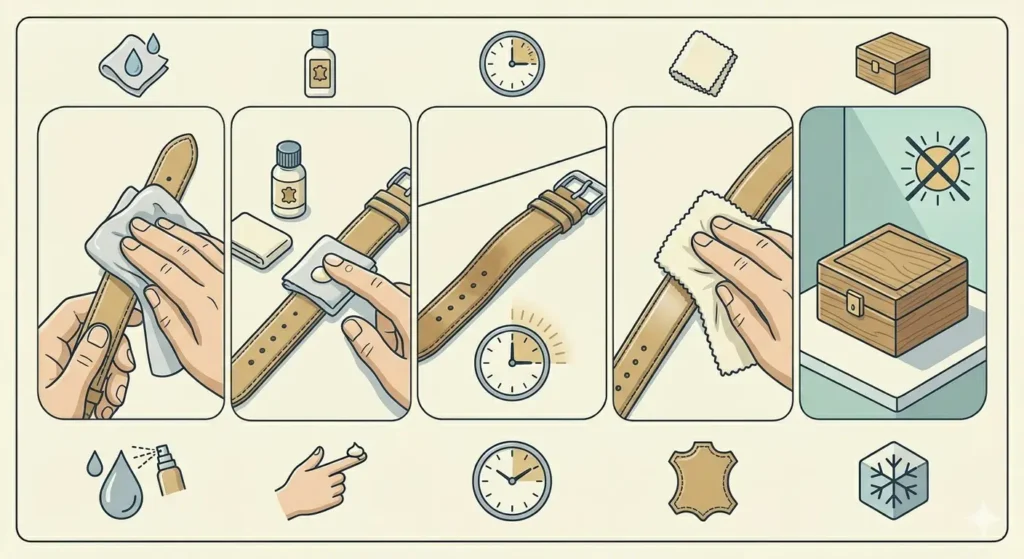
Proper care extends leather strap lifespan significantly. Regular cleaning removes oils and dirt that degrade the material:
- Step 1: Wipe the strap with a slightly damp cloth to remove surface dirt
- Step 2: Apply leather conditioner sparingly every few months
- Step 3: Allow the strap to absorb the conditioner for 10-15 minutes
- Step 4: Buff away excess product with a soft, dry cloth
- Step 5: Store in cool, dry conditions away from direct sunlight
Rotating between multiple straps prevents excessive wear on any single piece, particularly during hot, humid weather when perspiration accelerates deterioration.
Metal Bracelet Care
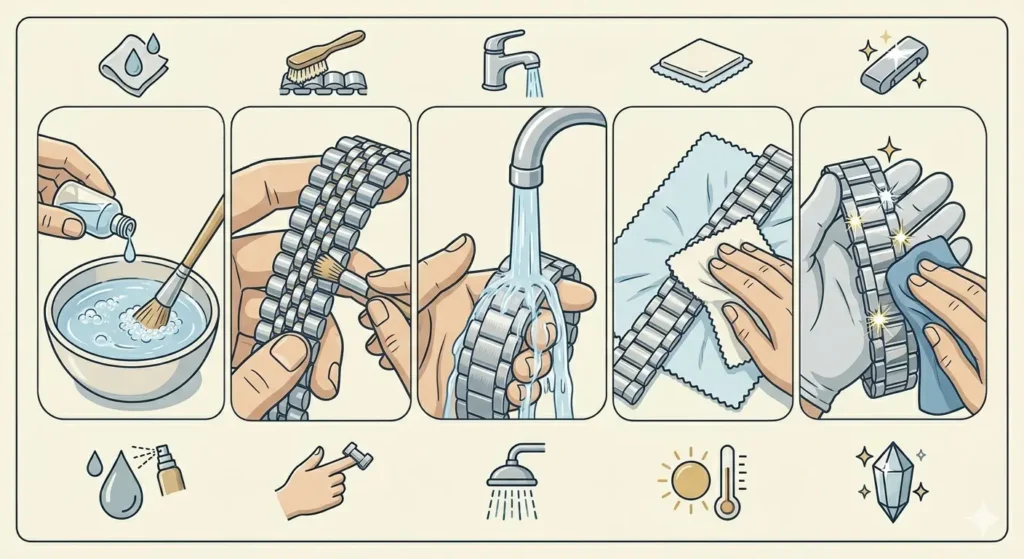
Metal bracelets require periodic cleaning to maintain luster:
- Step 1: Mix mild soap with warm water
- Step 2: Use a soft brush to clean between links
- Step 3: Rinse thoroughly with clean water
- Step 4: Dry completely with a soft cloth
- Step 5: Polish with a microfiber cloth to restore shine
Avoid harsh chemicals that can damage finishes or cause discoloration. For precious metal bracelets, professional cleaning maintains optimal appearance.
Rubber and Silicone Strap Maintenance
Rubber straps tolerate water exposure but benefit from regular cleaning. Soap and water remove sweat, oils, and debris that can cause odors or material degradation.
UV exposure remains the primary threat to rubber longevity. When not wearing the watch, store rubber-strapped timepieces away from direct sunlight to prevent premature aging and cracking.
Fabric Strap Care
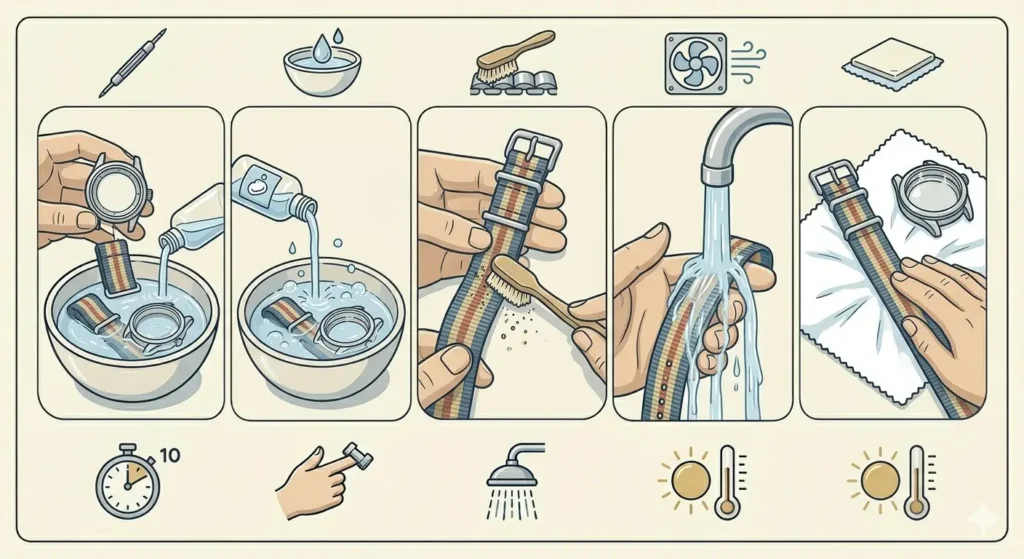
NATO and canvas straps can be hand-washed with mild detergent:
- Step 1: Remove the strap from the watch
- Step 2: Soak in lukewarm water with gentle detergent for 10 minutes
- Step 3: Gently scrub with a soft brush
- Step 4: Rinse thoroughly until water runs clear
- Step 5: Air dry completely before reattaching to the watch
Pro-Tip: Never put fabric straps in washing machines or dryers. The agitation and heat can damage hardware, fade colors, and cause shrinkage that affects fit.
Quick Reference Guide for Strap Selection
| Material | Best For | Durability | Water Resistance |
| Leather | Formal occasions, business wear | Moderate (1-2 years typical) | Low – avoid water |
| Metal | All-purpose, professional settings | Excellent (many years) | Excellent |
| Rubber/Silicone | Sports, water activities | Good (2-5 years) | Excellent |
| NATO/Fabric | Casual wear, travel | Good (2-3 years) | Good – dries quickly |
| Canvas | Casual, warm weather | Moderate (1-3 years) | Fair – requires drying |
Tips for Building a Strap Collection
Creating a versatile strap collection allows one watch to serve multiple purposes. Strategic selection provides maximum flexibility:
- Start with a quality leather strap in brown or black for formal needs
- Add a metal bracelet for professional versatility
- Include at least one rubber strap for active pursuits
- Keep 2-3 NATO straps in different colors for casual variety
- Consider seasonal options like suede for fall/winter and light canvas for summer
Quick-change systems and multiple spring bars enable rapid strap swaps throughout the day. Keeping a clock tab open helps track time while experimenting with different combinations for various activities.
Budget-conscious collectors can find excellent aftermarket options from reputable manufacturers, often matching original equipment quality at fraction of branded prices.
Common Problems and Troubleshooting
Strap Smell and Odor
Leather straps can develop unpleasant odors from perspiration absorption. Regular cleaning and rotation between multiple straps prevents this issue. For existing odors, specialized leather cleaning products neutralize bacteria causing the smell.
Fabric straps respond well to washing, while rubber straps benefit from antibacterial soap treatments.
Strap Stiffness
New leather straps often feel rigid and uncomfortable. The break-in period varies by leather type and thickness. Gently flexing the strap accelerates softening, though patience yields best results.
Leather conditioner applied sparingly helps maintain suppleness as the strap ages.
Metal Bracelet Pinching
Poorly sized bracelets can pinch skin or pull arm hair. Professional resizing ensures proper fit, with the bracelet sitting comfortably without excessive movement.
Link removal or addition adjusts length precisely, while micro-adjustment clasps provide fine-tuning options.
Buckle or Clasp Failure
Spring-loaded deployment clasps occasionally fail from wear or damage. Replacement clasps are available from watch suppliers, though professional installation ensures proper function.
Tang buckles rarely fail, but leather can tear at stress points. This signals the need for strap replacement rather than repair.
Strap Fading or Discoloration
Sunlight exposure fades colored straps over time. Storing watches away from windows when not worn preserves color integrity.
Some leather develops attractive patina while others show uneven discoloration. The difference depends on leather quality and tanning processes.
Quick-Release Mechanism Jamming
Quick-release spring bars can become stuck from dirt accumulation. Cleaning the mechanism with a soft brush and occasional lubrication maintains smooth operation.
If jamming persists, replacement spring bars restore functionality.
Frequently Asked Questions
How often should watch straps be replaced?
Replacement frequency depends on material and usage. Leather straps typically last 1-2 years with regular wear, while metal bracelets can last decades. Rubber straps require replacement every 2-5 years as the material degrades. Signs indicating replacement needs include cracking, excessive wear at buckle holes, fading, or loss of elasticity.
Can any strap fit any watch?
Straps must match the watch lug width for proper fit. Standard widths include 18mm, 20mm, and 22mm, though measurements vary by model. Additionally, some watches feature integrated bracelets or proprietary attachment systems requiring specific replacement parts rather than universal straps.
What causes green discoloration on skin from metal bracelets?
Green staining results from contact between skin moisture and copper alloys in lower-grade metals. This harmless reaction occurs more frequently with costume jewelry or inexpensive metal. Stainless steel and precious metals rarely cause this issue. Keeping the bracelet clean and dry minimizes occurrence.
How should leather straps be stored when not in use?
Store leather straps in cool, dry locations away from direct sunlight. Avoid humid environments that promote mold growth or extremely dry conditions that crack leather. Laying straps flat or loosely rolled prevents creasing. Allow straps to fully dry before storage if exposed to moisture.
Are expensive straps worth the investment?
Premium straps offer superior materials, construction quality, and longevity compared to budget options. High-quality leather develops attractive patina rather than deteriorating, while well-made metal bracelets feature solid links and robust clasps. For frequently worn watches, quality straps justify higher costs through extended lifespan and enhanced comfort.
How tight should a watch strap be worn?
Straps should fit snugly without restricting circulation or leaving deep impressions on skin. Two-finger clearance between strap and wrist indicates proper fit for most people. The watch should stay in place during normal movement without sliding excessively. Bracelet fit may need adjustment throughout the day as wrists naturally swell and contract.
Can leather straps be worn while swimming or showering?
Leather straps should not be exposed to water regularly. Moisture damages leather structure, causes discoloration, and promotes bacterial growth leading to odors. For water activities, switch to rubber, silicone, or metal straps designed for aquatic environments. If leather gets wet accidentally, dry it naturally at room temperature.
What makes NATO straps special compared to regular straps?
NATO straps use a single-piece design that passes under the watch case, providing extra security if spring bars fail. The watch remains attached to the wrist even with one broken spring bar. This military-derived design also allows quick changes without tools, making it ideal for those who enjoy frequently switching strap colors and patterns.
Do watch straps need professional installation?
Most strap changes can be performed at home with proper tools. Spring bar tools or careful use of small screwdrivers enables DIY installation. However, valuable watches or complex bracelet systems benefit from professional service to avoid scratching cases or damaging components. Quick-release systems make installation especially simple without tools.
How can bracelet sizing be adjusted at home?
Many bracelets feature removable links secured by pins or screws. Small screwdrivers or pin pushers allow link removal for sizing. Mark the links to remove symmetrically from both sides, maintaining balance. Some bracelets require professional tools or techniques – when uncertain, jewelers and watch repair shops offer affordable sizing services.