
How to choose a watch for investment requires understanding market trends, brand reputation, and long-term value retention. Luxury timepieces have proven to be tangible assets that can appreciate significantly over time when selected strategically. This guide provides actionable steps to help collectors and investors identify watches with strong investment potential.
Key Takeaways
- Focus on established luxury brands with proven track records of value retention
- Limited edition models and discontinued references often appreciate faster
- Condition and originality directly impact resale value
- Market demand fluctuates – research current trends before purchasing
- Documentation and service history are essential for maximum returns
- Investment-grade watches typically require 5-10 years to show significant appreciation
Understanding Watch Investment Fundamentals
Investment watches differ from regular timepieces in several critical ways. The primary distinction lies in value retention and appreciation potential rather than just functionality or aesthetics. Certain brands, models, and conditions command premium prices in the secondary market.
The watch investment market operates on principles of scarcity, desirability, and brand heritage. Manufacturers like Rolex, Patek Philippe, and Audemars Piguet have established reputations spanning decades, creating built-in demand for their products. Understanding these fundamentals helps identify opportunities with genuine investment merit.
Method 1: Research Proven Investment Brands
Brand selection forms the foundation of successful watch investing. Not all luxury brands appreciate equally, and some actually depreciate after purchase.
Top-Tier Investment Brands
Patek Philippe consistently leads the investment watch category. Models like the Nautilus and Aquanaut have shown remarkable appreciation, with some references doubling or tripling in value within five years. The brand’s limited production numbers and strict quality standards create natural scarcity.
Rolex represents the most accessible entry point for investment watches. Sports models like the Submariner, Daytona, and GMT-Master II maintain strong demand. The brand’s controlled distribution and recognizable designs ensure steady appreciation for popular references.
Audemars Piguet’s Royal Oak collection has demonstrated exceptional growth. The original Gerald Genta design from 1972 continues driving demand for both vintage and contemporary models. Limited production runs contribute to sustained value increases.
Emerging Investment Opportunities
Richard Mille has emerged as a modern investment brand despite relatively short history. Extreme pricing and celebrity endorsements create aspirational demand. However, market volatility remains higher compared to established brands.
Independent manufacturers like F.P. Journe and Philippe Dufour produce extremely limited quantities, making their pieces rare and collectible. These watches appeal to serious collectors willing to invest substantial capital.
Pro-Tip: Stick with brands that have maintained value for at least 20-30 years. Newer brands may show rapid appreciation initially but lack proven long-term track records during economic downturns.
Method 2: Identify Models with Strong Appreciation History
Within each brand, specific models perform better as investments. Historical data reveals patterns worth following.
Sports Models vs. Dress Watches
Sports watches generally outperform dress watches in appreciation. The Rolex Daytona, for example, has seen values increase 300-500% over the past decade for certain references. Steel sports models attract broader buyer pools compared to precious metal dress pieces.
Complications like chronographs, annual calendars, and world timers tend to hold value better than time-only watches. The additional functionality justifies premium pricing and attracts serious collectors.
Limited Editions and Discontinued References
Limited production runs create immediate scarcity. When manufacturers announce discontinuation of popular models, prices typically surge. The Rolex Daytona reference 116500LN in white dial consistently trades above retail due to limited availability.
Collaborations and special editions from reputable brands can appreciate quickly. However, verify that limitations are genuine and not marketing tactics with continued production under different names.
Method 3: Evaluate Condition and Originality
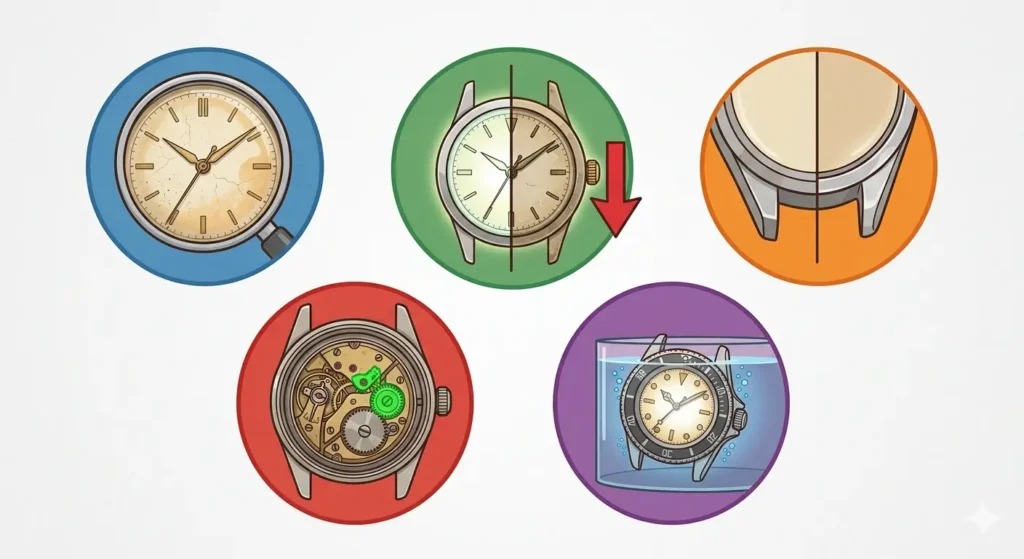
Condition dramatically affects investment value. Watches in pristine condition with original components command significant premiums.
- Step 1: Examine the dial for refinishing signs – original dials with natural patina are worth substantially more than restored versions
- Step 2: Verify all components are original to the watch – replaced hands, crowns, or bezels reduce value by 20-40%
- Step 3: Check case condition for polishing – over-polished cases show rounded edges and lost definition in lugs
- Step 4: Inspect movement for authenticity – aftermarket parts or improper servicing diminish investment quality
- Step 5: Confirm water resistance seals are intact for sports models – maintaining factory specifications preserves value
Unpolished examples with original finish always trade at premiums. Collectors prefer watches showing honest wear over heavily polished pieces that have lost original proportions.
Method 4: Verify Documentation and Provenance
Complete documentation separates good investments from great ones. Papers, boxes, and service records significantly impact resale values.
Essential Documentation
Original warranty cards or certificates establish authenticity and production date. These papers can add 15-25% to resale value for investment-grade watches. Ensure names haven’t been filled in if purchasing modern pieces, as this maintains flexibility for future sales.
Complete box sets including outer boxes, inner presentation cases, booklets, and hang tags preserve maximum value. Some collectors pay substantial premiums for complete sets versus watch-only sales.
Service history from authorized dealers demonstrates proper maintenance. Regular servicing according to manufacturer recommendations protects mechanical integrity and maintains warranty coverage where applicable.
Provenance and Ownership History
Watches with documented celebrity ownership or historical significance command extraordinary premiums. Paul Newman’s Rolex Daytona sold for $17.8 million due to provenance alone.
First-owner examples with continuous documentation appeal to serious collectors. Single-owner watches often receive better care and have verifiable histories.
Method 5: Analyze Current Market Trends
Investment timing requires understanding current market dynamics and future demand indicators.
Monitoring Price Trends
Track auction results from major houses like Christie’s, Sotheby’s, and Phillips. These sales establish market values and reveal emerging trends. Consistent price increases over 12-24 months indicate sustainable demand rather than temporary hype.
Online marketplaces like Chrono24 provide real-time pricing data. Compare asking prices to actual sold prices – significant gaps suggest softening demand or unrealistic seller expectations.
When tracking market movements throughout the day, tools like the world time comparison tool help monitor international auction results across different time zones simultaneously.
Identifying Sustainable vs. Speculative Demand
Sustainable demand shows steady appreciation over years. Speculative bubbles create rapid price spikes followed by corrections. The 2020-2022 watch market boom saw some models appreciate 100%+ before correcting 30-40% in 2023.
Social media influence can create artificial demand. Verify that price increases reflect genuine collector interest rather than influencer-driven hype that may not sustain long-term.
Pro-Tip: Avoid buying at market peaks when prices surge rapidly. The best investment opportunities often appear during market corrections when quality pieces sell below recent highs.
Method 6: Consider Production Numbers and Availability
Scarcity drives investment value. Understanding production volumes helps predict appreciation potential.
Annual Production Figures
Rolex produces approximately 1 million watches annually, but sports models represent only a fraction. The Daytona has estimated annual production of 30,000-40,000 pieces globally, creating natural scarcity against massive demand.
Patek Philippe manufactures roughly 60,000 watches yearly across all models. Limited production ensures scarcity, particularly for complicated pieces requiring extensive hand-finishing.
Independent brands like Philippe Dufour produce single-digit quantities annually. Extreme rarity creates investment potential but also limits liquidity when selling.
Waiting Lists and Retail Availability
Extended waiting lists at authorized dealers signal strong investment potential. When retail access requires multi-year waits, secondary market premiums emerge immediately.
Models readily available at retail rarely appreciate. Investment watches typically trade above retail or sell out immediately upon release.
Method 7: Budget for Total Investment Costs
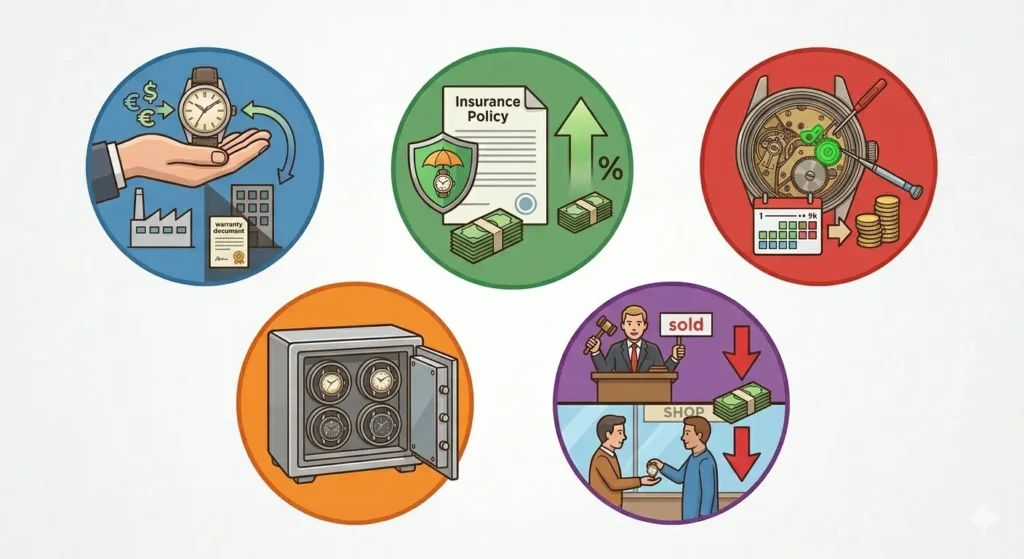
Purchase price represents only part of total investment. Additional costs affect overall returns.
- Step 1: Calculate initial purchase including taxes and dealer premiums – authorized dealers charge retail while grey market may offer discounts with warranty trade-offs
- Step 2: Budget for insurance costs – annual premiums typically run 1-2% of watch value for comprehensive coverage
- Step 3: Account for regular servicing – mechanical watches require service every 5-7 years at costs ranging from $500 to $2,000+ depending on complexity
- Step 4: Consider storage solutions – proper watch winders and safes protect investment and maintain functionality
- Step 5: Include potential selling costs – auction houses charge 10-15% buyer’s premiums, while dealer consignment takes 10-20% commission
Factor these ongoing costs when calculating potential returns. A watch appreciating 50% over ten years may yield lower net returns after expenses compared to simple appreciation calculations.
Method 8: Purchase from Reputable Sources
Source selection protects against counterfeits and ensures authenticity. The investment watch market contains sophisticated fakes that fool untrained buyers.
Authorized Dealers
Authorized dealers provide genuine products with full manufacturer warranties. Retail premiums ensure authenticity and establish clear provenance from day one. Relationships with authorized dealers can provide access to allocation models that appreciate immediately.
Established Grey Market Dealers
Reputable grey market dealers offer genuine watches without manufacturer warranties. Savings of 10-30% below retail can offset warranty loss for knowledgeable buyers. Verify dealer reputation through community forums and independent reviews.
Auction Houses and Private Sales
Major auction houses authenticate watches before sale and provide guarantees. Buyer’s premiums add 20-25% to hammer prices but include expert vetting. Private sales require independent authentication from qualified watchmakers to avoid costly mistakes.
Using a clock tab keeps precise time when participating in timed online auctions where bids close at specific moments.
Tips for Successful Watch Investment
Diversification Strategy
Avoid concentrating entire investment budgets in single watches. Spread capital across multiple brands and models to reduce risk. Market preferences shift, and diversification protects against brand-specific downturns.
Long-Term Holding Period
Plan minimum holding periods of 5-10 years. Short-term flipping incurs transaction costs that erode profits. Watches appreciate most significantly over extended timeframes as scarcity increases and new collectors enter the market.
Passion Meets Investment
Purchase watches that provide personal enjoyment beyond investment returns. The best investments combine financial appreciation with wearing pleasure. This approach ensures satisfaction even if markets underperform expectations.
Stay Informed
Join collector communities and follow industry publications. Knowledge of new releases, brand strategies, and market shifts informs better investment decisions. Active engagement with the watch community provides early awareness of emerging opportunities.
Maintain Detailed Records
Document all purchases with receipts, photographs, and service records. Comprehensive records establish provenance and simplify future sales. Digital backups protect against loss of physical documentation.
Common Problems When Investing in Watches
Overpaying During Market Peaks
Emotional purchases during hype cycles lead to overpayment. When models trade at all-time highs with rapid appreciation, correction risks increase. Solution: Set maximum price limits based on historical data rather than current asking prices. Wait for market corrections if prices exceed reasonable valuations.
Purchasing Watches Without Proper Authentication
Sophisticated counterfeits fool casual buyers, resulting in worthless purchases. Solution: Always obtain independent authentication from qualified watchmakers before significant purchases. Spend $200-500 on professional verification to protect five or six-figure investments.
Neglecting Proper Maintenance
Skipped servicing causes mechanical damage that reduces value. Dried lubricants and worn components lead to expensive repairs. Solution: Follow manufacturer service intervals strictly. Budget ongoing maintenance costs as part of total investment expense.
Buying Modified or Aftermarket Parts
Custom dials, bezels, or hands destroy investment value despite appearing attractive. Solution: Verify complete originality before purchase. Consult brand-specific experts who can identify subtle modifications that general appraisers might miss.
Insufficient Liquidity Planning
Some investment watches prove difficult to sell quickly at desired prices. Ultra-high-end pieces and niche brands have smaller buyer pools. Solution: Research secondary market liquidity before purchasing. Mainstream models from established brands sell faster than obscure references.
Ignoring Market Cycles
Watch markets fluctuate with economic conditions. Recessions typically depress luxury goods pricing temporarily. Solution: View market downturns as buying opportunities rather than reasons to panic sell. Quality investment pieces recover and exceed previous highs over time.
Track market timing using an online stopwatch when monitoring limited-time drops or flash sales from authorized dealers offering allocation pieces.
Frequently Asked Questions
What is the minimum budget needed to start investing in watches?
Entry-level investment watches from brands like Rolex start around $8,000-$12,000 for sports models with appreciation potential. However, budgets of $20,000-$30,000 provide access to references with stronger historical performance. Smaller budgets can target vintage pieces from quality brands, though these require more expertise to evaluate properly.
How long should investment watches be held before selling?
Minimum holding periods of 5-7 years allow sufficient time for appreciation while avoiding short-term market volatility. Optimal returns typically appear after 10-15 years as scarcity increases and models become vintage. Some collectors hold pieces 20+ years to maximize appreciation, particularly for limited editions and discontinued references.
Are vintage watches better investments than new models?
Both categories offer opportunities depending on expertise and goals. Vintage watches from the 1950s-1980s have established track records but require authentication skills to avoid counterfeits and frankenwatches. New models from proven brands offer guaranteed authenticity and immediate wearing enjoyment. Vintage pieces typically appreciate faster once they cross into ‘collectible’ age ranges of 30+ years.
Do watch investments require insurance?
Comprehensive insurance protects against theft, loss, and damage. Standard homeowner’s policies often cap coverage at $1,000-$2,000 for jewelry and watches. Separate riders or specialized collectors’ insurance provide full replacement value. Annual premiums typically cost 1-2% of total watch value, representing essential protection for five and six-figure investments.
Can watches be worn while holding them as investments?
Regular wearing is acceptable and even recommended for mechanical watches. Movements benefit from regular use rather than sitting dormant. However, wear carefully to avoid damage, scratches, and excessive polishing. Sports models tolerate daily wear better than delicate dress watches. Many collectors rotate multiple pieces to enjoy their investments while preserving condition.
What documents are essential when selling investment watches?
Original warranty cards or certificates establish authenticity and production date, adding 15-25% to resale value. Complete box sets including outer boxes, inner cases, and booklets preserve maximum pricing. Service records from authorized dealers demonstrate proper maintenance. Purchase receipts verify ownership history. Without documentation, expect value reductions of 20-40% compared to fully documented examples.
How do economic recessions affect watch investment values?
Luxury watch markets typically decline 20-40% during severe recessions as discretionary spending drops. However, top-tier brands like Patek Philippe and Rolex recover faster than mid-range luxury brands. Economic downturns create buying opportunities for investors with available capital. Historical data shows investment-grade watches exceed pre-recession prices within 3-5 years of recovery.
Are women’s watches good investments compared to men’s models?
Men’s sports watches historically outperform women’s models in appreciation. The secondary market shows stronger demand for men’s sizes, particularly in sports categories. However, vintage women’s pieces from prestigious brands with original diamonds and unique complications can appreciate significantly. Modern unisex sizing trends may shift this dynamic as 36-38mm watches appeal to broader audiences.
Should investment watches be stored in watch winders?
Watch winders keep automatic movements running between wears, preventing lubricant settling and maintaining accuracy. Quality winders cost $200-$2,000 depending on capacity and features. For watches worn regularly, winders provide convenience rather than necessity. Long-term storage pieces can rest without winding, requiring full service before returning to regular use. Proper winding direction and rotations per day prevent excessive wear.
What red flags indicate a watch is a poor investment?
Avoid watches from brands with inconsistent quality histories or frequent model changes that dilute scarcity. Heavy discounting at authorized dealers signals weak demand and poor value retention. Modified or refinished examples lose 40-60% of original value. Watches without documentation face authenticity questions that depress pricing. Models from brands primarily marketing rather than manufacturing watchmaking expertise typically depreciate rapidly. Overly trendy designs may lose appeal as fashion shifts, unlike classic designs with timeless aesthetics.