

Bronze watches develop a natural patina over time – that rich, warm, earthy tone that makes each piece truly one of a kind. Knowing how to clean and maintain a bronze watch’s patina properly is the difference between a watch that ages beautifully and one that looks neglected. The key is to work with the patina, not against it.
Quick Summary: What You Need to Know
- Bronze patina is natural oxidation – it adds character, not damage
- Use mild soap and a soft brush for routine cleaning
- Avoid abrasive materials that strip the patina completely
- Dry the watch thoroughly after every cleaning session
- Apply a light wax or oil to slow uneven oxidation
- Clean every 4 to 8 weeks depending on wear frequency
- Never soak a bronze watch in water for extended periods
Step-by-Step Guide: How to Clean a Bronze Watch’s Patina
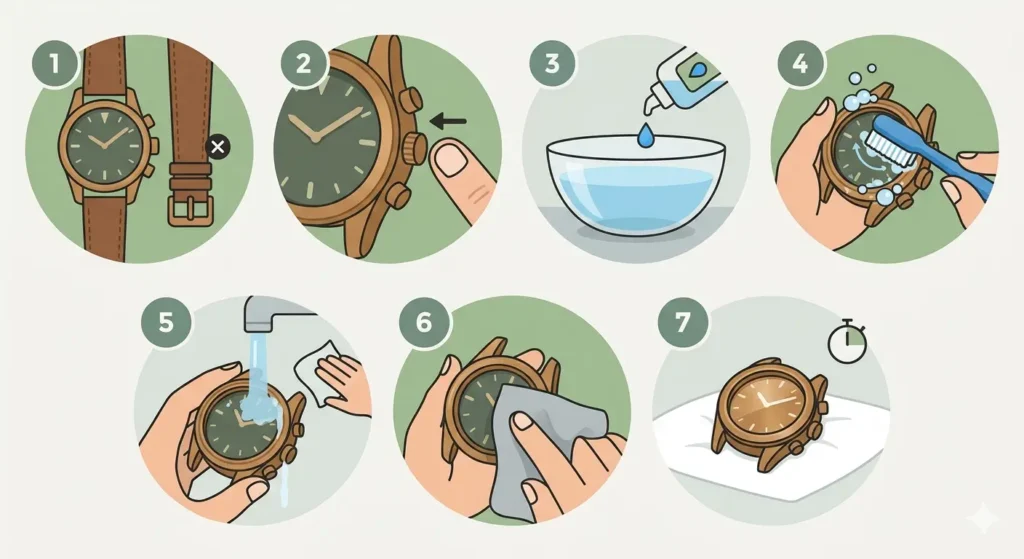
Before starting, gather everything needed: a soft-bristle toothbrush, mild dish soap, lukewarm water, a microfiber cloth, and optionally a small bowl. This process takes about 10 to 15 minutes and is safe for most bronze watch cases.
- Step 1: Remove the watch strap if it is leather or fabric. Water and soap can damage organic strap materials, so detach them before cleaning the case. Metal bracelets can usually be cleaned together with the case.
- Step 2: Check the crown and any pushers to make sure they are screwed down or pushed in fully. Even water-resistant bronze watches benefit from this precaution before any wet cleaning.
- Step 3: Mix a small drop of mild dish soap into lukewarm water in a bowl. Avoid hot water, as it can cause rapid oxidation changes on the bronze surface.
- Step 4: Dip the soft-bristle toothbrush into the soapy water and gently scrub the case in circular motions. Focus on crevices around the lugs, crown, and caseback where dirt, sweat, and oils accumulate most.
- Step 5: Rinse the case lightly with clean lukewarm water. Do not hold it under running water for more than a few seconds. A damp cloth wiped over the surface works just as well.
- Step 6: Pat the entire case dry immediately with a microfiber cloth. Pay close attention to gaps and grooves where moisture tends to sit. Trapped moisture is one of the main causes of uneven or blotchy patina development.
- Step 7: Leave the watch on a clean, dry surface for 20 to 30 minutes to air dry completely before reassembling the strap or wearing it again.
Most people find that this routine handles everyday grime without disrupting the natural character of the patina. This works best when done consistently rather than doing a deep clean once and ignoring the watch for months.
How to Maintain the Bronze Patina Long-Term
Cleaning removes dirt, but maintenance is what keeps the patina developing evenly and attractively over the years. Bronze is a living material in the sense that it reacts to everything – sweat, humidity, air, and even the oils from skin contact all play a role.
Apply a Thin Layer of Renaissance Wax or Carnauba Wax
After cleaning and drying, applying a small amount of Renaissance Wax or carnauba wax to the bronze case helps create a barrier that slows aggressive oxidation. Use a soft cloth, apply a tiny amount in circular motions, then buff it off. This does not stop patina from forming – it just keeps it more even and controlled. Many collectors do this every one to two months.
Use Natural Skin Contact to Your Advantage
Wearing a bronze watch regularly is one of the best maintenance habits possible. The natural oils from the skin help condition the metal and encourage a smoother, more uniform patina. Watches left unworn in a drawer tend to develop patchy, uneven oxidation. Regular wear is the simplest maintenance tool available.
Control the Storage Environment
When not wearing the watch, store it in a cool, dry place away from direct sunlight and humidity. Avoid sealed plastic bags, which trap moisture. A watch box or pouch with breathable fabric lining works well. Tracking time zones or scheduling watch rotation is easier with tools like a world time comparison tool if managing multiple watches across different occasions.
Avoid Harsh Chemicals at All Times
Perfumes, colognes, sunscreen, and cleaning sprays can react aggressively with bronze. These chemicals can strip patina unevenly or leave permanent discoloration. Put the watch on after applying any products to the skin, not before.
Pro-Tip: If the patina becomes uneven or blotchy over time, a single cleaning session with a paste made from equal parts salt, flour, and white vinegar – left on the case for 10 minutes then rinsed off – can gently even out the surface oxidation. Use this sparingly and only when the unevenness is significant. It is a reset, not a routine step.
How to Remove Unwanted Tarnish Without Stripping the Patina
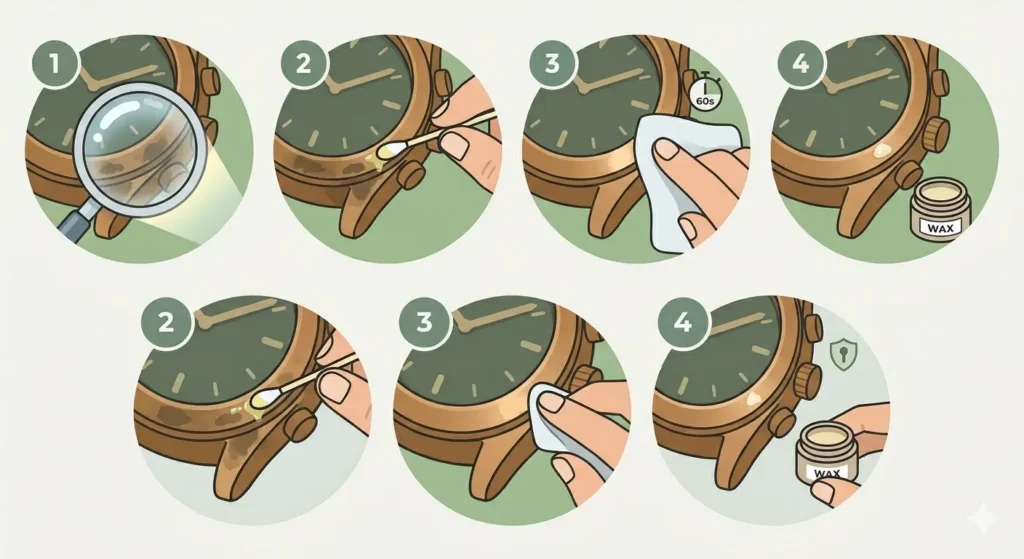
There is a difference between patina and tarnish. Patina is the warm brownish-green or golden-brown layer that forms naturally and is considered desirable. Tarnish is the dull, streaky, or overly dark buildup that can make a watch look dirty rather than aged. Knowing how to target tarnish without removing the whole patina is a skill worth developing.
- Step 1: Identify the tarnished areas by examining the case under good lighting. Tarnish usually appears as darker, duller patches concentrated near the lugs or caseback edges.
- Step 2: Apply a small amount of lemon juice to a cotton swab and dab – do not rub – onto the tarnished area only. Lemon juice is a mild acid that dissolves surface tarnish without being aggressive enough to strip deeper patina.
- Step 3: Leave it for no more than 30 to 60 seconds, then wipe the area clean immediately with a damp cloth.
- Step 4: Dry the spot thoroughly and apply a small amount of wax to re-protect the now-cleaned area.
The key is precision. Targeting only the problem areas and acting quickly prevents over-treatment, which can leave the bronze looking raw or uneven.
Tips for Keeping a Bronze Watch in Top Condition
- Wipe the case down with a dry microfiber cloth after each wear to remove sweat and oils before they sit on the surface overnight
- Rotate the watch into regular use rather than storing it for long periods to encourage even patina development
- Avoid exposing the watch to saltwater, as salt accelerates oxidation dramatically and can cause pitting on the bronze surface
- Use a clock tab or timer when applying any treatment like wax or lemon juice to avoid over-processing the surface
- Inspect the caseback seal annually – moisture ingress is more damaging than surface oxidation
- Never use paper towels or rough cloths on bronze – always use microfiber to avoid micro-scratches that disrupt patina uniformity
Pro-Tip: For watches with heavy patina buildup around the crown threads or caseback grooves, a dry wooden toothpick is safer than a metal tool for clearing debris. It is firm enough to dislodge buildup but soft enough not to scratch the bronze or disturb the surrounding patina.
Common Problems and How to Fix Them
Fix 1: Patina Developing Too Unevenly
This usually happens when certain areas of the watch are exposed to more moisture or skin contact than others. The fix is to clean the entire case with the mild soap method, then apply wax evenly across the whole surface. Going forward, rotating the watch position on the wrist slightly during daily wear can help distribute contact more evenly.
Fix 2: Green Oxidation Appearing on the Skin
Green transfer from bronze to skin is normal and harmless. It happens because bronze reacts with skin acidity. Applying a thin coat of clear nail polish to the inner caseback and any surfaces that directly contact the wrist reduces this significantly without affecting the watch’s appearance.
Fix 3: Patina Stripping After Contact With Soap or Cleaning Products
If a cleaning product accidentally strips part of the patina, leaving a bright, raw bronze patch, do not panic. Leave the watch unworn in a slightly humid environment for a few days, then begin wearing it regularly. The patina will return, though it may take a few weeks to blend back in naturally. Applying a tiny amount of ammonia solution diluted in water and leaving it on the raw patch for two minutes can also kickstart re-oxidation.
Fix 4: Sticky or Greasy Feel After Wax Application
This means too much wax was applied. Buff the case more firmly with a clean microfiber cloth to remove the excess. For future applications, less is always more – a thin, nearly invisible layer is all that is needed for protection.
Fix 5: White or Chalky Deposits Forming on the Surface
White deposits are usually mineral buildup from water exposure. A light scrub with a toothbrush dipped in a 50-50 solution of white vinegar and water removes them cleanly. Rinse and dry immediately after, then apply protective wax to the cleaned area.
Frequently Asked Questions
How often should a bronze watch be cleaned?
For regular everyday wearers, cleaning every four to six weeks is a good baseline. If the watch is worn during physical activity or in humid conditions, cleaning every two to three weeks keeps buildup under control without being excessive.
Will cleaning a bronze watch remove the patina completely?
A gentle clean with mild soap and a soft brush will not remove established patina. Only abrasive materials, harsh chemicals, or strong acids will strip it. Standard cleaning removes surface dirt and oils while leaving the deeper patina layer intact.
Is it normal for bronze to leave green marks on the wrist?
Yes, completely normal. Bronze contains copper, which reacts with skin acids and sweat to produce a greenish transfer. It washes off easily and poses no health risk. Applying a clear protective coat to the inner caseback reduces this effect.
Can a bronze watch be worn while swimming or showering?
It is not recommended, even if the watch is rated water resistant. Saltwater and chlorine both accelerate oxidation aggressively and can cause uneven or excessive patina development. For casual splashes, most bronze watches handle it fine, but prolonged water exposure should be avoided.
How long does it take for a bronze watch to develop patina?
Noticeable patina typically begins forming within a few weeks of regular wear. A deep, rich patina with good character usually takes three to twelve months to fully develop, depending on the wearer’s skin chemistry, climate, and how often the watch is worn.
What should never be used to clean a bronze watch?
Avoid steel wool, abrasive pads, baking soda paste used aggressively, harsh chemical solvents like acetone, and commercial metal polishes designed for silver or gold. These strip the patina completely and can leave the bronze surface looking raw and uneven.
Can the patina be restored if it gets stripped accidentally?
Yes. Wearing the watch regularly after accidental stripping is the most natural approach. A diluted ammonia solution applied briefly to the raw area can also kick-start re-oxidation. Full restoration usually takes a few weeks of consistent wear.
Does the type of water used for cleaning matter?
Tap water is fine for most cleaning tasks. Hard water with high mineral content can leave white deposits if the case is not dried thoroughly, so patting the case dry immediately after rinsing is important regardless of water type.
Should the strap be cleaned the same way as the bronze case?
No. Leather straps should never be soaked or scrubbed with water. A slightly damp cloth with no soap is the safest approach for leather. Metal bracelets made of bronze or stainless steel can be cleaned with the same mild soap method used for the case.
What is the best way to store a bronze watch when not in use?
Store it in a breathable watch pouch or box in a cool, dry place away from direct sunlight. Avoid airtight containers, which trap moisture and can cause aggressive or uneven oxidation. Keeping it on a watch stand or cushion also prevents the case from sitting flat and developing contact marks.