

A guide to field watches: what to look for begins with understanding that these timepieces represent one of the most practical and enduring watch styles ever created. Field watches combine rugged durability with straightforward functionality, making them ideal companions for outdoor adventures, daily wear, and everything in between. Choosing the right field watch requires knowing which features matter most and how to identify quality construction that will serve reliably for years.
Key Takeaways
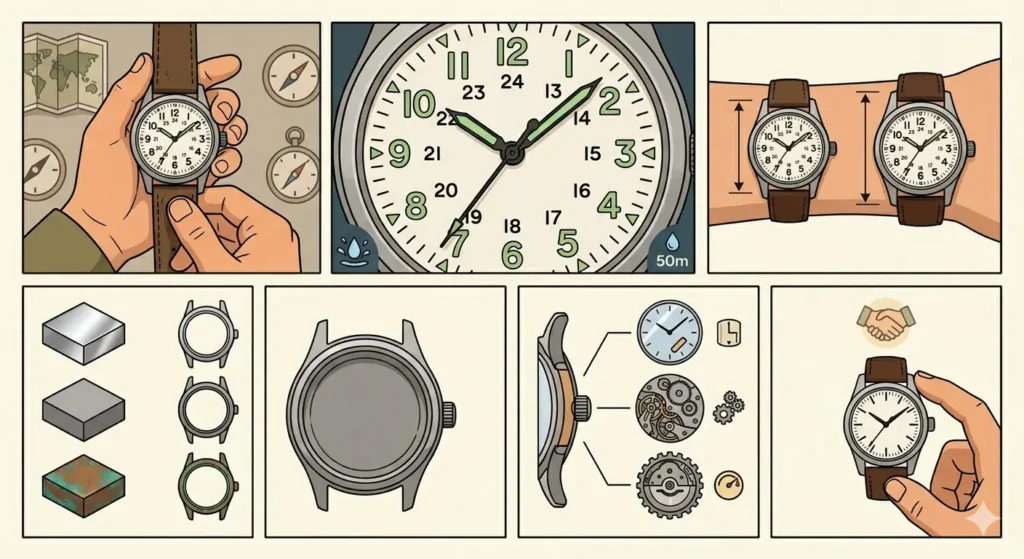
- Field watches originated from military use and prioritize legibility, durability, and simplicity
- Essential features include clear Arabic numerals, luminous hands, and water resistance of at least 50 meters
- Case size typically ranges from 36mm to 42mm for optimal comfort and versatility
- Material choices include stainless steel for durability, titanium for lightweight strength, or bronze for unique patina development
- Movement options range from reliable quartz to traditional mechanical and modern automatic calibers
- Quality field watches balance affordability with robust construction and timeless design
Understanding Field Watch Design Principles
Field watches trace their heritage back to military timepieces issued to soldiers during the early 20th century. The original design philosophy centered on creating watches that could withstand harsh conditions while providing instant time readability in high-pressure situations. This military DNA influences every aspect of modern field watch design.
The defining characteristic of any field watch is exceptional legibility. Large Arabic numerals, high-contrast dials, and luminous markers work together to ensure time can be read quickly in any lighting condition. Most people find that this straightforward approach to timekeeping becomes incredibly practical once they experience it firsthand.
Durability stands as another cornerstone principle. Field watches typically feature robust cases, scratch-resistant crystals, and movements designed to handle shocks and vibrations. The best examples can accompany wearers through demanding outdoor activities, travel, and daily wear without showing signs of distress.
Essential Features to Prioritize
Dial Legibility and Layout
The dial serves as the most critical component when evaluating field watches. Look for clean, uncluttered designs that prioritize function over decoration. Arabic numerals should appear at all 12 hour positions or at least the cardinal positions (12, 3, 6, and 9). This provides quick orientation when checking the time at a glance.
Hands must contrast sharply against the dial background. Black hands on light dials or white hands on dark dials offer optimal visibility. The minute hand should extend close to the minute markers on the dial’s edge, enabling precise time reading. Some designs include a seconds hand, though many traditional field watches omit this feature for simplicity.
Luminous material application makes tremendous difference in low-light situations. Quality field watches use Super-LumiNova or similar compounds on both hands and hour markers. This works best when applied generously enough to glow brightly for several hours after light exposure.
Case Size and Proportions
Field watch cases traditionally measured between 34mm and 38mm in diameter, reflecting historical sizing standards. Modern interpretations typically range from 36mm to 42mm, accommodating contemporary preferences while maintaining the style’s characteristic proportions. The key is to select a size that sits comfortably on the wrist without overhang.
Case thickness deserves equal attention. Field watches should maintain relatively slim profiles, typically between 9mm and 13mm thick. This allows the watch to slide easily under shirt cuffs and maintains comfort during extended wear. Excessive thickness can interfere with clothing and creates unnecessary bulk.
Lug-to-lug measurement determines how the watch actually wears on the wrist. Even if the case diameter seems appropriate, extended lugs can make a watch feel oversized. Measure the flat part of your wrist and choose watches with lug-to-lug dimensions that fit comfortably within that space.
Water Resistance Requirements
Field watches should offer meaningful water resistance, typically rated to at least 50 meters (5 ATM). This provides protection against rain, splashes, and brief submersion. Many quality examples offer 100 meters of water resistance, adding versatility for swimming and water sports.
Higher water resistance ratings come with trade-offs. Achieving 200+ meter ratings often requires thicker cases and additional gaskets that compromise the sleek profile characteristic of field watches. Unless diving activities are planned, 100 meters represents the sweet spot between protection and practicality.
Regular seal maintenance ensures continued water resistance. Gaskets degrade over time, particularly when exposed to temperature extremes or chemicals. Having seals inspected and replaced every few years maintains the watch’s protective capabilities.
Material Selection Considerations
Case Material Options
Stainless steel remains the most popular field watch case material, offering excellent durability, corrosion resistance, and value. Grade 316L stainless steel provides superior protection against rust and maintains appearance through years of wear. The material accepts various finishes, from polished to bead-blasted, each offering different aesthetic and practical characteristics.
Titanium presents compelling advantages for those prioritizing weight reduction. Titanium cases weigh approximately 40% less than steel equivalents while offering superior scratch resistance. The material’s hypoallergenic properties benefit wearers with metal sensitivities. However, titanium commands higher prices and shows a different color tone than steel.
Bronze cases have gained popularity for their unique aging characteristics. Bronze develops a patina over time, creating individualized appearance that evolves with use. This works best when embracing the natural aging process rather than fighting it. Bronze requires more maintenance than steel and can cause reactions in sensitive wearers.
Crystal Protection
Sapphire crystal offers the highest scratch resistance available in watch manufacturing. Ranking 9 on the Mohs hardness scale, sapphire resists damage from virtually all materials encountered in daily wear except diamond. The material’s clarity remains excellent throughout the watch’s lifetime, though it can shatter under extreme impacts.
Mineral crystal provides adequate protection at lower price points. While more prone to scratching than sapphire, mineral glass offers better impact resistance and costs significantly less to replace. Many affordable field watches use hardened mineral crystal treated to improve scratch resistance.
Acrylic crystal appears in vintage-inspired designs, offering authentic period appearance and unique properties. Acrylic scratches easily but polishes out readily with simple compounds. The material won’t shatter like sapphire and adds vintage character that some collectors specifically seek.
Strap and Bracelet Choices
NATO straps represent the quintessential field watch companion. These single-piece nylon straps slide beneath the case, providing redundant security if a spring bar fails. Quality NATO straps use tightly woven nylon that resists fraying and dries quickly when wet. The material’s flexibility allows for precise fit adjustment and comfortable all-day wear.
Leather straps add versatility and traditional appeal. Full-grain leather develops character through use while maintaining durability. For field watches specifically, choose thicker leather (at least 3mm) that can withstand active use. Consider durability when traveling to different climates, as leather requires more maintenance in humid conditions.
Canvas and fabric straps offer middle-ground options between NATO and leather. These straps provide durability similar to NATO construction with subtler appearance. Canvas accepts water exposure better than leather while offering more refined aesthetics than nylon.
Metal bracelets suit field watches intended for dressier occasions. Look for solid links rather than folded construction, and ensure the clasp features micro-adjustment capabilities. Metal bracelets add weight but provide the most secure attachment method and work well in all weather conditions.
Movement Types and Considerations
Quartz Movements
Quartz movements deliver exceptional accuracy at affordable prices, typically varying only 15-30 seconds per month. Battery-powered quartz calibers require minimal maintenance beyond battery replacement every 2-3 years. This makes them ideal for field watches that may sit unworn between uses.
The primary advantage of quartz movements lies in their reliability and low maintenance requirements. They handle shocks better than mechanical movements and maintain accuracy regardless of position or power reserve. For true utility purposes, quartz movements offer practical advantages that mechanical alternatives cannot match.
Quality varies significantly among quartz movements. Japanese movements from manufacturers like Seiko and Miyota offer reliable performance at budget-friendly prices. Swiss quartz movements typically cost more but provide refined finishing and sometimes additional features like end-of-life indicators.
Mechanical Hand-Wind Movements
Hand-wound mechanical movements connect wearers directly to watchmaking tradition. These movements require daily winding, creating ritual interaction that many enthusiasts enjoy. The lack of automatic winding mechanism allows for slimmer cases, maintaining classic field watch proportions.
Most people find that hand-wound movements require more attention than other options. Forgetting to wind the watch means it stops running until manually wound again. Power reserves typically range from 38-48 hours, requiring winding every 1-2 days depending on usage patterns.
Mechanical movements offer soul and character that quartz alternatives lack. Watching the seconds hand sweep smoothly rather than tick provides subtle satisfaction. The mechanical nature means these watches can theoretically last indefinitely with proper service and care.
Automatic Movements
Automatic movements combine mechanical appeal with convenience. The rotor winds the mainspring through natural wrist motion, eliminating manual winding for watches worn regularly. Most automatic field watches feature transparent casebacks showcasing the movement’s operation.
Power reserve capacity affects how long automatic movements run without wearing. Modern automatics typically offer 38-80 hours of power reserve. Longer reserves mean watches can survive weekends without stopping, reducing need for winding or time resetting.
Automatic movements add thickness to watch cases compared to hand-wound alternatives. The additional height comes from the rotor mechanism and can push case thickness beyond ideal field watch dimensions. Consider whether the convenience justifies the added bulk for intended use cases.
Evaluating Build Quality
Case Finishing and Details
Examine case finishing closely when evaluating field watches. Quality pieces feature consistent surface treatments without tool marks, uneven polishing, or machining imperfections. Brushed surfaces should show uniform directionality, while polished areas maintain even luster across entire surfaces.
Crown operation provides insight into manufacturing quality. The crown should screw down smoothly with consistent resistance throughout its travel. Pulling and pushing positions should engage with distinct clicks. Loose or gritty crown action indicates poor tolerances or inadequate quality control.
Caseback alignment and fitting reveal construction standards. Screw-down casebacks should align text or logos properly when tightened. Snap-on casebacks should sit flush without gaps or movement. Any play or misalignment suggests compromised water resistance and overall quality concerns.
Dial and Hand Quality
Dial printing quality separates premium field watches from budget alternatives. Text and numerals should appear crisp with clean edges and consistent color saturation. Examine printing under magnification when possible – quality dials maintain sharpness even under close inspection.
Hand finishing and alignment demonstrate manufacturing precision. Hands should sit level without touching each other or the dial surface. Luminous material application should appear even without bubbles or gaps. The hands must clear all dial elements throughout their rotation without interference.
Date windows, when present, should frame numbers centrally with adequate clearance. The date wheel should advance cleanly near midnight without gradual rolling. Magnification cyclops, if included, must center properly over date apertures and maintain optical clarity.
Budget Ranges and Value Assessment
Entry-Level Options ($100-$300)
Entry-level field watches deliver core functionality without premium materials or movements. Expect mineral crystals, quartz movements, and adequate but basic finishing. Quality brands in this range include Timex, Seiko 5, and Orient, all offering reliable performance suitable for understanding whether the field watch style suits personal preferences.
These watches typically feature stainless steel cases with acceptable build quality. While finishing may show minor imperfections, overall construction remains solid enough for daily wear. This price point provides excellent opportunity to experience field watch practicality without significant financial commitment.
Mid-Range Selection ($300-$1000)
Mid-range field watches introduce sapphire crystals, improved movements, and superior finishing. This segment offers automatic movements from reliable manufacturers like Sellita, Miyota, or entry-level Swiss calibers. Case finishing shows greater attention to detail with more refined surfaces and better tolerances.
Brands like Hamilton, Seiko Prospex, and Tissot dominate this category, offering heritage designs and proven reliability. The increased investment brings meaningful quality improvements in materials, finishing, and long-term durability. Most people find this range offers optimal value, balancing cost with genuine quality enhancements.
Premium Tier ($1000+)
Premium field watches feature in-house or modified movements, exceptional finishing, and superior materials. Manufacturing quality reaches levels where imperfections become virtually nonexistent. Brands like Sinn, Damasko, and Omega produce field-style watches with advanced materials, anti-magnetic properties, and refined aesthetics.
Higher prices bring diminishing returns in pure functionality but significant improvements in finishing, materials, and brand prestige. These watches often incorporate specialized technologies like tool-steel cases, advanced anti-reflective coatings, or proprietary movement modifications that enhance performance.
Pro-Tip: Testing Legibility Before Purchase
Before committing to any field watch, test legibility under various lighting conditions. Check time readability in bright sunlight, office lighting, and dim environments. The best field watches maintain excellent legibility across all situations. If possible, test lume performance by exposing the watch to bright light, then viewing it in darkness. Strong, long-lasting luminescence proves essential for true field watch utility. Many buyers focus solely on appearance but later regret purchasing watches they cannot easily read when it matters most.
Sizing and Fit Guidelines
Proper fit determines whether a field watch becomes a cherished daily companion or drawer queen. The case should sit entirely on the flat part of the wrist without lugs extending over edges. When viewed from above, the watch should appear balanced and proportional rather than oversized or diminutive.
Strap or bracelet adjustment affects both comfort and appearance. NATO straps should pass through both spring bars with enough excess to fold back and secure through keepers without excessive tail length. Metal bracelets should allow one finger to slide beneath the clasp when worn, indicating proper tightness for all-day comfort.
Consider wrist size honestly when selecting case diameter. Smaller wrists (under 6.5 inches) typically accommodate 36-40mm cases most comfortably. Medium wrists (6.5-7.5 inches) handle 38-42mm well. Larger wrists (over 7.5 inches) can wear 40-44mm without appearing oversized. These guidelines provide starting points, but personal preference and case design significantly influence ideal sizing.
Practical Maintenance Requirements
Field watches require minimal maintenance when properly cared for. Quartz models need battery replacement every 2-3 years, a simple service most jewelers perform for $10-30. Mechanical watches require professional servicing every 3-5 years, costing $150-400 depending on movement complexity and brand.
Daily care extends field watch longevity significantly. Rinse watches with fresh water after saltwater or chemical exposure. Avoid exposing watches to extreme temperature changes, which can damage seals and affect movement performance. Store watches away from magnetic sources like speakers, phone cases with magnets, or magnetic clasps.
Regular inspection catches potential issues before they become serious. Check water resistance seals every 1-2 years, particularly before planned water exposure. Examine straps and bracelets for wear, replacing them before failure occurs. Monitor accuracy in mechanical watches – significant deviation from normal performance may indicate need for service.
Tips for Choosing the Right Field Watch
- Define primary use cases before shopping to prioritize features that matter most for intended activities
- Try watches in person whenever possible, as photos often misrepresent size and proportions
- Research brand reputation and customer service quality, as support matters more than initial price
- Consider versatility – field watches should transition seamlessly between casual and semi-formal settings
- Avoid trendy design elements that may look dated quickly; classic field watch aesthetics remain timeless
- Factor total cost of ownership, including potential service, strap replacements, and maintenance over years of wear
- Purchase from authorized dealers when buying premium pieces to ensure warranty coverage and authenticity
- Start with one quality piece rather than multiple budget options – better to own one excellent watch than several mediocre alternatives
Common Problems and Troubleshooting
Poor Timekeeping Accuracy
Quartz watches losing more than 30 seconds per month typically need battery replacement. Mechanical watches running fast or slow beyond manufacturer specifications may require regulation or service. Magnetic exposure can cause mechanical watches to run significantly fast – demagnetization corrects this issue quickly and inexpensively.
Crown Difficult to Operate
Gritty or stiff crown operation often indicates dirt buildup in crown threads. Gently cleaning threads with soft brush and mild soap water usually resolves the issue. If problems persist, gaskets may need replacement during next service. Never force resistant crowns, as this damages threads and compromises water resistance.
Condensation Under Crystal
Moisture inside the watch case indicates compromised water resistance. Remove the watch from wrist immediately and have it serviced promptly to prevent movement damage. Continued exposure to moisture causes rust and deterioration that becomes expensive to repair. Even minor condensation requires professional attention to prevent permanent damage.
Strap Wear and Breakage
NATO and fabric straps typically last 1-2 years with regular wear before showing significant deterioration. Leather straps may last longer with proper care but eventually crack or tear. Replace straps at first signs of serious wear rather than risking watch damage from strap failure. Keep spare straps on hand to swap when current straps show wear.
Lume Performance Degrading
Luminous material gradually loses charging efficiency over decades but should remain functional for 20+ years. Weak lume shortly after purchase indicates insufficient application rather than degradation. Quality field watches maintain strong luminescence for many years when using modern Super-LumiNova compounds.
Frequently Asked Questions
What makes a field watch different from other watch styles?
Field watches prioritize legibility, durability, and functionality above all other considerations. They feature large Arabic numerals, high-contrast dials, robust cases, and straightforward time-only or time-and-date complications. The design philosophy stems from military requirements for watches that perform reliably under harsh conditions while providing instant time readability. Unlike dress watches that emphasize refinement or dive watches that focus on water resistance, field watches balance practical features suitable for varied environments and activities.
Should field watches have manual or automatic movements?
Both movement types suit field watches depending on usage patterns and preferences. Automatic movements offer convenience for daily wear, winding through natural wrist motion and eliminating manual winding requirements. Hand-wound movements enable slimmer cases and create direct interaction through daily winding ritual. For occasional wear, quartz movements provide superior practicality with no winding needed and consistent accuracy. The best choice depends on whether the watch will be worn daily (automatic), appreciated for tradition (hand-wound), or used intermittently (quartz).
What size field watch wears most comfortably?
Most wearers find field watches between 36mm and 40mm offer optimal comfort and versatility. This size range accommodates various wrist sizes while maintaining proportions appropriate to field watch heritage. Smaller wrists typically suit 36-38mm cases, while larger wrists handle 38-42mm comfortably. Consider lug-to-lug measurement equally important to diameter – even appropriately sized cases with extended lugs can feel oversized. The watch should sit entirely on the flat portion of the wrist without lugs extending over edges for proper fit.
How much water resistance does a field watch need?
Field watches should offer minimum 50 meters (5 ATM) water resistance for basic protection against rain and splashes. The sweet spot sits at 100 meters, providing adequate protection for swimming and water sports without excessive case bulk. Higher ratings like 200 meters serve diving activities but compromise the slim profile characteristic of traditional field watches. Unless planning underwater activities, 100 meters balances protection with practical design considerations. Regular seal maintenance ensures continued resistance regardless of rating.
Are NATO straps better than metal bracelets for field watches?
NATO straps align more closely with field watch heritage and practical advantages. The single-piece design provides redundant security if spring bars fail, while quick-drying nylon handles wet conditions better than leather. Metal bracelets offer refined appearance and work well across all weather conditions but add weight and formality. The best choice depends on intended use – NATO for outdoor activities and casual wear, metal for versatile daily wearing including dressier occasions. Many field watch owners maintain both options to swap based on activities.
What features indicate quality field watch construction?
Quality construction shows through consistent case finishing without tool marks or imperfections, smooth crown operation with distinct position clicks, proper caseback alignment when tightened, and crisp dial printing under magnification. Hands should clear all dial elements without touching, and luminous material should appear evenly applied. Sapphire crystal suggests higher quality than mineral glass. Movement decoration visible through transparent casebacks indicates attention to detail. Water resistance testing results and warranty coverage from reputable manufacturers provide additional quality assurance.
Can field watches serve as dress watches?
Field watches occupy versatile middle ground suitable for many occasions including semi-formal settings. Classic designs with clean dials, modest sizes (36-40mm), and appropriate straps transition well from casual to business casual environments. However, formal occasions requiring black-tie dress typically call for dressier watches with refined cases and leather straps. Field watches excel in versatility, handling everything from outdoor adventures to office wear, but may appear too casual for truly formal events. Their utilitarian heritage makes them ideal everyday watches that adapt to most situations.
How often do field watches require professional service?
Quartz field watches need minimal service beyond battery replacement every 2-3 years. Mechanical watches (hand-wound or automatic) require comprehensive service every 3-5 years to maintain accuracy and prevent wear. Service intervals depend on usage frequency, environmental exposure, and manufacturer recommendations. Watches worn daily in demanding conditions may need more frequent attention than occasionally worn pieces. Regular accuracy monitoring helps identify when service becomes necessary – significant deviation from normal performance indicates potential issues requiring professional attention.
What causes field watch lume to appear weak?
Weak luminescence typically results from insufficient light exposure before viewing in darkness. Modern Super-LumiNova requires bright light charging for optimal performance – expose the watch to sunlight or bright artificial light for several minutes before checking lume. Age degrades lume over decades, but quality applications remain functional for 20+ years. Weak lume on new watches indicates inadequate material application rather than degradation. Some field watches use vintage-style lume compounds that glow less brightly but maintain period-correct appearance. Compare lume performance to manufacturer specifications when assessing whether performance meets expectations.
Should beginners start with automatic or quartz field watches?
Quartz movements provide ideal introduction to field watches, offering reliable performance without maintenance requirements beyond battery changes. The lower price points of quality quartz field watches allow newcomers to experience the style without significant investment. Once comfort with field watch proportions and aesthetics develops, upgrading to mechanical movements becomes more informed decision. Automatic movements require understanding of power reserves, winding requirements, and service needs that some beginners find overwhelming. Starting with quartz establishes whether field watch style suits preferences before committing to higher-maintenance mechanical options.