

Learning how to properly wind a manual-wind watch is essential for maintaining accurate timekeeping and preserving the watch’s mechanical integrity. Manual-wind watches require regular winding to keep running, and doing it correctly prevents damage while ensuring optimal performance. This guide walks through the exact steps needed to wind a manual watch safely and effectively.
Quick Summary Table
| Key Point | Details |
|---|---|
| Winding Direction | Always wind clockwise (away from your body) |
| Best Time to Wind | Same time each day, preferably morning |
| Number of Turns | Typically 30-40 full rotations until resistance |
| Watch Position | Off the wrist for better control |
| Winding Frequency | Daily, at consistent intervals |
Understanding Manual-Wind Watch Mechanisms
Manual-wind watches operate through a mainspring that stores energy when wound. Unlike automatic watches that wind through wrist movement, manual watches depend entirely on the crown being turned by hand. The mainspring gradually releases energy to power the movement, typically providing 38-48 hours of power reserve depending on the caliber.
The crown connects directly to the winding stem, which engages with gears that tension the mainspring. When wound properly, this creates smooth, consistent power delivery to the escapement and balance wheel – the components responsible for accurate timekeeping.
Step-by-Step Guide to Winding Your Manual Watch
Method 1: Basic Winding Technique
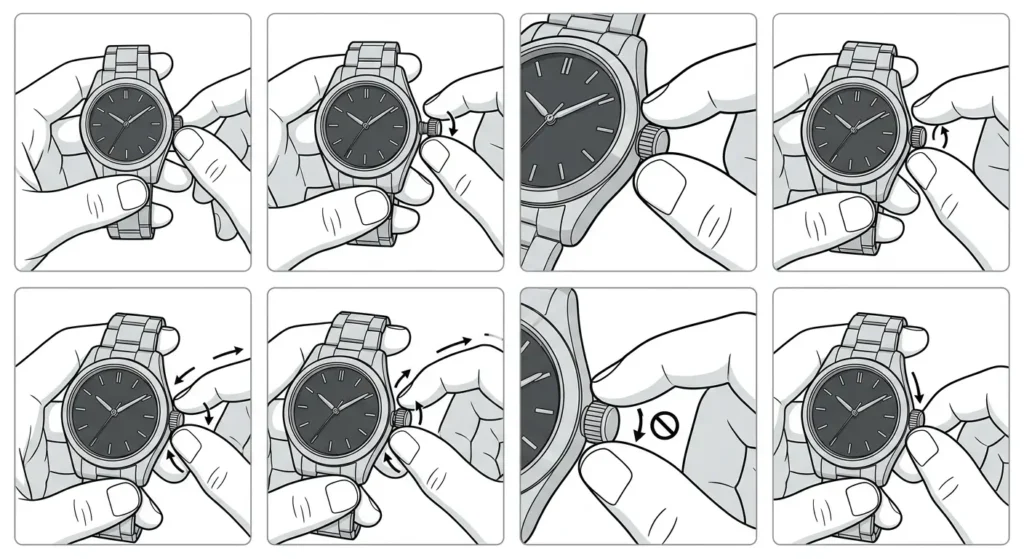
- Step 1: Remove the watch from your wrist and hold it securely in your non-dominant hand, with the crown facing toward you.
- Step 2: If the crown is screwed down, gently unscrew it by turning counterclockwise until it pops out to the winding position (position 0).
- Step 3: Grip the crown between your thumb and index finger using a light but firm pinch grip.
- Step 4: Turn the crown clockwise (away from your body) in smooth, deliberate rotations – each full turn should feel controlled and steady.
- Step 5: Continue winding for approximately 30-40 full rotations, or until you feel increased resistance in the crown.
- Step 6: Stop winding immediately when you feel the resistance increase noticeably – never force the crown past this point.
- Step 7: If the crown screws down, gently push it in while turning clockwise until it’s fully secured against the case.
Pro-Tip: Never wind a manual watch while it’s on your wrist. This creates lateral pressure on the winding stem and crown, which can bend the stem or damage the crown tube over time. Always remove the watch first for better control and to protect the delicate internal components.
Method 2: Winding a Watch That Has Stopped
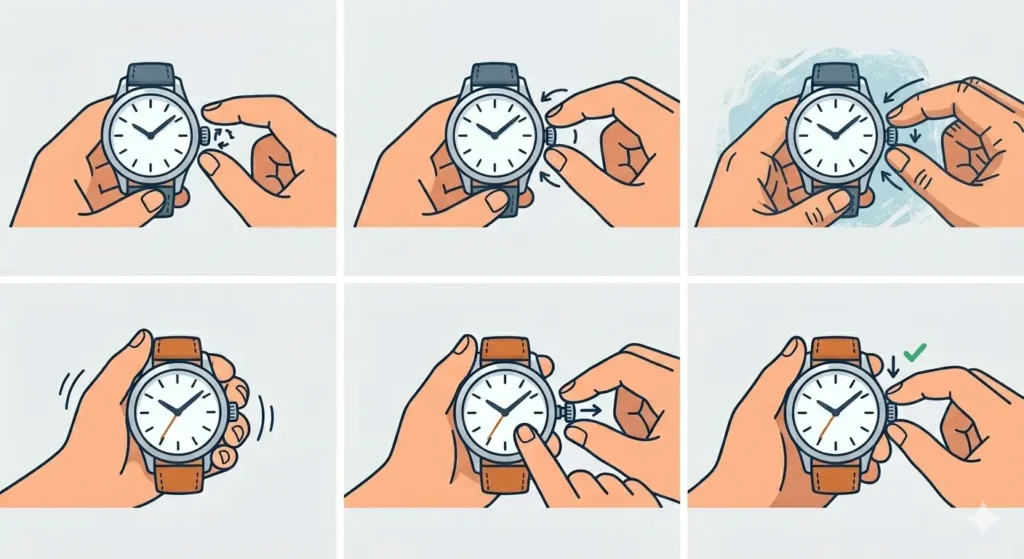
- Step 1: Remove the watch from your wrist and ensure the crown is in the winding position.
- Step 2: Begin winding clockwise with slow, gentle rotations – the first 10-15 turns may feel very easy with minimal resistance.
- Step 3: Continue winding until you complete approximately 30-40 full rotations, paying attention to the gradual increase in resistance.
- Step 4: Once fully wound, give the watch a gentle shake to help distribute the lubricants and ensure the balance wheel starts moving.
- Step 5: Set the correct time using an accurate time reference, pulling the crown to position 2 (time-setting position).
- Step 6: Push or screw the crown back to its secure position.
Optimal Winding Schedule and Practices
Consistency matters significantly for manual-wind watches. Winding at the same time each day – preferably in the morning – creates a predictable pattern that helps maintain accuracy. Most watchmakers recommend winding once every 24 hours, even if the power reserve extends beyond this timeframe.
Winding daily prevents the mainspring from becoming fully unwound, which keeps consistent tension throughout the gear train. This steady power delivery results in better timekeeping accuracy. Many people find that incorporating watch winding into their morning routine, perhaps while checking the current time, makes it a natural habit.
For watches with longer power reserves (48+ hours), daily winding still provides benefits. The mainspring delivers more consistent torque when kept in the upper portion of its power range, leading to superior chronometric performance.
Tips for Safe and Effective Winding
Proper Crown Handling
The crown is a precision component that requires careful handling. Use gentle, controlled pressure – think of it as turning a small knob rather than tightening a bolt. Excessive force can strip gears, damage the crown wheel, or bend the winding stem.
Most people find that using just the thumb and index finger provides adequate control without risking over-tightening. Avoid using your entire hand or gripping too firmly, as this makes it harder to sense the subtle resistance that signals a fully wound mainspring.
Recognizing Proper Resistance
A healthy manual-wind movement provides tactile feedback throughout the winding process. Initial rotations feel light and easy, with resistance gradually building as the mainspring tensions. The key is to stop when resistance noticeably increases – this happens well before the crown becomes difficult to turn.
Forcing the crown beyond this point risks breaking the mainspring or damaging the barrel arbor. Quality movements include a bridle or slipping mechanism to prevent overwinding, but relying on these safety features repeatedly can cause premature wear.
Environmental Considerations
Wind watches in a clean, dry environment away from magnetic fields. Strong magnets from speakers, laptops, or magnetic phone mounts can magnetize the balance spring, causing dramatic timing errors. Keep the watch away from dust and moisture during winding, as the open crown provides a potential entry point for contaminants.
Pro-Tip: Count your rotations when first winding a new watch to learn its specific requirements. Different calibers need varying numbers of turns – vintage movements might need 20-25 turns while modern calibers often require 35-45. Knowing your watch’s ‘sweet spot’ prevents both under-winding and over-winding.
Common Problems and Troubleshooting
Fix 1: Crown Feels Loose or Wobbly
A loose crown often indicates a worn crown tube or damaged threading. Stop winding immediately and have a watchmaker inspect the watch. Continuing to wind with a loose crown can cause the stem to detach or allow moisture ingress.
Fix 2: Crown Won’t Turn or Feels Stuck
Resistance before any winding occurs usually means the crown isn’t fully unscrewed (for screw-down crowns) or the movement has seized due to dried lubricants or debris. Never force a stuck crown. Instead, try gently pressing in while turning counterclockwise to ensure full disengagement. If still stuck, professional service is necessary.
Fix 3: Watch Stops Before Expected Power Reserve
Premature stopping suggests either insufficient winding, a weakened mainspring, or increased friction in the movement. Ensure complete winding by counting rotations and feeling for proper resistance. If the issue persists after several full windings, the movement likely needs cleaning and lubrication.
Fix 4: Crown Turns Indefinitely Without Resistance
Continuous turning without building resistance indicates a broken mainspring, stripped gears, or disconnected barrel arbor. This requires professional repair – continuing to wind serves no purpose and may cause additional damage to loose components inside the movement.
Fix 5: Unusual Sounds During Winding
Grinding, clicking, or scraping sounds during winding signal internal problems. These noises might come from damaged gear teeth, misaligned components, or foreign debris in the movement. Stop winding and seek professional assessment to prevent catastrophic failure.
Maintaining Your Manual-Wind Watch
Regular winding is just one aspect of proper maintenance. Manual-wind watches benefit from complete servicing every 3-5 years, which includes disassembly, cleaning, lubrication, and adjustment. This service ensures the winding mechanism operates smoothly and the mainspring maintains proper tension.
Between services, avoid exposing the watch to extreme temperatures, strong shocks, or magnetic fields. Store unworn watches in a cool, dry place – preferably in a watch box or case that protects against dust and humidity. Some collectors wind stored watches weekly to prevent lubricants from settling and keep the movement limber.
Water resistance degrades over time, especially around the crown area. Even watches rated for water resistance should have gaskets inspected annually, as the repeated winding action can wear the crown seals faster than on automatic or quartz watches.
Frequently Asked Questions
How many times should you wind a manual watch?
Most manual-wind watches require 30-40 full clockwise rotations of the crown to achieve a complete wind. The exact number varies by movement – vintage calibers often need fewer turns (20-25) while modern movements may require 40-45. Stop winding when resistance increases noticeably rather than counting to a specific number.
Can you overwind a manual watch?
Yes, overwinding can damage the mainspring or barrel arbor, though modern watches often include slipping mechanisms to prevent this. The key is stopping when resistance builds rather than forcing the crown. Quality movements provide clear tactile feedback – stop turning as soon as the crown feels noticeably harder to turn.
Should you wind a manual watch daily?
Daily winding at the same time each day is recommended for optimal accuracy and longevity. This practice maintains consistent mainspring tension, which delivers more stable power to the escapement and results in better timekeeping. Wind in the morning to establish a reliable routine.
What happens if you don’t wind a manual watch?
The watch simply stops running once the power reserve depletes, typically after 38-48 hours. Allowing occasional stops causes no harm, but prolonged periods without winding can let lubricants settle and congeal, potentially increasing wear when the movement restarts. Wind stored watches at least weekly.
Which direction do you wind a manual watch?
Always wind clockwise when viewing the crown from the side (turning away from your body). This is universal for virtually all manual-wind watches. Counterclockwise turning accomplishes nothing and may disengage winding gears on some movements.
How do you know when a manual watch is fully wound?
The crown resistance increases noticeably when the mainspring reaches full tension. This change in resistance feels distinct – what started as easy, smooth turning becomes progressively harder. Stop immediately when this resistance builds rather than forcing the crown further.
Can winding damage a manual watch?
Improper winding technique can damage components. The most common issues include overwinding (breaking the mainspring), winding while on the wrist (bending the stem), forcing a stuck crown (stripping gears), and cross-threading screw-down crowns. Following proper techniques prevents these problems entirely.
Is it better to fully wind a manual watch or partial wind?
Fully winding provides the most consistent power delivery and best accuracy. Partial winding leaves the mainspring in a weaker state, resulting in reduced amplitude of the balance wheel and less precise timekeeping. Always complete a full wind during the daily winding session.
Why does my manual watch stop after winding?
If the watch stops immediately or shortly after winding, possible causes include a broken mainspring, seized movement due to dried lubricants, damaged escapement, or magnetization affecting the balance spring. This requires professional diagnosis and repair – continued winding attempts won’t resolve the underlying issue.
How long does a manual-wind watch stay wound?
Power reserve varies by caliber but typically ranges from 38-48 hours for standard movements. Some modern high-end calibers offer 72 hours or longer. Check the manufacturer’s specifications for exact power reserve duration. Daily winding prevents the watch from reaching the end of its reserve.