
Opening a watch case back is essential for battery replacement, cleaning, or repair work. How to open a watch case back (snap-on vs. screw-down) depends entirely on the type of closure system the timepiece uses. This guide provides clear, step-by-step instructions for both methods, ensuring safe and effective access to the watch movement without causing damage.
Quick Summary Table
| Case Back Type | Tools Needed | Difficulty Level | Risk of Damage |
|---|---|---|---|
| Snap-on | Case knife or flat blade | Easy | Medium (scratches possible) |
| Screw-down | Case wrench or rubber ball | Medium | Low (with proper tool) |
How to Open a Snap-on Watch Case Back
Snap-on case backs are the most common type found in affordable and mid-range watches. These backs press into the case body with friction and feature a small notch or lip for removal.
Tools Required for Snap-on Cases
- Case opening knife or thin blade
- Watchmaker’s cloth or soft surface
- Plastic tweezers (optional)
Step-by-Step Process for Snap-on Removal
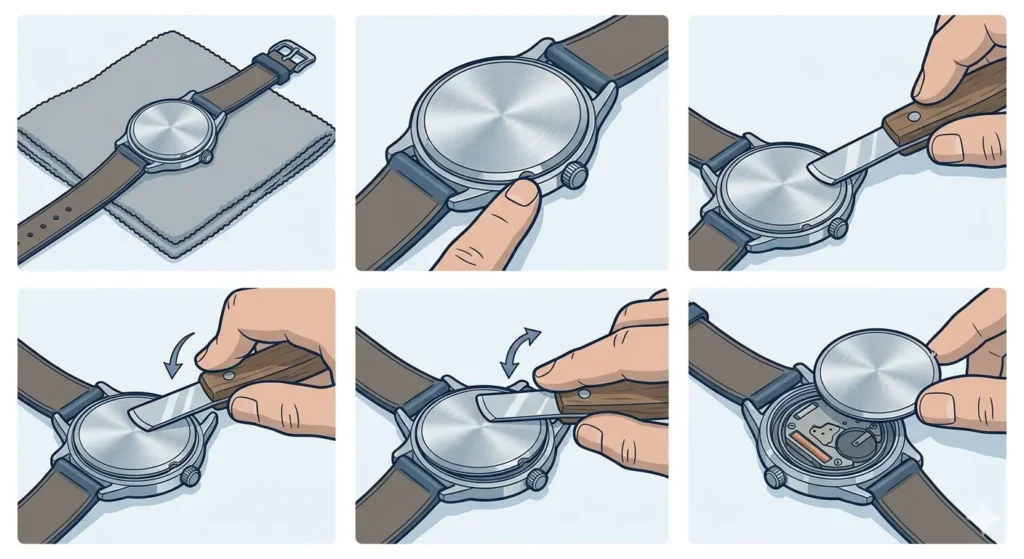
- Step 1: Place the watch face-down on a soft cloth to protect the crystal from scratches.
- Step 2: Locate the small notch or indentation on the case back edge – this indicates where to insert the tool.
- Step 3: Insert the case knife blade into the notch at a shallow angle, approximately 20-30 degrees.
- Step 4: Apply gentle, steady pressure while twisting the blade slightly to pop the case back loose.
- Step 5: Once the back lifts, use fingers or plastic tweezers to remove it completely.
Pro-Tip: Never force the blade too deeply into the case – this can slip and scratch the case body or damage internal components. The goal is to create just enough leverage to break the friction seal, not to pry aggressively.
How to Open a Screw-down Watch Case Back
Screw-down case backs provide superior water resistance and are commonly found in dive watches, sports watches, and higher-end timepieces. These backs feature notches around the perimeter that require specialized tools.
Tools Required for Screw-down Cases
- Adjustable case wrench with fitting dies
- Rubber friction ball (alternative method)
- Watchmaker’s cloth
- Case holder or cushion
Step-by-Step Process for Screw-down Removal
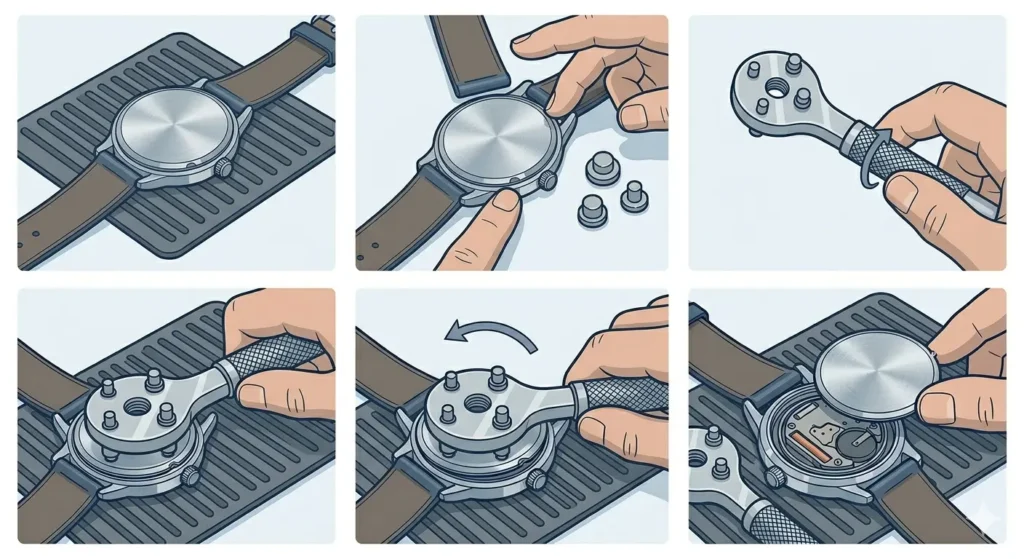
- Step 1: Secure the watch face-up in a case holder or place it on a non-slip surface to prevent movement.
- Step 2: Count the notches on the case back to determine the correct die size for the case wrench.
- Step 3: Adjust the case wrench pins to match the notch positions exactly – pins should fit snugly without forcing.
- Step 4: Position the wrench firmly against the case back, ensuring all pins engage the notches simultaneously.
- Step 5: Turn the wrench counter-clockwise (lefty-loosey) with steady, controlled pressure.
- Step 6: Once the back loosens, finish unscrewing by hand to avoid cross-threading.
Alternative Method: Rubber Ball Technique
For screw-down backs without deep notches, a rubber ball can provide sufficient friction:
- Step 1: Press a slightly deflated rubber ball firmly against the entire case back surface.
- Step 2: Apply downward pressure while turning counter-clockwise.
- Step 3: The friction should grip the case back enough to unscrew it without tools.
Pro-Tip: Many screw-down case backs are tightened at the factory with significant torque. If the case back resists reasonable force, stop and consider taking the watch to a professional rather than risking damage to the case or tool slippage that could scratch the finish.
Identifying Your Watch Case Back Type
Before attempting to open any watch, proper identification saves time and prevents damage.
Visual Identification Methods
Snap-on cases typically show a thin seam around the perimeter with a visible notch or small gap. The edge appears smooth except for the removal point. Screw-down cases display multiple notches (usually 4, 6, or 8) evenly spaced around the circumference, or they may have a smooth edge with internal threading.
Some watches feature exhibition case backs with visible screws – these require a small screwdriver rather than the methods described here. Press-fit display backs combine snap-on mechanics with transparent crystals.
Tips for Safe Watch Case Opening
Successful case back removal requires patience and proper technique. Rushing the process increases the risk of costly mistakes.
Workspace Preparation
Work on a clean, well-lit surface free from dust and debris. A white cloth helps spot tiny screws or parts if they fall. Good lighting reveals the case back type and notch positions clearly. Keep all tools organized and within easy reach.
Handling Precautions
Always handle the watch movement carefully once the case back is removed. Avoid touching internal components with bare fingers – oils from skin can damage delicate parts. If checking the time during another task, the clock tab tool keeps accurate time visible without repeatedly checking the watch.
Never open a watch case immediately after wearing it. Body heat causes metal to expand slightly, which can make case backs tighter. Allow the watch to cool to room temperature for easier opening.
Tool Maintenance
Keep case knives sharp and clean. Dull blades require excessive force, increasing slip risk. Clean case wrench pins after each use to prevent dirt buildup that could scratch case backs. Store tools in a dry environment to prevent rust.
Common Problems and Solutions
Snap-on Case Won’t Budge
When a snap-on case back resists opening, the friction seal may have bonded over time. Try working around the perimeter with the case knife, gently lifting at multiple points rather than forcing one spot. Some cases require rotating the blade position slightly to find the best leverage angle.
Screw-down Case Stripped Notches
Damaged notches from previous improper removal attempts make tool engagement difficult. In this situation, a rubber ball method often succeeds where wrenches fail. For severely damaged notches, professional watchmakers have specialized grip tools designed for stripped cases.
Case Back Appears Stuck After Unscrewing
Some screw-down cases have gaskets that create suction even after full thread disengagement. Gently wiggle the case back while lifting – avoid prying, which can damage the gasket seal. If resistance continues, verify that the case back has unscrewed completely rather than assuming it’s a gasket issue.
Tool Slipping During Removal
Slippage typically indicates incorrect tool sizing or insufficient pressure. For case wrenches, double-check that pin spacing matches notch positions exactly. Ensure the tool sits perpendicular to the case back surface. Adding a small piece of rubber shelf liner under the watch can prevent rotation during the process.
Reassembly Guidelines
Proper case back reinstallation ensures water resistance and protection for the movement.
Snap-on Case Back Replacement
Align the case back with the case body, ensuring any gasket sits properly in its groove. Press down firmly and evenly around the entire perimeter – never press only on one side. The case back should sit flush with the case body when properly seated. A soft press tool or case back press prevents damage during this step.
Screw-down Case Back Replacement
Clean both the case threads and case back threads before reassembly. Position the case back carefully to avoid cross-threading, then hand-tighten initially. Use the case wrench for final tightening, turning clockwise until snug – avoid overtightening, which can damage threads or compress gaskets excessively.
For those timing watch servicing intervals, the online stopwatch provides precise duration tracking without needing to check the watch being serviced.
Frequently Asked Questions
Can any watch case back be opened at home?
Most snap-on and screw-down case backs can be opened with basic tools and careful technique. However, some specialized designs like monocoque cases, welded backs, or certain vintage complications require professional equipment and expertise. Exhibition cases with small screws need precision screwdrivers but are generally accessible.
How often should a watch case back be opened?
Battery-powered watches require opening every 2-3 years for battery replacement. Automatic and manual watches benefit from professional servicing every 3-5 years, which includes case back removal for cleaning and lubrication. Opening the case unnecessarily exposes the movement to dust and moisture, so limit access to when maintenance is actually needed.
What happens if the gasket gets damaged during opening?
A damaged gasket compromises water resistance and should be replaced immediately. Most watch gaskets cost only a few dollars and can be purchased based on case diameter. Installing a new gasket during any case opening is good practice for watches exposed to moisture or used for swimming.
Why does my screw-down case back have both notches and a smooth edge?
Some manufacturers use hybrid designs where the notches are shallow or the case back has a polished outer ring with internal notches. These typically require specialized low-profile case wrenches. The smooth outer surface provides better aesthetics while the internal notches allow removal.
Is it safe to open a water-resistant watch at home?
Opening is safe, but reassembly requires attention to gasket condition and proper seating. Water resistance testing after closing requires specialized pressure testing equipment that most home users lack. If the watch has significant water resistance ratings (100m+) and will be used for swimming or diving, professional servicing ensures proper sealing.
What size case wrench is needed for most watches?
Adjustable case wrenches typically handle diameters from 16mm to 60mm, covering most wristwatches. The number of notches varies – common configurations include 4-notch, 6-notch, and 8-notch designs. A quality adjustable wrench with interchangeable dies handles the majority of watch types encountered.
Can opening the case back void the warranty?
Most manufacturer warranties explicitly state that unauthorized opening voids coverage. Warranty stickers or sealed case backs indicate that the manufacturer expects only authorized service centers to perform internal work. Always check warranty terms before opening any watch still under coverage.
How can over-tightening be avoided when closing a screw-down case?
Tighten only until resistance increases noticeably – screw-down cases need snug fitting but not maximum torque. The gasket compresses to create the seal, so excessive force actually damages the sealing mechanism rather than improving it. Hand-tightening followed by a quarter to half turn with the wrench usually provides adequate sealing.
What should be done if a tool scratches the case back during opening?
Minor scratches on steel case backs can often be buffed out with polishing compounds designed for metal. Deeper scratches may require professional refinishing. For gold-plated or precious metal cases, even light scratching can remove plating – extra care with tool placement and pressure prevents this damage.
Are there watches that cannot be opened without special tools?
Yes, some high-end watches use proprietary case back designs requiring brand-specific tools. Certain complications like chronographs or perpetual calendars have complex movements where amateur opening risks serious damage. Vintage watches with corroded or seized case backs often need professional intervention to avoid breaking components during forced removal.