
Family game night ideas are the perfect way to bring everyone together for quality bonding time, laughter, and friendly competition. Whether you’re looking for classic board games, active challenges, or creative activities, the right games can transform an ordinary evening into memorable family moments that strengthen relationships and create lasting traditions.
In today’s digital age, setting aside dedicated time for face-to-face family interaction has become more important than ever. Game nights offer an excellent opportunity to disconnect from screens, engage in meaningful conversations, and build stronger family connections through shared experiences and playful competition.
Why Family Game Nights Matter
Regular family game nights provide numerous benefits beyond simple entertainment. They help develop critical thinking skills, improve communication, teach valuable lessons about winning and losing gracefully, and create a safe space for family members of all ages to interact on equal footing. These gatherings foster teamwork, boost creativity, and provide stress relief after busy school and work schedules.
Research consistently shows that families who engage in regular recreational activities together report higher levels of satisfaction, better communication patterns, and stronger emotional bonds. Game nights offer a structured yet flexible framework for this important family time.
Classic Board Game Ideas
Monopoly: The Timeless Property Game
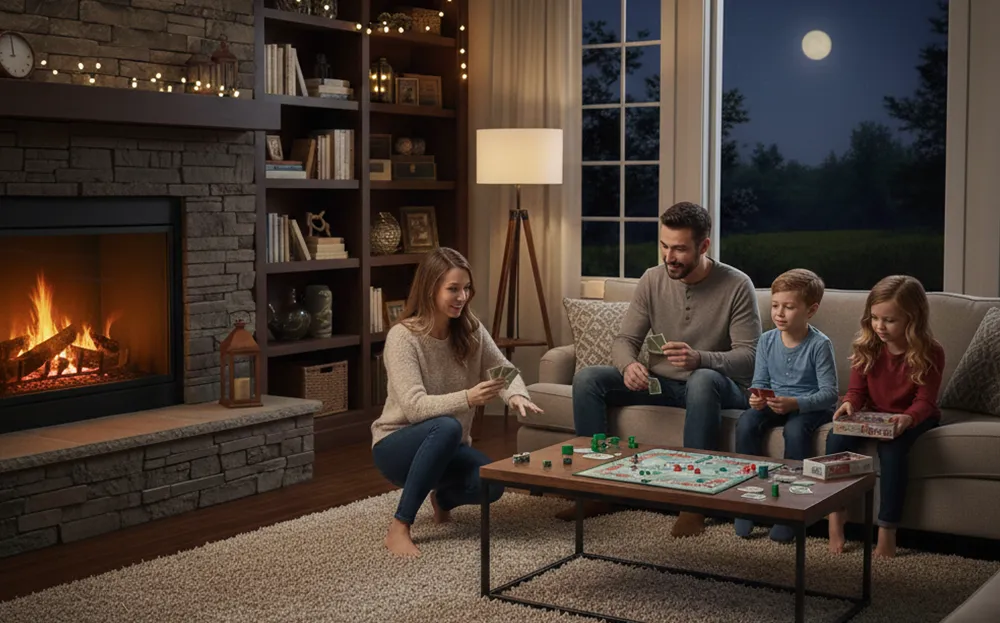
Monopoly remains one of the most popular family board games, teaching children about money management, strategic thinking, and negotiation skills. The game accommodates 2-8 players and typically runs for 60-90 minutes, making it perfect for extended family gatherings. Various themed editions allow families to choose versions that match their interests, from classic cityscapes to movie franchises.
To keep younger players engaged, consider implementing house rules that speed up gameplay or using the shorter “Speed Die” variant included in newer editions.
Scrabble: Building Words and Vocabulary
Scrabble challenges players aged 8 and up to create words from letter tiles while strategically maximizing points. This educational game naturally improves spelling, vocabulary, and pattern recognition skills. Family members can work together in teams to level the playing field between different age groups and skill levels.
The game encourages healthy competition while simultaneously teaching language skills, making it an excellent choice for families who value educational entertainment.
Clue: Mystery Solving Adventure
Clue invites 3-6 players to become detectives solving a murder mystery through deductive reasoning and strategic questioning. The game develops critical thinking skills as players eliminate possibilities and narrow down suspects, weapons, and locations. Its engaging narrative element keeps players invested from start to finish.
The mystery-solving aspect appeals to children and adults alike, creating an immersive experience that sparks imagination and logical thinking.
Active and Physical Game Ideas
Charades: Act It Out
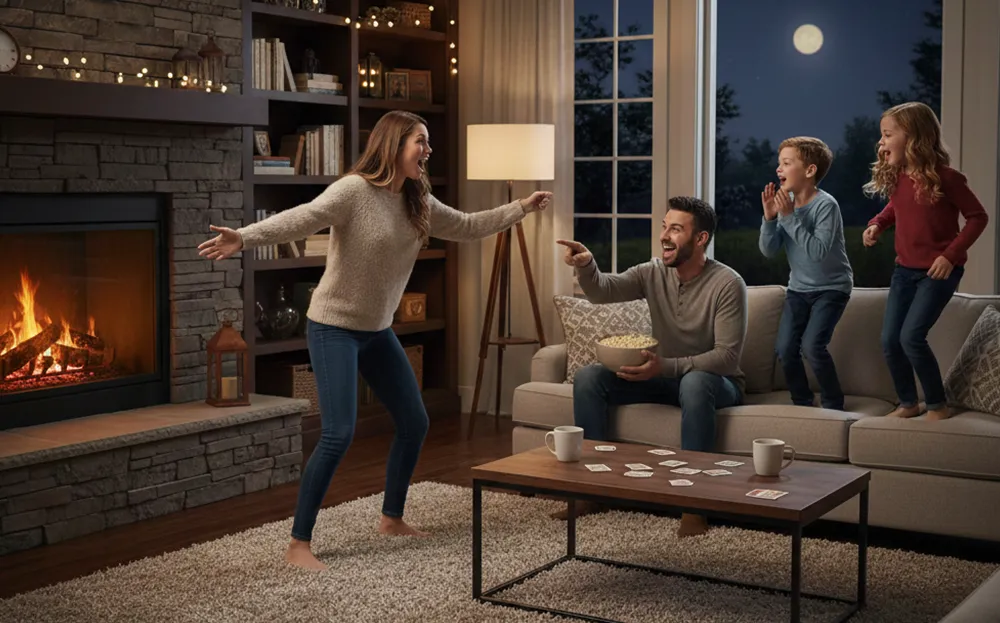
Charades requires no equipment beyond imagination and creativity. Players act out words, phrases, movies, or books without speaking while teammates guess the answer. This classic game accommodates any number of players and can be adapted for various difficulty levels based on age groups.
The physical activity and laughter generated by charades make it perfect for energetic families or as an icebreaker when extended family visits. You can use an online stopwatch to time each round and add competitive excitement to the game.
Twister: Flexibility and Balance Challenge
Twister tests flexibility, balance, and spatial awareness as players place hands and feet on colored circles according to spinner results. This physical game works best with 2-4 active participants and guarantees laughter as players become tangled in increasingly difficult positions.
The game provides excellent physical activity for children while remaining accessible and entertaining for adults willing to embrace the silly, contorted positions.
Card Game Ideas
Uno: Fast-Paced Color Matching
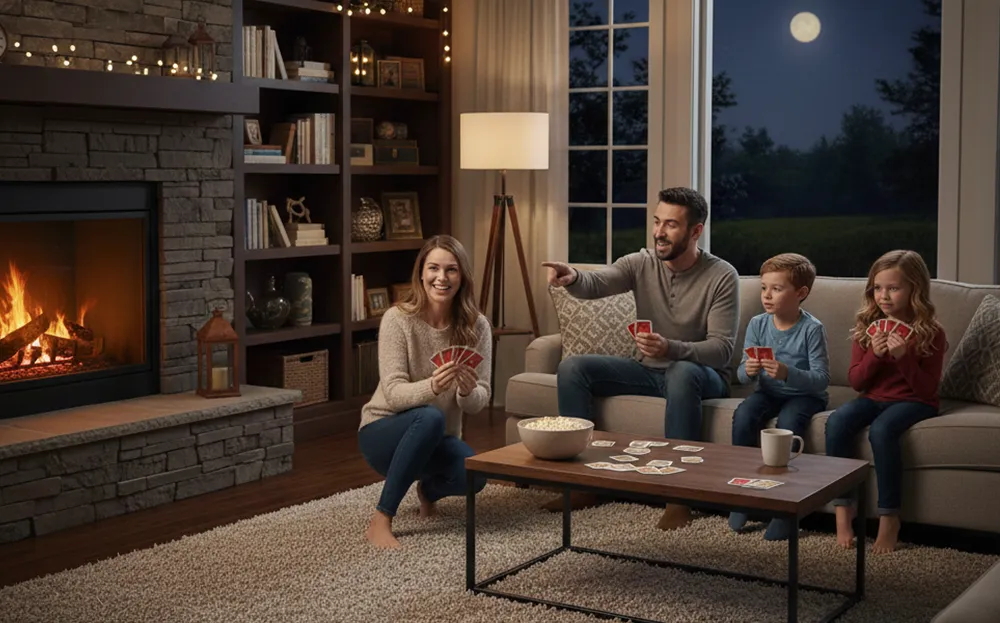
Uno’s simple rules make it accessible for players as young as 7, while strategic card play keeps older family members engaged. The game moves quickly, typically lasting 15-30 minutes per round, allowing multiple games in one evening. Special action cards like Skip, Reverse, and Draw Two add exciting twists that keep everyone alert.
The compact card deck makes Uno perfect for travel or spontaneous game sessions, and numerous themed variations offer fresh experiences for families who play regularly.
Go Fish: Perfect for Younger Children
Go Fish introduces young children aged 4 and up to card game mechanics through simple matching and memory skills. Players ask opponents for specific cards to create sets, developing early strategic thinking and social interaction abilities. The straightforward gameplay allows even preschoolers to participate meaningfully in family game night.
This gentle introduction to competitive games helps build confidence in younger players while providing quality bonding time with parents and siblings.
Strategy and Thinking Games
Chess: The Ultimate Strategy Game
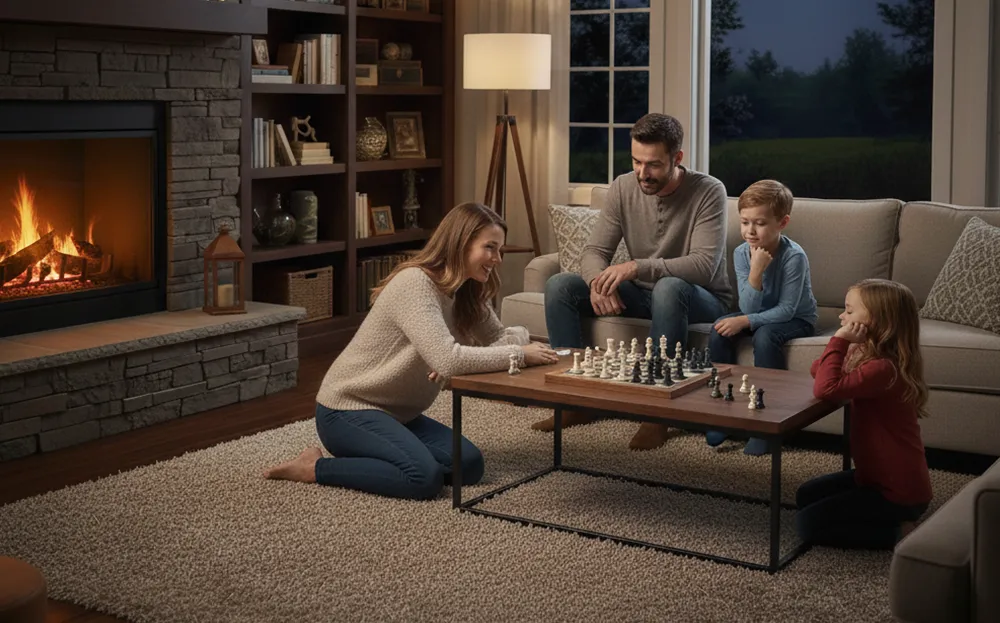
Chess offers timeless strategic depth suitable for families with older children. The game develops planning skills, pattern recognition, and patience as players think several moves ahead. While traditionally a two-player game, families can rotate players or organize mini-tournaments to involve everyone.
Free online tutorials and apps make learning chess more accessible than ever, allowing beginners to develop skills before challenging family members.
Jenga: Steady Hands Required
Jenga combines physical dexterity with strategic thinking as players remove wooden blocks from a tower and place them on top without causing collapse. The increasing tension as the tower grows taller creates exciting moments that captivate players of all ages. Games typically last 10-20 minutes, perfect for families with shorter attention spans.
The tactile nature and visible progression make Jenga particularly engaging for kinesthetic learners and younger children who struggle with abstract game concepts.
Creative and Artistic Game Ideas
Pictionary: Drawing and Guessing Fun
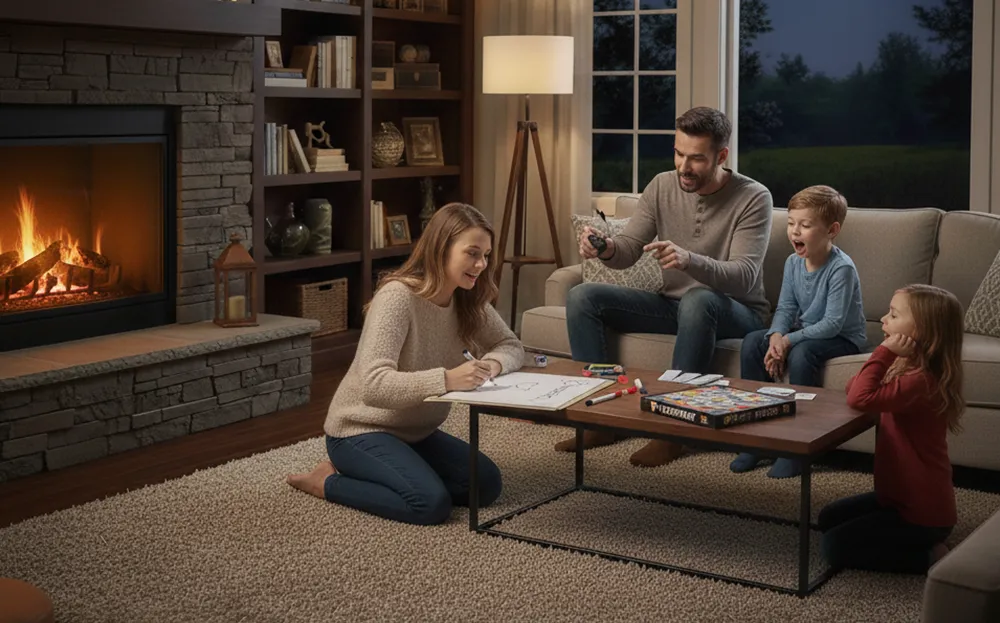
Pictionary challenges players to draw words or phrases while teammates guess the answer within a time limit. No artistic talent is required—in fact, hilariously bad drawings often generate the most laughter and memorable moments. The game accommodates large groups by dividing into teams and encourages creativity in both artists and guessers.
This game level the playing field between ages, as young children’s imaginative interpretations often prove just as effective as detailed adult drawings.
Story Cubes: Collaborative Storytelling
Story Cubes use dice with various images to prompt collaborative storytelling. Players roll the dice and create narratives incorporating all the symbols shown. This open-ended game has no winners or losers, making it ideal for families who prefer cooperative rather than competitive activities.
The creative freedom encourages imagination, language development, and listening skills while allowing even shy family members to contribute comfortably.
Cooperative Game Ideas
Pandemic: Save the World Together
Pandemic requires players to work as a team to stop global disease outbreaks. This cooperative board game eliminates the winner-takes-all dynamic, instead challenging families to communicate effectively and strategize together. The game suits ages 8 and up and typically runs 45-60 minutes.
Cooperative games like Pandemic teach valuable lessons about teamwork, shared responsibility, and collective problem-solving that translate beyond game night into daily family life.
Tips for Successful Family Game Nights
Establish a regular schedule for game nights to build anticipation and ensure consistency. Weekly or bi-weekly sessions work well for most families. Choose games appropriate for your youngest participant’s age and attention span to maintain engagement across all family members.
Create a comfortable environment with adequate lighting, seating, and table space. Minimize distractions by turning off televisions and putting phones away. Consider serving simple snacks and drinks to make the occasion feel special without requiring extensive preparation.
Rotate who chooses the game each week to ensure everyone feels their preferences matter. Keep a variety of games available to match different moods and energy levels. When planning your family game night, you can check time zones for family members in different locations to coordinate schedules for virtual game sessions.
Adapting Games for Different Ages
Modify rules to accommodate skill level differences within your family. Allow younger children extra time, provide hints, or create teams pairing adults with kids. Many classic games offer junior versions specifically designed for younger players while maintaining core gameplay elements.
Be flexible with rules and prioritize fun over strict adherence to instructions. The goal is family bonding, not rigid competition. If a particular rule frustrates players or slows the game excessively, consider adjusting it to better suit your family’s dynamics.
Creating Game Night Traditions
Develop rituals around your family game nights to make them more memorable. This might include special snacks, a rotating trophy for weekly winners, or funny team names. Take photos during particularly amusing moments to build a family game night album.
Consider theming certain game nights around holidays, seasons, or family events. A Halloween-themed game night with spooky games or a summer outdoor game tournament can add variety and excitement to your regular routine. You can even use a clock tab displayed on your device to help manage game time and keep sessions running smoothly.
Budget-Friendly Game Night Ideas
Quality family time doesn’t require expensive purchases. Many engaging games use household items or free printables. Create DIY versions of commercial games, organize scavenger hunts, or play classic games like hide-and-seek with creative twists.
Check local libraries, which often lend board games free of charge. Swap games with friends or neighbors to expand your collection without additional cost. Focus on games with high replay value that can be enjoyed repeatedly without becoming stale.
Frequently Asked Questions
What are the best family game night ideas for mixed age groups?
Games like Uno, Pictionary, and Charades work excellently for mixed ages because they rely on creativity and simple mechanics rather than complex strategies. Cooperative games such as Pandemic also level the playing field by having everyone work together. Choose games with adjustable difficulty levels or team-based formats to ensure younger and older players can participate meaningfully together.
How long should a family game night last?
Most successful family game nights run between 1-2 hours, though this depends on your family’s attention spans and schedules. For families with young children, 45-60 minutes may be more appropriate. Choose 2-3 games of varying lengths to provide variety and allow natural stopping points if energy wanes. Quality matters more than quantity—a focused hour of engaged play beats a dragging three-hour session.
How often should we have family game nights?
Weekly game nights work well for most families, creating a predictable routine that everyone anticipates. However, bi-weekly or monthly schedules can also be effective if weekly commitments prove challenging. Consistency matters more than frequency—choose a schedule your family can maintain long-term. Even one game night per month provides valuable bonding opportunities if approached with enthusiasm and full participation.
What if family members don’t want to participate in game night?
Start by understanding the resistance—some people dislike competitive games while others prefer active rather than sedentary activities. Offer game choices that accommodate different preferences, rotating who selects the activity. Make participation voluntary but create such an enjoyable atmosphere that family members naturally want to join. For reluctant teens, consider games that appeal to their interests or allow them to bring a friend occasionally.
Are digital or video games appropriate for family game night?
Multiplayer video games and digital party games can absolutely enhance family game night when chosen thoughtfully. Games like Mario Kart, Just Dance, or cooperative adventure games provide engaging shared experiences. However, balance digital games with traditional board games and card games to ensure varied types of interaction and maintain the face-to-face connection that makes game nights special.
How do we handle competitive children who get upset when losing?
Emphasize that game night’s primary purpose is spending quality time together, not winning. Praise good sportsmanship and gracious losing as much as victories. Choose cooperative games where everyone wins or loses together, or team-based games that distribute success and failure. Teach that losing provides opportunities to learn and improve, and model this attitude yourself when you don’t win. Younger children gradually develop these skills with patient, consistent guidance.