
Replacing a watch strap buckle is a straightforward process that requires minimal tools and just a few minutes. Whether the buckle is damaged, worn out, or simply needs an upgrade, this step-by-step guide will walk through the entire replacement process to restore the watch strap to perfect working condition.
Key Takeaways
- Replacing a watch strap buckle typically takes 5-10 minutes with basic tools
- Most buckles attach using a spring bar or screw mechanism
- Having a spring bar tool makes the process significantly easier
- Always work on a soft surface to prevent scratching the watch
- Buckle sizes must match the strap width for proper fit
Tools and Materials Needed
Before starting the replacement process, gather these essential items:
- New watch buckle (matching the strap width)
- Spring bar tool or small flathead screwdriver
- Soft cloth or watch cushion
- Good lighting
- Magnifying glass (optional but helpful)
Method 1: Replacing a Spring Bar Buckle
Remove the Old Buckle
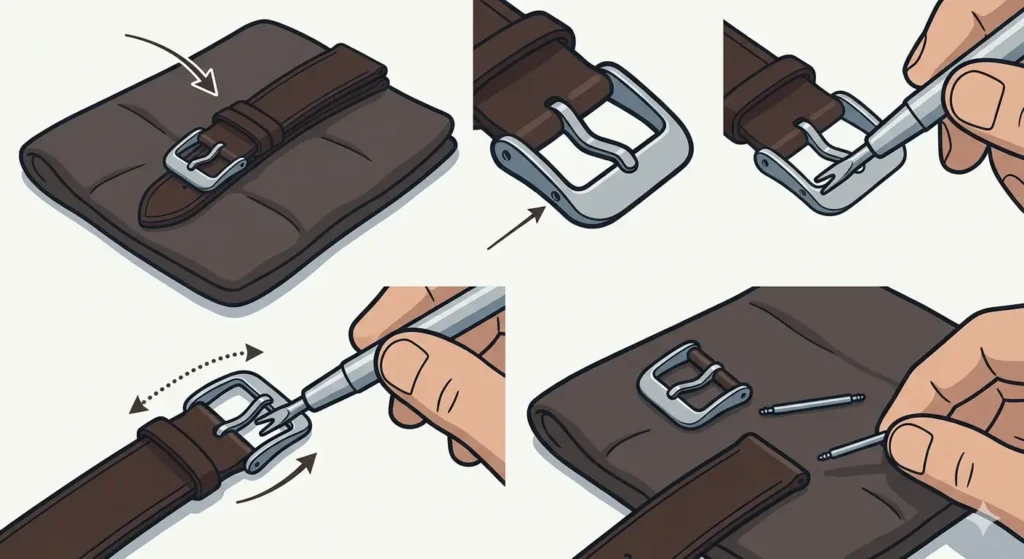
Step 1: Place the watch strap on a soft cloth to protect it from scratches.
Step 2: Locate the small holes on the sides of the buckle where the spring bar sits.
Step 3: Insert the forked end of the spring bar tool into one of the holes.
Step 4: Push the spring bar inward to compress it while gently pulling the buckle away from the strap.
Step 5: Once one side is free, remove the spring bar completely from the strap.
Install the New Buckle
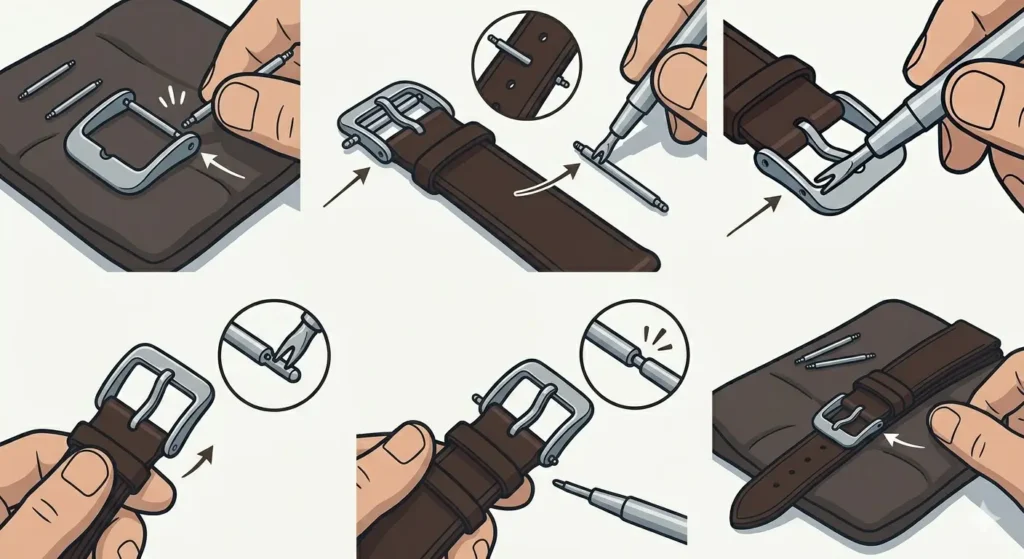
Step 1: Take the spring bar and insert it through one side of the new buckle.
Step 2: Thread the spring bar through the appropriate hole in the watch strap.
Step 3: Pass the spring bar through the other side of the buckle.
Step 4: Use the spring bar tool to compress one end of the spring bar.
Step 5: While keeping the spring bar compressed, align it with the hole on the strap.
Step 6: Release the spring bar tool slowly, allowing the spring bar to snap into place.
Step 7: Gently tug the buckle to ensure it’s securely attached.
Pro-Tip: Always compress the spring bar on the side opposite to where the buckle tongue sits. This prevents the buckle from twisting or sitting at an awkward angle on the strap.
Method 2: Replacing a Screw-Type Buckle
Remove the Old Buckle
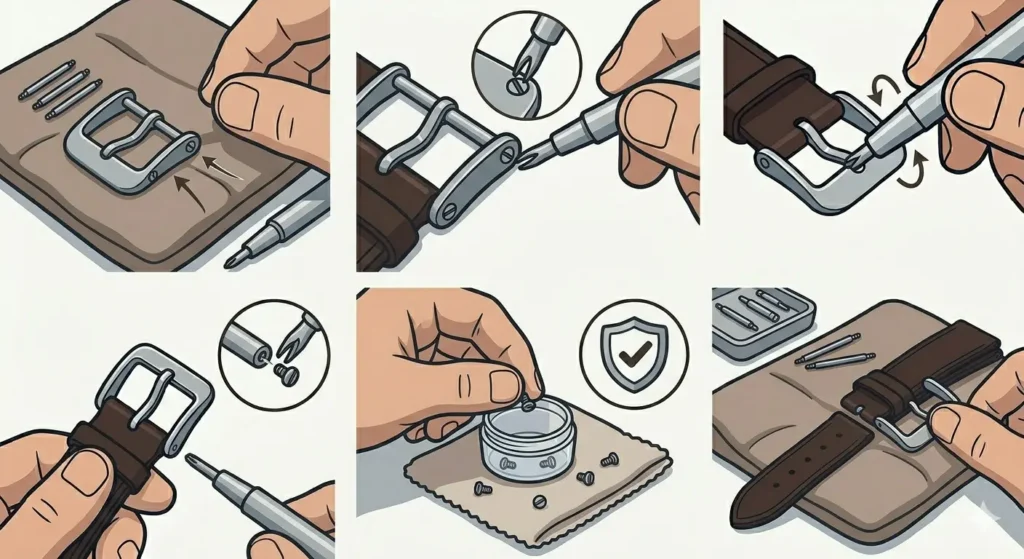
Step 1: Examine the buckle to locate the small screws on each side.
Step 2: Use a precision screwdriver that fits the screw head perfectly.
Step 3: Turn the screws counterclockwise to loosen them.
Step 4: Remove the screws completely and set them aside in a safe place.
Step 5: Slide the old buckle off the strap.
Install the New Buckle
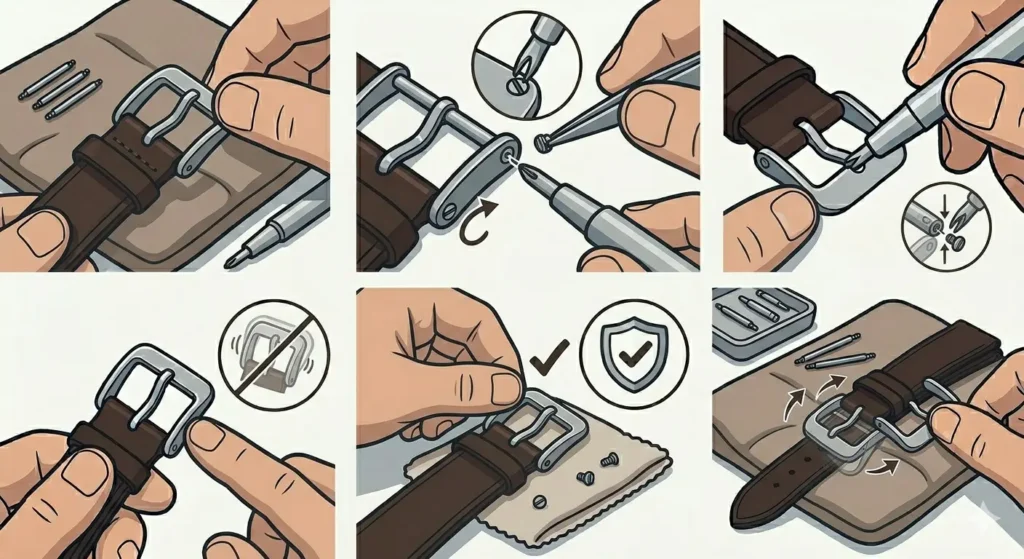
Step 1: Position the new buckle on the strap at the desired location.
Step 2: Align the screw holes in the buckle with the holes in the strap.
Step 3: Insert the screws through the buckle and into the strap holes.
Step 4: Turn the screws clockwise, tightening them evenly on both sides.
Step 5: Ensure the buckle sits straight and doesn’t wobble.
Step 6: Test the buckle by fastening and unfastening it several times.
Tips for Successful Buckle Replacement
- Measure the strap width accurately before purchasing a replacement buckle – common sizes include 18mm, 20mm, and 22mm
- Choose buckles made from materials that match or complement the watch case
- Work in a well-lit area to see the small components clearly
- Keep track of tiny parts by using a small dish or magnetic tray
- If the spring bar feels stuck, apply a tiny drop of lubricant to help it slide
- Consider timing the replacement during a break, as checking time across different zones might remind when to take a pause
- Replace spring bars if they show signs of wear or corrosion
- Test the buckle security before wearing the watch daily
Pro-Tip: When inserting a spring bar, listen for a faint ‘click’ sound. This indicates the spring bar has properly seated into the hole, ensuring a secure attachment that won’t come loose during regular wear.
Common Problems and Solutions
Fix 1: Spring Bar Won’t Compress
Sometimes spring bars become stiff or corroded. Apply a small amount of penetrating oil to the spring mechanism and let it sit for a few minutes. If the spring bar still won’t compress, replace it with a new one rather than forcing it.
Fix 2: Buckle Sits Crooked on the Strap
This usually happens when the spring bar isn’t fully seated in both holes. Remove the buckle and reinstall it, making absolutely certain both ends of the spring bar click into their respective holes. The buckle should sit perfectly straight when properly installed.
Fix 3: New Buckle Doesn’t Fit the Strap Width
Double-check the strap width measurement. If the buckle is too wide, it will overhang; if too narrow, it will slide around. Return the incorrect buckle and order the exact width needed. Most watch straps have the width printed on the underside.
Fix 4: Screw Threads Are Stripped
Stripped screws won’t tighten properly. Replace both the screw and potentially the buckle if the threading is damaged. Never force a screw that isn’t threading smoothly, as this will worsen the damage.
Fix 5: Spring Bar Keeps Popping Out
This indicates either a worn spring bar or enlarged holes in the strap. Replace the spring bar first. If the problem persists, the strap holes may be stretched and the strap itself needs replacement. Using a stopwatch to time how long the spring bar stays in place can help diagnose if this is an intermittent or constant issue.
Frequently Asked Questions
What size buckle do most watch straps need?
Watch strap buckles come in various sizes, with 18mm, 20mm, and 22mm being the most common widths. The size needed matches the width of the strap at the point where the buckle attaches. Always measure the strap width before purchasing a replacement buckle.
Can any buckle be used on any watch strap?
No, the buckle must match the strap width exactly and be compatible with the attachment method (spring bar or screw). Additionally, the buckle material and style should complement the watch design. Leather straps typically use different buckle styles than metal or rubber straps.
How long does a watch buckle typically last?
A quality watch buckle can last several years to decades with proper care. The lifespan depends on the material quality, frequency of use, and exposure to elements. Stainless steel buckles generally outlast plated or lighter metal alternatives.
Is it difficult to replace a watch buckle without professional tools?
While a spring bar tool makes the job easier, a small flathead screwdriver can work in a pinch. The process requires patience and a steady hand but isn’t particularly difficult. Most people can successfully replace a buckle on their first attempt with careful attention to the steps.
What happens if the spring bar is too long or too short?
A spring bar that’s too long won’t fit between the strap holes, while one that’s too short won’t engage the holes securely and will fall out. Spring bars must match the exact width of the strap where the buckle attaches. Standard sizes increase in 1mm increments.
Should the buckle be replaced when changing watch straps?
Not necessarily. If the existing buckle is in good condition, matches the new strap width, and complements the style, it can be reused. However, many people prefer to match new straps with new buckles for a fresh, cohesive look.
Can a damaged buckle scratch the watch case?
Yes, a damaged buckle with sharp edges or protruding parts can scratch the watch case, crystal, or even the wearer’s wrist. Any buckle showing signs of damage should be replaced immediately to prevent further issues.
How tight should the screws be on a screw-type buckle?
Screws should be snug but not overtightened. They need enough tension to prevent the buckle from moving, but excessive force can strip the threads or damage the strap. Tighten until resistance is felt, then add a quarter turn.
What’s the difference between a tang buckle and a deployment clasp?
A tang buckle is the traditional pin-and-hole style commonly seen on leather straps, while a deployment clasp (or deployant) uses a folding mechanism and is typically found on metal bracelets. The replacement process differs significantly between these two types.
Is it worth timing the buckle replacement process?
For those who enjoy tracking tasks, using a clock tab to monitor the replacement time can be helpful for planning future maintenance. Most buckle replacements take 5-10 minutes once familiar with the process.
Conclusion
Replacing a watch strap buckle is a simple maintenance task that restores both function and appearance to a watch. With the right tools and a few minutes of careful work, anyone can successfully complete this repair without professional assistance. Whether dealing with a spring bar or screw-type attachment, following these step-by-step instructions ensures a secure, properly aligned buckle that will serve reliably for years to come.