
Learning how to match your watch to your outfit transforms personal style and creates polished, cohesive looks for any occasion. The right watch pairing elevates professional attire, complements casual wear, and demonstrates attention to detail that others notice immediately.
Quick Summary Table
| Outfit Type | Best Watch Style | Key Matching Rule |
|---|---|---|
| Formal/Business | Dress watch with leather strap | Match metals to belt buckle and shoes |
| Business Casual | Versatile steel or two-tone watch | Keep it simple and understated |
| Casual | Sport watch or NATO strap | Coordinate with dominant outfit color |
| Athletic/Active | Digital or rubber strap sport watch | Focus on functionality over style |
| Evening/Formal Event | Slim dress watch, minimal design | Match precious metals to jewelry |
Understanding Watch and Outfit Coordination Basics
Watch coordination starts with recognizing that timepieces serve as functional jewelry. The watch face size, strap material, and metal finish all communicate style messages. Large, bold watches project confidence and casual energy, while slim dress watches convey sophistication and formality.
Metal tones create visual harmony when matched correctly. Silver-toned watches pair naturally with cool colors like blue, gray, and black. Gold or rose gold watches complement warm tones including brown, tan, and earth colors. This principle extends beyond the watch itself to belt buckles, shoe hardware, and other metal accessories worn simultaneously.
Strap materials define formality levels. Leather straps work for business and formal settings, especially in black or brown. Metal bracelets suit both professional and casual contexts depending on design. Rubber, silicone, and NATO fabric straps belong in athletic, outdoor, or relaxed casual environments.
Method 1: Matching Watches to Formal and Business Attire
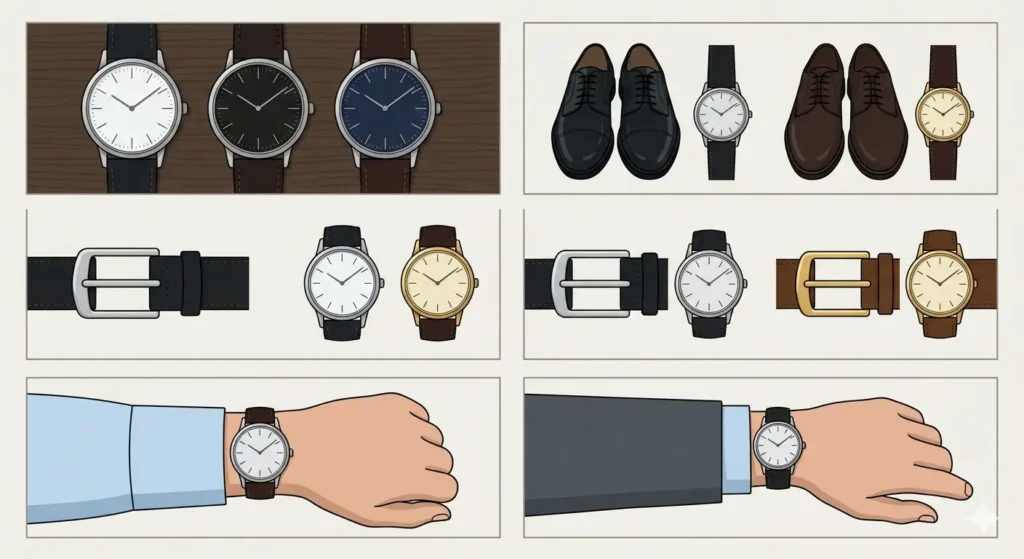
Formal business settings demand understated elegance from watch choices. The watch should enhance professional appearance without drawing excessive attention or appearing flashy.
- Step 1: Select a dress watch with a clean, simple dial – white, black, or subtle colors work best for formal environments
- Step 2: Choose a leather strap that matches shoe color – black shoes require black straps, brown shoes pair with brown straps
- Step 3: Match watch metal to belt buckle finish – silver buckle means silver case, gold buckle pairs with gold case
- Step 4: Keep watch size proportional to wrist – the case should not extend beyond the wrist bone
- Step 5: Ensure the watch slides under shirt cuffs without catching or bulging noticeably
Conservative dress codes typically favor watches under 40mm in diameter with minimal complications. Chronographs and busy dials distract in boardrooms and formal presentations. A simple three-hand watch with date function satisfies professional needs while maintaining appropriate restraint.
Pro Tip: When wearing a suit, the watch should remain hidden under the sleeve most of the time. It should only appear when checking the time or during natural hand movements – this signals true elegance and proper fit.
Method 2: Coordinating Watches with Business Casual Outfits
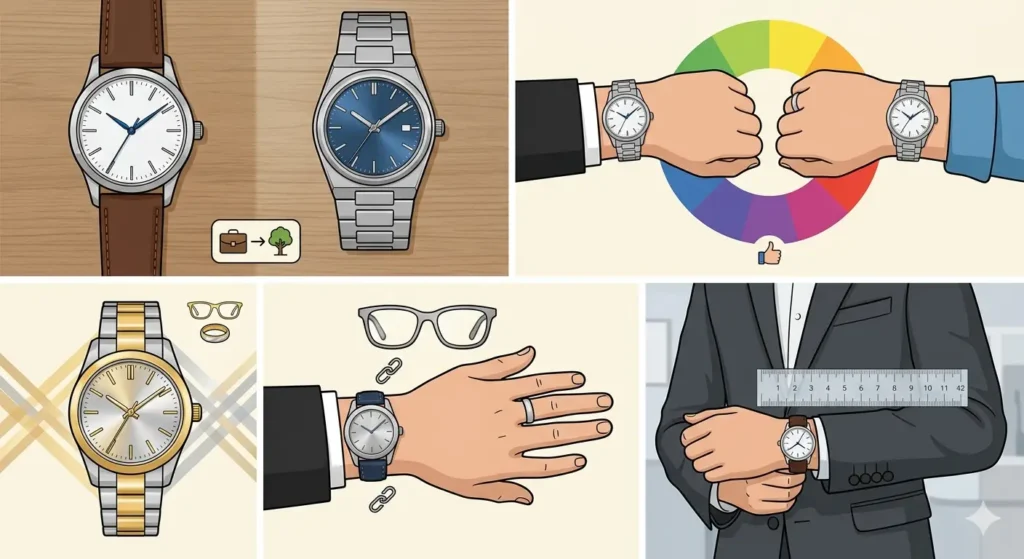
Business casual environments offer more flexibility while still maintaining professional standards. This dress code allows for personality expression through watch selection.
- Step 1: Choose versatile watches with either leather or metal bracelets that transition between settings
- Step 2: Select stainless steel watches for maximum versatility – they pair with virtually any color palette
- Step 3: Consider two-tone watches combining silver and gold for outfits mixing warm and cool colors
- Step 4: Match watch strap or bracelet finish to dominant metal accessories like glasses frames or wedding rings
- Step 5: Opt for medium-sized cases between 38-42mm that balance presence with professionalism
Business casual permits subtle color on watch dials. Navy blue, burgundy, or forest green dials add personality while remaining appropriate. These colors should echo tones present in the outfit – a navy dial complements khaki pants and blue dress shirts perfectly.
Method 3: Pairing Watches with Casual Wear

Casual outfits provide the greatest freedom for watch experimentation. Personal style takes priority over rigid matching rules in relaxed settings.
- Step 1: Identify the dominant color in the casual outfit – jeans, shirt, or jacket
- Step 2: Select watch straps or dials that coordinate with or contrast against this dominant color
- Step 3: Consider NATO straps or rubber bands for weekend wear – these add color options and comfort
- Step 4: Match sport watches with athletic casual wear like sneakers and joggers
- Step 5: Use larger, bolder watches with casual outfits since relaxed dress codes accommodate statement pieces
Casual coordination benefits from the world time comparison tool when coordinating style across different occasions throughout the day. Color matching becomes more playful – orange NATO straps work with denim, while green canvas straps complement earth-tone casual wear.
Texture plays a role in casual watch matching. Brushed metal finishes suit rugged casual styles with boots and heavier fabrics. Polished finishes work better with clean, minimal casual aesthetics featuring sneakers and fitted basics.
Method 4: Selecting Watches for Athletic and Active Outfits
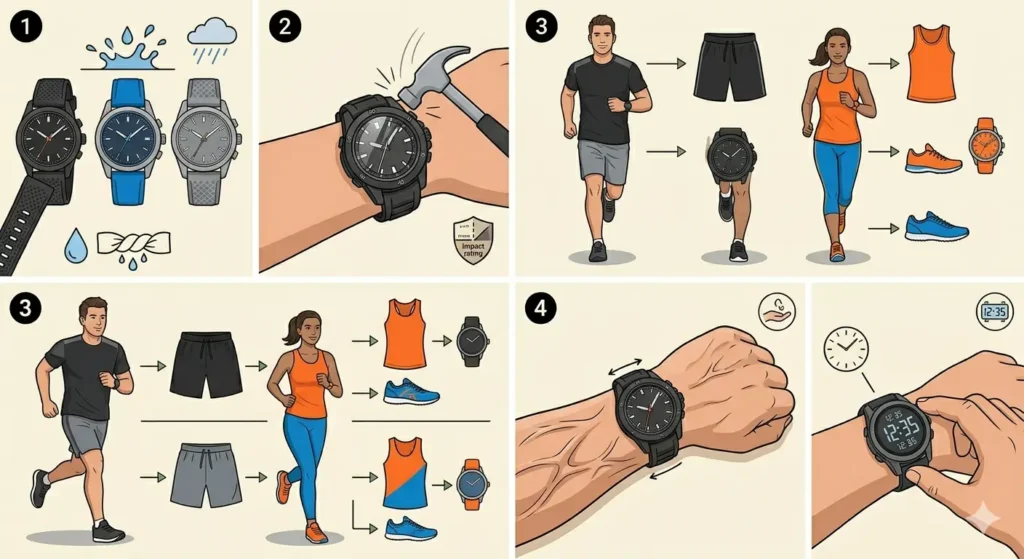
Athletic wear prioritizes function over fashion, though style still matters for active lifestyles. The right watch supports workout needs while looking appropriate with performance clothing.
- Step 1: Choose sport watches with rubber, silicone, or synthetic straps that resist sweat and water
- Step 2: Select durable watches with scratch-resistant crystals and cases rated for impact
- Step 3: Match watch color to athletic wear palette – black watches work universally, bright colors coordinate with vibrant activewear
- Step 4: Ensure comfortable fit – the watch should stay secure without pinching during movement
- Step 5: Consider digital displays for easy reading during activities versus analog dials
Fitness tracking features determine watch selection for many active individuals. These technical capabilities matter more than aesthetic matching, though color options allow coordination with gym bags, shoes, and athletic gear.
Method 5: Matching Watches to Evening and Formal Event Attire

Evening wear and formal events represent the pinnacle of watch-outfit coordination. These occasions demand refined choices that complement elegant attire without competing for attention.
- Step 1: Select ultra-thin dress watches that disappear under formal shirt cuffs
- Step 2: Match precious metal cases to jewelry – gold cufflinks require gold watches, platinum pairs with white gold or silver
- Step 3: Choose black leather straps for tuxedos and black-tie events without exception
- Step 4: Opt for simple dial designs with minimal complications – date windows are acceptable, chronographs are not
- Step 5: Ensure watch case diameter stays under 40mm for true formal elegance
Black-tie events traditionally call for pocket watches rather than wristwatches, though modern conventions accept discrete dress watches. The watch should never upstage the overall presentation – it serves as a subtle finishing touch rather than a focal point.
Pro Tip: For formal evening events, match the watch dial color to the shirt – white dial with white shirt creates seamless elegance. This creates visual continuity that sophisticated dressers recognize immediately.
Understanding Color Coordination Between Watches and Outfits
Color theory guides successful watch-outfit pairings. Complementary colors create visual interest, while analogous colors produce harmonious combinations that feel naturally balanced.
Neutral outfits in black, white, gray, or navy accept any watch color or metal tone. These foundation pieces allow watches to become accent pieces that add personality. A brown leather strap warms up monochromatic gray outfits, while a blue dial echoes navy blazers elegantly.
Colorful outfits require more deliberate watch selection. Match one element of the watch – dial, bezel, or strap – to a color present in the outfit. This creates intentional coordination without overthinking the combination. A burgundy sweater pairs beautifully with a watch featuring burgundy dial accents or a matching leather strap.
Metal tones follow the warm-cool color principle consistently. Cool colors like blue, purple, and gray pair with silver, stainless steel, or white gold watches. Warm colors including red, orange, yellow, and brown complement gold, rose gold, or bronze watch cases.
Coordinating Watch Size with Body Proportion and Outfit Style
Watch size affects the overall balance of an outfit. Proportional sizing ensures the watch enhances appearance rather than overwhelming or disappearing on the wrist.
Wrist size determines appropriate watch diameter. Smaller wrists under 6.5 inches suit watches between 36-40mm. Medium wrists from 6.5-7.5 inches accommodate 40-44mm cases comfortably. Larger wrists over 7.5 inches can wear 44mm and above without the watch appearing undersized.
Outfit style influences size appropriateness beyond wrist measurements. Formal wear demands smaller, thinner watches regardless of wrist size – oversized watches ruin tailored aesthetics. Casual wear permits larger watches since relaxed clothing provides visual balance for substantial timepieces.
Lug-to-lug measurement matters as much as case diameter. The watch lugs should not extend beyond the wrist edges, even if the dial diameter seems appropriate. This ensures comfortable wear and proper visual proportion.
Matching Watch Straps to Different Outfit Materials and Textures
Strap materials should harmonize with outfit fabrics and textures for cohesive styling. Material matching creates subtle connections that elevate overall presentation.
Leather watch straps pair naturally with leather shoes and belts. This trinity of leather goods should coordinate in color and finish – smooth leather straps with polished shoes, textured straps with pebbled or suede footwear. The leather quality should also match – premium crocodile straps look incongruous with budget shoes.
Metal bracelets complement structured fabrics like wool, cotton twill, and denim. The cool, hard surface of metal echoes the crisp texture of woven materials. Brushed metal bracelets suit rougher textures, while polished bracelets work better with smooth, refined fabrics.
Fabric and NATO straps match casual textiles including canvas, chambray, and jersey knits. The soft, flexible nature of fabric straps mirrors comfortable casual clothing. Color coordination becomes easy with fabric straps since they come in virtually unlimited color combinations.
Rubber and silicone straps pair with synthetic performance fabrics in athletic and outdoor contexts. Both materials share water resistance, durability, and practical functionality that prioritizes performance over luxury.
Seasonal Considerations for Watch and Outfit Matching
Seasons influence both wardrobe and watch selection. Temperature, holidays, and seasonal color palettes all affect appropriate watch-outfit combinations.
Summer calls for lighter colors, breathable materials, and water-resistant watches. Lighter-colored leather straps in tan or cream complement linen and cotton summer clothing. Metal bracelets and NATO straps work well since leather becomes uncomfortable in heat and humidity. Bright dial colors suit summer’s energetic mood.
Fall and winter favor darker, richer colors and warmer materials. Brown leather straps in deeper shades match boots and heavier outerwear perfectly. Gold-tone watches complement autumn’s warm color palette of rust, burgundy, and olive. Larger watches balance bulkier winter clothing better than delicate summer pieces.
Spring offers transitional flexibility between winter’s heavy pieces and summer’s light aesthetic. Versatile stainless steel watches transition smoothly through spring’s variable weather. Medium-toned leather straps in cognac or honey brown work across spring’s color spectrum.
Using a clock tab helps coordinate timing for seasonal wardrobe transitions and ensures watches match current seasonal style requirements.
Tips for Building a Versatile Watch Collection
Strategic watch collecting ensures appropriate options for every outfit and occasion without excessive redundancy. A well-planned collection covers essential style needs efficiently.
The foundation piece should be a versatile dress watch with a simple dial and leather strap. This handles business, formal events, and dressier casual occasions. Stainless steel case with black or brown leather strap in the 38-40mm range works universally.
The second essential is a casual everyday watch with more durability and style flexibility. Steel sport watches with bracelets or tool watches with robust cases fill this role. This watch handles daily wear, weekend activities, and business casual settings comfortably.
The third category covers specialty needs – diving watches for water activities, chronographs for sport timing, or dress watches in precious metals for exceptional formal occasions. These additions depend on lifestyle and specific needs rather than universal requirements.
Watch straps expand collection versatility without purchasing multiple watches. Quality watches with interchangeable straps transform from formal to casual instantly. A single watch with black leather, brown leather, and metal bracelet options handles diverse outfit requirements effectively.
Common Problems and Solutions
Watch Appears Too Formal for Casual Outfit
Dress watches sometimes clash with casual clothing, creating awkward combinations. The solution involves changing the strap rather than the entire watch. Replace leather dress straps with NATO fabric straps or metal bracelets to casualize the watch instantly. This preserves the watch investment while adapting its style level appropriately.
Watch Metal Does Not Match Other Accessories
Mismatched metals create visual discord that others notice subconsciously. When watch metal conflicts with belt buckles, glasses frames, or jewelry, choose which metal will dominate the outfit and swap out conflicting pieces. Alternatively, select two-tone watches that incorporate both silver and gold, allowing coordination with mixed metal accessories.
Watch Too Large or Small for Outfit Style
Proportion problems make outfits appear unbalanced. Oversized watches overwhelm formal wear while small watches disappear under casual bulk. The fix requires matching watch size to occasion formality – reserve larger watches exclusively for casual settings and smaller watches for business and formal contexts. When outfit formality is uncertain, medium-sized watches around 40mm provide safe middle ground.
Watch Strap Color Clashes with Shoes and Belt
Color conflicts between leather goods destroy outfit cohesion. Traditional style rules demand matching leather tones across shoes, belts, and watch straps. When these clash, change the watch strap to match existing footwear and belt combinations. Keep backup straps in both black and brown for quick coordination.
Watch Style Does Not Suit Personal Aesthetic
Borrowed or gifted watches sometimes conflict with personal style preferences. Rather than forcing incompatible combinations, acknowledge that certain watches belong with specific outfit types only. A sporty dive watch need not coordinate with business attire – save it exclusively for casual weekend wear where its style fits naturally.
Multiple Watches Create Decision Paralysis
Large collections complicate daily outfit coordination. Simplify by designating specific watches for specific contexts – formal watch, work watch, weekend watch. This eliminates decision fatigue while ensuring appropriate selections. Using an online stopwatch to time morning routines reveals how much time watch selection actually requires, often motivating better organization systems.
Frequently Asked Questions
Should watches match belt buckles or shoes?
Watches should match both belt buckles and shoes when possible, creating cohesive metal coordination across all leather accessories. When forced to choose between the two, prioritize matching the belt buckle since it sits closer to the watch visually. Silver-toned watches pair with silver buckles and black shoes, while gold watches complement gold buckles and brown shoes.
Can black watches work with brown shoes?
Black watches with metal cases or black leather straps work with brown shoes in casual settings, though this combination breaks traditional formal dress codes. For business or formal occasions, match the watch strap to shoe color directly. In casual contexts, black watches coordinate with brown shoes when outfit colors tie the elements together – navy or gray clothing bridges the black-brown gap effectively.
What watch colors are most versatile across different outfits?
Stainless steel watches with white, black, or blue dials offer maximum versatility across outfit types and formality levels. These neutral options coordinate with both warm and cool color palettes while transitioning seamlessly from professional to casual settings. Black leather and metal bracelet strap options extend versatility further, allowing one watch to serve multiple style needs.
How many watches does a complete wardrobe require?
A complete wardrobe functions well with three watches – one dress watch for formal occasions, one everyday casual watch, and one sport watch for active pursuits. This covers essential style needs without redundancy. Collectors and enthusiasts may own more, but these three categories provide functional coverage for all outfit types and occasions that most people encounter regularly.
Should watch size change based on outfit formality?
Yes, watch size should decrease as outfit formality increases. Formal and business attire requires smaller, thinner watches under 40mm that slide beneath shirt cuffs discreetly. Casual wear accommodates larger watches up to 44mm or beyond, since relaxed clothing provides visual balance for substantial timepieces. This size variation ensures proportional harmony between watch and outfit style level.
Do rubber strap watches ever work with dress clothes?
Rubber strap watches rarely work with formal dress clothes and should be avoided in business and formal settings. However, high-quality rubber straps on luxury sport watches can work with business casual attire in creative industries where dress codes relax. Traditional professional environments still expect leather or metal watch bands exclusively for anything dressier than casual Friday attire.
What watch features matter most for outfit coordination?
Case metal finish, strap material, dial color, and watch size matter most for outfit coordination. These visible elements create immediate visual connections or conflicts with clothing. Technical features like movement type, water resistance, or complications affect functionality but do not impact style coordination. Focus on external aesthetics when matching watches to outfits.
Can gold watches work with silver jewelry?
Gold watches can work with silver jewelry when worn intentionally as mixed metals, though traditional style rules discourage this combination. Modern fashion accepts mixed metal looks when done confidently with balanced distribution – a gold watch balances silver rings and necklaces better than mixing gold and silver watches together. For conservative or formal settings, match all metals consistently.
How do you match watches to patterned clothing?
Match watches to patterned clothing by selecting one color present in the pattern and coordinating the watch dial or strap to that specific color. This creates intentional connection without overwhelming the pattern. Alternatively, use neutral watches in black, white, or stainless steel that complement any pattern without competing for visual attention. Avoid watches with busy dials when wearing heavily patterned clothing.
Should watch style match shoe style?
Watch style should match shoe formality level rather than specific shoe style. Dress shoes pair with dress watches, sneakers work with sport watches, and boots coordinate with tool watches or casual pieces. This formality matching creates appropriate style cohesion. The specific shoe design need not dictate exact watch selection, but formality alignment ensures outfits appear intentionally coordinated rather than accidentally assembled.