
Installing a deployant clasp on a leather strap transforms the way a watch fits and feels on the wrist. This simple upgrade eliminates the daily wear on the leather caused by traditional buckles, extends strap life, and adds a touch of refinement to any timepiece. The process takes only a few minutes with the right tools and technique.
Quick Summary Table
| Task | Details |
|---|---|
| Time Required | 5-10 minutes |
| Tools Needed | Spring bar tool, deployant clasp, leather strap |
| Difficulty Level | Beginner-friendly |
| Main Benefit | Extends strap life, improves comfort |
Step-by-Step Installation Process
Preparing the Leather Strap
Before beginning the installation, lay out all materials on a clean, soft surface. A microfiber cloth or watch mat prevents scratches and keeps small parts from rolling away. Remove the watch from the existing strap if still attached, setting it aside in a safe location.
Check that the deployant clasp matches the strap width. Most clasps are available in standard sizes: 18mm, 20mm, 22mm, and 24mm. The clasp should fit snugly between the strap edges without gaps or forcing.
Removing the Original Buckle
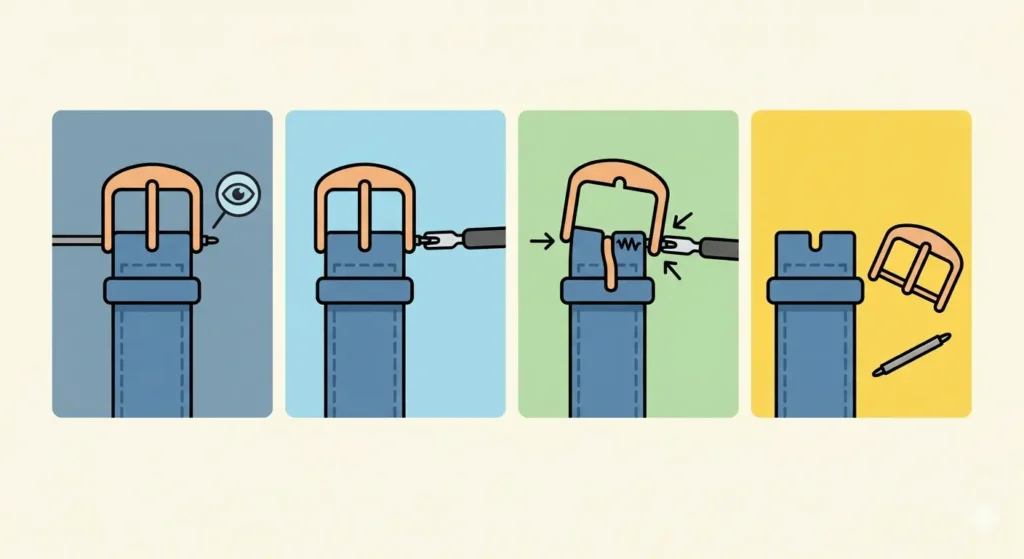
- Step 1: Locate the spring bar holding the buckle to the strap. This small metal pin runs through the buckle and strap, secured by spring-loaded ends.
- Step 2: Insert the forked end of the spring bar tool between the strap and buckle, positioning it against one end of the spring bar.
- Step 3: Apply gentle pressure while pushing the spring bar inward to compress the spring. The bar should release from the buckle hole.
- Step 4: Slide the spring bar out completely and set it aside. Keep this piece – it will be needed for the deployant clasp installation.
Pro-Tip: Work over a container or cloth when removing spring bars. These tiny components can launch across the room when released, making them difficult to find on hard floors or carpets.
Measuring the Correct Positioning
The deployant clasp must be positioned to balance comfort and aesthetics. Put the strap around the wrist without the clasp attached, noting where the holes align for a comfortable fit. Most wearers prefer the clasp centered on the underside of the wrist when closed.
Mark or remember which hole provides the best fit. The clasp will attach to the side of the strap with the buckle holes (the longer side), while the shorter side with the fixed bar remains unchanged.
Attaching the Deployant Clasp
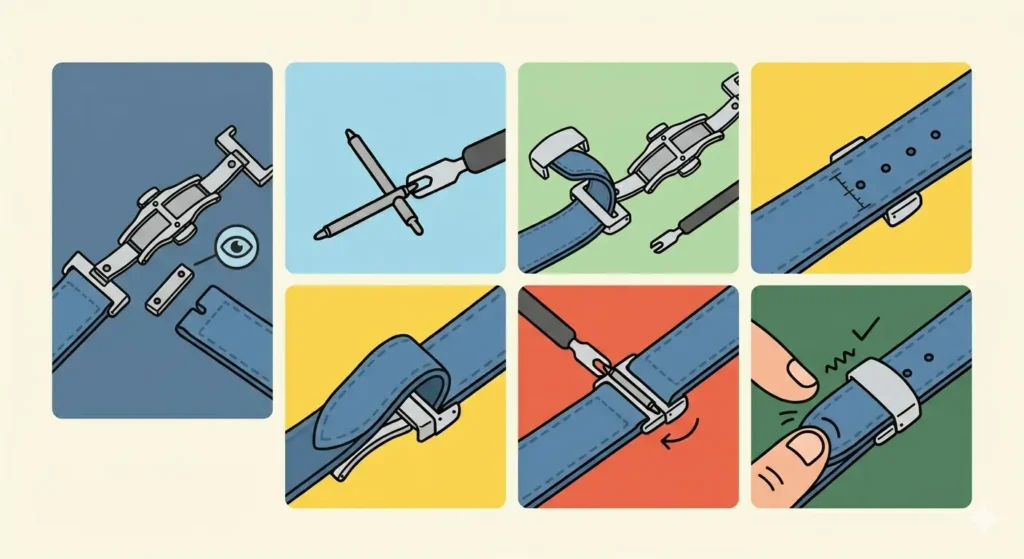
- Step 1: Open the deployant clasp fully to expose both attachment points. Most clasps have a double-folding design with two hinged sections.
- Step 2: Take the spring bar and compress one end using the spring bar tool. Insert this compressed end into the hole on one side of the clasp attachment point.
- Step 3: Thread the strap through the clasp according to the manufacturer’s design. Some clasps require the strap to loop through from underneath, while others feed from the top.
- Step 4: Align the spring bar with the holes in the strap, ensuring it sits in the correct position based on the earlier measurement.
- Step 5: Compress the free end of the spring bar and guide it into the opposite hole of the clasp. Release the tool slowly, allowing the spring bar to seat properly.
- Step 6: Tug gently on the strap to confirm the spring bar is secure. The strap should not pull free with normal handling force.
Final Adjustments and Testing
Close the deployant clasp and examine the alignment. The clasp should sit flat against the wrist without twisting or angling to one side. If the clasp appears crooked, recheck the spring bar installation and strap threading.
Test the clasp mechanism by opening and closing it several times. The action should feel smooth and secure, with a satisfying click when locked. Some deployant clasps include safety catches or buttons – familiarize yourself with these features before wearing.
Place the watch on the wrist and adjust the fit. The deployant clasp allows micro-adjustments by moving the fixed bar through different holes on the opposite strap end. Find the sweet spot where the watch sits comfortably without sliding or pinching. When tracking important moments with an online stopwatch during workouts or timing tasks, a secure fit becomes even more critical.
Tips for Successful Installation
Choosing the Right Deployant Clasp
Not all deployant clasps work equally well with every strap. Single-fold clasps suit thinner dress straps, while double-fold or butterfly clasps better accommodate thicker, casual leather. Match the clasp finish (polished, brushed, PVD) to the watch case for a cohesive look.
Protecting the Leather During Installation
Leather straps can tear or deform if handled roughly during installation. Support the strap from underneath when inserting spring bars, distributing pressure across a wider area. Avoid using excessive force – if a spring bar won’t seat, double-check the alignment rather than pushing harder.
Breaking In the Deployant Clasp
New deployant clasps often feel stiff during the first few days of wear. The hinges and locking mechanism need time to settle into smooth operation. Opening and closing the clasp a dozen times before wearing helps accelerate this break-in period.
Pro-Tip: Apply a tiny amount of watchmaker’s grease or silicone lubricant to the hinge points of a stiff deployant clasp. Use a toothpick to apply sparingly – excess lubricant attracts dust and can stain leather.
Maintaining the Installation
Check spring bar security every few months, especially if the watch sees active wear. Spring bars can work loose over time, particularly if the clasp gets bumped or caught on clothing. A quick tug test takes seconds and prevents the frustration of a dropped watch.
Common Problems and Solutions
Clasp Feels Loose or Wobbly
A loose-feeling deployant clasp usually indicates an undersized spring bar or worn holes in the strap. Measure the strap width accurately and verify the spring bar diameter matches. Standard spring bars are 1.5mm thick, but some straps require 1.8mm or 2.0mm for a snug fit.
If the strap holes have stretched from previous use, shifting the clasp position to fresh holes often solves the problem. Extremely worn straps may need replacement to achieve a secure fit.
Strap Twists When Clasp Is Closed
Twisting occurs when the strap threads incorrectly through the clasp or when the spring bar sits unevenly. Remove the clasp and examine the threading path. The leather should pass through each section of the clasp without folding or bunching.
Some deployant clasps have directional threading – reversing the strap orientation may eliminate the twist. Consult the clasp instructions or manufacturer diagrams if available.
Clasp Won’t Lock Properly
Locking issues stem from misaligned clasp components or interference from thick leather. Open the clasp completely and inspect the locking mechanism for debris or bent parts. Clean any dust or lint with compressed air or a soft brush.
If the leather thickness prevents full closure, the clasp may be designed for thinner straps. Deployant clasps typically accommodate leather between 2.5mm and 4mm thick. Measure the strap at the clasp attachment point to verify compatibility.
Spring Bar Keeps Popping Out
Repeated spring bar failures indicate incorrect bar length or damaged spring ends. Spring bars should measure exactly the same as the strap width – a 20mm strap needs a 20mm spring bar. Bars that are too short lack the spring tension needed to stay seated.
Inspect the spring bar ends under magnification. Bent, flattened, or broken tips won’t grip properly in the holes. Replace damaged spring bars immediately, as they can fail during wear and cause watch loss. For those who frequently check different time zones using a world time comparison tool, a secure watch attachment becomes essential during international scheduling.
Frequently Asked Questions
Can any leather strap accept a deployant clasp?
Most leather watch straps work with deployant clasps, but very thick or thin straps may have compatibility issues. Straps between 2.5mm and 4mm thick fit standard clasps best. Check the clasp specifications before purchasing to ensure compatibility with the specific strap.
Do deployant clasps damage leather straps faster than regular buckles?
Deployant clasps actually extend leather strap life significantly. Traditional buckles create a sharp crease at the same point every time, wearing through the leather quickly. Deployant clasps distribute stress across a broader area and eliminate the daily bending motion that causes cracking.
How tight should the deployant clasp fit on the wrist?
The watch should sit comfortably without sliding more than half an inch up or down the wrist. Leave enough room to insert a finger between the strap and skin. Too tight restricts circulation and causes discomfort, while too loose allows the watch to spin and potentially catch on objects.
What is the difference between single-fold and double-fold deployant clasps?
Single-fold clasps have one hinge point and fold once, resembling a traditional buckle in profile. Double-fold (butterfly) clasps have two hinge points and fold twice, creating a more symmetrical appearance on the wrist. Double-fold clasps generally feel more secure and work better with thicker straps.
Can a deployant clasp be moved to a different strap?
Yes, deployant clasps transfer between straps easily if the width matches. Simply remove the spring bars and reinstall on the new strap following the same process. This makes deployant clasps a worthwhile investment for those who change straps frequently.
Why does the deployant clasp sit crooked on the wrist?
Crooked positioning usually results from uneven strap length on either side of the clasp. Adjust the fixed bar position on the shorter strap end to balance the proportions. The clasp should center on the underside of the wrist when properly balanced.
How long do deployant clasps typically last?
Quality deployant clasps last many years with normal wear. Stainless steel clasps often outlive multiple leather straps. The hinges and locking mechanism may eventually wear and feel loose, but this typically takes 5-10 years of daily use. Cheaper clasps with plated finishes may show wear sooner.
Is special maintenance required for deployant clasps?
Deployant clasps need minimal maintenance. Wipe them clean with a soft cloth periodically to remove skin oils and dirt. Check spring bar security every few months. Avoid exposing clasps to harsh chemicals, which can corrode metal and degrade any rubber or plastic components.
Can deployant clasps be used with NATO or fabric straps?
Deployant clasps work best with traditional two-piece leather straps. NATO straps and single-piece fabric straps have different attachment methods that don’t accommodate standard deployant clasps. Some specialized clasps exist for NATO straps, but they require different installation techniques.
What should be done if the spring bar tool slips and scratches the watch?
Prevention works better than repair – always work away from the watch case when removing or installing spring bars. If scratches occur, minor surface marks can sometimes be buffed out with a polishing cloth. Deeper scratches may require professional refinishing. Using a clock tab to track the time spent on careful installation helps maintain focus and prevent rushed mistakes.