
How to tell if a watch has good value is a question many buyers face when investing in timepieces. Whether shopping for a luxury watch or an everyday piece, understanding value indicators helps make informed purchasing decisions. This guide breaks down the essential factors that determine a watch’s true worth beyond its price tag.
Key Takeaways
- Brand reputation and heritage significantly impact a watch’s value retention
- Movement quality (automatic, mechanical, or quartz) directly affects long-term worth
- Materials like sapphire crystal, stainless steel, and precious metals indicate better value
- Limited production numbers and discontinued models often appreciate over time
- Service history and original documentation are crucial for resale value
- Market demand and trends influence current and future watch values
Check the Brand Heritage and Reputation
Brand name serves as the foundation of a watch’s value proposition. Established manufacturers like Rolex, Omega, Patek Philippe, and Seiko have decades or centuries of proven craftsmanship. These brands maintain consistent quality control and offer reliable after-sales service networks.
Research the brand’s history and standing within the watch community. Brands with strong heritage typically hold value better than newcomers, though exceptions exist for innovative independent watchmakers. Check online forums, collector groups, and auction results to gauge how specific brands perform in secondary markets.
The reputation extends beyond luxury names. Mid-range brands like Hamilton, Tissot, and Oris offer excellent value for money with solid build quality. Most people find that established brands provide better long-term satisfaction and resale potential.
Examine the Movement Type and Quality
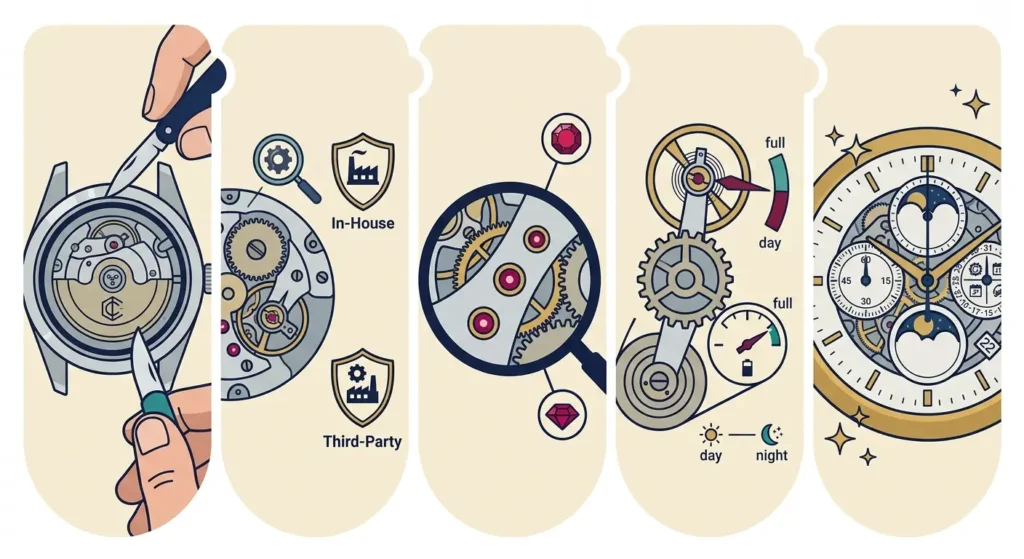
The movement represents the heart of any timepiece and dramatically affects its value. Three main types exist: mechanical (hand-wound), automatic (self-winding), and quartz (battery-powered).
- Step 1: Open the case back or request movement documentation to identify the caliber type
- Step 2: Research whether the movement is in-house manufactured or sourced from third-party suppliers like ETA or Sellita
- Step 3: Check the number of jewels (typically 17-31 for quality mechanical movements)
- Step 4: Verify the power reserve duration for automatic movements (38-72 hours is standard)
- Step 5: Look for additional complications like chronographs, moon phases, or perpetual calendars that increase value
In-house movements generally command higher prices and better value retention than generic movements. However, modified ETA movements from reputable brands can offer excellent reliability at lower price points.
Pro-Tip: Movement Finishing Matters
Examine the movement decoration through the display case back. High-value watches feature perlage, Côtes de Genève striping, blued screws, and hand-beveled edges. These finishing touches indicate craftsmanship quality and attention to detail that separates valuable pieces from mass-produced alternatives.
Assess Build Materials and Construction
Materials directly correlate with durability, aesthetics, and long-term value. Premium watches use specific materials that justify higher prices and better value retention.
Case Materials
Stainless steel remains the most popular choice, offering durability and corrosion resistance. Grade 316L stainless steel is standard for quality watches. Precious metals like gold (yellow, white, or rose) and platinum significantly increase value but require careful authentication.
Titanium offers lightweight strength and hypoallergenic properties, though it scratches more easily than steel. Ceramic cases provide scratch resistance and modern aesthetics, particularly in sports watches.
Crystal Type
The crystal protects the dial and serves as a value indicator:
- Sapphire crystal: Scratch-resistant and premium standard for valuable watches
- Mineral crystal: Mid-range option, less scratch-resistant than sapphire
- Acrylic/Hesalite: Used in vintage watches and some modern pieces, scratches easily but polishes well
Sapphire crystal with anti-reflective coating indicates higher quality manufacturing.
Bracelet and Strap Quality
Examine the bracelet construction, clasp mechanism, and micro-adjustment features. Solid link bracelets hold value better than hollow links. Quality clasps feature secure locking mechanisms and fine adjustment options.
Evaluate Production Numbers and Availability
Scarcity creates value in the watch market. Limited editions, discontinued models, and pieces with restricted production runs often appreciate over time.
- Step 1: Research the production quantity through manufacturer websites or authorized dealers
- Step 2: Check if the model is currently in production or has been discontinued
- Step 3: Verify limited edition numbering and certificates of authenticity
- Step 4: Compare availability on secondary markets to gauge scarcity
Mass-produced models typically depreciate unless they belong to iconic collections. Special editions commemorating anniversaries or collaborations may hold value better than standard production pieces.
Review Service History and Documentation
Complete documentation significantly enhances a watch’s value. This works best when all original materials accompany the timepiece.
Essential documentation includes:
- Original warranty card with date and authorized dealer stamp
- Instruction manual and brand literature
- Service records from authorized service centers
- Original box and outer packaging
- Authenticity certificates for limited editions
Regular maintenance by authorized service centers preserves value better than third-party repairs. Service intervals typically range from 3-5 years for automatic movements. The key is to maintain detailed records of all servicing and repairs.
Analyze Market Demand and Pricing Trends
Current market conditions heavily influence watch values. Research recent sales data from auction houses, authorized dealers, and secondary market platforms.
- Step 1: Check sold listings on platforms like Chrono24, eBay, and WatchBox for comparable models
- Step 2: Review auction results from Sotheby’s, Christie’s, and Phillips for benchmark pricing
- Step 3: Monitor waiting lists and availability at authorized dealers
- Step 4: Compare retail prices to secondary market premiums or discounts
Watches selling above retail on secondary markets indicate strong demand and good value retention. Models consistently selling below retail may depreciate further unless market conditions change.
Timing matters when evaluating value. Using tools like a world time comparison tool helps coordinate with international auction times and dealer releases across different time zones.
Inspect Physical Condition Thoroughly
Condition directly affects current value and future appreciation potential. Even minor flaws reduce resale prices significantly.
Case and Bezel Inspection
Examine the case for deep scratches, dents, or polishing marks that alter original proportions. Over-polishing removes metal and destroys crisp edges, reducing collector value. The bezel should rotate smoothly without excessive play for rotating bezel models.
Dial and Hands Assessment
Original dials in excellent condition command premium prices. Check for:
- Discoloration or ‘tropical’ aging (valued in vintage pieces, problematic in modern watches)
- Moisture damage or condensation marks
- Lume degradation or mismatched lume color
- Refinished or reprinted dials (significantly reduces value)
- Hand alignment and original finish matching
Most people find that pristine original dials retain value far better than refinished examples, even when aging is present.
Movement Functionality
Test all functions including time setting, date change, chronograph operation, and winding mechanism. Listen for unusual sounds during operation. Automatic movements should wind smoothly without grinding or resistance.
Verify Authenticity and Originality
Counterfeit watches flood the market, making authentication crucial for value assessment. Authentic pieces maintain value; fakes have none.
- Step 1: Verify serial and model numbers match manufacturer databases
- Step 2: Check weight, as counterfeits often use lighter materials
- Step 3: Examine logo printing, engravings, and finishing quality under magnification
- Step 4: Confirm movement matches specifications for the model
- Step 5: Seek authentication from authorized dealers or professional watchmakers when purchasing high-value pieces
Original components preserve value better than replaced parts. Aftermarket dials, hands, or bezels significantly reduce collector interest and resale potential.
Pro-Tip: Serial Number Research
Cross-reference serial numbers with manufacturer production records when possible. Many brands provide authentication services that verify production dates and original specifications. This verification proves originality and helps avoid frankenwatches assembled from multiple sources.
Consider Long-Term Value Retention
Some watches appreciate while others depreciate. Understanding factors that preserve value helps identify good long-term investments.
Strong value retention indicators include:
- Iconic design that remains relevant across decades
- Consistent brand positioning and quality standards
- Active collector community and enthusiast following
- Historical significance or cultural impact
- Versatility for different occasions and styles
Sports watches from major brands typically hold value better than dress watches, though exceptions exist for complications and precious metal pieces. Tool watches designed for specific purposes often maintain strong followings.
Track value changes over time using a stopwatch during auction events to note bidding patterns and final hammer prices for comparable models.
Compare Price to Specifications Ratio
Value represents more than just price—it measures what you receive for the money spent. Calculate the specifications-to-price ratio by considering:
- Movement complexity and finishing level
- Material quality and durability
- Brand service network and parts availability
- Warranty coverage and duration
- Resale market activity and liquidity
A $3,000 watch with in-house movement, sapphire crystal, and solid construction may offer better value than a $10,000 piece with generic movement and basic specifications.
Tips for Determining Watch Value
- Buy from authorized dealers to ensure authenticity and warranty coverage
- Research extensively before purchasing, comparing multiple sources and prices
- Join watch forums and communities to learn from experienced collectors
- Consider total cost of ownership including insurance and maintenance
- Avoid trendy pieces that may lose appeal as fashions change
- Focus on timeless designs with proven track records
- Request independent appraisals for high-value vintage or rare pieces
- Understand personal preferences versus investment potential
- Build relationships with reputable dealers for better opportunities
- Keep all documentation organized and stored safely
Common Problems When Assessing Watch Value
Problem 1: Overvaluing Brand Names
Some buyers assume any luxury brand automatically means good value. However, certain models from prestigious brands depreciate heavily while lesser-known brands offer superior specifications at better prices. Research specific models rather than relying solely on brand reputation.
Problem 2: Ignoring Service Costs
Complicated movements require expensive servicing every few years. Calculate total ownership costs including regular maintenance, which can exceed $500-1,000 per service for luxury automatic watches. These ongoing expenses affect overall value proposition.
Problem 3: Following Hype Without Research
Social media and influencer culture create artificial demand for certain models. Hype-driven prices often collapse once trends fade. Base value assessments on fundamental quality factors rather than temporary popularity.
Problem 4: Misunderstanding Limited Editions
Not all limited editions gain value. Production runs of several thousand pieces provide limited scarcity. True collectible limited editions typically number under 500 pieces and feature meaningful complications or historical significance.
Problem 5: Neglecting Condition Issues
Minor cosmetic flaws seem insignificant but substantially reduce resale values. A small scratch on a polished bezel or moisture mark on a dial can decrease value by 20-30% compared to pristine examples.
Frequently Asked Questions
What makes a watch hold its value over time?
Watches hold value through brand reputation, limited production numbers, iconic designs, quality materials, in-house movements, strong collector demand, and complete documentation. Pieces from established manufacturers with proven track records typically maintain value better than fashion watches or unknown brands.
How can you tell if a watch is worth the asking price?
Compare the asking price to recent sold listings for identical or similar models on secondary markets, auction results, and authorized dealer pricing. Consider the condition, completeness of documentation, service history, and current market demand. Prices aligned with or below market averages indicate fair value.
Do quartz watches have good resale value?
Most quartz watches depreciate significantly except for specific models from brands like Grand Seiko, Breitling, or Omega with high-accuracy quartz movements. Luxury quartz watches generally hold 30-50% of retail value, while mechanical watches from the same brands may retain 60-80% or more.
How important is the original box and papers for watch value?
Original box and papers add 15-30% to resale value for modern watches and even more for vintage pieces. Complete sets prove authenticity, establish provenance, and appeal to collectors who value originality. Missing documentation raises authenticity concerns and reduces buyer confidence.
What watch brands offer the best value for money?
Brands offering strong value include Seiko, Orient, Tissot, Hamilton, and Sinn in entry to mid-range segments. These manufacturers provide quality movements, good materials, and reliable construction at accessible prices. Tudor and Omega offer excellent value in luxury segments with strong resale potential.
How much should you spend on a quality watch?
Quality watches exist at every price point. Expect to spend at least $200-500 for reliable automatic movements with decent materials. Mid-range quality starts around $1,000-3,000, while luxury pieces with in-house movements begin around $5,000. Value depends on specifications and brand positioning rather than absolute price.
Can watches be good investments?
Certain watches appreciate, but most should be considered depreciating assets. Sports models from Rolex, Patek Philippe, and Audemars Piguet show investment potential, particularly discontinued references. However, transaction costs, maintenance expenses, and market volatility make watches unreliable investments compared to traditional financial instruments.
How often should valuable watches be serviced?
Manufacturers recommend servicing automatic watches every 3-5 years, though some modern movements extend this to 7-10 years. Regular maintenance preserves value by preventing wear damage. Service costs range from $300-1,500+ depending on complexity. Delaying service risks expensive repairs that reduce overall value.
What features add the most value to a watch?
In-house movements, complications like chronographs or annual calendars, precious metal cases, sapphire crystals, high water resistance, and micro-adjustment bracelets add measurable value. Certifications like COSC chronometer status or Geneva Seal also increase worth. However, features must align with brand positioning to truly enhance value.
How do you spot a good deal on a used watch?
Good deals appear when asking prices fall 10-20% below average market values for similar condition and completeness. Verify authenticity thoroughly, as suspiciously low prices often indicate counterfeits or undisclosed damage. Research the seller’s reputation and request detailed photos and service history before purchasing.