
Selling a luxury watch the right way can mean the difference between leaving money on the table and walking away with a price that truly reflects what the timepiece is worth. Whether it is a Rolex, Patek Philippe, Audemars Piguet, or any other high-end brand, the process matters just as much as the product. This step-by-step guide covers everything needed to get the best possible return – from preparing the watch to choosing where and when to sell it.
Key Takeaways
- Gather all original documentation and packaging before listing the watch
- Get a professional appraisal to understand the true market value
- Clean and service the watch without over-polishing, which can reduce value
- Compare multiple selling platforms – authorized dealers, auction houses, and peer-to-peer marketplaces
- Timing the sale correctly can significantly affect the final price
- Buyers trust verified sellers – authentication and transparency always help
Step-by-Step Guide to Selling Your Luxury Watch for the Best Price
Step 1: Gather All Documentation and Original Packaging
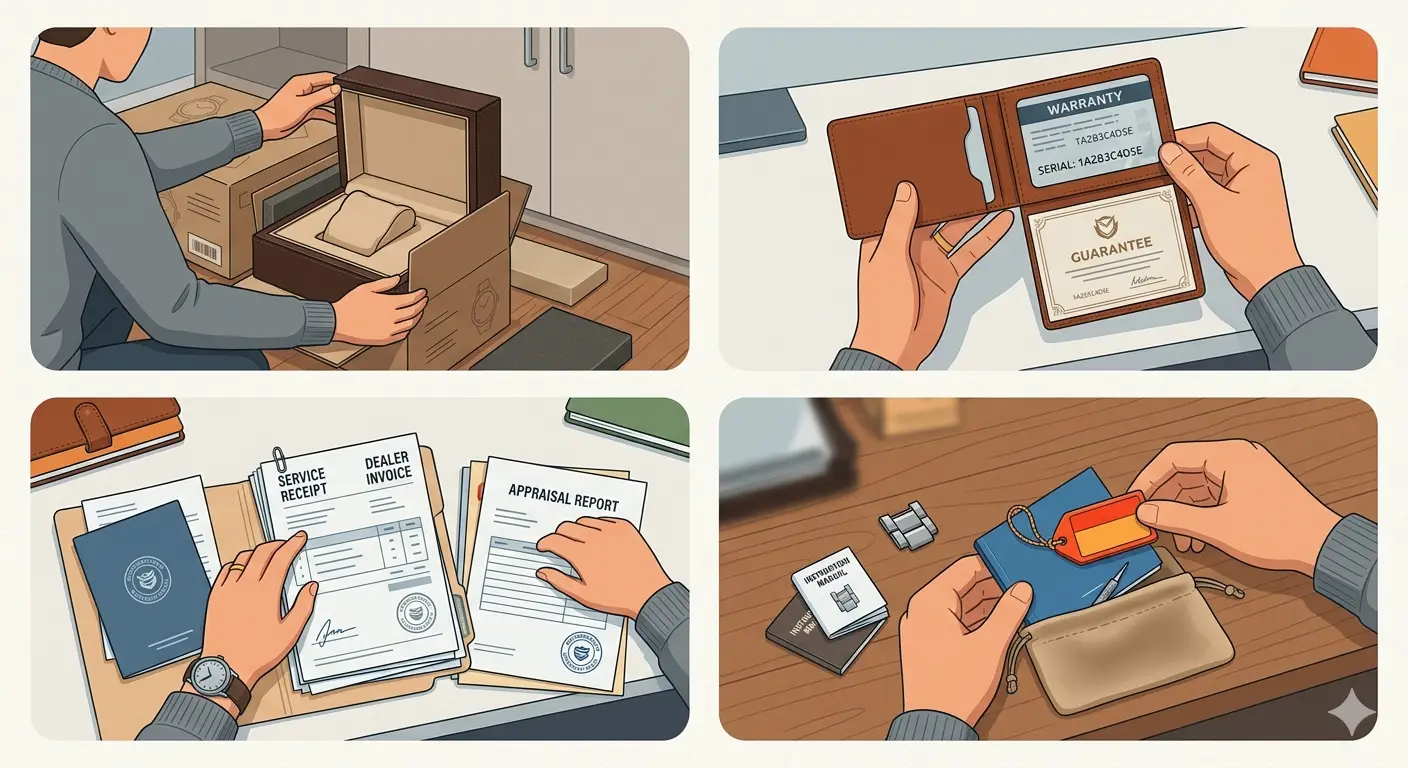
The first thing any serious buyer will ask about is paperwork. Original boxes, warranty cards, service records, receipts, and certificates of authenticity are not just nice extras – they directly increase resale value. A Rolex Submariner with a full set of original documents and box can command 10 to 20 percent more than the same model sold without them.
- Step 1: Search for the original watch box, outer box, and all inner packaging materials
- Step 2: Locate the warranty card or guarantee certificate with a matching serial number
- Step 3: Gather any service records, receipts from authorized dealers, and previous appraisal documents
- Step 4: Keep all hangtags, booklets, and accessories that came with the watch
Step 2: Get a Professional Appraisal

Before setting a price, get an accurate sense of what the watch is currently worth on the secondary market. Retail price and resale value are completely different numbers. An independent appraiser or a certified watchmaker who specializes in luxury timepieces can give a fair market assessment based on condition, rarity, and current demand.
- Step 1: Find a certified independent appraiser – look for membership in organizations like the American Society of Appraisers or the National Association of Jewelry Appraisers
- Step 2: Request a written appraisal that includes the brand, model, reference number, condition rating, and current estimated market value
- Step 3: Cross-check the appraisal against current sold listings on platforms like Chrono24, WatchBox, or recent auction results from Christie’s or Phillips
Pro-Tip: Never rely solely on a single appraisal from a buyer who also intends to purchase the watch. That creates a clear conflict of interest. Always use an independent third party, then use that figure as a baseline during negotiations.
Step 3: Assess and Document the Watch Condition
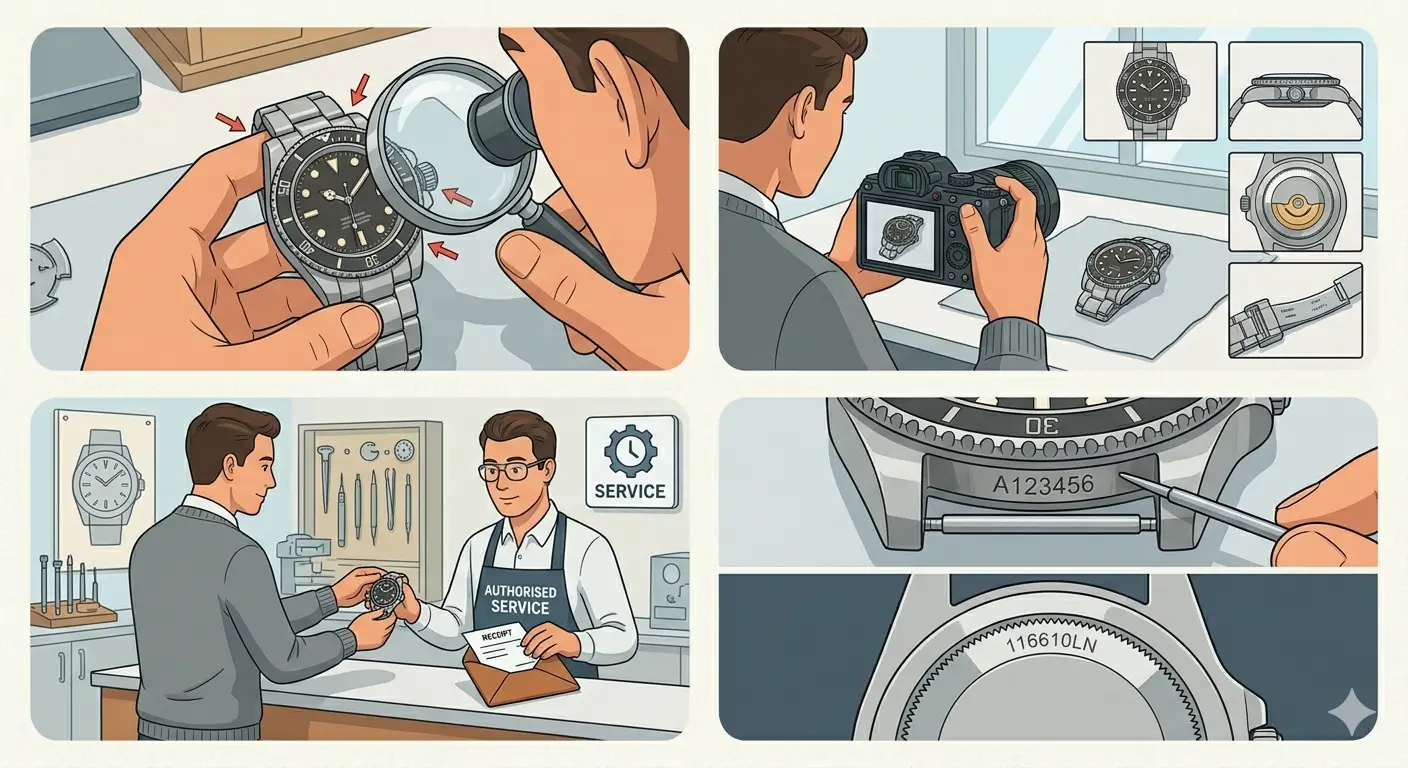
Condition is one of the biggest factors affecting price. Scratches, dents, faded dials, or worn crown are visible signs that reduce perceived value. However, there is one important rule – avoid polishing the case unless absolutely necessary. Over-polishing a luxury watch removes the sharp edges and ‘factory finish’ that collectors specifically look for, and it can actually lower the price.
- Step 1: Inspect the case, bracelet, crystal, dial, and crown for any damage
- Step 2: Take high-resolution photos in natural light from multiple angles – top, side, caseback, and clasp
- Step 3: If the watch has stopped working or has a mechanical issue, get it serviced by an authorized service center and keep the service receipt
- Step 4: Note the serial and reference number – these are usually found between the lugs or on the caseback
Step 4: Research Current Market Prices
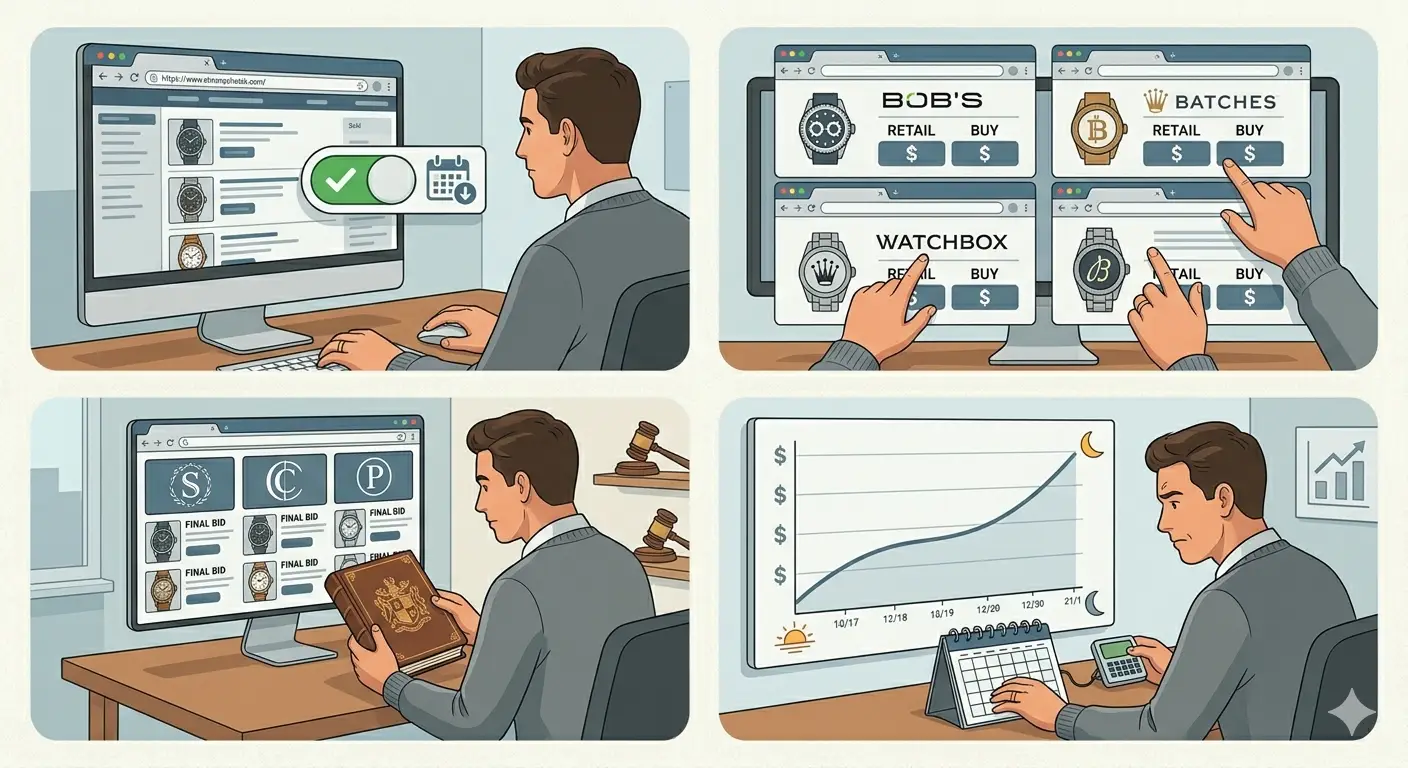
Market prices for luxury watches fluctuate based on trends, celebrity exposure, brand announcements, and even broader economic conditions. A watch that was worth a certain amount two years ago may be worth more or less today. This works best when sellers take time to study the market before committing to a price.
- Step 1: Visit Chrono24 and filter by ‘sold’ or ‘recently sold’ listings for the specific reference number
- Step 2: Check WatchBox, Bob’s Watches, and Crown and Caliber for dealer buy prices and retail prices
- Step 3: Review recent auction results from Sotheby’s, Christie’s, and Phillips Watch Auctions for rare or vintage models
- Step 4: Track prices over a few weeks if possible – this reveals whether the market is trending up or down
Step 5: Choose the Right Selling Platform
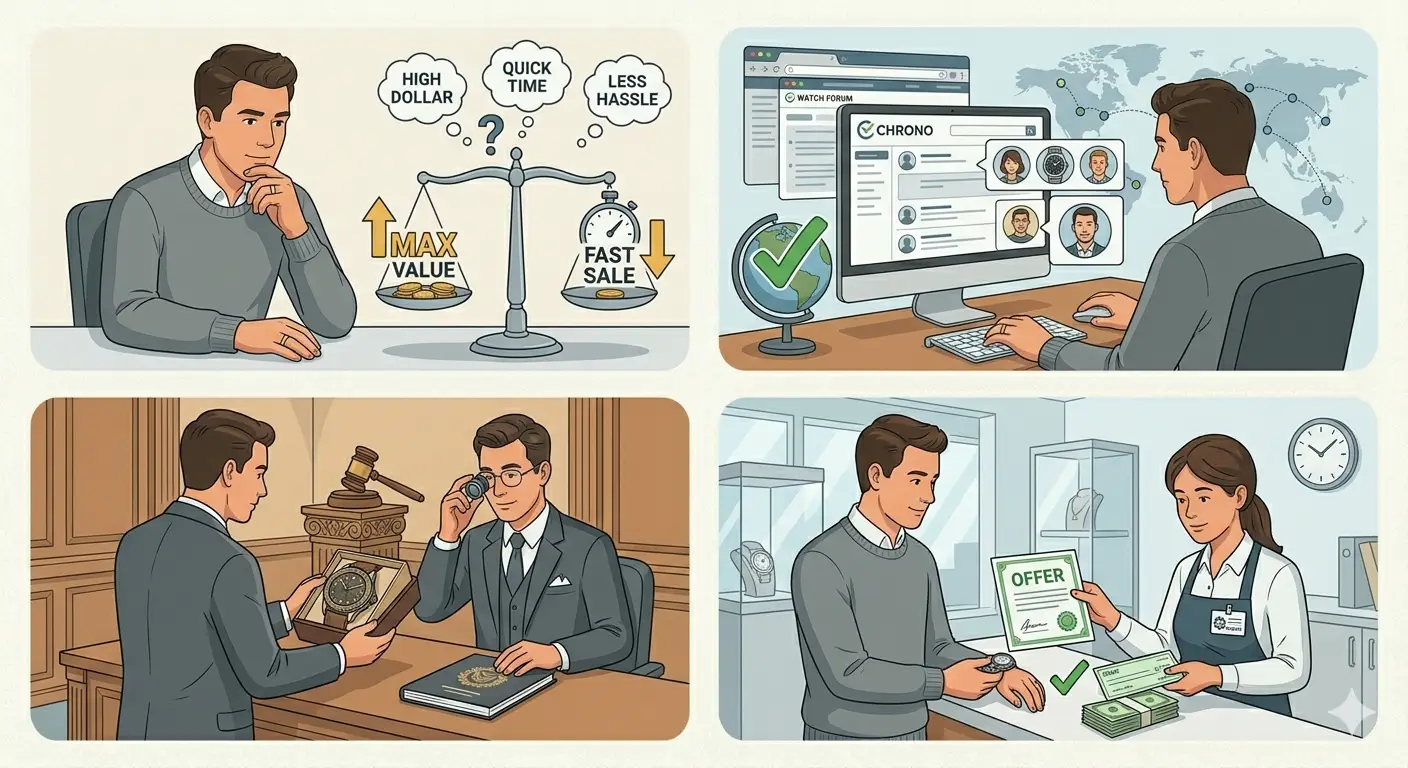
Where a watch is sold has a major impact on the final price. Each channel has trade-offs between convenience, fees, and potential return. Most people find that peer-to-peer platforms return the highest price but require more effort, while dealers offer speed and convenience at a lower payout.
- Step 1: Decide the priority – maximum price vs. fastest sale vs. least effort
- Step 2: For maximum value, list on Chrono24 or WatchUSeek forums where serious collectors shop
- Step 3: For rare or vintage pieces, submit to auction houses like Phillips, Sotheby’s, or Antiquorum
- Step 4: For a quick, hassle-free sale, approach authorized dealers or specialist buyers like WatchBox or Watchfinder
- Step 5: Avoid general marketplaces like eBay unless the watch is well-documented and authenticated, as buyer trust issues are common there
Step 6: Create a Strong, Transparent Listing
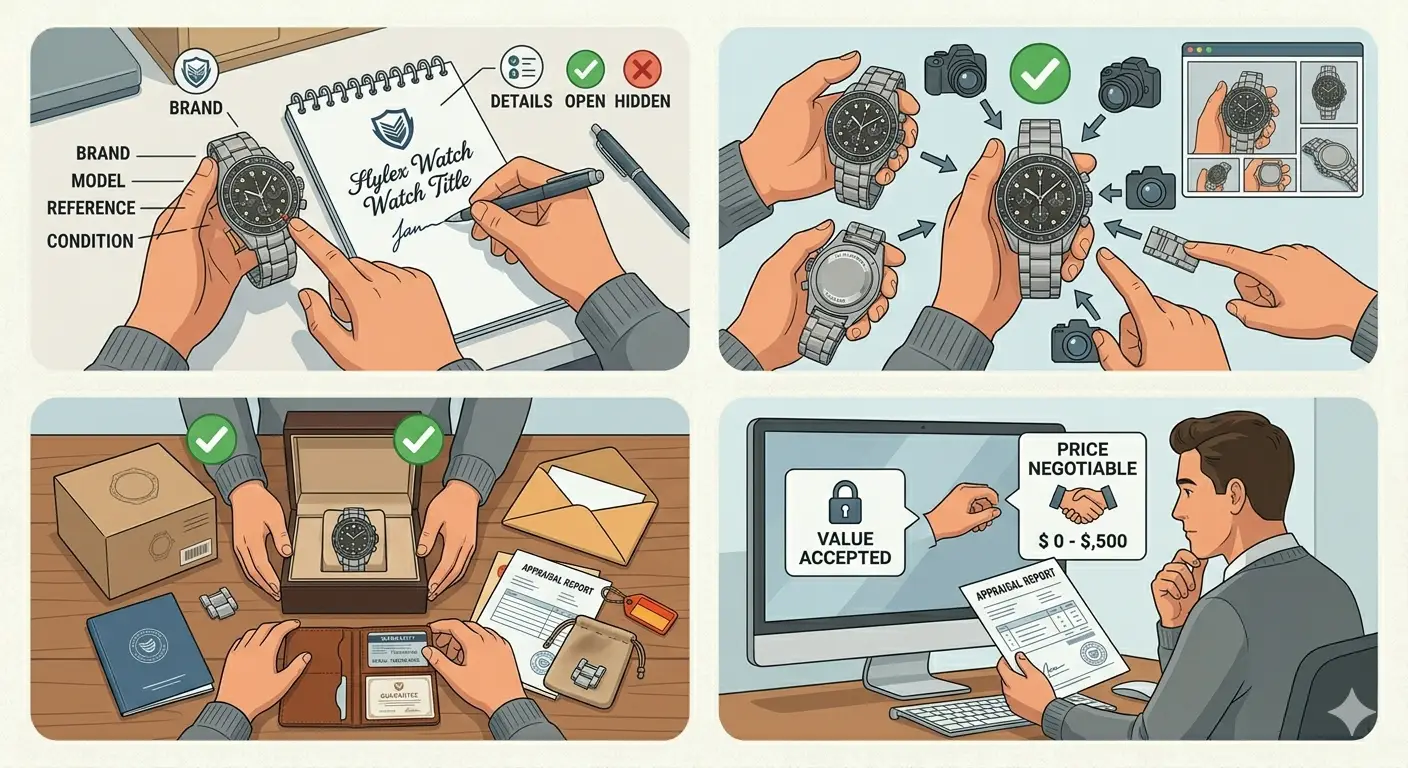
Buyers in the luxury watch market are informed and cautious. A vague or low-effort listing drives serious buyers away. The key is to be thorough, honest, and professional.
- Step 1: Write a clear title that includes the brand, model name, reference number, and year if known
- Step 2: Include all condition details – be upfront about scratches or wear rather than hiding them
- Step 3: Upload multiple high-quality photos showing the dial, case, bracelet, caseback, serial numbers, and all included accessories
- Step 4: Mention all original documentation and packaging included in the sale
- Step 5: Include the appraisal value and your asking price, noting whether the price is firm or negotiable
Pro-Tip: If selling internationally or dealing with buyers in different time zones, use a world time comparison tool to coordinate viewing appointments or auction bid deadlines without confusion. Missed connections due to time zone errors are more common than sellers expect.
Step 7: Negotiate Smartly and Close the Sale Safely
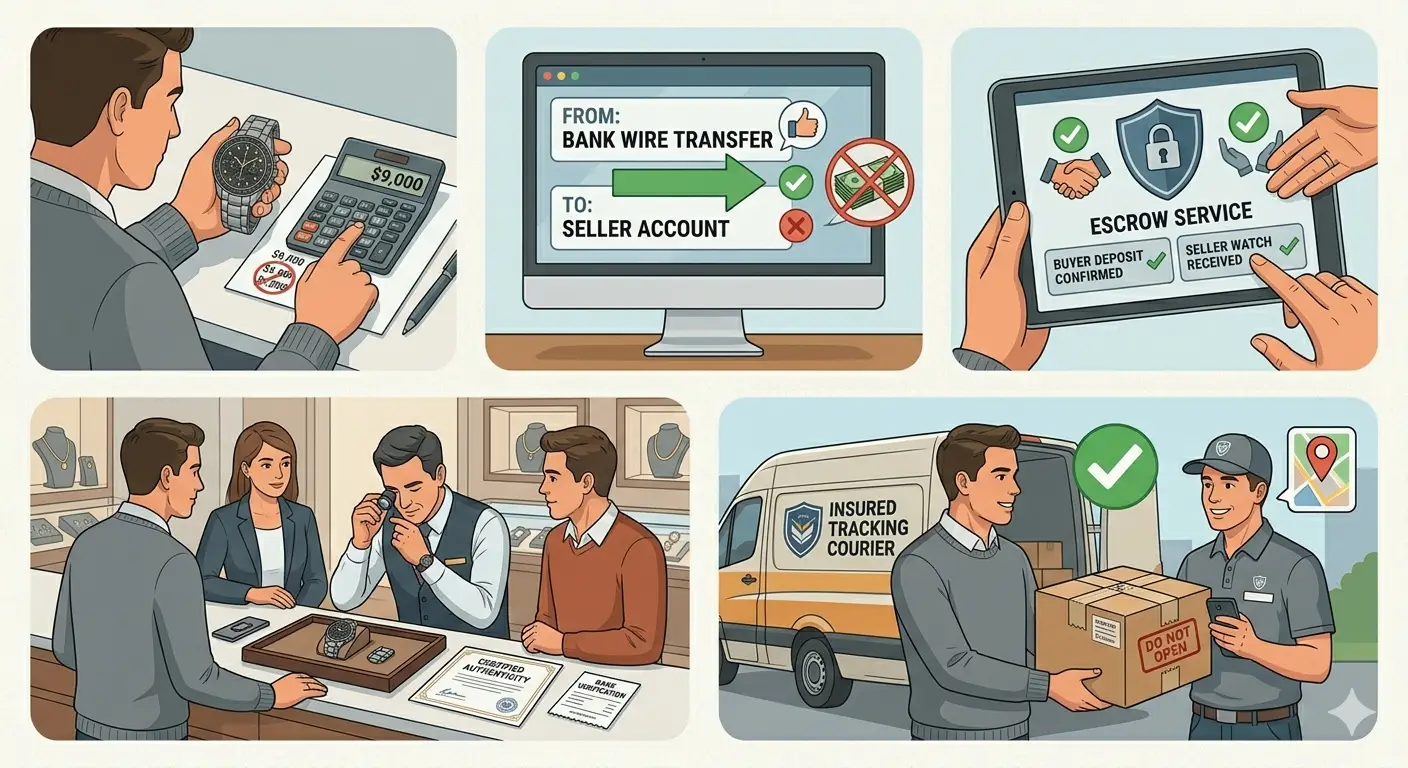
Negotiation is expected in luxury watch transactions. Having a clear minimum price in mind before entering any discussion keeps the process calm and professional. Never accept partial payments from unknown buyers, and always use secure payment methods.
- Step 1: Set a firm minimum below which the watch will not be sold
- Step 2: Accept payment via bank wire transfer for high-value transactions – avoid cash for watches above a certain threshold due to legal reporting requirements
- Step 3: Use an escrow service for peer-to-peer deals where both parties are unknown to each other
- Step 4: For in-person sales, meet at a bank, jeweler, or authorized dealer who can verify the payment and authenticate the watch on site
- Step 5: Ship only via insured courier with tracking – never standard post for high-value items
Tips for Getting the Best Price
- Sell when the brand is trending – limited releases or new model announcements often spike demand for older references
- Avoid selling right after purchasing – the first year typically sees the steepest depreciation
- Keep the watch serviced and in working condition before listing – a non-running watch is always valued lower
- Full sets (box, papers, all accessories) consistently sell for more – never discard original packaging
- For watches with complications like perpetual calendars or tourbillons, get expert authentication first, as these attract high-end collectors who verify everything
- If timing an auction bid or tracking a live sale deadline, a reliable clock tab helps stay on top of real-time countdowns without needing to switch between windows
Common Problems and How to Handle Them
Problem 1: The Watch Has No Original Box or Papers
This is very common and does not make the watch unsellable. However, the price will be lower. To offset this, get an independent appraisal from a reputable source, provide a clear condition report, and consider having the watch authenticated by a third-party service like WatchCSA or a certified watchmaker. Transparency about the lack of papers actually builds more trust than ignoring the issue.
Problem 2: Getting Lowball Offers from Dealers
Dealers need a margin to make a profit, so their offers are almost always below secondary market retail. This is normal. Use dealer offers as a floor – if no private buyer comes in above that figure within a set timeframe, the dealer offer becomes a reliable fallback. Never accept a dealer offer on the first visit without first comparing it to at least two other quotes.
Problem 3: Buyer Asks for Too Many Delays Before Payment
In peer-to-peer transactions, a buyer who repeatedly delays payment or asks for multiple extensions before sending funds is a warning sign. Set a clear payment deadline in writing before agreeing to hold the watch. If the deadline passes without payment, move on to the next interested party.
Problem 4: Uncertainty About Whether the Price Is Fair
Markets move fast. A price that seemed strong a few months ago may be below current demand – or above it. Always recheck sold listings on Chrono24 and recent auction results within two weeks of finalizing a listing price. Stale pricing data leads to either leaving money on the table or sitting on an unsold listing too long.
Frequently Asked Questions
What is the best place to sell a luxury watch for maximum value?
Peer-to-peer platforms like Chrono24 generally offer the highest potential return because buyers pay close to retail secondary market prices. For rare or vintage pieces, auction houses like Phillips or Christie’s can exceed expectations when demand is strong. The trade-off is more effort and longer wait times compared to selling directly to a dealer.
Does having the original box and papers really make a difference in price?
Yes, significantly. A ‘full set’ – meaning the watch, original inner and outer box, warranty card, and all booklets – consistently sells for 10 to 20 percent more on the secondary market than the same model sold without documentation. For collector-grade pieces, this gap can be even wider.
Should the watch be polished before selling?
Generally, no. Collectors and serious buyers often prefer unpolished cases because they retain the original factory finish with sharp brushed and polished transitions. Over-polishing rounds off these edges and reduces value. Light cleaning with a soft cloth is fine, but professional polishing should be avoided unless the watch is heavily scratched and will not attract buyers otherwise.
How long does it typically take to sell a luxury watch?
It depends on the platform and the watch. Common in-demand references like a Rolex Submariner or Datejust can sell within days on Chrono24. Rare or niche models may take weeks to months to find the right buyer. Dealers and watch buying services offer instant or same-day offers, but at a lower price.
What payment methods are safest for high-value watch transactions?
Bank wire transfer is the most commonly used and safest method for watches valued above several thousand dollars. It is traceable and irreversible once received. Escrow services are also recommended for peer-to-peer deals between strangers. Avoid payment apps like PayPal for luxury goods because buyer protection policies can lead to chargebacks even on legitimate completed sales.
Are there taxes or legal requirements when selling a luxury watch?
In many jurisdictions, profit from selling a personal asset at a gain may be subject to capital gains tax. Cash transactions above certain thresholds (for example, $10,000 in the United States) must be reported under anti-money laundering regulations. It is best to consult a local tax advisor for specific guidance, as rules vary by country and region.
Can a luxury watch be sold if it needs servicing?
Yes, but the price will reflect the service cost. Some buyers prefer to purchase and service the watch themselves. Others expect the seller to have it serviced first. Either way, be fully transparent about the condition. A watch that is disclosed as needing service is more trusted than one where mechanical issues were hidden and discovered later.
How do auction houses determine the starting price for a watch?
Auction specialists research comparable sold results, consult with brand historians for rare pieces, and assess physical condition. They then set an estimate range and a reserve price (the minimum below which the watch will not sell). Sellers usually negotiate the reserve with the auction house before the sale.
Is it safe to sell a luxury watch online to someone abroad?
Yes, with the right precautions. Use a payment method that clears fully before shipping. Ship only via insured courier with full declared value and tracking. For very high-value pieces, some sellers use authentication and escrow services that hold the funds until the buyer confirms receipt and authenticity. Never ship before payment is confirmed and cleared.
What details should be included in a watch listing to attract serious buyers?
A strong listing includes the brand, exact model name, reference number, year of manufacture, case material, movement type, condition description with any noted flaws, list of included accessories and documents, serial number range, and high-resolution photos from multiple angles. Serious buyers expect full transparency – the more detail provided, the faster the sale typically closes.