

How to rotate your watch collection effectively ensures each timepiece receives proper wear, maintenance, and appreciation while preventing common issues like lubricant degradation and mechanical stalling. Managing multiple watches requires a systematic approach that balances personal preference with practical care considerations.
Quick Summary Table
| Key Aspect | Recommendation |
|---|---|
| Rotation Frequency | Change watches every 2-7 days depending on collection size |
| Minimum Wear Time | At least 8-10 hours per rotation for automatics |
| Storage Method | Watch box or winder for automatics; drawer for quartz |
| Tracking System | Digital calendar, spreadsheet, or manual log |
| Ideal Collection Size | 7-10 watches for weekly rotation system |
Understanding Watch Rotation Basics
Watch rotation refers to the practice of regularly alternating between timepieces in a collection rather than wearing the same watch continuously. This practice serves multiple purposes beyond simple variety. Mechanical watches, particularly automatic movements, benefit from regular wear as the natural motion keeps lubricants distributed and prevents internal components from seizing.
Different watch types require varying rotation approaches. Automatic watches need movement to stay wound and functional, while quartz watches can sit idle for extended periods without mechanical consequences. Vintage pieces often demand more careful rotation schedules due to aging lubricants and delicate components.
The rotation strategy also depends on lifestyle factors. Active individuals might rotate sports watches more frequently, while formal timepieces see rotation based on events and occasions. Understanding these fundamentals helps create a rotation system that maintains watch health while matching daily activities.
Method 1: The Weekly Rotation System
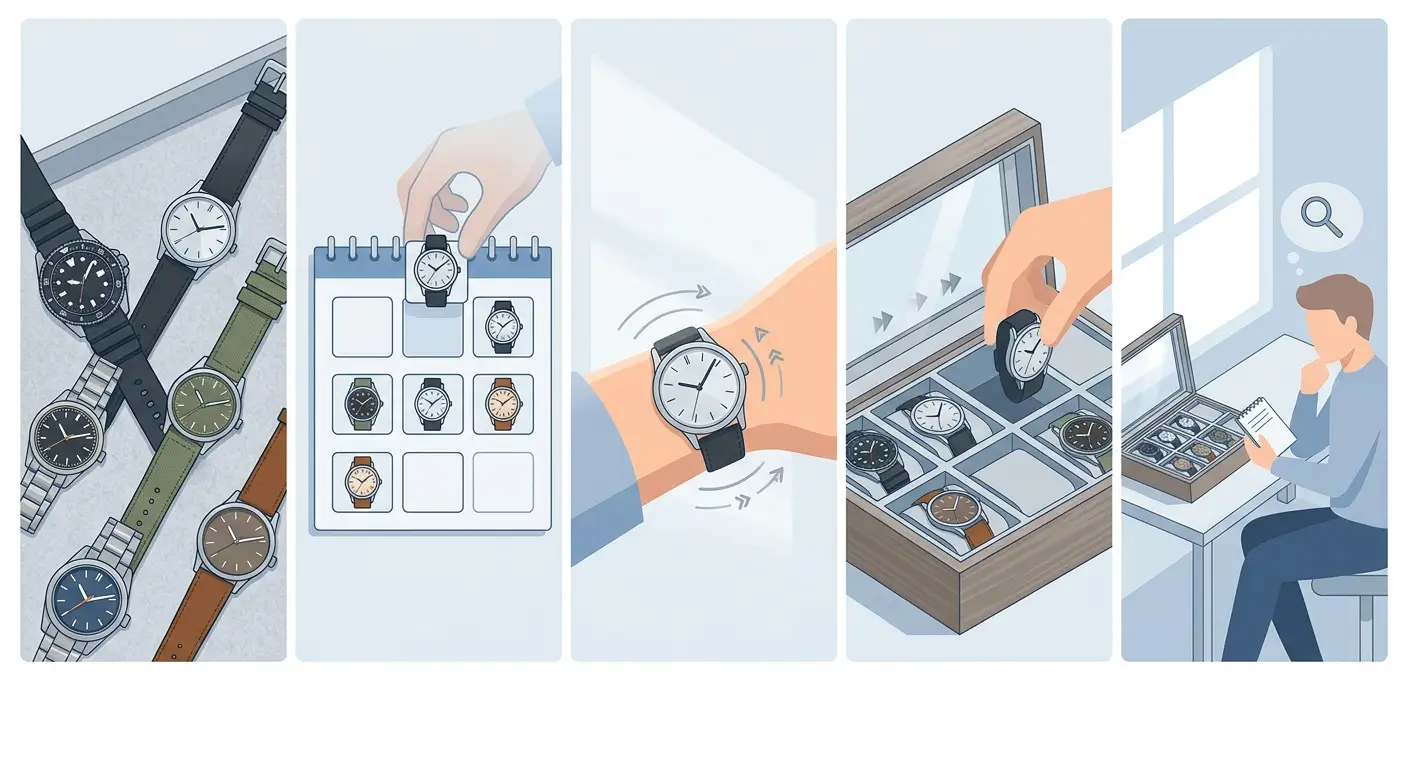
The weekly rotation system works exceptionally well for collections of seven to ten watches. This method assigns each watch to a specific day or occasion, creating predictable wear patterns.
- Step 1: Select seven watches from the collection representing different styles – one sports watch, one dress watch, one casual piece, and four versatile options that suit various occasions.
- Step 2: Assign each watch to a specific day of the week, starting with Monday. Match the watch style to typical weekly activities (formal watches for business days, casual pieces for weekends).
- Step 3: Wear each assigned watch for the full day, ensuring automatic movements receive at least 8-10 hours of wrist time to maintain power reserve.
- Step 4: Return each watch to its designated storage spot at day’s end, keeping track of which watch comes next in the rotation.
- Step 5: Review the rotation weekly and adjust assignments based on upcoming events or seasonal changes in wardrobe and activities.
This system creates routine while allowing flexibility. If a particular watch doesn’t suit an unexpected event, swap it temporarily but return to the schedule the following day. The predictability helps ensure no watch sits unworn for extended periods.
Pro-Tip: Keep automatic watches fully wound before storing them in the rotation. A fully wound watch maintains better timekeeping and reduces stress on the movement when it eventually winds down between wears.
Method 2: The Occasion-Based Rotation
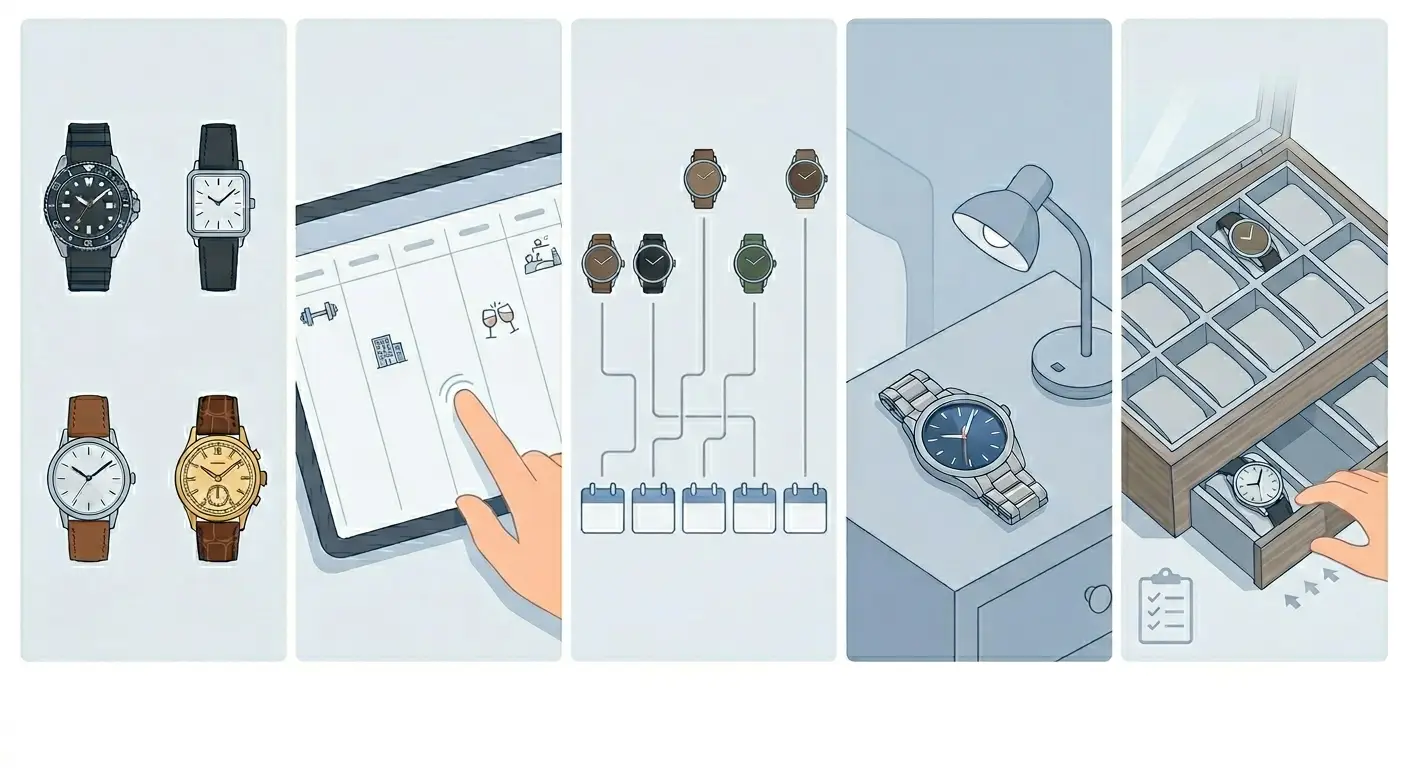
Occasion-based rotation prioritizes matching watches to specific activities and events rather than following a strict schedule. This approach suits collectors with diverse lifestyles and varying daily requirements.
- Step 1: Categorize the entire collection by purpose: sports/active watches, business/formal pieces, casual everyday watches, and special occasion timepieces.
- Step 2: Review the weekly calendar each Sunday evening, identifying upcoming activities, meetings, workouts, and social events.
- Step 3: Select watches for each day based on planned activities, ensuring appropriate style matches (dive watch for swimming, dress watch for formal dinner, chronograph for active days).
- Step 4: Keep a backup versatile watch readily accessible for unexpected schedule changes or last-minute events.
- Step 5: Track which watches remain unworn each month and intentionally incorporate them into the following month’s rotation to prevent prolonged storage.
This method provides maximum flexibility while maintaining watch health. The key challenge involves remembering to rotate less-worn pieces regularly. Setting monthly reminders helps ensure every watch receives adequate attention regardless of occasion frequency.
Method 3: The Seasonal Rotation Strategy
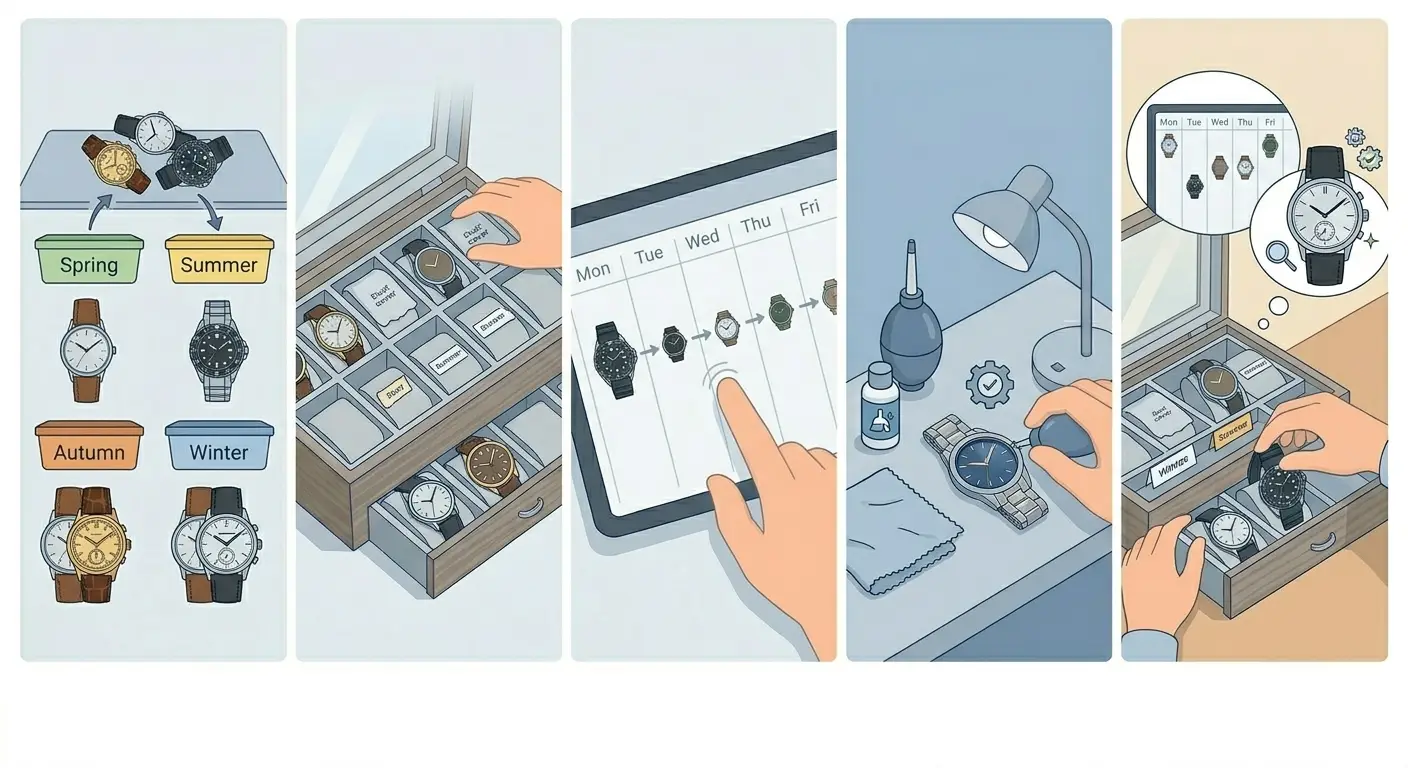
Seasonal rotation acknowledges that certain watches suit specific times of year better than others. Leather straps work beautifully in fall and winter but suffer in summer humidity, while bright-colored dials match summer wardrobes more naturally.
- Step 1: Divide the collection into four seasonal groups based on strap materials, dial colors, case sizes, and complications. Group leather-strap watches for cooler months and bracelet/rubber strap pieces for warmer weather.
- Step 2: Store off-season watches in a designated section of the watch box, keeping current-season pieces in prime accessible positions.
- Step 3: Rotate through the current season’s selection using either weekly or occasion-based methods, focusing wear time on season-appropriate pieces.
- Step 4: Service and clean off-season watches before storage, ensuring they enter their dormant period in optimal condition.
- Step 5: Transition the collection at season changes (approximately every three months), swapping storage positions and inspecting each watch before reintroducing it to regular rotation.
Seasonal rotation extends watch longevity by protecting pieces from unsuitable environmental conditions. Leather straps avoid humidity damage, and delicate vintage pieces stay safe from harsh weather exposure. This method also keeps the collection feeling fresh as different watches emerge with changing seasons.
Setting Up a Watch Tracking System
Maintaining accurate records prevents watches from languishing unworn while helping identify service needs and wearing patterns. Several tracking approaches work effectively depending on technical comfort and collection size.
Digital spreadsheets offer comprehensive tracking with columns for watch name, last wear date, service history, and upcoming maintenance. Tools like world time comparison tool help coordinate watches with different time zones if the collection includes GMT or world time pieces. Update the spreadsheet each time watches change, noting any performance issues or needed adjustments.
Physical logbooks provide a tangible alternative for collectors preferring analog methods. A dedicated notebook with sections for each watch records wear dates, winding notes, accuracy observations, and maintenance reminders. This approach works particularly well for vintage collections where documenting behavior patterns helps identify developing issues.
Mobile apps designed specifically for watch collecting combine tracking with community features and market valuation. These apps often include service reminders, photo galleries, and insurance documentation storage. The convenience of phone-based tracking ensures updates happen in real-time rather than waiting to access a computer.
Calendar-based systems integrate watch rotation into daily planning tools. Digital calendars like Google Calendar or Apple Calendar can include recurring events labeled with specific watch names, creating visual rotation schedules. This method particularly suits the weekly rotation approach where watches follow predictable patterns.
Maintaining Watches Between Rotations
Proper storage and maintenance between wears keeps watches in optimal condition regardless of rotation frequency. Different watch types require specific care approaches during inactive periods.
Automatic watches benefit from watch winders that simulate wrist motion and maintain full wind. Quality winders offer programmable rotation counts matching specific movement requirements – typically 650 to 900 turns per day. However, constant winding isn’t necessary for all automatics. Robust modern movements handle sitting unwound without issues, and many collectors prefer letting watches rest to reduce unnecessary wear on winding mechanisms.
Quartz watches need minimal maintenance between rotations but should have batteries replaced proactively. A dead battery left in a watch can leak and damage the movement. When storing quartz pieces long-term, remove the battery entirely or ensure regular power checks every few months.
All watches regardless of type should be stored away from magnetic fields, extreme temperatures, and direct sunlight. Smartphone speakers, laptop cases, and magnetic bag clasps pose magnetization risks to mechanical movements. Temperature fluctuations cause lubricants to degrade faster and can affect gasket integrity in water-resistant pieces.
Clean watches before storage, wiping cases and bracelets with a soft cloth to remove oils, sweat, and dirt. Leather straps particularly benefit from conditioning treatments before extended storage periods. This prevents cracking and maintains suppleness for when the watch returns to rotation.
Optimizing Rotation for Collection Size
Collection size dramatically impacts rotation strategy effectiveness. Small collections require different approaches than extensive accumulations.
Collections of 3-5 watches rotate naturally through daily selection without formal systems. Simply choosing a different watch each day ensures adequate wear for all pieces. The limited selection makes tracking unnecessary since no watch stays unworn long enough to cause concerns.
Medium collections of 6-15 watches benefit most from structured rotation systems. Weekly or occasion-based methods work perfectly at this scale, providing enough variety to match different needs while remaining manageable. This size range represents the sweet spot where rotation systems add genuine value without becoming burdensome.
Large collections exceeding 20 watches require more deliberate rotation planning. Not every watch can receive regular wear, necessitating tiered systems. Designate a primary rotation of 7-10 frequently worn pieces while establishing quarterly or seasonal rotations for the broader collection. This ensures favorites receive adequate attention while preventing any piece from sitting completely forgotten.
Very large collections over 50 pieces often function partially as investments or historical archives rather than purely functional rotations. These collections might separate into active rotation sections and preserved storage sections, with certain pieces only emerging for special occasions or specific purposes.
Pro-Tip: Use the online stopwatch to track exactly how long each watch has been worn during a day. This helps ensure automatic watches receive sufficient movement to maintain proper power reserve without constantly checking the time.
Adjusting Rotation for Watch Types
Different movement types and complications require tailored rotation approaches that account for their specific mechanical needs and characteristics.
Manual wind watches need daily attention when in rotation. Unlike automatics that wind through motion, manual pieces require deliberate winding sessions. Incorporate these watches into morning or evening routines, winding them at consistent times to maintain power reserve. When rotating manual watches out of active wear, let them wind down completely rather than maintaining partial power.
Complicated watches with perpetual calendars, annual calendars, or moon phases require special rotation consideration. Perpetual calendars should ideally stay wound continuously since resetting them after stopping involves complex procedures best avoided. These pieces work well on quality winders during rotation breaks. Annual calendars and moon phases tolerate stopping better but still benefit from more frequent rotation to minimize adjustment needs.
Dive watches and tool watches handle rotation most forgivingly. Their robust construction tolerates sitting unwound for extended periods. Rotate these pieces based purely on preference and occasion rather than mechanical necessity. This flexibility makes tool watches excellent choices for larger collections where some pieces inevitably receive less frequent wear.
Vintage watches require the most careful rotation planning. Older lubricants benefit from regular movement but aged components need gentler treatment. Rotate vintage pieces monthly at minimum to keep lubricants distributed, but avoid overwearing fragile examples. Many collectors maintain vintage watches on low-speed winders between wears to provide minimal movement without stress.
Creating a Rotation Schedule
Documenting rotation plans transforms intentions into consistent practice. Written schedules provide accountability and ensure systematic coverage across the collection.
Start by listing every watch in the collection with key details: movement type, complications, strap material, and typical wearing occasions. This inventory forms the foundation for rotation planning.
Next, determine rotation frequency goals based on collection size. Collections under 10 watches might target wearing each piece every 7-10 days. Larger collections might aim for monthly rotation cycles with favorite pieces appearing more frequently.
Map out a sample month showing which watches get worn on which days. This visualization reveals gaps where certain watches consistently miss rotation slots. Adjust the schedule to ensure better distribution. The clock tab feature helps coordinate multiple time zones when planning travel watches into rotation schedules.
Build flexibility into the schedule by designating specific watches as ‘flex options’ – versatile pieces that can substitute when planned watches don’t suit unexpected situations. This prevents the schedule from becoming rigidly impractical.
Review and adjust the rotation schedule quarterly. Wearing patterns change with seasons, wardrobe updates, and lifestyle shifts. Regular schedule reviews keep rotation systems aligned with current needs rather than outdated assumptions.
Tips for Effective Watch Rotation
Beyond structured systems, several practical habits enhance rotation effectiveness and watch care:
- Wind automatic watches fully before placing them in storage, even if using a winder. This reduces stress on the mainspring when the watch eventually winds down.
- Photograph the collection periodically to document condition and track any changes in appearance or functionality over time.
- Rotate storage positions within watch boxes. Watches in prime visible locations get worn more frequently, so periodically move less-worn pieces to these spots.
- Match strap changes to rotation schedules. Swapping straps seasonally refreshes the collection’s appearance and helps match pieces to different wearing situations.
- Set calendar reminders for watches that haven’t been worn recently. Monthly alerts for neglected pieces ensure nothing sits forgotten indefinitely.
- Group watches by formality level rather than alphabetically or by brand. This practical organization makes selecting appropriate pieces for daily activities more intuitive.
- Maintain service records alongside rotation tracking. Patterns in wearing frequency help predict when watches might need maintenance based on actual use rather than just calendar time.
- Consider watch cases or travel rolls for pieces temporarily removed from primary rotation. Proper storage prevents damage while keeping them accessible for reintroduction.
- Coordinate strap material with weather forecasts. Check the week ahead and select appropriate strap types to avoid leather in rainy periods or metal bracelets during extreme cold.
- Leave one empty spot in the watch box rotation section. This placeholder reminds collectors to deliberately select the next watch rather than automatically grabbing the same favorite repeatedly.
Common Problems and Solutions
Problem: Watches Consistently Stopped Between Rotations
Solution: This indicates insufficient wear time during rotation periods. Automatic watches need 8-10 hours of normal wrist motion to maintain full wind. Increase wearing duration for each rotation cycle or consider watch winders for pieces that stop frequently despite adequate wear time, as this might signal the need for service.
Problem: Forgetting Which Watch Was Worn Last
Solution: Implement immediate tracking by updating logs or spreadsheets as soon as watches are removed for the day. Alternatively, use a simple physical system like moving a small marker or card in the watch box to indicate the most recently worn piece. Digital photos of the daily watch choice also create automatic date-stamped records.
Problem: Some Watches Never Get Worn Despite Rotation Plans
Solution: Honestly assess why certain pieces consistently get skipped. If a watch doesn’t match current lifestyle or preferences, consider selling or trading it rather than forcing rotation. Collections should contain watches that bring genuine enjoyment rather than obligation. For watches kept for sentimental reasons despite infrequent wear, establish minimum quarterly rotation requirements.
Problem: Losing Track of Service Dates Across Multiple Watches
Solution: Create a dedicated maintenance calendar separate from rotation tracking. List each watch with its last service date and recommended service interval (typically 3-5 years for modern pieces, 2-3 years for vintage). Set reminders one year before service comes due to plan financially and logistically for maintenance.
Problem: Watches Gaining or Losing Time Accuracy
Solution: Track accuracy patterns in rotation logs by noting time discrepancies when removing and donning each watch. Consistent fast or slow running might indicate magnetization (easily demagnetized with proper tools) or need for regulation during next service. Temperature extremes during storage can also affect accuracy temporarily.
Problem: Running Out of Power Reserve on Automatic Watches
Solution: Learn each watch’s specific power reserve duration – most modern automatics run 38-72 hours when fully wound. Plan rotation frequency accordingly, ensuring watches don’t sit longer than their power reserve capacity unless intentionally allowing them to stop. For longer gaps, either use watch winders or simply accept resetting as part of the rotation process.
Problem: Difficulty Matching Watches to Daily Outfits
Solution: Plan watches alongside outfits the night before, treating watch selection as part of overall wardrobe coordination. Keep watches grouped by formality level and color palette in storage to simplify matching. Versatile neutral-dial pieces (black, white, blue) on leather or bracelet work with most outfits when specific matching feels challenging.
Frequently Asked Questions
How often should automatic watches be rotated in a collection?
Automatic watches should be rotated at minimum every 2-3 weeks to prevent lubricants from settling and components from seizing. Ideally, wear each automatic watch for at least one full day (8-10 hours) every 7-10 days if collection size permits. More frequent rotation better maintains movement health, though quality modern automatics can safely sit unworn for several weeks without damage.
Do quartz watches need rotation like mechanical watches?
Quartz watches require less frequent rotation since they lack mechanical movements that benefit from regular motion. However, rotate quartz watches every few months to check battery status, ensure functionality, and prevent long-term storage issues. Regular rotation also helps identify dying batteries before they leak and damage movements.
Should watches be stored on winders between rotations?
Watch winders are optional for most collections and particularly benefit complicated pieces like perpetual calendars that are difficult to reset. Simple automatic watches actually benefit from rest periods between wears, reducing unnecessary wear on winding mechanisms. Use winders selectively for high-complication pieces or when extended storage periods exceed recommended service intervals.
What is the ideal number of watches for effective rotation?
Seven to twelve watches represent the ideal collection size for effective rotation, allowing daily variety while ensuring each piece receives adequate wear. Collections smaller than five rotate naturally without formal systems, while collections exceeding twenty require tiered rotation strategies where not every watch gets regular wear.
How long can a watch safely sit unworn?
Modern automatic watches can safely sit unworn for several months without damage, though ideally they should run at least monthly to keep lubricants distributed. Vintage watches with older lubricants should be worn or wound at minimum every 2-3 weeks. Quartz watches can sit for years if stored properly with functional batteries or with batteries removed.
Does watch rotation affect accuracy and performance?
Regular rotation actually improves long-term accuracy and performance by keeping movements active and lubricants properly distributed. Watches worn consistently maintain better timekeeping than pieces that sit idle for extended periods. However, frequent rotation requires more regular time-setting since watches stop between wears unless kept on winders.
How should vintage watches be incorporated into rotation schedules?
Vintage watches need gentler rotation with monthly wear minimums rather than weekly cycles. Avoid overwearing delicate vintage pieces, but ensure they run regularly enough to prevent lubricant degradation. Consider dedicated winders set to low turn counts for valuable vintage watches between rotation periods.
Can too much rotation damage watches?
Excessive rotation through constant wearing and immediate switching doesn’t damage watches mechanically, but it increases adjustment wear on straps, clasps, and case backs. The watches themselves tolerate frequent rotation without issue. The practical limitation comes from time spent changing watches and maintaining multiple pieces rather than mechanical wear concerns.
What tracking method works best for watch rotation?
Digital spreadsheets offer the most comprehensive tracking with easy updates and historical data analysis. However, simple calendar apps or physical notebooks work equally well for smaller collections. The best tracking method is whichever system gets consistently used rather than abandoned after initial enthusiasm.
Should all watches in a collection be rotated equally?
Not necessarily – favorite watches naturally receive more wear than occasional pieces, and this is perfectly acceptable. Focus rotation efforts on ensuring no watch sits completely neglected rather than forcing equal wear across all pieces. Establish minimum rotation frequencies (monthly or quarterly) for less-favored watches while allowing favorites unlimited wear time.