
Removing patina from a bronze watch is something many collectors face after noticing the dial, case, or bracelet turning darker or developing an uneven greenish-brown tone. Bronze naturally reacts to air, moisture, and skin oils – and while some watch enthusiasts embrace that aged look, others prefer a cleaner, polished finish. The good news is that removing patina from a bronze watch is straightforward when using the right materials and technique.
Quick Summary
- Bronze watches develop patina from oxidation – it is natural but removable
- Lemon juice, white vinegar, or commercial bronze cleaners are the most effective solutions
- Always remove the strap and crown before cleaning
- Avoid abrasive scrubbing that can scratch the case
- Seal or wax after cleaning to slow down re-patination
- Regular light cleaning keeps heavy buildup from forming
What You Need Before Starting
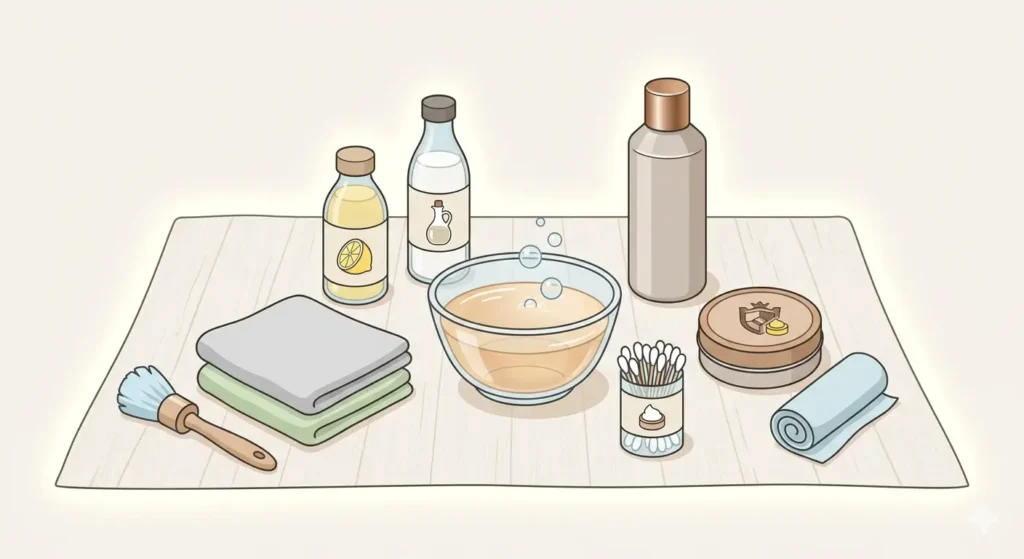
Gathering the right tools before beginning makes the whole process faster and safer. Using improvised or wrong materials can damage the case finish or harm the movement inside.
- Soft toothbrush or small detailing brush
- Microfiber cloths (at least two)
- Lemon juice or white vinegar (natural options)
- Commercial bronze cleaner (optional, for heavy patina)
- Mild dish soap
- Warm water in a small bowl
- Cotton swabs for tight areas
- Renaissance Wax or carnauba wax (for sealing after cleaning)
Step-by-Step Guide to Remove Patina from a Bronze Watch
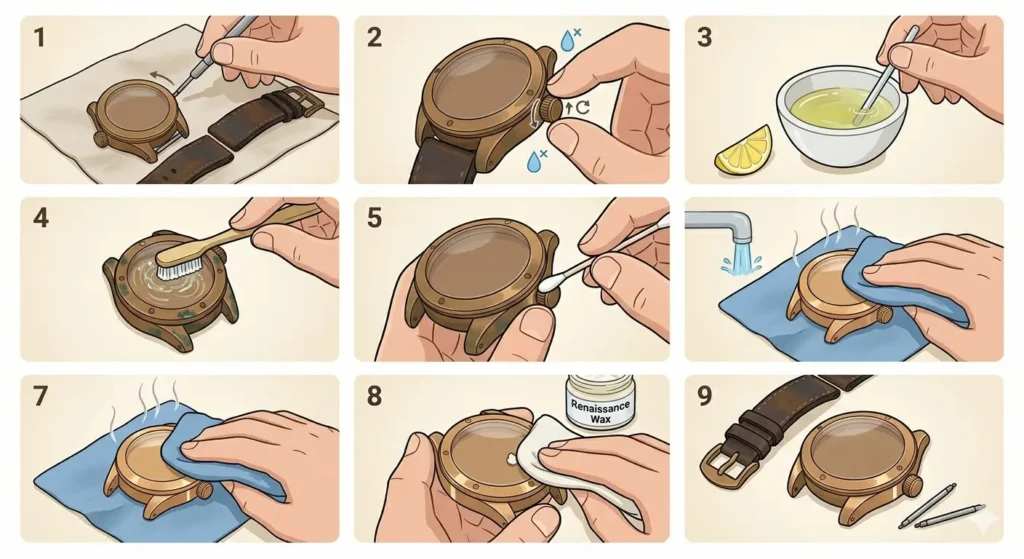
Follow these steps carefully and the watch should come out looking noticeably brighter and more uniform. Take the time to do each step properly – rushing through this can lead to missed spots or, worse, water getting into the case.
- Step 1: Remove the strap or bracelet from the watch case. This protects leather or fabric straps from the cleaning agent and gives better access to the lugs and case edges where patina tends to hide.
- Step 2: Push the crown in and make sure it is screwed down tight if the watch has a screw-down crown. Water resistance during cleaning is critical – even a small gap can allow liquid to enter the movement.
- Step 3: Prepare the cleaning solution. For light to moderate patina, mix equal parts lemon juice and warm water in a small bowl. For heavy patina, use undiluted white vinegar or a dedicated bronze cleaner following the product instructions.
- Step 4: Dip the soft toothbrush into the solution and gently scrub the bronze case in small circular motions. Focus on areas with visible discoloration – typically the lugs, bezel edges, and case back. Do not scrub aggressively.
- Step 5: Use a cotton swab dipped in the solution to reach tight spots between the lugs and around the crown tube. These areas collect the most grime and often have the darkest patina.
- Step 6: Rinse the case thoroughly with clean warm water. Use a damp microfiber cloth rather than submerging the watch, especially if water resistance is not confirmed. Wipe away all traces of the cleaning solution.
- Step 7: Dry the case completely with a clean dry microfiber cloth. Let it air dry for an additional 10 to 15 minutes before reattaching the strap.
- Step 8: Apply a thin layer of Renaissance Wax or carnauba wax to the case using a soft cloth. Buff gently. This creates a light barrier that slows down future oxidation and helps the watch maintain its cleaned appearance longer.
- Step 9: Reattach the strap and check the watch over in good lighting. Any remaining dark spots can get a second light treatment with a cotton swab and cleaning solution.
Pro Tip: Timing the Cleaning Session
Set aside at least 30 to 45 minutes for this process – not because it is complicated, but because rushing through the drying and waxing steps is where most people make mistakes. A watch left slightly damp before reattaching the strap can develop new patina within days. If tracking time while cleaning multiple pieces, a simple online stopwatch can help pace each stage without losing track.
Natural vs. Commercial Cleaners – Which One to Use
The choice between a natural acid solution and a commercial bronze cleaner really depends on how heavy the patina is and how comfortable someone is using store-bought chemical products on a watch.
Natural Cleaners (Lemon Juice or White Vinegar)
These work well for light to moderate patina. The mild acid reacts with the copper oxide layer on the bronze surface and lifts it away without being aggressive. Lemon juice tends to smell better and is slightly gentler. White vinegar is more potent and works faster on stubborn spots. Both are safe when used briefly and rinsed off completely.
Commercial Bronze Cleaners
Products like Brasso or Flitz are designed specifically for metals like bronze and copper. They contain fine abrasives or chemical agents that break down oxidation more aggressively. These work best when the patina is thick, uneven, or has been building up for years. The key is to use them sparingly and avoid letting them sit on the surface too long.
Tips for Maintaining a Clean Bronze Watch
- Wipe the case down with a dry microfiber cloth after every wear – sweat and oils accelerate patina formation significantly
- Store the watch in a cool, dry place – humidity is the main driver of bronze oxidation
- Avoid wearing the watch in the shower or pool even if it has water resistance ratings, as chlorine and minerals speed up patina
- Re-apply a thin coat of protective wax every few months, especially if worn daily
- If traveling across time zones and adjusting the watch frequently, tools like a world time comparison tool can help track local times without overhandling the crown – excessive crown manipulation can wear down the seals faster
- Schedule a light cleaning every 4 to 6 weeks if the watch is worn regularly
Common Problems and How to Fix Them
Fix 1: Patina Keeps Coming Back Within Days
This usually means the protective wax step was skipped or the surface was not dried completely before waxing. Clean the watch again, make sure it is bone dry, and apply a proper coat of Renaissance Wax. That protective layer is what slows reoxidation.
Fix 2: Green Spots That Do Not Come Off
Deep green deposits – sometimes called verdigris – are more advanced corrosion and require a stronger approach. Apply undiluted white vinegar directly to the spot with a cotton swab, let it sit for 2 to 3 minutes, then gently scrub. For extremely stubborn spots, a paste made from flour, salt, and white vinegar (traditional bronze cleaning paste) applied for 5 minutes can help break them down.
Fix 3: Case Looks Dull or Scratched After Cleaning
This happens when an abrasive cloth or brush was used. For brushed finish cases, use a watch-specific finishing stick or a very fine scotch-brite pad following the grain of the original brushing. For polished cases, a metal polishing cloth can restore shine, but be careful not to round off sharp edges.
Fix 4: Cleaning Solution Got Into the Crown Area
If liquid seeped in around the crown during cleaning, do not attempt to wind or set the watch. Leave the crown pulled out slightly (if not screw-down) and let the watch rest in a warm dry area for at least 48 hours. If the watch fogs up or stops running, it needs to go to a watchmaker for service immediately.
Pro Tip: Test the Cleaning Agent First
Before applying any cleaning solution to the full case, test it on the case back or a hidden lug surface. Some bronze alloys used in watches have a different mix ratio and may react more aggressively than expected. A 30-second test on an inconspicuous area can prevent visible damage on the front of the case.
Frequently Asked Questions
Does removing patina from a bronze watch damage it?
No, not when done correctly. Using mild acids like lemon juice or vinegar and a soft brush is safe for bronze. The risk of damage comes from using harsh abrasives, steel wool, or leaving chemical cleaners on the case too long without rinsing.
How often should a bronze watch be cleaned to prevent patina buildup?
A light wipe-down after every use and a full cleaning every 4 to 6 weeks is a practical routine for daily wear. Occasional wearers can stretch this to every 2 to 3 months.
Can the dial be cleaned the same way as the case?
No. The dial is extremely delicate and should never be touched with liquid cleaners unless specifically restored by a professional. Patina removal should be limited to the metal case, case back, and bracelet only.
Will removing patina affect the resale value of the watch?
This depends on the buyer. Some collectors specifically seek out bronze watches with natural patina as it adds character. Others prefer a clean finish. Removing patina does not damage the watch mechanically, so it generally does not reduce functional value – but preferences vary in the collector market.
What is the difference between patina and corrosion on bronze?
Patina is a thin surface layer of oxidation – mostly copper oxide – that forms naturally and is harmless. Corrosion (verdigris) is a deeper, often powdery green layer that can pit and damage the metal if left untreated. Patina is aesthetic; corrosion is structural and should be addressed promptly.
Is it safe to use Brasso or other commercial cleaners on a bronze watch?
Yes, when used carefully. Apply a small amount with a cloth or swab, work in sections, and rinse thoroughly. Avoid getting commercial cleaners near the crystal, leather straps, or any painted elements on the case.
Can toothpaste be used to remove patina from a bronze watch?
Some non-gel, non-whitening toothpastes contain mild abrasives that can help with very light surface patina. However, it is not the most reliable method and carries some risk of fine scratching. Lemon juice or a dedicated metal cleaner is a safer and more effective choice.
How long does it take for patina to return after cleaning?
Without a protective wax coating, patina can start to develop again within a few days to a week, especially in humid climates or with frequent skin contact. With a good wax seal and proper storage, it can take weeks or even a couple of months before visible patina returns.
Should a watchmaker be consulted before cleaning a bronze watch?
For vintage or high-value bronze watches, a consultation is worthwhile. For modern production bronze sport watches, the cleaning process described here is generally safe. The most important precaution is always ensuring the crown is sealed before any liquid contact.
Does the type of bronze alloy affect how patina forms or how it is removed?
Yes. Bronze used in watchmaking is often a CuSn alloy (copper-tin) or an aluminum bronze variant. Each develops patina at different rates and with slightly different tones. Aluminum bronze tends to patinate slower and with a more golden hue, while traditional tin bronze can go greener faster. The cleaning method remains the same for both, but aluminum bronze may require slightly longer contact time with the cleaning agent.