

Storing a watch the right way matters more than most people realize. Whether it is a daily wearer going into a drawer for a few months or a treasured timepiece being put away for years, proper preparation keeps it running accurately and looking its best. This step-by-step guide covers exactly how to prepare your watch for long-term storage – nothing more, nothing less.
Key Takeaways
- Clean the watch thoroughly before storage to prevent corrosion and dirt buildup
- Mechanical watches should be fully wound; automatic watches need a watch winder or manual winding before storage
- Remove leather straps to prevent cracking and mold during long-term storage
- Store in a cool, dry, dark environment – ideally between 15 degrees C and 20 degrees C
- Avoid magnetic fields, humidity, and direct sunlight
- Service the watch before storage if it has not been serviced in 3 to 5 years
- Check on stored watches every 3 to 6 months
Step-by-Step Guide to Preparing Your Watch for Long-Term Storage
Step 1: Clean the Watch Properly
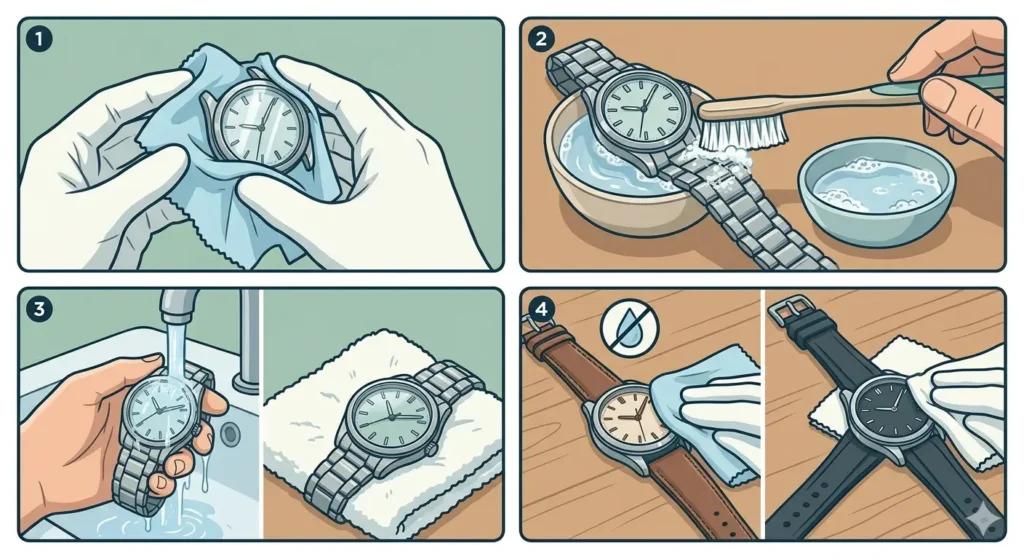
Before anything goes into storage, the watch needs to be clean. Oils from the skin, sweat, dust, and moisture can cause damage over time – especially to metal cases and delicate finishes.
- Step 1: Use a soft, lint-free microfiber cloth to wipe down the case, bezel, and crystal.
- Step 2: For metal bracelets, use a soft-bristle toothbrush dipped in warm water with a small drop of mild soap. Scrub gently between the links.
- Step 3: Rinse the bracelet lightly if the watch is water-resistant. Dry thoroughly with a clean cloth before storing.
- Step 4: For leather or rubber straps, wipe gently with a dry cloth only. Avoid moisture on leather.
The key is to make sure no moisture remains on the watch before sealing it away. Even a small amount of trapped humidity can cause fogging on the crystal or corrosion inside the case.
Step 2: Wind the Watch Correctly
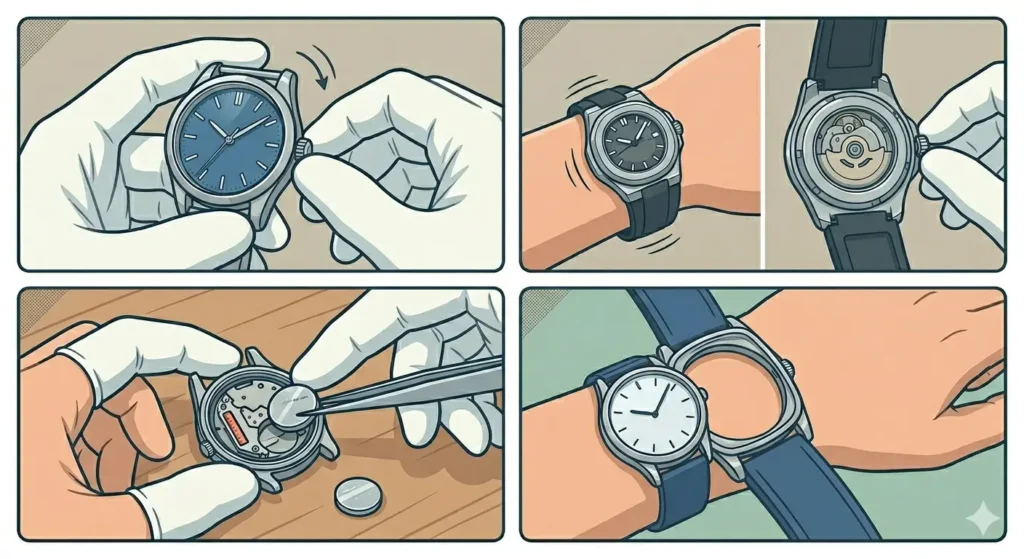
This step is specific to the type of movement inside the watch, and getting it right protects the mainspring and overall mechanism.
- Step 1: For a manual (hand-wound) mechanical watch, wind it fully before storing. A fully wound spring holds its tension more evenly over time.
- Step 2: For an automatic watch, wear it for a full day or manually wind it via the crown before storage. Without motion, it will stop running within 24 to 72 hours.
- Step 3: For quartz watches, consider removing the battery if storing for more than 6 months. A dead or leaking battery can corrode the movement.
Most people find that forgetting to handle the winding step leads to accuracy issues when the watch comes out of storage months later.
Pro-Tip: If storing an automatic watch for more than a few months, use a quality watch winder set to the correct rotations per day (TPD) for that specific movement. This keeps the lubricants distributed and the watch running without manual intervention.
Step 3: Detach or Prepare the Strap
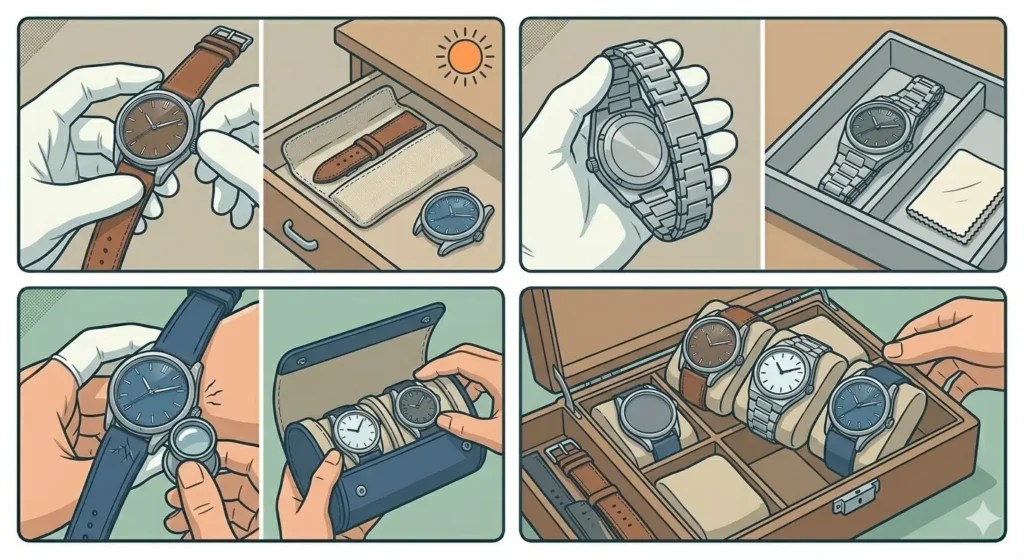
The strap material determines how it should be handled before long-term storage.
- Step 1: Remove leather straps from the watch entirely. Store them flat in a breathable pouch away from heat and humidity. Leaving a leather strap on a watch in a sealed box leads to mold and cracking.
- Step 2: Metal bracelets can stay attached as long as they are clean and dry.
- Step 3: Rubber or silicone straps can remain on the watch but should be checked for any signs of deterioration before storage.
Step 4: Check the Crown and Seals
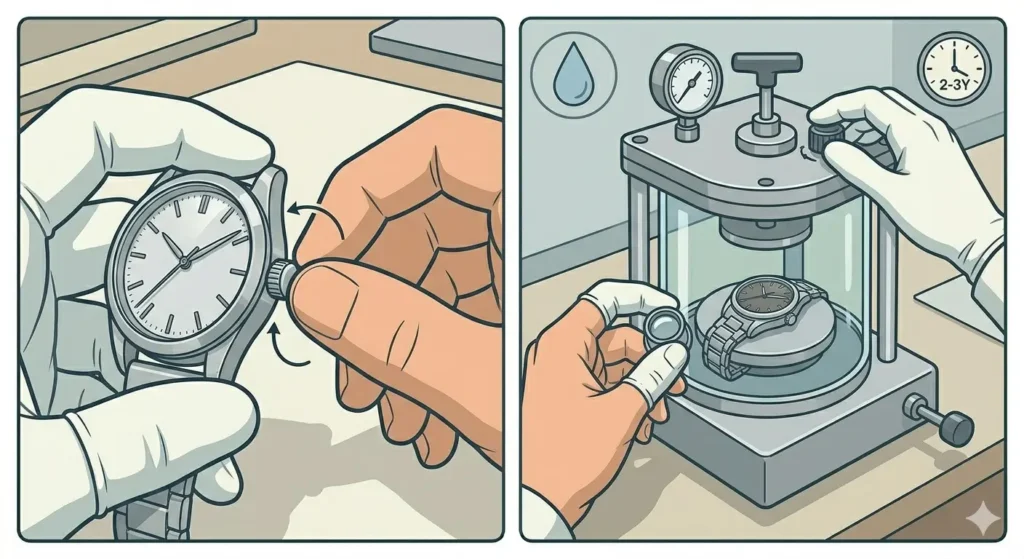
The crown position and the condition of the gaskets play a direct role in protecting the watch interior.
- Step 1: Push the crown fully into its closed position and tighten it if it is a screw-down crown. This is the first line of defense against dust and humidity.
- Step 2: If the watch is due for a water resistance test or has not been pressure-tested in the last 2 to 3 years, consider having it tested before long-term storage.
This works best when done before placing the watch in any storage container. Once sealed away, there is no easy way to check whether moisture is getting in.
Step 5: Choose the Right Storage Environment
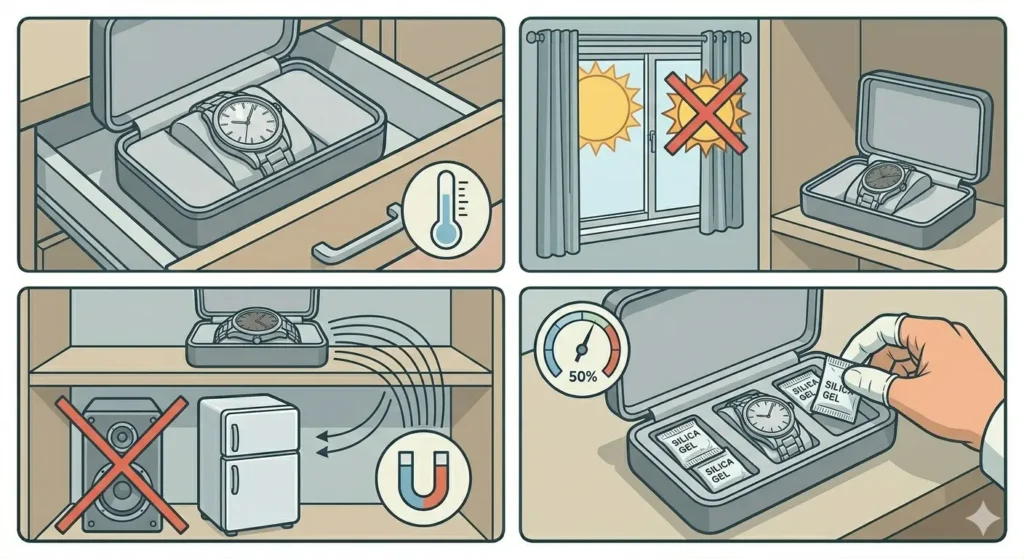
Where the watch lives during storage matters just as much as how it was prepared.
- Step 1: Store in a cool, dry location with temperatures between 15 degrees C and 20 degrees C (59 to 68 degrees F). Avoid attics, garages, and basements where temperatures fluctuate.
- Step 2: Keep the watch away from direct sunlight. UV exposure fades dials and degrades gaskets over time.
- Step 3: Avoid storing near speakers, refrigerators, or any magnetic devices. Magnetic fields disrupt mechanical movements and can cause permanent accuracy issues.
- Step 4: Humidity should stay below 50 percent. Use silica gel packets inside the storage box to absorb moisture.
Pro-Tip: A dedicated watch box with individual cushioned compartments is the ideal storage solution. It protects against physical knocks, keeps watches upright, and reduces dust accumulation. For high-value pieces, a fireproof safe adds an extra layer of protection.
Step 6: Use Proper Storage Containers
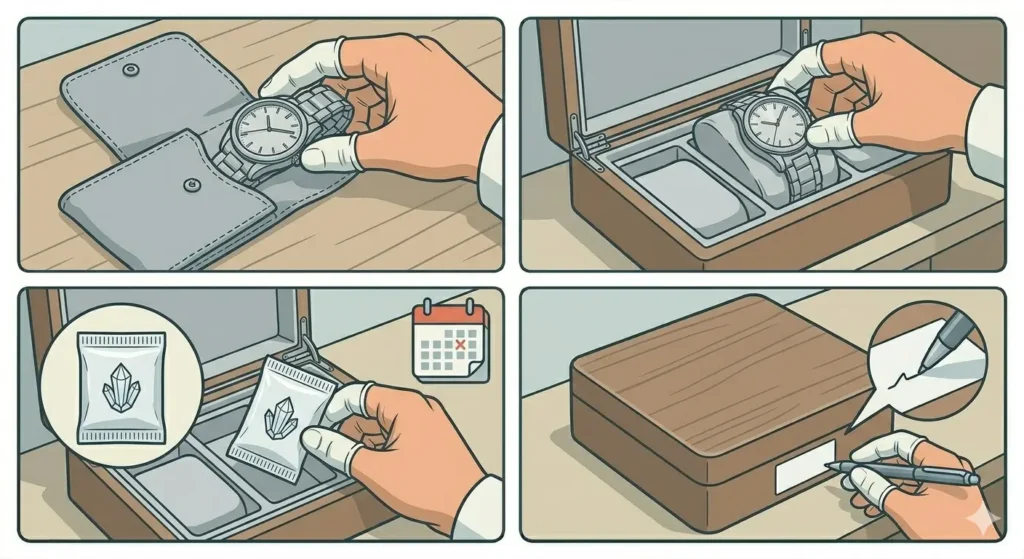
The container the watch goes into should protect it physically and from environmental factors.
- Step 1: Place the watch in a soft watch pouch or on a watch pillow before putting it into any hard case. Avoid letting metal touch metal.
- Step 2: Use a watch box, wooden display case, or hard-shell travel case with proper cushioning.
- Step 3: Include a small silica gel packet inside the box and replace it every 6 months.
- Step 4: Label the box with the date stored. This makes it easy to track when a check-up is needed.
Just as tracking time accurately matters – whether using a world time comparison tool or a physical timepiece – keeping a record of when the watch went into storage ensures nothing gets forgotten over months or years.
Step 7: Schedule a Pre-Storage Service if Needed
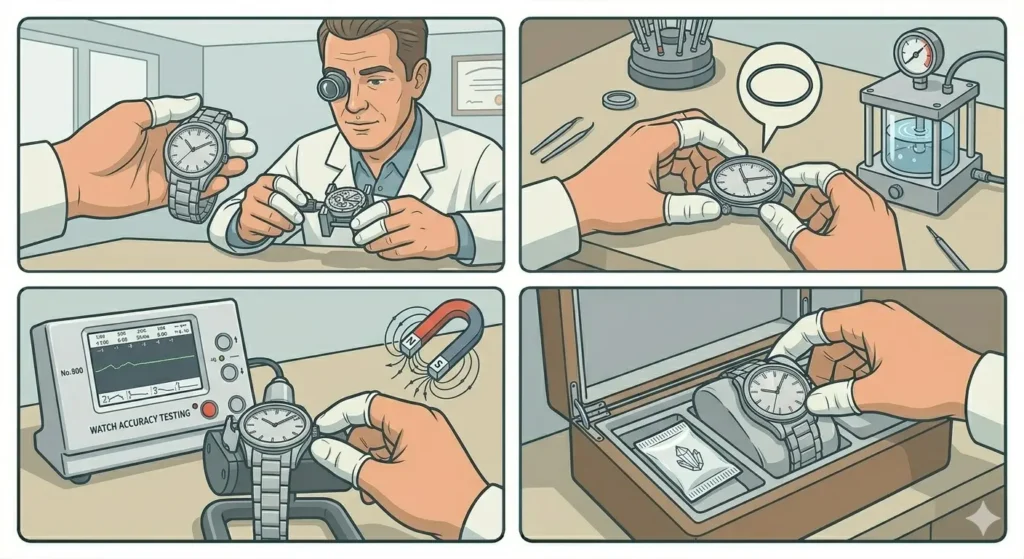
Long-term storage on a watch that needs servicing will only make the problem worse. Dried lubricants, worn gaskets, and accumulated grime do not pause while the watch sits in a box.
- Step 1: If the watch has not been serviced in 3 to 5 years, take it to a qualified watchmaker before storage.
- Step 2: Ask the watchmaker to replace gaskets and test water resistance if applicable.
- Step 3: Have any known issues – magnetization, accuracy drift, sticky crown – addressed before the watch goes away.
Tips for Long-Term Watch Storage
- Set a reminder to check on stored watches every 3 to 6 months. A quick visual inspection and a short wind keeps mechanical movements in better shape than leaving them completely idle.
- Keep original boxes and papers with the watch whenever possible. They protect resale value and provide a dust-free secondary storage layer.
- Never store a watch in a regular plastic zip bag long-term. Plastics can off-gas chemicals that damage case finishes and deteriorate rubber seals.
- If storing multiple watches, keep them separated so they cannot knock against each other.
- For pocket watches, store them lying flat on a cushion rather than hung or upright.
- Consider photographing the watch before storage. This provides documentation of condition and any pre-existing scratches.
Common Problems When Storing Watches Long-Term
Problem 1: Watch Stops Running After Storage
This is the most common issue with automatic and manual watches. After months of inactivity, the mainspring loses tension. The fix is simple – wind the watch manually. If it still does not run after winding, the lubricants inside may have dried and a service is needed.
Problem 2: Fogging or Moisture Inside the Crystal
Fogging means moisture has entered the case. This usually happens when the crown was not fully secured or the gaskets have worn out. Do not try to dry it at home with heat. Take it to a watchmaker to have it properly dried, the gaskets replaced, and water resistance restored.
Problem 3: Leather Strap Cracking or Growing Mold
Leather straps left in sealed, humid environments crack or develop mold. Removing and storing leather straps separately in a breathable environment prevents this. Mildly affected straps can sometimes be treated with leather conditioner, but severe cases usually mean the strap needs replacing.
Problem 4: Magnetization Affecting Accuracy
If the watch runs significantly fast after storage, it may have been exposed to a magnetic field. A watchmaker can demagnetize a watch quickly and inexpensively. Going forward, store the watch away from electronics, speakers, and magnetic closures on bags or cases.
Problem 5: Corroded Battery in Quartz Watch
A battery left inside a quartz watch for years can leak and cause serious damage to the movement. Always remove the battery before long-term storage. When the watch comes out of storage, install a fresh battery from a reputable brand.
Problem 6: Crown Becomes Stiff or Stuck
Long periods of inactivity combined with dried lubricants can cause the crown to stiffen. Forcing it will strip threads or damage the stem. This needs professional attention – a watchmaker will clean and lubricate the crown mechanism properly. Just as timing precision matters whether checking a clock tab or a mechanical watch, the crown mechanism is critical to accurate setting.
Frequently Asked Questions
How long can a watch be stored without being used?
A watch can technically be stored indefinitely with proper preparation. However, mechanical watches benefit from being wound and run for a period every 3 to 6 months to keep lubricants distributed and prevent the movement from seizing.
Should a watch be wound before long-term storage?
Yes. A manual watch should be fully wound before storage. An automatic watch should be worn for a day or manually wound before placing into storage. This ensures the mainspring is in a natural, tensioned state rather than fully slack.
Is it safe to store a watch in a safe or vault?
Yes, as long as the environment inside is not excessively humid or hot. A fireproof safe is an excellent option for valuable watches. Add silica gel packets inside the safe to control humidity and check them regularly.
Can a watch be stored in its original box?
Absolutely. The original manufacturer box is one of the best storage options available. It is designed specifically for that watch, provides cushioning, and often has a lid that reduces dust. Just make sure the box is kept in a stable environment away from heat, moisture, and light.
How often should stored watches be checked?
Every 3 to 6 months is a good rule. During each check, wind any mechanical watches, inspect for moisture or fogging, check strap condition, and replace silica gel packets if they have absorbed their capacity.
What temperature is safe for watch storage?
Between 15 degrees C and 20 degrees C (59 to 68 degrees F) is the ideal range. Temperatures above 30 degrees C can degrade lubricants and gaskets. Freezing temperatures can cause metal to contract and damage delicate components.
Should the battery be removed from a quartz watch before storage?
Yes, if storing for 6 months or longer. A battery left inside can leak over time, causing corrosive damage to the movement that is often irreparable. Remove it, label the watch with the battery removal date, and install a fresh one when the watch comes out of storage.
Can humidity damage a stored watch?
Yes. High humidity accelerates corrosion of metal components, damages leather straps, and can cause fogging inside the crystal if the seals are not perfect. Keep humidity below 50 percent and use silica gel packets in the storage container.
Is a watch winder necessary for storing automatic watches?
It is not strictly necessary, but it is beneficial for long-term storage. A watch winder keeps the movement running, lubricants circulating, and the watch ready to wear at any time. Without one, simply wind the watch manually every few months during storage checks.
How do you store a watch with a leather strap long-term?
Remove the leather strap from the watch entirely. Store it flat in a breathable cloth pouch or paper-based box. Keep it at room temperature, away from direct sunlight and moisture. Condition the leather lightly before storage if it shows any signs of dryness.