

Keeping a stainless steel watch bracelet clean ensures it maintains its shine and longevity. Regular cleaning removes dirt, sweat, oils, and grime that accumulate between links, preventing tarnish and keeping the timepiece looking pristine.
Key Takeaways
- Clean stainless steel bracelets every 2-4 weeks to prevent buildup
- Use mild soap, warm water, and a soft brush for basic cleaning
- Dry thoroughly to avoid water spots and potential rust
- Avoid harsh chemicals that can damage the finish
- Remove the bracelet from the watch case when possible for thorough cleaning
Step-by-Step Cleaning Guide
Materials Needed
- Mild dish soap or hand soap
- Warm water
- Soft-bristled toothbrush or dedicated watch brush
- Microfiber cloth or lint-free towel
- Small bowl
- Toothpick or wooden stick (optional)
Basic Cleaning Method
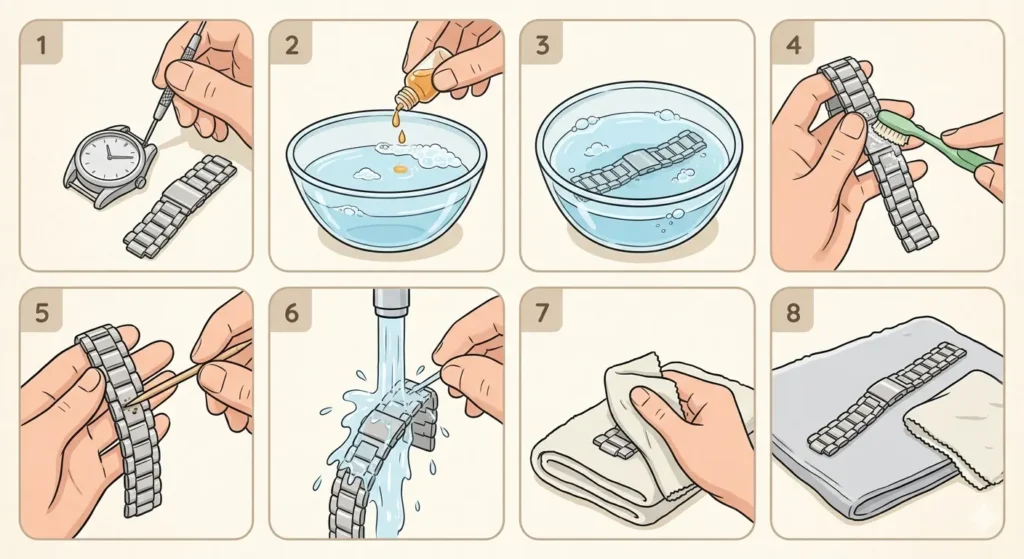
- Step 1: Remove the bracelet from the watch case if possible. This prevents water from entering the watch mechanism and allows access to all bracelet areas.
- Step 2: Fill a small bowl with warm water (not hot) and add 2-3 drops of mild dish soap. Mix gently until suds form.
- Step 3: Submerge the bracelet in the soapy water and let it soak for 5-10 minutes. This loosens embedded dirt and oils.
- Step 4: Using a soft-bristled toothbrush, gently scrub the bracelet, paying special attention to the spaces between links where grime accumulates. Brush in a back-and-forth motion along the link grooves.
- Step 5: For stubborn dirt in tight spaces, use a toothpick or wooden stick to carefully dislodge debris. Avoid metal tools that could scratch the surface.
- Step 6: Rinse the bracelet thoroughly under running warm water to remove all soap residue. Soap left behind can leave streaks or dull the finish.
- Step 7: Shake off excess water and pat dry with a microfiber cloth. Then lay the bracelet flat on a dry towel for 30-60 minutes to air dry completely.
- Step 8: Once fully dry, buff the bracelet with a clean microfiber cloth to restore shine and remove any remaining water spots.
Pro Tip: Never use paper towels or rough fabrics to dry stainless steel, as these can create micro-scratches that dull the finish over time. Microfiber cloths are soft enough to protect the surface while effectively removing moisture and fingerprints.
Alternative Quick Clean Method
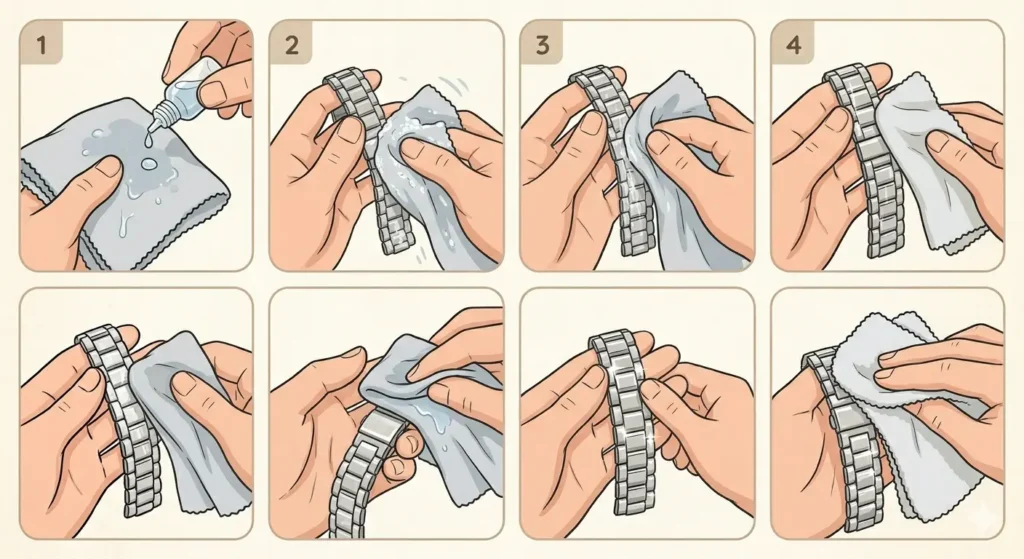
For times when a full cleaning isn’t possible, this quick method works well:
- Step 1: Dampen a microfiber cloth with warm water and add a tiny drop of mild soap.
- Step 2: Wipe down the entire bracelet, working the cloth between links as much as possible.
- Step 3: Use a second damp cloth (water only) to wipe away soap residue.
- Step 4: Dry immediately with a clean microfiber cloth.
Tips for Maintaining Bracelet Cleanliness
- Wipe down the bracelet with a dry microfiber cloth after each wear to remove sweat and oils
- Remove the watch before swimming, showering, or exercising to minimize exposure to moisture and chemicals
- Store the watch in a cool, dry place away from humidity
- Avoid contact with harsh chemicals, perfumes, lotions, and cleaning products that can damage the finish
- Clean the bracelet more frequently during summer months when sweat production increases
- Consider professional ultrasonic cleaning once or twice yearly for deep cleaning
- Check world time zones when coordinating professional service appointments across different regions
Pro Tip: Establish a regular cleaning schedule by setting a reminder on your digital clock every two weeks. Consistent maintenance prevents heavy buildup and keeps the cleaning process quick and easy.
Common Problems and Solutions
Water Spots or Streaks
If water spots appear after cleaning, this usually means the bracelet wasn’t dried thoroughly enough or hard water minerals were left behind. Buff the bracelet with a dry microfiber cloth using circular motions. For persistent spots, clean again using distilled water instead of tap water.
Stuck or Stiff Links
Links that feel stiff after cleaning may have soap residue or moisture trapped inside. Rinse the bracelet again under warm running water, flexing the links gently to work water through all joints. Dry thoroughly and allow extra air-drying time. If stiffness persists, professional servicing may be needed to check for internal corrosion or mechanical issues.
Lingering Odor
Odors that remain after cleaning indicate bacteria buildup in hard-to-reach areas. Increase soaking time to 15-20 minutes and use a firmer brush to clean between links more thoroughly. Adding a drop of white vinegar to the cleaning solution can help neutralize odors, but rinse extremely well afterward to prevent vinegar smell.
Dull or Cloudy Appearance
A cloudy finish typically results from soap film, hard water deposits, or product buildup. Clean the bracelet again using distilled water and ensure all soap is rinsed away. Polish with a dedicated stainless steel polishing cloth to restore luster.
Frequently Asked Questions
How often should a stainless steel watch bracelet be cleaned?
Clean the bracelet every 2-4 weeks with regular wear. Increase frequency to weekly during hot weather or if the watch is worn during physical activities that cause sweating. Daily wipe-downs with a dry cloth help maintain cleanliness between deep cleans.
Can vinegar be used to clean stainless steel watch bracelets?
Yes, white vinegar can be used sparingly for tough grime or odor removal. Mix equal parts white vinegar and water, soak for 5-10 minutes, then scrub gently. Rinse thoroughly with clean water afterward, as vinegar residue can be corrosive if left on the metal. This method should only be used occasionally, not as a regular cleaning routine.
Is it safe to use ultrasonic cleaners on stainless steel bracelets?
Ultrasonic cleaners are generally safe for solid stainless steel bracelets and very effective at removing embedded dirt. However, always remove the watch case first, as ultrasonic vibrations can damage internal watch mechanisms, seals, and certain crystal types. Use only plain water or specialized watch cleaning solution in the ultrasonic tank.
What should be avoided when cleaning stainless steel bracelets?
Avoid bleach, chlorine, ammonia-based cleaners, abrasive scrubbers, baking soda paste, and harsh chemical solvents. These substances can scratch, discolor, or corrode the stainless steel finish. Never use steel wool, scouring pads, or stiff metal brushes that create permanent scratches.
Can stainless steel watch bracelets rust?
High-quality stainless steel is highly rust-resistant but not completely rust-proof. Prolonged exposure to saltwater, chlorine, or moisture trapped between links can cause surface corrosion or rust spots, especially on lower-grade stainless steel. Always dry the bracelet thoroughly after exposure to water and avoid wearing it in pools or ocean water for extended periods.
How can stuck debris be removed from between tight links?
Soak the bracelet longer (15-20 minutes) to soften debris, then use a soft toothbrush to work into the gaps from multiple angles. For extremely stubborn buildup, a toothpick or wooden stick can carefully dislodge particles without scratching. Dental floss or unwaxed thread can also be threaded between links to pull out trapped material.
Should the bracelet be removed from the watch before cleaning?
Removing the bracelet is highly recommended for thorough cleaning, as it prevents water from entering the watch case and damaging internal components. Most bracelets have spring bars that can be released with a spring bar tool. If removal isn’t possible or the watch is water-resistant, clean carefully around the case and dry immediately.
What causes green residue on skin after wearing a stainless steel bracelet?
Green discoloration on skin isn’t caused by stainless steel itself, but by a reaction between sweat, skin oils, and trace metals in lower-quality alloys. Keeping the bracelet clean reduces this reaction. If discoloration occurs frequently, the bracelet may contain nickel or other reactive metals, and a higher-grade stainless steel replacement should be considered.
Can polishing cloths be used on brushed stainless steel finishes?
Standard polishing cloths are designed for mirror-polished finishes and can alter the appearance of brushed or satin finishes. For brushed stainless steel, use a soft microfiber cloth and clean in the direction of the brushing pattern. Specialized brushed stainless steel polishing cloths are available but should be used sparingly to maintain the original texture.
How long should the bracelet be air-dried after cleaning?
Allow at least 30-60 minutes of air-drying time after patting with a microfiber cloth. This ensures all moisture evaporates from between links and internal pin mechanisms. Laying the bracelet flat on a dry towel in a well-ventilated area speeds up the drying process. Never wear or store the bracelet while still damp, as trapped moisture can lead to corrosion.