
Learning how to clean a leather watch strap properly can extend its lifespan by years. This guide walks through the complete cleaning process, from mild soap solutions to specialized leather care, plus clear signs that replacement is the only option left.
Quick Summary Table
| Cleaning Method | Best For | Time Required |
|---|---|---|
| Mild Soap & Water | Light dirt and daily grime | 10-15 minutes |
| Leather Cleaner | Stubborn stains and deep cleaning | 20-25 minutes |
| Conditioning Treatment | Maintaining flexibility and preventing cracks | 15 minutes (plus drying time) |
Step-by-Step Guide to Cleaning Your Leather Watch Strap
What You’ll Need
- Soft microfiber cloths (at least 2)
- Mild soap (dish soap or hand soap without harsh chemicals)
- Distilled water
- Small bowl
- Soft-bristled toothbrush (optional, for textured leather)
- Leather conditioner
- Cotton swabs
The Basic Cleaning Process
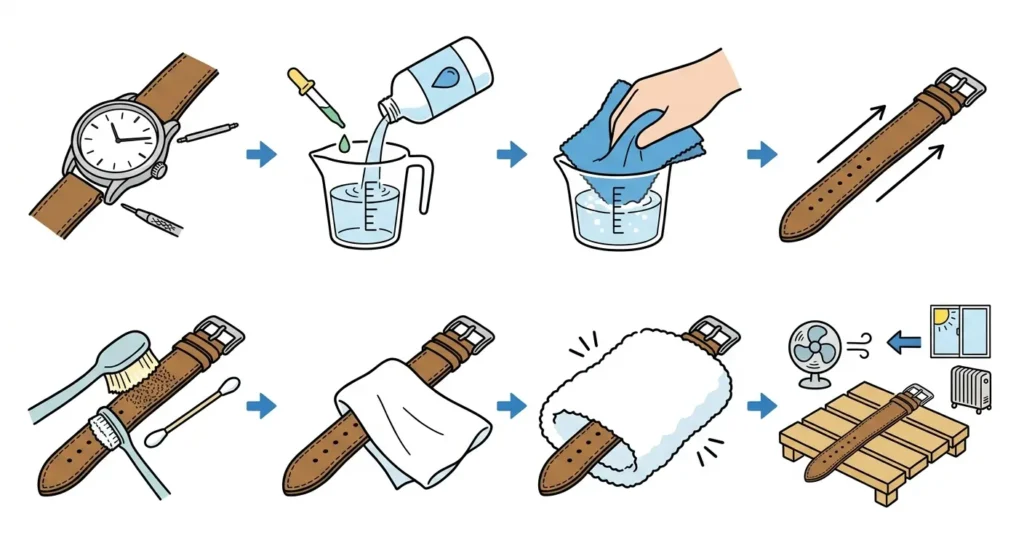
Step 1: Remove the strap from the watch case if possible. Most straps use spring bars that can be released with a small tool or careful maneuvering. This prevents water damage to the watch mechanism and allows thorough cleaning of both sides.
Step 2: Mix a cleaning solution using one drop of mild soap per cup of distilled water. The solution should be barely soapy – excess soap leaves residue that attracts more dirt.
Step 3: Dampen (don’t soak) a microfiber cloth with the solution. Wring it out until it’s just slightly moist. Leather should never get saturated with water.
Step 4: Wipe the strap gently in straight strokes, following the grain of the leather. Avoid circular motions that can work dirt deeper into the pores.
Step 5: For stubborn spots or textured leather, dip a soft-bristled toothbrush lightly in the solution and brush gently. Use cotton swabs for tight areas near buckles and holes.
Step 6: Wipe the entire strap with a clean, damp cloth (water only) to remove any soap residue.
Step 7: Pat dry immediately with a clean, dry microfiber cloth. Never leave leather wet.
Step 8: Air dry the strap completely at room temperature, away from direct sunlight or heat sources. This usually takes 2-4 hours. Rushing this step causes warping and cracking.
Pro Tip: Always test any cleaning solution on a small, hidden area of the strap first (like the underside near the buckle). Some dyed leathers can discolor or fade with certain cleaners, and it’s better to discover this on a quarter-inch spot than across the entire band.
Deep Cleaning with Leather Cleaner
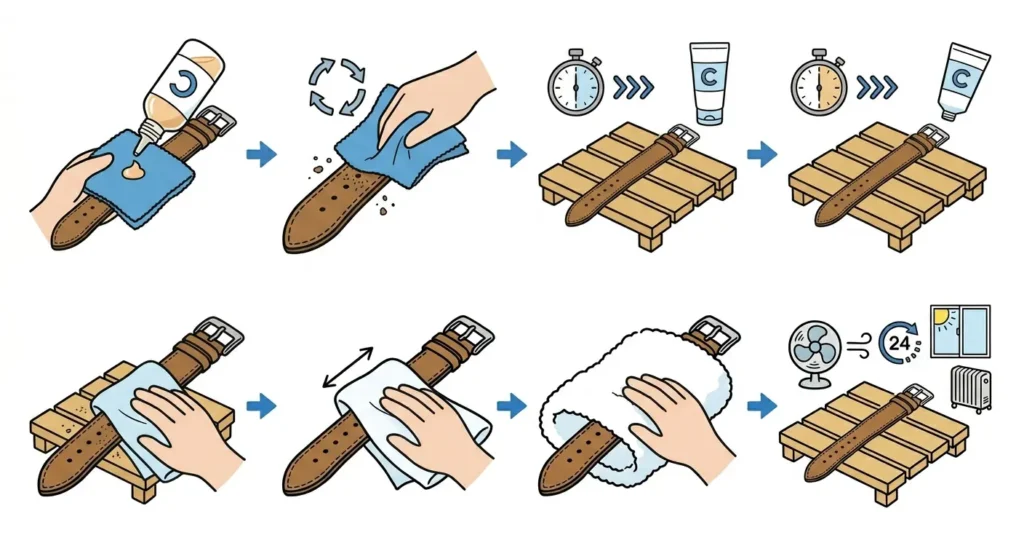
For straps with significant buildup, sweat stains, or oils that mild soap can’t handle, a dedicated leather cleaner works better.
Step 1: Choose a leather cleaner specifically designed for finished leather goods. Products meant for saddles or car seats often contain conditioning agents that leave watch straps too slippery.
Step 2: Apply a small amount (pea-sized) to a microfiber cloth, never directly to the strap.
Step 3: Work the cleaner into the leather using gentle circular motions, focusing on stained or discolored areas.
Step 4: Allow the cleaner to sit for 30-60 seconds (check product instructions).
Step 5: Wipe away the cleaner with a clean, barely damp cloth.
Step 6: Dry thoroughly with a soft cloth and allow complete air drying before conditioning.
Conditioning After Cleaning
Cleaning removes not just dirt but also natural oils from leather. Conditioning restores flexibility and prevents premature aging.
- Wait until the strap is completely dry (at least 4 hours after cleaning)
- Apply a small amount of leather conditioner to a cloth
- Rub into the strap using circular motions, covering both sides
- Let the conditioner absorb for 15-20 minutes
- Buff away any excess with a clean, dry cloth
- Allow 24 hours before wearing to ensure complete absorption
Most leather straps benefit from conditioning every 2-3 months, or monthly if worn daily in hot, humid climates.
Signs Your Leather Strap Is Beyond Cleaning
Sometimes cleaning won’t solve the problem because the leather has reached the end of its functional life. Here’s when replacement becomes necessary:
Structural Damage
- Deep cracks that go through the leather thickness, not just surface lines
- Tears or splits near the buckle holes or spring bar channels
- Significant stretching where the strap no longer holds the watch securely
- Holes that have elongated or torn, making the watch fit loose
Material Degradation
- Leather that feels brittle or powdery rather than supple
- Peeling or flaking of the finish or dye
- Permanent discoloration that persists after cleaning (often from chemical exposure)
- Backing material separating from the top leather layer
Persistent Odor
- Strong smell that remains after thorough cleaning and drying
- Musty or mildew odor indicating deep moisture damage
- Embedded body odor from years of wear that has penetrated too deeply to remove
Pro Tip: When evaluating whether a strap is salvageable, try the flex test. Gently bend a section of the strap. Healthy leather should flex smoothly and return to shape. If it creases sharply, crackles, or stays bent, the leather fibers have broken down beyond repair.
Maintenance Tips Between Cleanings
Regular maintenance reduces how often deep cleaning becomes necessary:
- Wipe the strap with a dry microfiber cloth daily after removing the watch
- Remove the watch during activities that cause heavy sweating
- Avoid getting leather straps wet – remove before washing hands, showering, or swimming
- Store watches in a cool, dry place with moderate humidity (40-50%)
- Rotate between multiple straps to give leather time to air out between wears
- Keep leather away from direct sunlight, which fades color and dries out the material
For those who frequently check timing or need precision tools, using an online stopwatch during leather drying phases ensures conditioning products absorb for the exact recommended duration.
Common Problems and Solutions
White Residue After Cleaning
This indicates soap wasn’t fully rinsed away. Wipe again with a cloth dampened only with distilled water, then dry thoroughly. Using less soap in the initial solution prevents this issue.
Stiff Leather After Drying
Over-wetting during cleaning or skipping conditioning causes stiffness. Apply leather conditioner and gently flex the strap to restore suppleness. Prevention involves using barely damp cloths rather than wet ones.
Darkened Spots or Streaks
Uneven water exposure creates these marks. Dampen the entire strap lightly and evenly, then allow it to dry completely. The color should even out. Some leathers naturally darken with any moisture exposure – testing on a hidden area first reveals this tendency.
Lingering Sweat Smell
Mix equal parts distilled water and white vinegar (1 tablespoon each). Dampen a cloth with this solution and wipe the strap, then follow with water-only wiping and thorough drying. Vinegar neutralizes odor-causing bacteria without harsh chemicals.
Strap Feels Greasy After Conditioning
Too much conditioner was applied. Buff vigorously with a clean, dry cloth to remove excess. Less is always more with leather conditioning – start with a minimal amount and add more only if needed.
Tips for Extending Leather Strap Lifespan
- Choose quality from the start: Full-grain leather straps resist wear and damage better than bonded or corrected-grain alternatives
- Consider climate: Leather performs best in moderate humidity; extremely dry or humid environments accelerate deterioration
- Match activity to material: Save leather straps for office wear and social occasions; switch to NATO or rubber straps for sports and outdoor activities
- Protect from chemicals: Hand sanitizers, perfumes, and cleaning products break down leather quickly – apply these before putting on the watch
- Address problems early: Clean small stains immediately rather than letting them set; condition at the first sign of dryness rather than waiting for cracks
When managing multiple watches or tracking cleaning schedules, tools like a world time comparison tool help coordinate maintenance routines across different time zones if collecting international timepieces.
Frequently Asked Questions
How often should leather watch straps be cleaned?
Light cleaning with a dry or barely damp cloth should happen weekly if worn daily. Deep cleaning with soap or leather cleaner is needed every 4-6 weeks for regular wearers, or whenever visible dirt and stains accumulate. Straps worn occasionally need cleaning only 2-3 times per year.
Can rubbing alcohol clean a leather watch strap?
Rubbing alcohol should be avoided on leather straps. It strips natural oils too aggressively, dries out the material, and can damage dyes and finishes. Stick with mild soap solutions or dedicated leather cleaners formulated to maintain the material’s integrity.
Is it safe to submerge a leather watch strap in water?
Never submerge leather straps in water. Soaking causes irreversible damage including warping, stiffening, color bleeding, and breakdown of adhesives used in layered straps. Always clean with a damp (not wet) cloth and avoid getting leather excessively wet.
What’s the difference between leather cleaner and leather conditioner?
Leather cleaner removes dirt, oils, and stains from the surface and pores of the leather. Leather conditioner restores moisture and natural oils, keeping the material supple and preventing cracks. Both serve different purposes – cleaning should always be followed by conditioning for best results.
Can saddle soap be used on watch straps?
Traditional saddle soap works but often leaves a waxy residue that attracts lint and feels sticky on small items like watch straps. Modern leather cleaners formulated for finished leather goods provide better results without buildup. If using saddle soap, buff thoroughly after application to remove excess.
How long does a well-maintained leather watch strap typically last?
With proper cleaning and conditioning, quality full-grain leather straps last 2-5 years of daily wear. Occasional wear extends this to 5-10 years or more. Cheap bonded leather or straps subjected to water exposure, chemicals, or neglect may fail within 6-12 months.
Will cleaning remove the patina from vintage leather straps?
Gentle cleaning with mild soap preserves desirable patina while removing dirt and oils. Harsh cleaners or excessive scrubbing can strip patina along with grime. For vintage pieces, use minimal moisture and the gentlest cleaning method that achieves results, testing on hidden areas first.
Can mink oil be used instead of leather conditioner?
Mink oil works as a conditioner but tends to darken leather significantly and can make straps feel greasy or slippery. Dedicated leather conditioners formulated for finished goods provide moisture without excessive darkening or residue. Mink oil suits work boots better than dress watch straps.
What causes white spots or discoloration on leather straps?
White spots typically result from salt deposits (dried sweat), water stains (especially hard water), or residue from soaps and lotions. Gentle cleaning with distilled water usually removes these. Permanent white discoloration may indicate finish damage or mold, which often can’t be reversed.
Should leather watch straps be stored differently when not in use?
Store leather straps flat or hanging in a cool, dry location away from direct sunlight. Avoid airtight containers that trap moisture and promote mold. A watch box with moderate ventilation at room temperature and 40-50% humidity preserves leather best. Apply conditioner before long-term storage to prevent drying.
Final Thoughts
Cleaning a leather watch strap properly requires patience and the right approach, but the effort preserves both appearance and longevity. The process takes just minutes, uses common household items, and prevents the need for premature replacement. Recognizing when a strap has reached the end of its useful life saves time spent on futile restoration attempts. Regular maintenance, prompt attention to stains, and proper conditioning create a cycle that keeps leather looking refined for years.
For those timing conditioning absorption periods or tracking maintenance schedules precisely, keeping a clock tab open ensures accuracy down to the minute. Quality leather responds well to consistent care, rewarding attention with a distinguished appearance that improves with age.