
How to choose the right watch size for your wrist involves understanding your wrist measurements, case diameter proportions, and lug-to-lug dimensions to ensure a comfortable and aesthetically balanced fit. Finding the perfect watch size transforms how a timepiece looks and feels, making the difference between a watch that enhances personal style and one that feels awkward or uncomfortable throughout the day.
Quick Summary Table
| Wrist Size | Recommended Case Diameter | Lug-to-Lug Distance |
|---|---|---|
| 6-7 inches (Small) | 38-42mm | Up to 48mm |
| 7-8 inches (Medium) | 40-44mm | 48-52mm |
| 8+ inches (Large) | 44-48mm | 52mm+ |
Key Takeaways
- Measure wrist circumference accurately using a flexible tape measure or paper strip method
- Case diameter should be proportional to wrist size – typically 38-48mm for most wearers
- Lug-to-lug distance matters more than case diameter for proper fit
- Watch lugs should never extend beyond the edges of the wrist
- Try watches in person whenever possible to assess comfort and visual balance
- Consider watch thickness and weight alongside diameter measurements
Measure Your Wrist Circumference
Accurate wrist measurement forms the foundation for choosing the right watch size. This simple process takes just a few minutes and provides essential data for making informed decisions.
Using a Flexible Tape Measure
- Step 1: Wrap a flexible tape measure around the wrist just below the wrist bone where a watch would naturally sit
- Step 2: Pull the tape measure snug but not tight – it should feel comfortable, similar to how a watch band would rest
- Step 3: Note the measurement in both inches and millimeters for reference when shopping
- Step 4: Measure at different times of day since wrist size can fluctuate due to temperature and activity
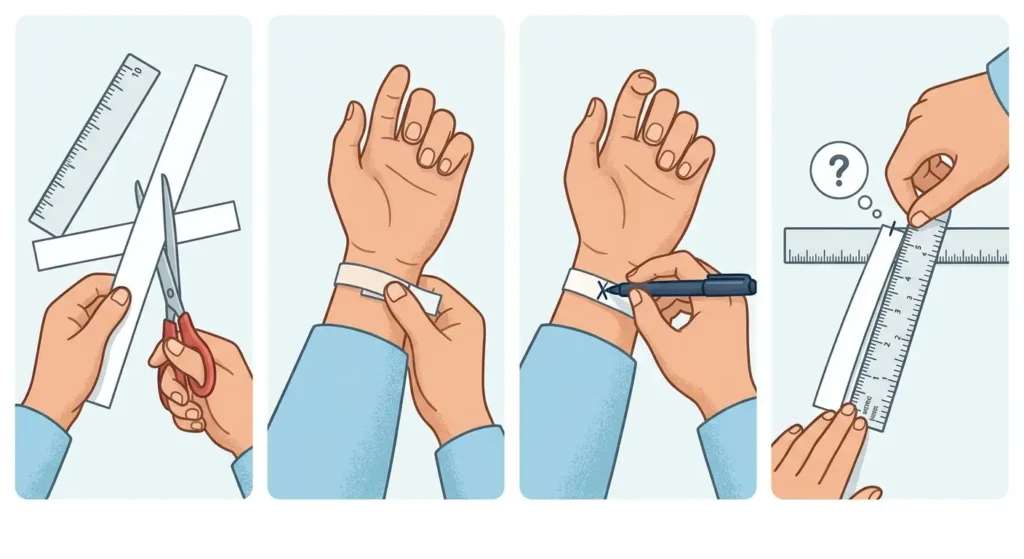
Paper Strip Method
- Step 1: Cut a strip of paper about half an inch wide and 10 inches long
- Step 2: Wrap the paper around the wrist where a watch would sit
- Step 3: Mark where the paper overlaps with a pen or pencil
- Step 4: Lay the paper flat and measure the distance from the end to the mark with a ruler
Most adults have wrist circumferences ranging from 6 to 8 inches. Smaller wrists measure under 6.5 inches, medium wrists fall between 6.5 and 7.5 inches, and larger wrists exceed 7.5 inches.
Understanding Watch Case Diameter
Case diameter refers to the width of the watch case measured from one side to the other, excluding the crown and pushers. This measurement significantly impacts how a watch appears on the wrist.
Small Wrists (6-7 inches)
Wearers with smaller wrists typically look best in watches with case diameters between 38mm and 42mm. Vintage-sized watches around 36-38mm can look particularly elegant and proportional. Oversized watches exceeding 44mm tend to overwhelm smaller wrists and create an unbalanced appearance.
Medium Wrists (7-8 inches)
Medium-sized wrists offer the most flexibility, accommodating case diameters from 40mm to 44mm comfortably. This range includes most popular sports watches, dress watches, and everyday timepieces. Both slightly smaller and slightly larger cases can work depending on personal style preferences.
Large Wrists (8+ inches)
Larger wrists can handle substantial watches ranging from 44mm to 48mm or beyond. Watches under 42mm may appear too small and delicate on bigger wrists. Pilot watches, dive watches, and modern sports watches often fall into this size category.
Pro Tip: Case diameter alone doesn’t tell the complete story. A 42mm round watch and a 42mm cushion-case watch wear very differently due to their shape. Always consider the overall visual footprint, not just the diameter measurement.
Check Lug-to-Lug Distance
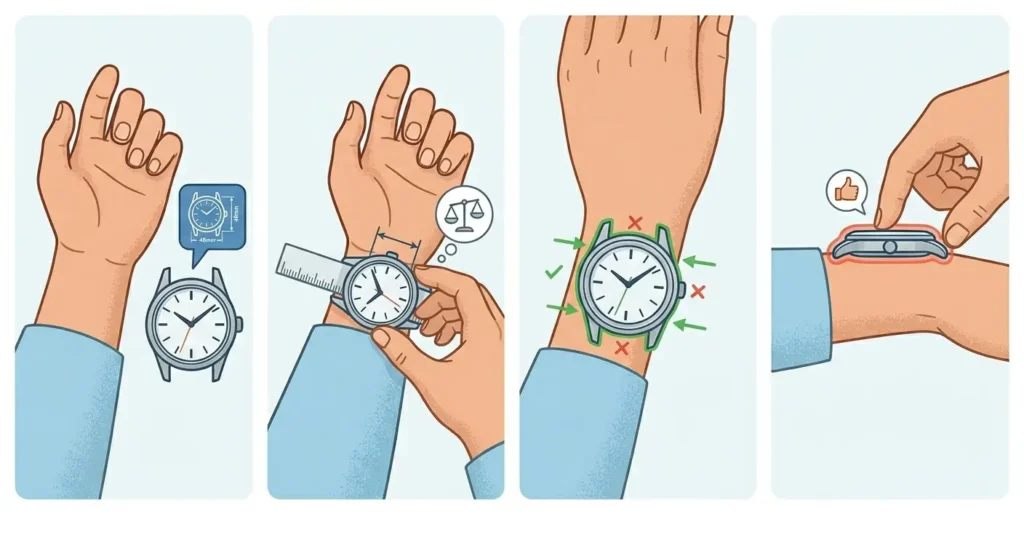
The lug-to-lug measurement represents the distance from the top lug to the bottom lug and often matters more than case diameter for achieving a proper fit. This dimension determines whether a watch will sit flat on the wrist or hang over the edges.
- Step 1: Find the lug-to-lug measurement in the watch specifications (typically 44mm to 54mm for most watches)
- Step 2: Compare this measurement to the flat top width of the wrist
- Step 3: Ensure the lugs don’t extend beyond the natural edges of the wrist when viewed from above
- Step 4: Test the watch in person if possible – the lugs should rest comfortably on top of the wrist without curving down the sides
When lugs extend beyond the wrist edges, the watch appears too large and won’t sit properly. The watch may rock back and forth or feel unstable during wear. A lug-to-lug distance roughly matching or slightly less than the wrist’s flat width creates the most comfortable and visually appealing fit.
Consider Watch Thickness and Weight
Thickness and weight influence comfort just as much as diameter and lug-to-lug measurements. These factors become especially important for all-day wear.
Thickness Guidelines
Dress watches typically measure 6-10mm thick, creating a sleek profile that slides easily under shirt cuffs. Everyday sports watches range from 10-14mm, offering durability without excessive bulk. Dive watches and chronographs often exceed 14mm, which can feel substantial on smaller wrists.
Watches thicker than 15mm may catch on clothing or feel top-heavy during daily activities. Consider sleeve fit when selecting watch thickness – business attire requires slimmer profiles than casual wear.
Weight Considerations
Lighter watches made from titanium or aluminum suit those who prefer barely noticing a watch on the wrist. Stainless steel watches offer a more substantial feel that many find reassuring. Gold or platinum watches carry significant weight and work best on larger wrists that can balance the heft.
Testing a watch for at least 15-20 minutes helps determine whether the weight feels comfortable or fatiguing over extended periods.
Try Different Watch Styles
Case shape dramatically affects how watch dimensions translate to on-wrist appearance. The same measurements can look completely different across various styles.
Round Cases
Round watches represent the most traditional and versatile option. The circular shape tends to wear slightly smaller than the stated diameter suggests. A 42mm round watch often appears more compact than square or cushion cases of the same width.
Square and Rectangular Cases
Angular cases create a bold, distinctive look that wears larger than round cases with similar dimensions. The corners extend the visual footprint, making a 40mm square watch appear comparable to a 42-43mm round watch.
Cushion Cases
Cushion-shaped cases blend round and square elements, creating substantial wrist presence. These designs typically wear true to size or slightly large, making them ideal for those wanting maximum visual impact.
Tonneau Cases
Barrel-shaped tonneau cases conform naturally to wrist curves, often feeling more comfortable than their dimensions suggest. The elongated shape works particularly well on narrower wrists.
Test the Strap or Bracelet Fit
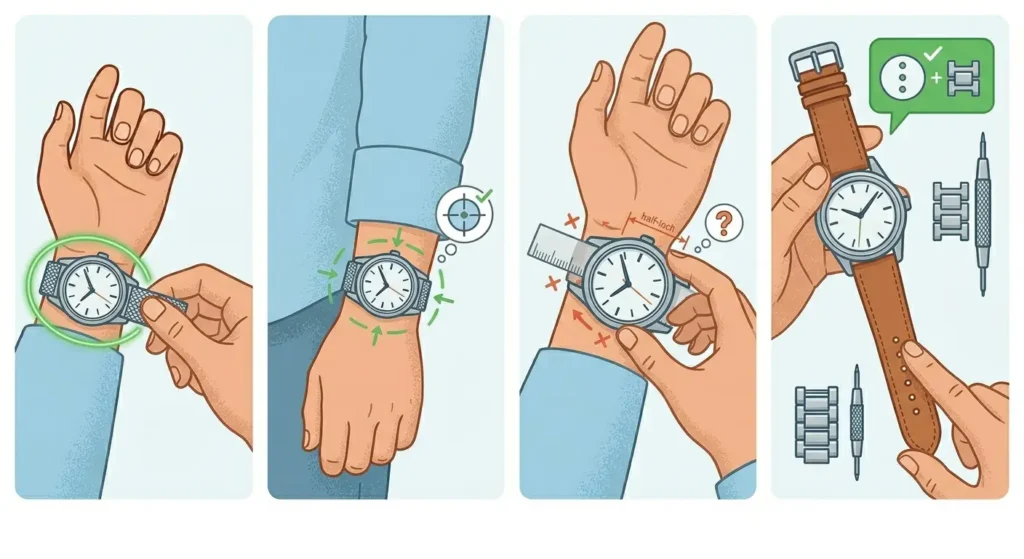
Proper strap or bracelet sizing ensures the watch case sits centered on top of the wrist rather than sliding to the sides.
- Step 1: Fasten the strap or bracelet with enough tension to keep the watch secure without cutting off circulation
- Step 2: Check that the watch case remains centered on the wrist top when the arm hangs naturally
- Step 3: Verify that the watch doesn’t slide more than half an inch up or down the wrist with normal movement
- Step 4: Ensure enough holes remain in leather straps or links can be removed from bracelets for a proper fit
The watch should feel snug enough to stay in place during activity but loose enough to slide slightly with a gentle push. One finger should fit comfortably between the strap and wrist. When using tools like a stopwatch function during activities, proper strap fit prevents the watch from shifting and ensures easy button access.
Account for Personal Style Preferences
Individual taste ultimately determines the ideal watch size within the appropriate range for wrist dimensions. Some prefer understated, classic proportions while others favor bold, statement-making sizes.
Classic Proportions
Conservative sizing emphasizes elegance and timelessness. Watches that fall in the smaller range for a given wrist size create refined, understated appeal. This approach works especially well for dress watches and formal occasions.
Modern Proportions
Contemporary watch design trends toward larger cases that command attention. Choosing sizes at the upper end of the recommended range creates a sportier, more casual aesthetic that suits active lifestyles.
Neither approach is objectively better – the choice depends on personal preference, wardrobe, and intended use. Many watch enthusiasts own different sizes for different occasions.
Shop Smart: In-Store vs. Online
Trying watches in person provides the most accurate assessment of size and fit, but online shopping offers convenience and broader selection.
In-Store Shopping
Visit authorized dealers or watch boutiques to try multiple sizes and styles. Observe how different case diameters look and feel during various movements – raising the arm, bending the wrist, and performing typical daily tasks. Take photos from multiple angles to review later, as mirrors can distort perception.
Online Shopping
When buying online, carefully review all specifications including case diameter, lug-to-lug distance, thickness, and weight. Read customer reviews focusing on sizing feedback. Look for retailers with generous return policies allowing at-home try-ons. Some online sellers provide printable templates showing actual watch size for preliminary assessment.
Comparing measurements against watches already owned helps predict how new pieces will fit. Just as checking the time across different zones requires attention to detail, selecting the right watch size demands careful measurement and comparison.
Tips for Choosing the Right Watch Size
- Start with recommended size ranges based on wrist circumference but adjust according to personal preference
- Prioritize lug-to-lug fit over case diameter – properly positioned lugs matter more than millimeter measurements
- Consider the watch’s intended use – sports watches can run larger while dress watches should be more conservative
- Account for wrist shape, not just size – flat wrists accommodate larger watches better than round wrists
- Remember that watch size trends change – choose based on personal comfort rather than current fashion
- Take wrist photos wearing different watches to see which proportions photograph best
- Factor in aging and lifestyle changes that may affect wrist size over time
- Don’t hesitate to size down if between sizes – slightly smaller usually looks more refined than oversized
- Consider strap options that can change the watch’s visual presence – NATO straps add bulk while thin leather minimizes it
- Use a digital clock display to time trying on watches for at least 15 minutes to assess true comfort
Pro Tip: Wrist size fluctuates throughout the day due to temperature, hydration, and activity levels. Measure in the afternoon or evening when wrists tend to be slightly larger to ensure the watch won’t feel too tight during normal daily variation.
Common Problems When Choosing Watch Size
Watch Looks Too Small or Too Large
When a watch appears disproportionate to the wrist, reassess lug-to-lug measurements first. Even if the case diameter falls within recommended ranges, improper lug fit creates visual imbalance. Consider watches with longer or shorter lug designs to find better proportions without changing case diameter significantly.
Watch Slides Around the Wrist
Excessive movement indicates either improper strap adjustment or fundamental sizing issues. Tighten the strap one hole and verify the watch stays centered. If the watch still moves excessively when properly fitted, the case may be too heavy or the shape incompatible with wrist contours. Try different case shapes or lighter materials.
Watch Feels Uncomfortable After Extended Wear
Discomfort developing over time often stems from weight or thickness rather than diameter. Heavy watches fatigue smaller wrists, while thick cases press uncomfortably against the hand during wrist flexion. Test lighter materials like titanium or thinner case designs. Ensure the case back sits flat against the wrist without sharp edges.
Difficulty Reading the Dial
When dial legibility suffers, the watch may be either too small (causing squinting) or too large (requiring awkward arm positioning). Optimal sizing places the dial in the natural field of view when glancing at the wrist. Adjust size up or down by 2mm increments to improve readability.
Watch Catches on Clothing
Snagging on sleeves or cuffs indicates excessive thickness or protruding elements like large crowns or pushers. Dress watches under 10mm thick slide easily under most shirt cuffs. For business attire, choose thinner profiles or wear the watch higher on the wrist where sleeves naturally widen.
Frequently Asked Questions
What is the most common watch size for men?
The most common watch size for men ranges from 40mm to 44mm in case diameter. This range fits the majority of male wrist sizes comfortably and accommodates both casual and formal styles. Modern trends favor the larger end of this spectrum, though classic dress watches often measure 38-40mm.
How do I know if my watch is too big for my wrist?
A watch is too big when the lugs extend beyond the edges of the wrist, the watch slides excessively during movement, or the overall appearance looks disproportionate when viewed in photos. The watch should sit flat on top of the wrist with lugs resting comfortably on the wrist surface without overhanging the sides.
Can women wear larger watch sizes?
Women can absolutely wear larger watch sizes if they suit personal style and wrist proportions. Many women prefer oversized watches in the 38-42mm range for a bold, contemporary look. The same sizing principles apply regardless of gender – proper lug-to-lug fit and visual balance matter most.
Does wrist size change with age?
Wrist size can change slightly with age due to factors like weight fluctuation, reduced muscle mass, or conditions affecting bone density. These changes typically occur gradually and may require adjusting watch strap fit or reconsidering watch size preferences every few years.
What watch size is best for small wrists under 6.5 inches?
Small wrists under 6.5 inches look best with watch case diameters between 36mm and 40mm. Vintage-inspired designs and dress watches in this range provide excellent proportions. Lug-to-lug measurements should not exceed 46-48mm to prevent overhang.
How much should a watch weigh?
Watch weight varies dramatically by material and size, typically ranging from 50 grams for small titanium watches to 200+ grams for large stainless steel or gold watches. Comfortable weight depends on personal preference and wrist size – test watches for 15-20 minutes to assess whether the weight feels balanced or fatiguing.
Are vintage watch sizes too small by modern standards?
Vintage watches typically measure 34-38mm, which some find small compared to modern 40-44mm standards. However, vintage sizes often provide superior proportions for smaller wrists and formal wear. These classic dimensions remain perfectly wearable and have seen renewed popularity among enthusiasts seeking elegant, understated styles.
Should the watch case touch the wrist bone?
The watch case should sit just above the wrist bone (ulna) on the forearm side, not directly on the bone itself. This position ensures comfortable movement and proper strap fit. Wearing the watch too close to the hand restricts wrist flexion, while positioning too far up the arm looks awkward.
How tight should a watch bracelet be?
A watch bracelet should be snug enough to prevent sliding more than half an inch up or down the wrist but loose enough to allow one finger to fit comfortably underneath. The watch should stay centered on top of the wrist during normal activity without feeling restrictive or cutting off circulation.
Do sport watches need to be larger than dress watches?
Sport watches tend to be larger than dress watches due to functional requirements like enhanced visibility, rotating bezels, and robust construction. However, size should still be proportional to wrist size. A well-fitted 40mm sport watch serves active lifestyles better than an oversized 46mm watch that shifts during movement.