
Changing a watch strap might seem intimidating at first, but with the right spring bar tool and technique, anyone can master this skill in minutes. This beginner-friendly guide walks through the entire process of removing and installing watch straps using spring bar tools, ensuring a secure fit every time.
Quick Summary Table
| Tool Needed | Time Required | Difficulty Level |
|---|---|---|
| Spring bar tool | 5-10 minutes | Easy |
Key Takeaways
- Spring bar tools have two ends: a forked end and a pointed end for different strap types
- Always work over a soft surface to prevent scratches and catch falling parts
- Push spring bars inward before lifting to avoid damaging the watch case
- Most watch straps use 18mm, 20mm, or 22mm spring bars
Step-by-Step Guide to Changing a Watch Strap
What You’ll Need
- Spring bar tool (forked and pointed ends)
- New watch strap
- Soft cloth or watch mat
- Good lighting
Removing the Old Watch Strap
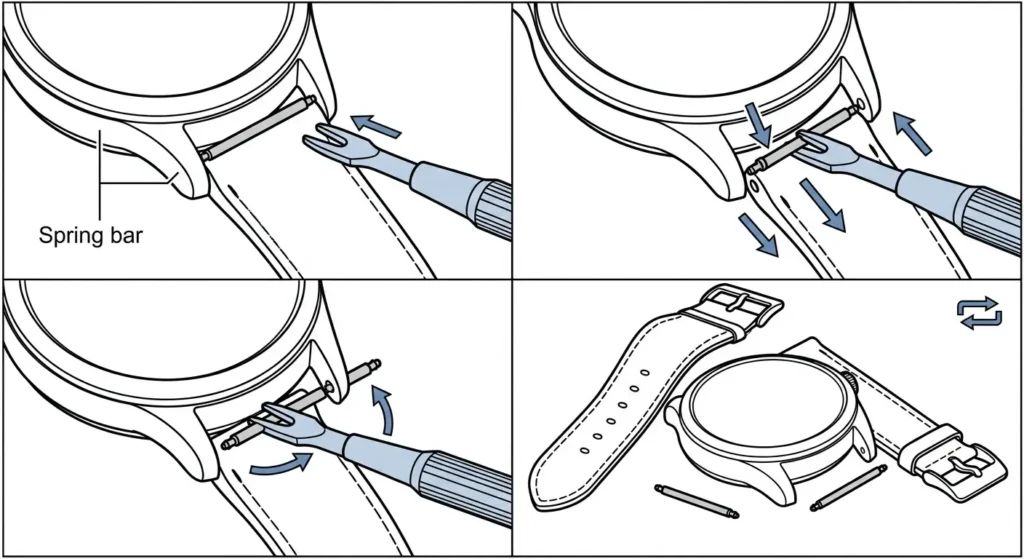
Before starting, place the watch face-down on a soft cloth to protect the crystal from scratches. Good lighting makes a significant difference when locating the tiny spring bar holes.
- Step 1: Locate the spring bar between the watch case and the strap. The spring bar is a small metal pin with springs on both ends that holds the strap in place.
- Step 2: For leather or NATO straps, use the forked end of the spring bar tool. Insert the fork between the strap and the watch case, catching the spring bar pin.
- Step 3: Gently push the spring bar inward toward the center of the watch while pulling the strap away from the case. This compresses the spring and releases one end of the bar.
- Step 4: Once one end is free, carefully maneuver the spring bar out from the other side. Be cautious – spring bars can fly across the room if released suddenly.
- Step 5: Repeat the process for the other side of the watch strap.
Pro-Tip: Always work over a watch mat or soft towel. Spring bars are tiny and easily lost if dropped. Having a contained workspace prevents losing these essential components and protects the watch from accidental drops or scratches.
Installing the New Watch Strap
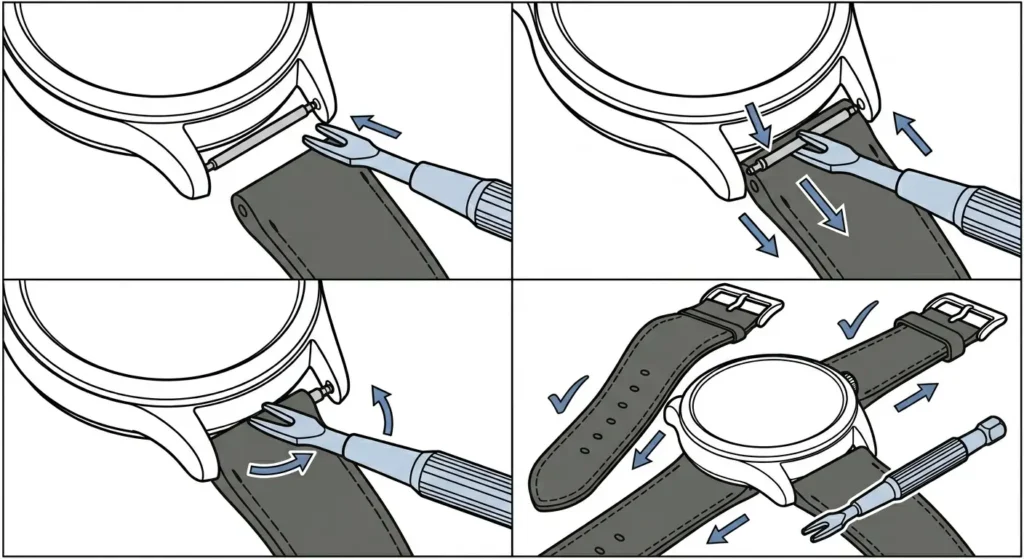
Installing a new strap requires precision and patience. Taking time during installation prevents scratches and ensures the strap stays securely attached.
- Step 1: Insert the spring bar through one end of the new watch strap. Make sure the spring bar matches the lug width of the watch (typically stamped on the old spring bar or listed in the watch specifications).
- Step 2: Position one end of the spring bar into the hole on one side of the watch case lug. The spring bar should sit firmly in the recessed hole.
- Step 3: Using the spring bar tool, compress the other end of the spring bar by pushing it inward.
- Step 4: While keeping the spring bar compressed, align the free end with the opposite lug hole.
- Step 5: Carefully guide the compressed end into the lug hole. Release the tool slowly and listen for a small ‘click’ sound, indicating the spring bar has seated properly.
- Step 6: Gently tug on the strap to confirm it’s securely attached. The strap should not pull away from the case.
- Step 7: Repeat the entire process for the other side of the watch.
Understanding Spring Bar Tool Ends
Spring bar tools typically feature two different ends, each designed for specific strap types and removal techniques.
The Forked End
The forked end resembles a tiny two-pronged fork. This end works best for leather straps, rubber straps, and any strap with enough clearance to slide the tool between the strap and the case. The fork catches the spring bar shaft, making it easier to compress and remove.
The Pointed End
The pointed (or notched) end looks like a small hook or pin. This end is ideal for metal bracelets and straps where there’s minimal space to work. The pointed end fits into the small hole drilled into the spring bar itself, allowing direct compression of the spring mechanism.
Tips for Successful Strap Changes
- Measure the lug width accurately before purchasing a new strap. Using calipers or a ruler ensures a perfect fit.
- Replace spring bars every 2-3 strap changes. Worn spring bars lose tension and may fail unexpectedly.
- Keep spare spring bars in common sizes (18mm, 20mm, 22mm) for quick replacements.
- Practice on an inexpensive watch before attempting the process on valuable timepieces.
- Apply gentle pressure when using the spring bar tool. Excessive force can scratch the watch case or bend the spring bar.
- For quick reference, consider using a stopwatch when practicing to track improvement in speed and efficiency.
- Natural lighting works better than artificial light for seeing small components clearly.
- Store removed spring bars in a small container immediately to prevent loss.
Common Problems and Troubleshooting
Spring Bar Won’t Compress
If the spring bar feels stuck or won’t compress, the spring mechanism may be corroded or damaged. Try applying a small amount of lubricant to the spring bar ends, or replace it with a new one. Forcing a stuck spring bar can damage the watch lugs.
Strap Feels Loose After Installation
A loose strap usually means the spring bar hasn’t seated properly in both lug holes. Remove the strap and reinstall it, ensuring both ends of the spring bar click into place. Check that the spring bar length matches the lug width exactly – a bar that’s too short won’t create enough tension.
Scratches on Watch Case
Scratches typically occur from slipping spring bar tools. Always angle the tool away from the case when applying pressure. Working slowly and deliberately reduces the risk of accidental scratches. Consider using a tool with a plastic coating for added protection.
Can’t Find the Lug Holes
Some watch cases have recessed or hard-to-see lug holes. Use a magnifying glass and strong lighting to locate them. Feeling gently with the spring bar tip can also help identify the hole location. The holes are always directly opposite each other on the lugs.
Pro-Tip: Never force a spring bar into place. If resistance is felt, remove the bar completely and restart the installation process. Forcing can permanently damage the watch case lugs, which are expensive or impossible to repair.
Frequently Asked Questions
What size spring bar do I need for my watch?
Measure the distance between the watch lugs (the lug width) using calipers or a ruler. Common sizes are 18mm, 20mm, and 22mm. The measurement should match the spring bar length exactly for proper tension and security.
Can I change a watch strap without a spring bar tool?
While technically possible using small flathead screwdrivers or paperclips, these alternatives significantly increase the risk of scratching the watch case or losing the spring bar. A proper spring bar tool costs only a few dollars and makes the process much safer and easier.
How often should I replace my watch strap?
Leather straps typically last 1-3 years depending on wear frequency and care. Rubber and silicone straps can last 3-5 years. Metal bracelets often last the lifetime of the watch. Replace any strap showing signs of cracking, tearing, or excessive wear.
Do all watches use spring bars?
Most watches with removable straps use spring bars, but some use screw bars, fixed lugs, or proprietary attachment systems. High-end watches sometimes use specialized mechanisms. Check the watch manual or manufacturer website to confirm the attachment type.
What’s the difference between quick-release and standard spring bars?
Quick-release spring bars have small levers built into the ends, allowing strap changes without tools. Standard spring bars require a spring bar tool for removal. Quick-release bars offer convenience but may be slightly less secure for sports or active wear.
Can I reuse old spring bars with a new strap?
Reusing spring bars is possible if they’re in good condition – no rust, full spring tension, and straight without bends. However, spring bars are inexpensive, and replacing them with each strap change ensures maximum security and prevents unexpected failures.
How do I know if the spring bar is properly installed?
A properly installed spring bar will produce a subtle click when it seats in the lug holes. Gently pull on the strap – it should feel secure without any movement. Visually inspect both ends to confirm the spring bar sits flush in the lug holes, not protruding or angled.
What if my spring bar tool keeps slipping?
Slipping usually occurs from using the wrong end of the tool or incorrect angle. Ensure the forked end fully catches the spring bar shaft, or the pointed end enters the spring bar hole. Maintain steady pressure and work at a shallow angle relative to the watch case.
Are expensive spring bar tools worth it?
Budget spring bar tools (under $10) work perfectly well for occasional strap changes. Expensive tools offer better ergonomics, durability, and multiple tip sizes, making them worthwhile for frequent users or professional watchmakers. Most beginners find mid-range tools ($15-25) provide the best value.
Can changing straps damage my watch?
When done carefully with proper tools, strap changes pose minimal risk. The main dangers are scratching the case with the tool, damaging lugs by forcing spring bars, or dropping the watch. Working slowly over a soft surface and using appropriate tools eliminates most risks.
Final Thoughts
Mastering the spring bar tool opens up endless possibilities for personalizing watches with different straps. This simple skill saves money on professional strap changes and allows quick style updates to match any occasion. With practice, most people can change a watch strap in under five minutes. For those looking to track practice time or timing precision during the process, using an online clock provides helpful reference. The confidence gained from successfully changing a first strap often leads to building a collection of straps for different looks and activities.