
Buying a first luxury watch represents a significant milestone in personal style and investment. This step-by-step guide covers everything from setting a budget to making the final purchase, helping newcomers navigate the world of high-end timepieces with confidence. Understanding the essential factors—such as brand reputation, movement type, and authentication—ensures a smart purchase that delivers lasting value.
Key Takeaways
- Set a realistic budget before exploring brands and models
- Research brand heritage and resale value for long-term investment
- Choose between mechanical and quartz movements based on lifestyle
- Buy from authorized dealers or reputable secondary markets only
- Verify authenticity through serial numbers and documentation
- Consider size, style, and wearability for daily use
Setting Your Budget
Establishing a clear budget forms the foundation of any luxury watch purchase. Entry-level luxury timepieces from brands like TAG Heuer or Longines typically start around $1,500 to $3,000, while prestigious names such as Rolex and Omega range from $5,000 to $15,000 for classic models. Ultra-luxury brands like Patek Philippe and Audemars Piguet begin at $20,000 and can exceed six figures.
The budget should account for more than just the purchase price. Factor in potential servicing costs, which typically run $300 to $1,000 every 5-7 years for mechanical watches. Insurance coverage adds another consideration for pieces valued above $5,000. Setting aside 10-15% of the watch’s value for maintenance over the first decade provides a realistic financial picture.
Pro-Tip: Avoid stretching the budget beyond comfortable limits. A well-chosen $4,000 watch that fits the lifestyle perfectly outperforms a $10,000 piece that creates financial stress or sits unworn in a drawer.
Researching Brands and Models
Brand research separates wise investments from regrettable purchases. Established manufacturers like Rolex, Omega, and Cartier maintain strong reputations for quality and hold value better than lesser-known names. Each brand carries distinct characteristics—Rolex emphasizes durability and status, Omega balances innovation with heritage, and Jaeger-LeCoultre showcases technical sophistication.
Start by identifying 3-5 brands within the budget range and explore their signature collections. Rolex’s Submariner and Datejust, Omega’s Speedmaster and Seamaster, and TAG Heuer’s Carrera each represent their brand’s core identity. Reading enthusiast forums, watching video reviews, and visiting boutiques builds knowledge about what makes each model distinctive.
Consider the watch’s history and cultural significance. The Omega Speedmaster went to the moon, while the Rolex Daytona gained fame through racing heritage. These stories add depth to ownership and often support stronger resale values. Checking recent auction results on platforms like Chrono24 or WatchBox reveals which models appreciate over time versus those that depreciate.
Choosing Between Movement Types
The movement—the mechanism powering the watch—represents its beating heart and significantly impacts both price and maintenance. Mechanical movements, whether manual-wind or automatic, showcase traditional watchmaking and require regular servicing. Quartz movements use battery power, delivering superior accuracy with minimal maintenance but less prestige among collectors.
Automatic movements wind themselves through wrist motion, making them ideal for daily wear. Manual movements require winding every 1-2 days, creating a ritual some owners cherish. Quartz movements need battery replacement every 2-3 years but keep time within seconds per month compared to mechanical movements that may vary by several seconds daily.
For a first luxury purchase, automatic movements from established brands like ETA or in-house calibers offer the best balance. They provide the craftsmanship enthusiasts seek while remaining practical for everyday use. Save ultra-complicated manual movements or tourbillons for future purchases after developing appreciation for mechanical horology.
Determining the Right Size and Style
Case diameter dramatically affects wearability and comfort. Modern luxury watches range from 36mm to 44mm, with 40-42mm suiting most wrist sizes. Measure wrist circumference with a soft tape measure—17cm or smaller typically pairs well with 38-40mm cases, while 18cm and above can accommodate 42-44mm diameters.
Try watches in person whenever possible, as photographs distort proportions. A watch should sit comfortably between the wrist bones, with lugs not overhanging the wrist’s edge. The case thickness matters too—dress watches measure 8-12mm thin, while sports models reach 12-15mm. Thicker cases can catch on shirt cuffs and feel cumbersome during extended wear.
Style categories guide selection based on lifestyle needs. Dress watches feature simple dials and leather straps, sports watches offer water resistance and robust construction, and dive watches include rotating bezels and luminous markers. A versatile first luxury watch balances elegance with durability—think Rolex Oyster Perpetual or Omega Aqua Terra rather than ultra-formal complications or extreme tool watches.
Finding Authorized Dealers and Trusted Sellers
Purchasing from authorized dealers guarantees authenticity and provides manufacturer warranties, typically covering 2-5 years. Brand boutiques and certified retailers appear on official websites—Rolex.com, Omegawatches.com, and similar sites maintain dealer locators. Authorized dealers may have waiting lists for popular models but eliminate authentication concerns.
The secondary market offers broader selection and sometimes better pricing, but requires careful vetting. Established platforms like Chrono24, WatchBox, and Crown & Caliber provide authentication services and buyer protection. Reputable pre-owned dealers include Watches of Switzerland, Tourneau, and Bob’s Watches, which offer warranties on certified pre-owned pieces.
Avoid online marketplaces without buyer protection or sellers unwilling to provide detailed photos, serial numbers, and provenance documentation. Meeting sellers in person allows inspection before payment, preferably at a watch boutique where staff can verify authenticity. Never wire money to unknown parties or purchase from listings with generic photos.
Verifying Authenticity
Authentication starts with examining the serial and reference numbers, typically engraved on the case back or between the lugs. Cross-reference these numbers with manufacturer databases or serial number lookup tools to confirm production year and model specifications. Mismatched numbers or missing engravings signal potential counterfeits.
Inspect the craftsmanship carefully. Luxury watches exhibit flawless finishing—sharp edges on indices, smooth case polishing, and perfectly aligned printing. The movement visible through exhibition case backs should display decorated components, not generic machinery. Authentic watches feel substantial and operate smoothly, with crowns screwing down precisely and bezels clicking crisply.
Request complete documentation including original box, papers, warranty cards, and purchase receipts. Full sets command higher resale values and provide verification of legitimate ownership. For significant purchases above $10,000, consider paying for independent authentication from certified watchmakers or services like WatchCSA before finalizing the transaction.
Understanding Warranty and Service
Manufacturer warranties protect against defects in materials and workmanship, typically lasting 2-5 years from purchase date. Rolex offers 5 years, Omega provides 5 years, and most Swiss brands cover 2-3 years. Warranties exclude damage from accidents, water ingress due to improper use, or normal wear like strap deterioration.
Service intervals for mechanical watches occur every 5-7 years, involving complete disassembly, cleaning, lubrication, and timing adjustments. Authorized service centers charge $300-$1,000 depending on complexity, while independent watchmakers may offer lower rates but potentially void warranties. Keeping service records maintains value for eventual resale.
Extended warranties and insurance provide additional protection. Some authorized dealers offer extended coverage for an extra fee, while specialized watch insurance through companies like Hodinkee Insurance or Jewelers Mutual covers theft, loss, and damage. For watches valued above $5,000, separate insurance policies make financial sense beyond homeowner’s coverage limits.
Making the Purchase
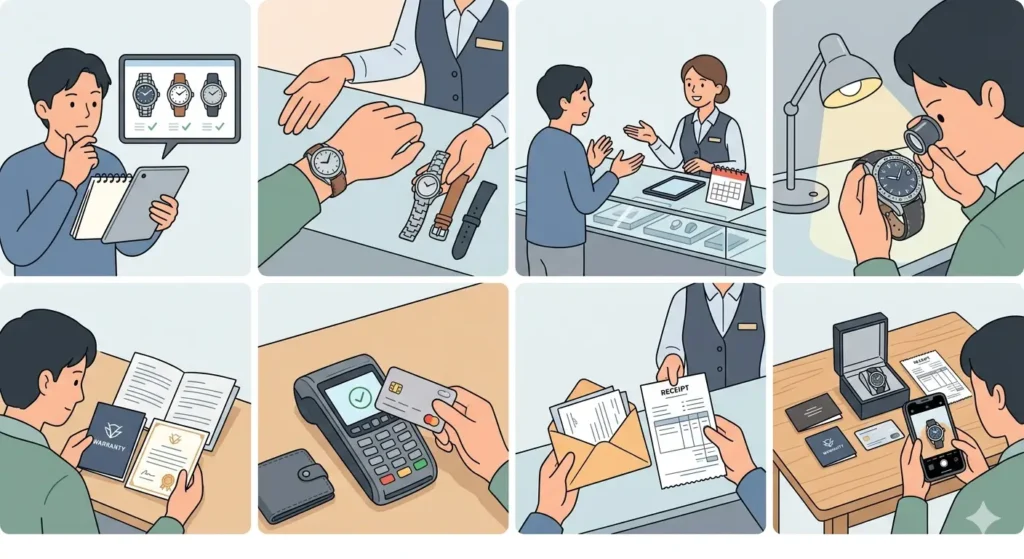
- Step 1: Visit the authorized dealer or trusted seller with the shortlist of preferred models narrowed to 2-3 options based on research
- Step 2: Try on each watch, testing different strap options and observing how it fits the wrist and complements personal style
- Step 3: Ask questions about availability, waiting times for popular models, and any current promotions or package deals
- Step 4: Inspect the watch thoroughly under good lighting, checking for any imperfections, ensuring all functions operate correctly, and verifying serial numbers
- Step 5: Review all documentation including warranty cards, instruction manuals, and certificates of authenticity before payment
- Step 6: Use secure payment methods like credit cards for purchase protection, avoiding cash transactions for high-value pieces
- Step 7: Obtain a detailed receipt listing the model reference, serial number, purchase price, and seller information
- Step 8: Register the watch with the manufacturer if applicable, and photograph all documentation for personal records
Negotiation possibilities vary by market conditions and dealer policies. Authorized dealers rarely discount current production models but may offer better terms on discontinued references or display pieces. Secondary market sellers often entertain offers 5-10% below asking prices, especially for watches listed for extended periods.
Tips for First-Time Luxury Watch Buyers
- Start with versatile, time-only models rather than complex chronographs or perpetual calendars that require more maintenance
- Choose classic designs over trendy pieces that may fall out of fashion within a few years
- Visit multiple dealers and try various brands before committing to understand personal preferences
- Read the instruction manual thoroughly to understand all functions and proper care procedures
- Join online watch communities to learn from experienced collectors and stay informed about market trends
- Consider brands with strong service networks in the local area for convenient maintenance access
- Avoid impulse purchases—sleep on the decision for at least 24-48 hours before buying
- Keep the original packaging and papers, even if the watch becomes a daily wearer
- Learn basic care like avoiding magnetic fields, not operating pushers underwater, and storing properly when not worn
- Use world time comparison tools to understand GMT functions if considering travel watches with multiple time zones
Common Problems and Solutions
Issue 1: Watch Runs Fast or Slow
Mechanical watches naturally vary by a few seconds daily, but accuracy beyond manufacturer specifications indicates a problem. Magnetic interference from electronics causes the most common timing issues—demagnetization by a watchmaker typically costs $50-$100 and resolves the problem immediately. If the watch consistently gains or loses more than 10 seconds daily, professional regulation brings it back to specification.
Issue 2: Crown Feels Stuck or Difficult to Turn
Screw-down crowns require counter-clockwise unscrewing before pulling out to set the time. Many first-time owners accidentally try to pull the crown while still threaded, which can damage the stem. If the crown genuinely sticks after proper unscrewing, dried lubrication may be the culprit—avoid forcing it and bring the watch to a service center for inspection and cleaning.
Issue 3: Water Damage Despite Water Resistance Rating
Water resistance ratings decrease over time as gaskets age and degrade. Operating the crown or pushers while underwater allows water ingress regardless of depth rating. Hot tub and shower use causes rapid temperature changes that create condensation inside the case. Annual gasket checks and pressure testing maintain water resistance, especially for watches regularly exposed to moisture.
Issue 4: Bracelet Sizing Feels Uncomfortable
Proper bracelet fit allows one finger to slide between the watch and wrist. Authorized dealers include professional sizing with purchase, adjusting the bracelet by removing or adding links. Some wrists swell during heat or exercise, requiring slightly looser sizing than initially comfortable. Micro-adjustment features on modern clasps provide fine-tuning without removing links.
Pro-Tip: Schedule the first service slightly earlier than recommended—around year 4 instead of year 5—to catch any developing issues before they cause significant damage. Early intervention prevents minor problems from escalating into expensive repairs.
Frequently Asked Questions
What is the best luxury watch brand for beginners?
Omega offers the best combination of quality, heritage, and value for first-time luxury watch buyers. The brand’s Seamaster and Speedmaster collections provide iconic designs with in-house movements at price points starting around $5,000. Alternative excellent choices include Tudor (Rolex’s sister brand), Longines for elegant dress watches, and TAG Heuer for sporty chronographs.
Should a first luxury watch be new or pre-owned?
Both options carry advantages depending on budget and preferences. New watches provide full manufacturer warranties and unworn condition but cost more. Certified pre-owned watches from reputable dealers offer 20-30% savings with dealer warranties while maintaining authenticity guarantees. For limited budgets, buying pre-owned from trusted sources allows access to higher-tier brands that would be unaffordable new.
How much should someone spend on a first luxury watch?
Allocating $3,000 to $7,000 provides access to quality Swiss luxury watches from brands like Omega, Tudor, and Longines without overstretching financially. This range delivers true luxury craftsmanship while leaving room for future collection growth. Spending less than $2,000 typically means fashion watches rather than proper luxury timepieces, while exceeding $10,000 as a first purchase may lead to regret if tastes change.
What size watch case works best for different wrist sizes?
Wrists measuring 15-16cm pair well with 36-38mm cases, 17-18cm wrists suit 38-40mm, and 19cm or larger can accommodate 42-44mm diameters. The lug-to-lug measurement matters more than diameter—lugs should not overhang the wrist’s edges. Modern sports watches wear larger than vintage pieces of the same diameter due to design differences, so always try before buying.
Is it worth buying a luxury watch as an investment?
Most luxury watches should be purchased for enjoyment rather than investment returns. Certain models from Rolex, Patek Philippe, and Audemars Piguet appreciate over time, but predicting which pieces will increase in value remains difficult. Buying what brings personal satisfaction ensures no regret even if resale value depreciates, while chasing investment returns often leads to overpaying for hyped models.
How can buyers tell if a luxury watch is authentic?
Authentic luxury watches display perfect finishing, precise engravings, and smooth operation across all functions. Serial and reference numbers should match manufacturer records and appear in correct locations with proper fonts. The movement visible through case backs shows decorated components with brand markings. When in doubt, authentication services from certified watchmakers or platforms like WatchCSA provide professional verification for $100-$300.
What maintenance does a luxury watch require?
Mechanical watches need complete servicing every 5-7 years, costing $300-$1,000 depending on complexity. Between services, keep watches away from strong magnets, avoid temperature extremes, and wipe down after exposure to sweat or saltwater. Automatic watches benefit from regular wear or watch winder use to prevent lubricants from settling. Store watches in their original boxes or watch rolls to prevent scratches.
When is the best time to buy a luxury watch?
End-of-year holiday sales and major watch trade shows like Baselworld timing often bring promotional offers from authorized dealers. The secondary market sees more negotiable pricing during economic downturns or when sellers need quick cash. However, buying the right watch at fair market value matters more than timing purchases for marginal discounts. Use time-tracking tools to monitor price trends across multiple platforms before making purchase decisions.
Can luxury watches be worn daily without damage?
Most luxury sports watches handle daily wear exceptionally well—Rolex Submariners and Omega Seamasters were designed for exactly this purpose. Dress watches with slim cases and delicate complications require more careful treatment, avoiding impacts and water exposure. Rotating between multiple watches extends each piece’s lifespan by reducing wear, but quality luxury watches built for daily use easily last decades with proper maintenance and care.
What paperwork should come with a luxury watch purchase?
Complete documentation includes the original warranty card with dealer stamp and purchase date, instruction manual, chronometer certification if applicable, original box and outer packaging, and detailed purchase receipt. Full sets significantly impact resale value—watches with complete papers command 15-25% premiums over identical models sold watch-only. Keep digital copies of all documents and use timing tools to track warranty expiration dates for service planning.