
Building a three-watch collection is the foundation of smart watch ownership. This guide shows how to select a dress watch, sport watch, and everyday timepiece that covers all occasions while maximizing versatility and value.
Key Takeaways
- A three-watch collection should include one dress watch, one sport watch, and one everyday casual piece
- Dress watches work best with leather straps, simple dials, and 38-40mm cases
- Sport watches need water resistance (minimum 100m), durable materials, and legible displays
- Everyday watches bridge the gap with versatile styling that transitions from casual to semi-formal
- Budget 40% for the dress watch, 35% for sport, and 25% for everyday when allocating funds
- Avoid overlap in style, color, and functionality between the three pieces
Understanding the Three-Watch Framework
The three-watch collection represents the minimum number needed to handle any situation without redundancy. Each watch serves a distinct purpose: formal events require refined elegance, active pursuits demand durability, and daily life needs comfortable versatility. This approach prevents the common mistake of buying multiple similar watches that leave gaps in functionality.
Most watch enthusiasts find this framework eliminates decision fatigue when checking time across different settings. The strategy also builds collection value more efficiently than random purchases.
Selecting the Dress Watch
The dress watch handles formal occasions, business meetings, and evening events. This piece should be the most refined in the collection.
Size and Proportions
Dress watches typically measure 38-40mm in diameter with thin cases under 10mm thick. These proportions allow the watch to slide cleanly under a dress shirt cuff without catching fabric. Cases in precious metals like gold or steel with polished finishes create appropriate formality.
Dial Design
Simple dial layouts work best for formal settings. White, silver, or black dials with minimal complications maintain elegance. Stick or Roman numeral markers provide clear legibility without sportiness. Avoid chronographs, bezels, or busy designs that reduce formal appeal.
Strap Selection
Leather straps in black or brown complement formal attire better than metal bracelets. Alligator or calfskin leather adds refinement. The strap should match belt and shoe colors for coordinated appearance.
Movement Choice
Mechanical movements suit dress watches when budget allows, but quality quartz movements offer accuracy and low maintenance. The key is reliability during important occasions where checking a reliable timekeeper matters most.
Pro-Tip: Choose a dress watch with a date window at 3 or 6 o’clock position only if needed regularly. Date complications can disrupt dial symmetry and formal aesthetics. Many collectors prefer time-only dress watches for pure elegance.
Choosing the Sport Watch
Sport watches handle physical activities, outdoor adventures, and casual weekend wear. Durability and functionality define this category.
Water Resistance Requirements
Minimum 100m (10 ATM) water resistance protects against swimming and water sports. Dive watches rated 200m or higher add safety margins for serious water activities. Screw-down crowns prevent water intrusion during pressure changes.
Case Construction
Stainless steel cases provide the best balance of durability and weight. Sizes typically run 40-44mm to accommodate larger bezels and crowns. Sapphire crystal resists scratches better than mineral glass during active use.
Bracelet and Strap Options
Metal bracelets with solid links or rubber straps handle moisture and impact better than leather. Quick-release spring bars allow fast strap changes between activities. NATO straps offer affordable variety and military-inspired durability.
Functionality Features
Rotating bezels help track elapsed time during activities. Luminous hands and markers ensure visibility in low light conditions. Chronograph functions add utility for timing events, though they increase complexity and maintenance needs.
Finding the Everyday Watch
The everyday watch bridges formal and casual settings. This versatile piece handles office work, weekend outings, and spontaneous plans without feeling out of place.
Style Versatility
Everyday watches work best with neutral dial colors like blue, gray, or white that pair with various outfits. Case sizes around 38-42mm suit most wrist sizes without drawing excessive attention. Both leather and metal bracelet options maintain appropriate versatility.
Comfort Considerations
Since this watch gets worn most frequently, comfort trumps other factors. Reasonable case thickness under 12mm prevents fatigue during all-day wear. Bracelet or strap quality affects comfort significantly during extended periods.
Practical Functions
Date displays add practical value for daily reference. Water resistance around 50-100m handles handwashing and rain without concern. Avoid overly complicated features that reduce reliability or increase service costs.
Brand and Movement
Reliable brands with good service networks ensure the watch stays functional through heavy use. Quality quartz movements reduce maintenance while mechanical options add engagement for enthusiasts who enjoy winding rituals.
Budget Allocation Strategy
Smart budget distribution maximizes collection value across all three pieces.
Percentage Breakdown

- Step 1: Allocate 40% of total budget to the dress watch, as this piece represents the collection during important occasions
- Step 2: Assign 35% to the sport watch, which requires durable construction and quality materials
- Step 3: Reserve 25% for the everyday watch, which sees most wear but needs less formal finishing
This distribution ensures each category receives appropriate investment without overemphasis on any single piece. For example, a $3,000 total budget divides into $1,200 dress, $1,050 sport, and $750 everyday watches.
Value Optimization
Consider pre-owned options for dress and sport watches where discounts reach 30-50% off retail. Everyday watches often benefit from buying new to ensure warranty coverage during heavy use. Gray market dealers offer authentic pieces at reduced prices when buying from authorized dealers exceeds budget.
Avoiding Common Overlap Mistakes
Collection redundancy wastes money and reduces practical coverage.
Color Coordination
Select different dial colors for each watch to expand outfit pairing options. A white dress watch, blue everyday piece, and black sport watch covers maximum versatility. Avoid buying three watches with similar dial colors that limit visual variety.
Case Material Variety
Mixing metals creates distinction between pieces. Steel sport watches, gold or two-tone dress watches, and steel everyday watches prevent monotonous appearance. Different finishes like polished versus brushed add further separation.
Functionality Gaps
Ensure the sport watch handles water activities if that matters personally. Verify the dress watch maintains thin profile for formal wear. Confirm the everyday watch offers needed features like date display or timing capabilities without excessive complications.
Pro-Tip: Before finalizing any watch purchase, lay out the current collection and identify what situations remain uncovered. This prevents impulse buying of similar watches that duplicate existing coverage. The goal is maximum versatility with minimum pieces.
Building the Collection Over Time
Most collectors build their three-watch collection sequentially rather than purchasing all pieces simultaneously.
Purchase Order Strategy
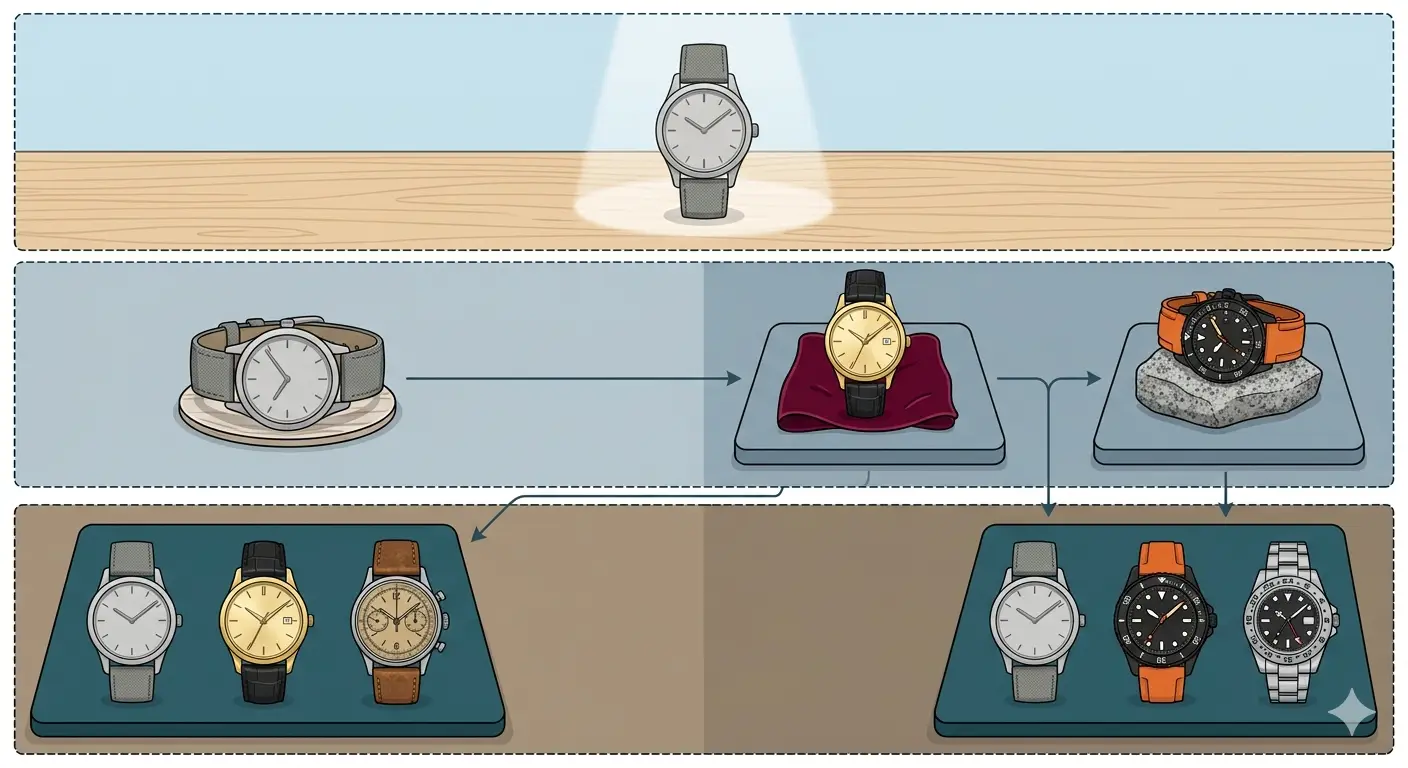
- Step 1: Start with the everyday watch, as this piece gets worn most frequently and provides immediate utility
- Step 2: Add the dress watch second if formal occasions occur regularly, or the sport watch if active lifestyle dominates
- Step 3: Complete the collection with the final piece once the first two establish clear gaps in coverage
Learning Through Use
Wearing each watch reveals personal preferences about size, weight, and features that inform future purchases. The first watch teaches what matters most before investing in remaining pieces. This approach reduces costly mistakes from buying all three watches before understanding individual wearing habits.
Tips for Maintaining Collection Value
Proper care preserves watch condition and resale value throughout ownership.
- Store watches in individual compartments to prevent scratches from contact with each other
- Service mechanical watches every 5-7 years to maintain accuracy and prevent wear damage
- Keep original boxes, papers, and receipts for documentation during potential future sales
- Rotate watches regularly to prevent lubricants from settling in unworn pieces
- Clean metal bracelets monthly with soft brushes and mild soap to remove dirt buildup
- Avoid exposing watches to extreme temperatures that damage seals and lubricants
- Replace leather straps when showing wear rather than letting deterioration reach the case
Common Problems and Solutions
Watch Feels Too Large or Small
Case size matching wrist proportions affects comfort and appearance. Measure wrist diameter before purchasing to ensure proper fit. Most retailers accept returns within reasonable periods if sizing proves incorrect after wearing at home.
Difficulty Choosing Between Similar Options
Create comparison charts listing features, prices, and specifications side-by-side. Eliminate options that duplicate existing collection coverage. Visit physical stores when possible to assess actual wrist presence beyond online photos.
Budget Constraints Limiting Choices
Start with one quality piece rather than three mediocre watches that need replacement sooner. Pre-owned market offers authentic luxury pieces at accessible prices. Microbrands provide excellent value with direct-to-consumer pricing that eliminates retail markups.
Uncertainty About Watch Legitimacy
Purchase from authorized dealers or reputable pre-owned sellers with authentication guarantees. Avoid deals that seem too good to be true, as counterfeit watches flood online marketplaces. Request serial number verification with manufacturer before completing private sales.
Frequently Asked Questions
What makes a three-watch collection better than owning just one or two watches?
Three watches provide complete coverage for all occasions without redundancy. One watch forces compromises in either formal or athletic settings. Two watches often leave gaps in versatility. Three distinct pieces handle dress codes, activities, and daily wear with appropriate style and functionality for each context.
Should all three watches come from the same brand?
No, mixing brands often provides better value and variety. Different manufacturers excel at specific categories – some produce superior dress watches while others specialize in sport models. Brand diversity prevents monotonous collection appearance and allows choosing best-in-class pieces for each category within budget.
Can a single versatile watch replace the need for three separate pieces?
Some watches attempt versatility, but truly handling all situations requires compromises that reduce effectiveness everywhere. Dress watches need thin cases that sacrifice water resistance. Sport watches need durability that adds bulk inappropriate for formal wear. Three focused pieces outperform one compromise solution.
How long does building a complete three-watch collection typically take?
Most collectors complete their foundation over 1-3 years, depending on budget and purchasing pace. Rushing leads to impulsive decisions and buyer’s remorse. Taking time allows learning from each watch before adding the next piece, ensuring better final selection based on actual wearing experience.
What total budget should someone plan for a quality three-watch collection?
Entry-level quality collections start around $1,500-2,000 total, with each piece ranging $500-800. Mid-range collections run $5,000-10,000 with better finishing and brand prestige. Luxury collections exceed $15,000 with precious metals and haute horlogerie movements. Budget should match personal financial situation without creating strain.
Is mechanical or quartz movement better for each watch type?
Mechanical movements suit dress watches when appreciation for craftsmanship matters. Quartz works well for sport watches needing accuracy during activities and everyday watches worn frequently. Mixed collection with both movement types provides variety while matching practical needs to technology strengths.
How often should watches be rotated in a three-piece collection?
Rotate based on occasions rather than schedules. Wear the dress watch for formal events, sport watch for activities, and everyday watch for regular days. This natural rotation prevents forcing watches into inappropriate settings while ensuring each piece gets adequate use to maintain mechanical movement health.
Can vintage watches work well in a modern three-watch collection?
Vintage pieces add character and value when properly serviced and authenticated. Older dress watches often feature superior proportions and finishing compared to modern equivalents. Sport watches benefit more from modern materials and water resistance. Mixing vintage dress with modern sport and everyday creates interesting collection depth.
What size differences should exist between the three watches?
Dress watches typically measure smallest at 38-40mm, everyday watches sit middle at 39-42mm, and sport watches run largest at 40-44mm. These size progressions match functional needs while creating visual distinction between pieces. Exact measurements depend on personal wrist size and style preferences.
Should the collection include different strap or bracelet types?
Yes, variety in strap types prevents monotonous appearance and suits different wearing contexts. Leather straps work best for dress watches, metal bracelets suit everyday wear, and rubber or NATO straps handle sport activities. Multiple strap options for each watch multiply outfit pairing possibilities without buying additional watches.
Conclusion
A properly constructed three-watch collection covers all lifestyle needs with distinct pieces for formal occasions, athletic activities, and everyday wear. Smart budget allocation, avoiding overlap, and sequential purchasing build collections that provide maximum versatility and lasting value. This framework eliminates guesswork while preventing common mistakes that plague unfocused buying.