
A brand-new leather watch strap can feel uncomfortably rigid right out of the box. That stiffness is completely normal – it just means the leather has not yet conformed to the shape of the wrist. With a little patience and the right technique, any stiff leather strap can be softened into something that feels like it was made specifically for you. This guide walks through exactly how to break in a stiff leather watch strap, step by step, using methods that actually work.
Quick Summary
- Problem: New leather watch straps are stiff and uncomfortable
- Root cause: Untreated or tightly finished leather that has not yet flexed or conformed to wrist shape
- Best methods: Wearing it regularly, manual bending, leather conditioner, and gentle moisture techniques
- Time to soften: Anywhere from a few days to 2-3 weeks depending on leather thickness and type
- What to avoid: Soaking in water, using harsh oils, or forcing the strap to bend sharply
Step-by-Step Guide to Breaking In a Stiff Leather Watch Strap
Method 1: Wear It Consistently Every Day
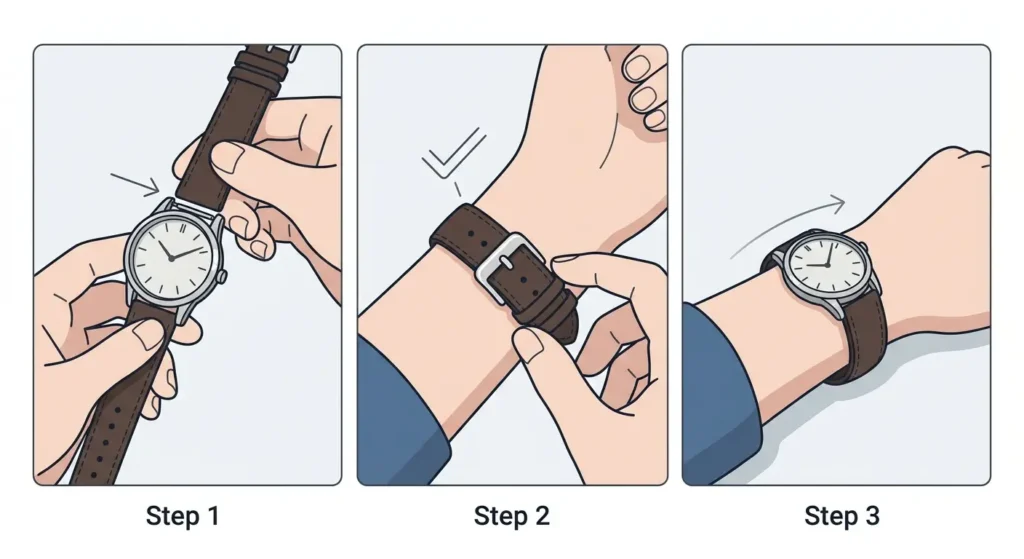
The most reliable way to soften a stiff leather strap is simply to wear it. Body heat, natural skin oils, and the repeated motion of the wrist gradually work the leather fibers, making them more pliable over time. Most people find that consistent daily wear over one to two weeks produces a noticeable improvement in comfort and flexibility.
- Step 1: Attach the strap to the watch and wear it for at least 6 to 8 hours per day.
- Step 2: Adjust the buckle to a comfortable hole – not too tight, not too loose.
- Step 3: Continue wearing daily. The strap will begin to curve naturally to match the wrist within a few days.
This works best when the watch is worn during everyday activities like typing, cooking, or light exercise – anything that keeps the wrist in motion.
Method 2: Apply a Leather Conditioner
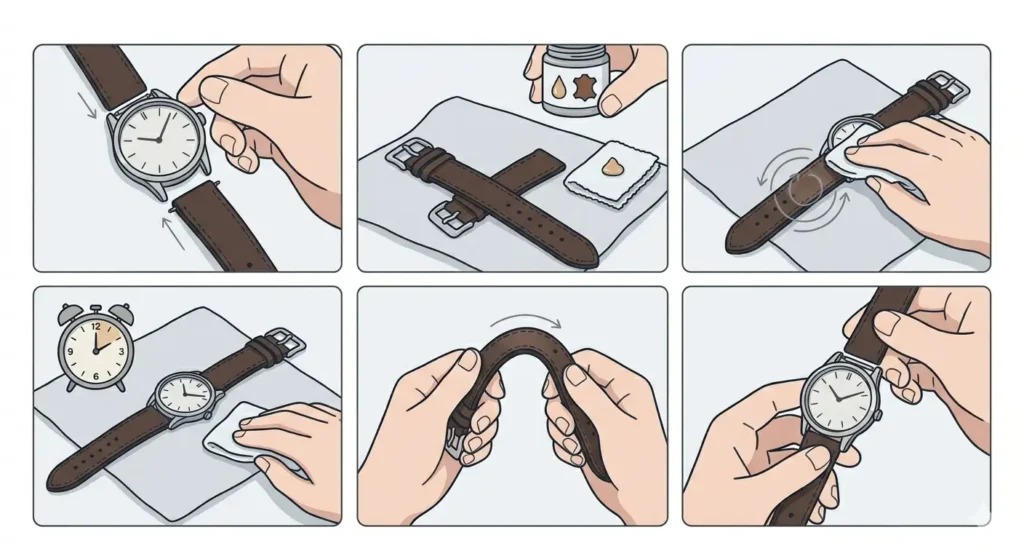
A good leather conditioner penetrates the surface and lubricates the fibers from within, dramatically reducing stiffness. This is one of the fastest ways to see results – especially for thicker or more tightly finished leather straps.
- Step 1: Remove the strap from the watch if possible to avoid getting product on the case or lug area.
- Step 2: Apply a small amount of leather conditioner (such as mink oil, neatsfoot oil, or a dedicated watch strap conditioner) onto a soft, lint-free cloth.
- Step 3: Rub the conditioner into both the outer and inner surfaces of the strap using gentle circular motions.
- Step 4: Allow the conditioner to absorb for at least 20 to 30 minutes before wiping off any excess with a clean cloth.
- Step 5: Gently flex the strap by hand a few times to help the conditioner work into the fibers.
- Step 6: Reattach the strap and wear normally.
Pro-Tip: Always test the conditioner on a small, hidden part of the strap first – especially on exotic or stitched leather – to make sure it does not cause discoloration or damage. Less is more with conditioner; a thin, even coat is all that is needed.
Method 3: Manual Bending and Flexing
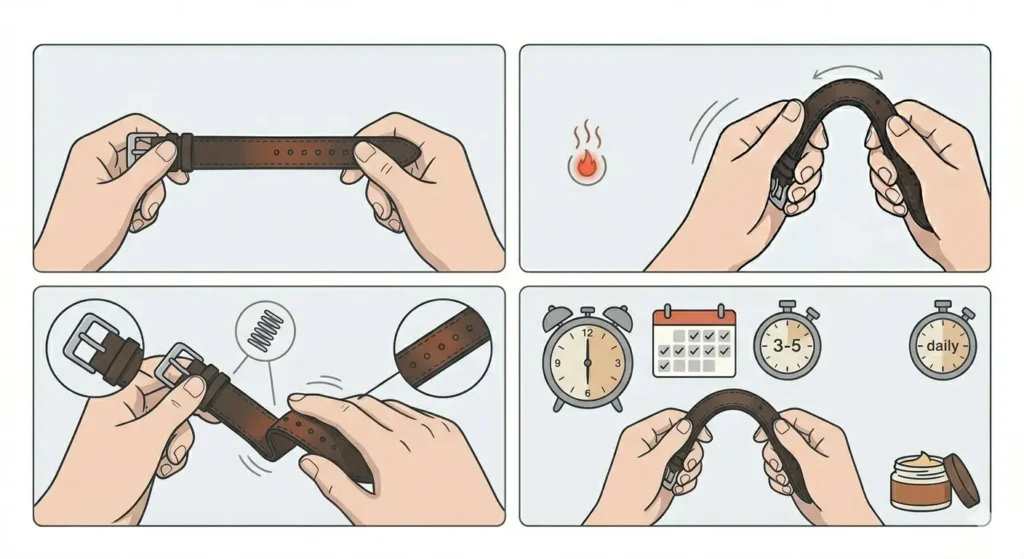
This is one of the quickest hands-on techniques and works especially well on vegetable-tanned leather straps that tend to be particularly stiff when new. The key is to apply gentle, controlled pressure rather than forcing it.
- Step 1: Hold the strap with both hands, one on each end.
- Step 2: Gently bend the strap back and forth – curling it inward (the direction it wraps around the wrist) and then releasing it. Do this slowly and steadily.
- Step 3: Move along the length of the strap so every section gets worked. Pay extra attention to the area near the buckle and the first few holes, as these tend to stay stiff the longest.
- Step 4: Repeat this process for 3 to 5 minutes daily. Combine this with the conditioner method for faster results.
This technique mimics the natural flexing that happens during wear, just in a more concentrated and deliberate way. Most people find that this alone can cut the break-in time in half.
Method 4: Use Gentle Warmth
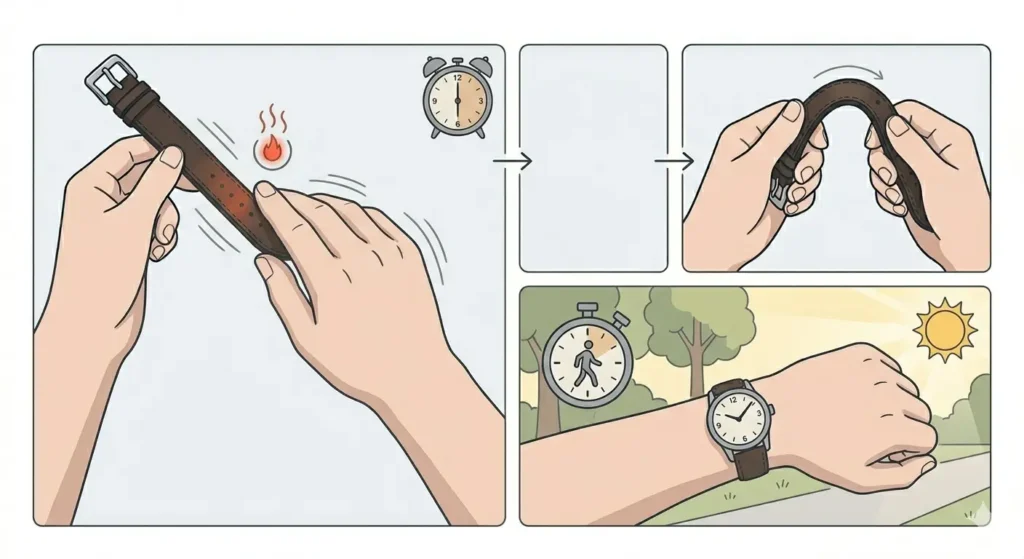
Warmth makes leather more pliable. A simple and safe way to use this to an advantage is to warm the strap slightly before flexing it or conditioning it.
- Step 1: Hold the strap in both hands and rub it firmly for 30 to 60 seconds. The friction generates enough heat to soften the leather slightly.
- Step 2: Immediately after warming, gently flex the strap as described in Method 3.
- Step 3: Alternatively, wearing the watch on a warm day or during mild activity (such as a timed short walk) helps the strap loosen up faster thanks to ambient warmth and wrist movement.
Avoid using a hairdryer or placing the strap near direct heat sources. Excessive heat can dry out the leather, cause cracking, or warp the shape of the strap permanently.
Method 5: Roll the Strap Around a Cylindrical Object Overnight
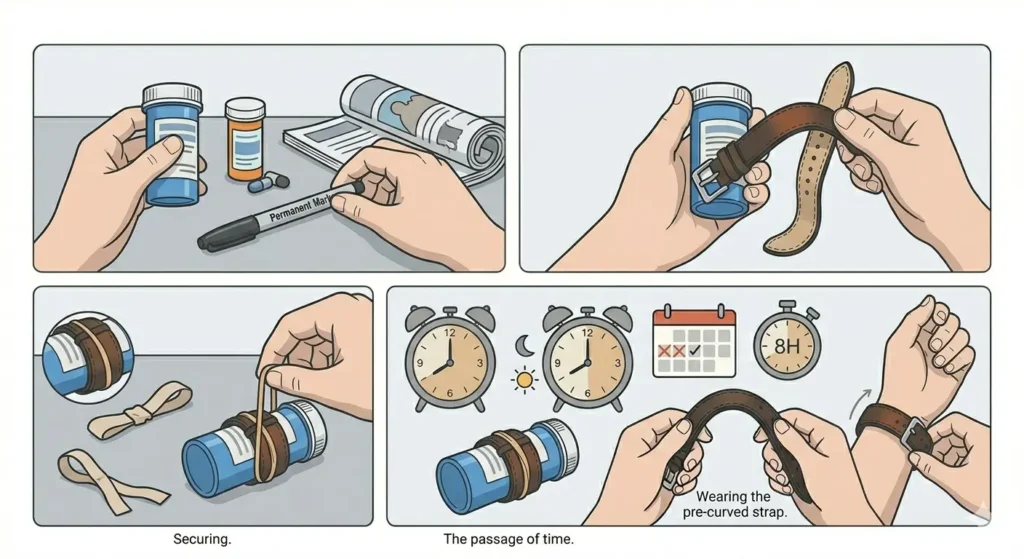
This is a passive method that works while sleeping or during periods of non-wear. It helps pre-curve the strap so it sits more naturally on the wrist from day one.
- Step 1: Find a cylindrical object with a diameter similar to a wrist – a pill bottle, a marker, or a rolled-up magazine works well.
- Step 2: Wrap the strap around the object with the inner side facing outward (the way it would wrap on the wrist).
- Step 3: Secure it in place with a rubber band or loosely tie it with a cloth ribbon. Do not use anything that would leave marks or dents.
- Step 4: Leave it overnight or for at least 8 hours.
- Step 5: Remove and wear the strap normally. It should already have a noticeable curve to it.
Pro-Tip: Combine this rolling method with a light application of leather conditioner before rolling. The conditioner softens the fibers while the curl position trains the strap into shape simultaneously – cutting the break-in time significantly.
Tips for Maintaining a Soft Leather Strap
- Apply a leather conditioner every 2 to 3 months to keep the strap supple and prevent future stiffening.
- Avoid prolonged exposure to direct sunlight, which dries out leather and causes stiffness to return.
- Rotate between two or more straps if possible. Allowing a strap to rest between wears gives it time to recover its shape and prevents excessive moisture buildup from sweat.
- Store leather straps flat or loosely coiled – never buckled tightly or folded sharply – to maintain their flexibility.
- Wipe down the inner surface of the strap regularly with a dry or slightly damp cloth to remove sweat residue, which can stiffen the leather over time.
- When tracking wear time for conditioning schedules, a simple time tracking reference can help keep tabs on how long the strap has been in use across different occasions or time zones.
Common Problems and Fixes
Fix 1: The Strap Is Still Stiff After Two Weeks of Wearing
Some leather types – particularly thick full-grain or vegetable-tanned leather – take longer to break in than others. If daily wear alone is not producing results, try combining Method 2 (conditioner) with Method 3 (manual flexing) at the same time. Apply conditioner, let it absorb for 15 minutes, then work the strap by hand. Repeat every other day.
Fix 2: The Strap Feels Softer in the Middle but Still Stiff Near the Buckle
The area near the buckle and the first hole receives less flexing motion during everyday wear. Focus the manual bending technique specifically on that section. Spending an extra 2 minutes a day working that area by hand will resolve this unevenness quickly.
Fix 3: The Leather Conditioner Darkened the Strap Color
This is a common reaction, especially with lighter-colored straps. In most cases, the color lightens slightly as the conditioner fully absorbs over 24 to 48 hours. If permanent darkening is a concern, use a conditioner specifically formulated for lighter leathers, or switch to a colorless, wax-based product.
Fix 4: The Strap Leaves Marks or Feels Rough on the Wrist
A rough or unmarked inner surface is often a sign that the leather needs conditioning and that the outer finish has not yet worn in. Condition the inner side of the strap specifically and follow up with manual flexing. A very light buff with a soft cloth after conditioning can also smooth out the inner texture.
Frequently Asked Questions
How long does it take to break in a stiff leather watch strap?
It typically takes anywhere from one to three weeks of consistent daily wear to fully break in a stiff leather watch strap. Thicker or vegetable-tanned leather may take slightly longer. Using leather conditioner and manual flexing methods alongside regular wear can speed up the process considerably.
Can water be used to soften a leather watch strap?
It is not recommended. Submerging or soaking a leather strap in water can cause the material to warp, weaken the stitching, and lead to cracking as it dries. Light moisture from natural sweat during wear is fine, but deliberately wetting the strap to soften it is likely to cause more damage than benefit.
What is the best leather conditioner for a watch strap?
Products like Leather Honey, Bickmore Bick 4, and dedicated watch strap conditioners are popular and well-regarded choices. Neatsfoot oil and mink oil also work effectively, though they can darken lighter-colored leather. For light or exotic leathers, a clear, wax-based conditioner is the safest option.
Is it safe to use olive oil or coconut oil on a leather watch strap?
While some people use natural oils like olive or coconut oil as a home remedy, these can go rancid over time and may leave an unpleasant smell. They can also cause unpredictable darkening or texture changes. A dedicated leather conditioner is a far safer and more predictable choice.
Why is a new leather watch strap stiff in the first place?
New leather straps are often treated with a surface finish or wax during manufacturing that makes them appear polished and structured. The leather fibers have also never been flexed or compressed, so they retain a rigid, flat shape. Breaking in the strap essentially means softening and loosening those fibers so they can conform naturally to the curve of the wrist.
Does the type of leather affect how long the break-in process takes?
Yes, significantly. Vegetable-tanned leather – common in heritage and artisan straps – tends to be the stiffest and takes the longest to break in. Chrome-tanned leather softens more quickly. Suede and nubuck straps are usually softer from the start and may require little to no break-in at all.
Can a leather watch strap be broken in without wearing the watch?
Yes. Methods like rolling the strap around a cylindrical object, applying leather conditioner, and manual flexing can all be done without wearing the watch. These are especially useful for straps that are being prepared in advance or stored until needed.
Will breaking in the strap damage it in any way?
No, as long as the methods used are gentle and appropriate. Avoid forcing the strap to bend sharply or fold flat, as this can crack the surface. Using the right conditioner and applying moderate, controlled pressure during flexing will not damage a quality leather strap – it will actually help preserve it over time.
How often should leather watch straps be conditioned after the break-in period?
Conditioning every two to three months is a good general guideline for regular use. In hot, dry climates or for straps that see heavy daily use, once a month may be more appropriate. A quick visual check for dryness or slight stiffness returning is a reliable indicator that another round of conditioning is due.
What signs indicate that a leather watch strap is breaking in properly?
The strap will start to curve more naturally, feel softer against the skin, and sit more flush with the wrist rather than holding a flat or rigid shape. The buckle area will become easier to bend, and the strap will no longer feel like it is pushing back against the wrist. These are all signs the break-in process is working as expected.