
How long is 800 seconds? The direct and simple answer is 13 minutes and 20 seconds. While this is a straightforward mathematical conversion, the feeling of 800 seconds can change dramatically based on your situation. Are you waiting for a server to reboot, holding your breath, or enjoying a coffee break? This block of time can feel like an eternity or vanish in an instant.
Understanding time in different units is more than just a math exercise. It’s a fundamental part of scheduling, planning, and managing our daily lives. Whether you’re timing a presentation, figuring out a song’s length, or setting a kitchen timer, knowing how to quickly convert seconds to minutes is a practical skill. In this article, we’ll break down the conversion, explore what you can accomplish in 800 seconds, and look at this time span in a broader context.
The Math: How to Convert 800 Seconds to Minutes
The calculation for converting seconds to minutes is simple. Since there are 60 seconds in 1 minute, you just need to divide the total number of seconds by 60.
Here’s the step-by-step math for 800 seconds:
1. Divide 800 by 60: 800 / 60 = 13.333…
2. Identify the whole number: The whole number is 13. This represents 13 full minutes.
3. Calculate the remaining seconds: To find the leftover seconds, you multiply the whole number (13) by 60. 13 60 = 780 seconds.
4. Subtract from the total: Subtract this number from your original total. 800 seconds – 780 seconds = 20 seconds.
Putting it together, 800 seconds is 13 minutes and 20 seconds.
Alternatively, if you use the decimal from step 1 (0.333…), you can multiply that by 60 to find the remaining seconds: 0.3333 * 60 = 19.99… or exactly 20 seconds. This is a common method used when converting time or coordinates.
What Can You Do in 800 Seconds (13 Minutes 20 Seconds)?
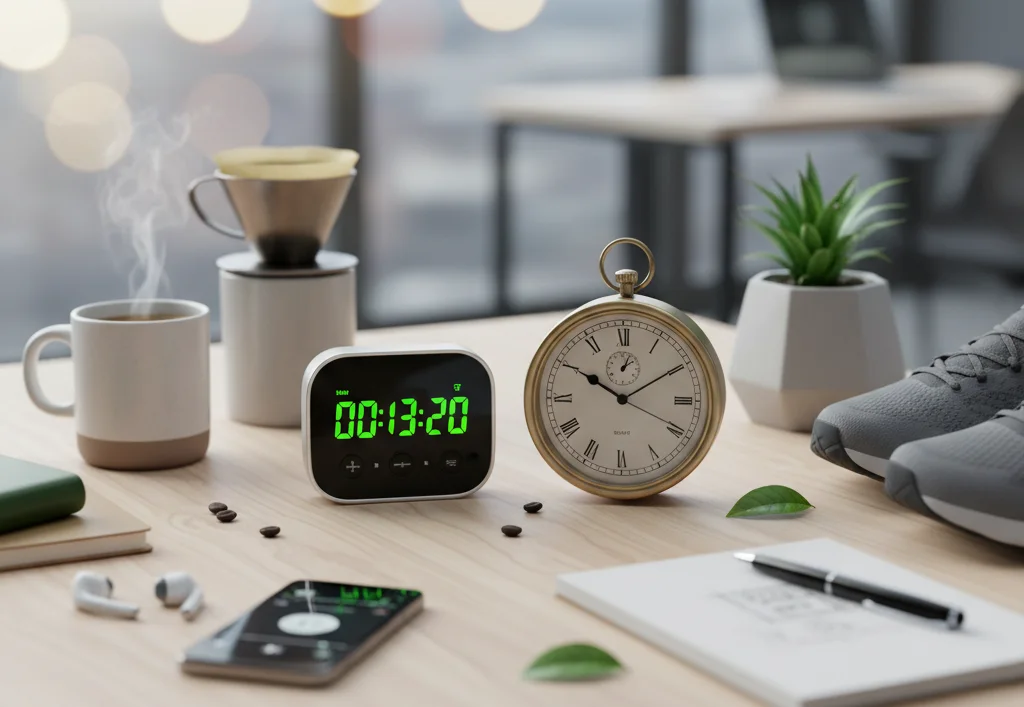
Contextualizing time helps us value it. 13 minutes and 20 seconds is a significant and useful block of time. It’s not just a “moment,” but it’s not a huge commitment either. Here are a few practical examples of what you can achieve in 800 seconds.
Productivity and Work
In a work setting, 800 seconds is the perfect amount of time for a “micro-task.” You could:
- Read and respond to 3-5 important emails.
- Tidy your physical or digital desktop.
- Stand up, stretch, and get a glass of water to clear your head.
- Brainstorm a list of ideas for an upcoming project.
- Review and plan your to-do list for the next hour.
This is slightly more than half of a standard 25-minute Pomodoro Technique session, making it an excellent “short sprint” for focused work.
Health and Wellness
13 minutes is a fantastic window for a quick mental or physical reset.
- Meditation: A 10-12 minute guided meditation session fits perfectly inside 800 seconds, leaving you time to settle in and out.
- HIIT Workout: You can complete a very effective high-intensity interval training (HIIT) circuit. For example: 40 seconds of work followed by 20 seconds of rest, repeated 13 times with different exercises (jumping jacks, push-ups, squats, etc.).
- A Brisk Walk: Get up from your desk and take a brisk walk down the hall, around the block, or up and down a few flights of stairs to get your blood flowing.
Leisure and Learning
In your free time, 800 seconds is enough to:
- Listen to music: The average pop song is about 3 minutes long. You could listen to 3-4 of your favorite songs.
- Make a proper cup of coffee: Whether using a French press, pour-over, or Aeropress, the entire process from boiling water to the final press or pour easily fits within a 13-minute window.
- Watch a video: This is the length of a typical in-depth YouTube explainer, a news segment, or a couple of short instructional videos.
- Read: You could read a few pages of a book or an entire short news article.
800 Seconds in a Broader Context
To give 800 seconds even more perspective, let’s compare it to some other verified time measurements.
- Sunlight to Earth: It takes light approximately 500 seconds (or 8 minutes and 20 seconds) to travel from the Sun to the Earth. So, 800 seconds is just a bit longer than that incredible cosmic journey.
- Sports: In ice hockey, a major penalty plus a minor penalty is 5 + 2 = 7 minutes, or 420 seconds. A “10-minute misconduct” penalty is 600 seconds. 800 seconds is longer than most standard penalty times.
- Other Time Units: 800 seconds is also 800,000 milliseconds or 0.222… hours.
Visualizing Time: Seconds to Minutes Conversion Table
Sometimes, seeing the numbers side-by-side provides the most clarity. Here is a simple table converting common second intervals into minutes.
| Seconds | Minutes (and Seconds) | Hours (Decimal) |
|---|---|---|
| 60 seconds | 1 minute | 0.0167 hours |
| 300 seconds | 5 minutes | 0.0833 hours |
| 600 seconds | 10 minutes | 0.1667 hours |
| 800 seconds | 13 minutes, 20 seconds | 0.2222 hours |
| 900 seconds | 15 minutes | 0.25 hours |
| 1800 seconds | 30 minutes | 0.5 hours |
| 3600 seconds | 60 minutes | 1 hour |
Need Precision? How to Track 800 Seconds Accurately
While knowing 800 seconds is 13:20 is useful for mental planning, there are many times when you need exact precision. For cooking, scientific experiments, workouts, or managing a test, “about 13 minutes” isn’t good enough. You need a specific countdown.
For these situations, a digital tool is your best bet. You can use our robust Timer Tools to set a perfect 800-second countdown (or any other duration you need). A reliable timer removes the guesswork and lets you focus on the task at hand.
Understanding this conversion also helps with global scheduling. If you have a meeting with a colleague in another part of the world, knowing your Current Local Times is essential. Being able to mentally add 13 minutes and 20 seconds to the clock helps you coordinate those “quick sync” calls more effectively.
Why Seconds Matter: The Building Block of Our Day
It’s easy to dismiss a “second” as insignificant, but it is the fundamental SI (International System of Units) unit of time. Officially, the second is defined with incredible precision based on the radiation frequency of a cesium-133 atom. This atomic-level accuracy is what powers our modern world, from GPS navigation and financial market transactions to the internet itself.
So, when you ask “how long is 800 seconds?”, you’re not just converting numbers. You’re measuring out a very real, very specific, and very valuable portion of your day. 800 seconds is 800 opportunities to act, think, or rest.
In conclusion, 800 seconds is a tangible and manageable 13 minutes and 20 seconds. It’s long enough to be productive, to take a meaningful break, or to learn something new. By understanding how to convert and visualize these smaller units of time, we can become better at managing our larger schedules.
For more deep dives into time zones, calendars, and other scheduling topics, be sure to explore our complete Guide.