

A stuck watch bezel can be frustrating, especially when it affects the functionality of a dive watch or GMT timepiece. This guide provides proven methods to safely free a stuck bezel without damaging the watch. Whether the bezel is stuck due to salt deposits, dirt, dried lubricant, or corrosion, these step-by-step solutions will help restore smooth rotation.
Key Takeaways
- Most stuck bezels result from dirt, salt, or dried lubricant between the bezel and case
- Warm water soak is the safest first method for most water-resistant watches
- Gentle pressure and rotation work better than forcing the bezel
- Proper cleaning and lubrication prevent future sticking
- Professional servicing may be necessary for severely corroded or damaged bezels
Method 1: Warm Water Soak
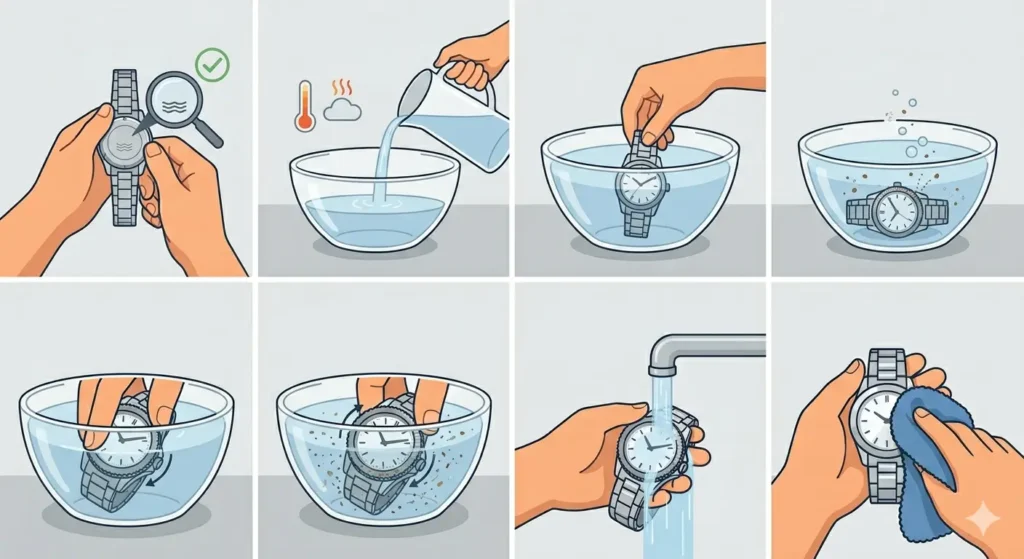
This method works best for water-resistant watches with bezels stuck from salt, sand, or general debris buildup.
- Step 1: Verify the watch has at least 50 meters water resistance by checking the case back or manual
- Step 2: Fill a bowl with warm water (not hot, around 40°C or 104°F)
- Step 3: Submerge the watch completely, ensuring water covers the bezel area
- Step 4: Let the watch soak for 15-20 minutes to dissolve deposits
- Step 5: While still submerged, gently attempt to rotate the bezel back and forth
- Step 6: If resistance decreases, continue rotating to work out remaining debris
- Step 7: Remove the watch and rinse under running water while rotating the bezel
- Step 8: Dry thoroughly with a soft cloth
Pro-Tip: For dive watches used in saltwater, adding a drop of dish soap to the warm water helps break down salt crystals more effectively. This gentle cleaning solution can penetrate tight spaces without harming gaskets or seals.
Method 2: Targeted Pressure and Rotation
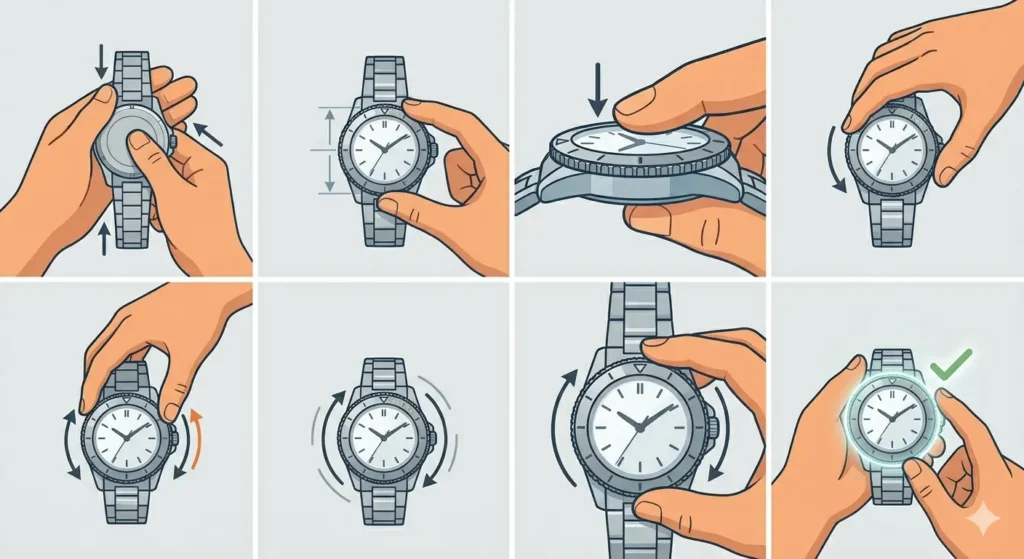
When soaking alone does not resolve the issue, applying controlled pressure while rotating can free stuck mechanisms.
- Step 1: Hold the watch firmly with one hand, supporting the case back
- Step 2: Place thumb and index finger on opposite sides of the bezel
- Step 3: Apply gentle downward pressure on the bezel edge
- Step 4: While maintaining pressure, attempt to rotate the bezel slowly
- Step 5: Work in both directions, applying consistent but gentle force
- Step 6: If movement begins, continue rotating through the full range
- Step 7: Repeat this process several times to ensure smooth operation
Method 3: Isopropyl Alcohol Flush
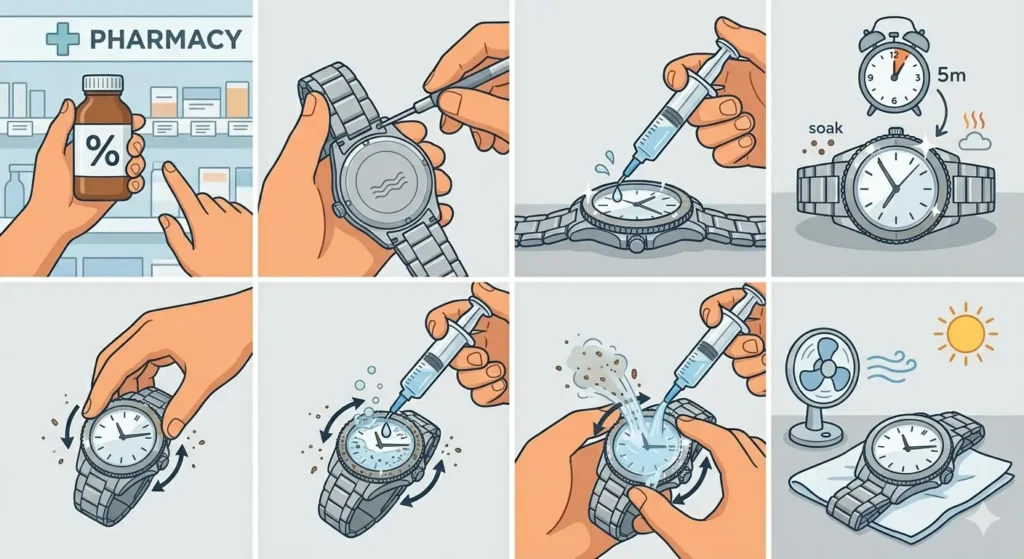
For bezels stuck due to dried oils, old lubricant, or sticky residue, isopropyl alcohol provides effective cleaning.
- Step 1: Obtain 90% or higher isopropyl alcohol from a pharmacy
- Step 2: Remove the watch strap or bracelet to prevent alcohol damage
- Step 3: Using a syringe or dropper, apply alcohol around the bezel edge
- Step 4: Allow the alcohol to seep into the gap between bezel and case for 5 minutes
- Step 5: Gently rotate the bezel back and forth to work the alcohol through
- Step 6: Apply more alcohol and continue rotating until movement improves
- Step 7: Once freed, flush the area with additional alcohol to remove dissolved residue
- Step 8: Let the watch air dry completely before use
Method 4: Freezer Method for Thermal Contraction
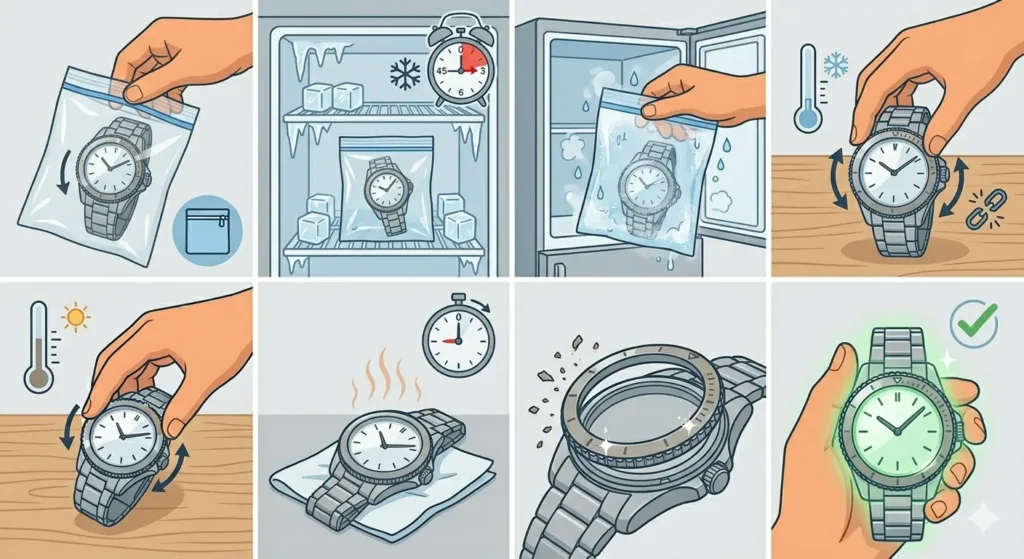
Temperature changes can help break the bond between stuck components through metal contraction and expansion.
- Step 1: Place the watch in a sealed plastic bag to prevent moisture exposure
- Step 2: Put the bagged watch in the freezer for 30-45 minutes
- Step 3: Remove the watch and immediately attempt to rotate the bezel
- Step 4: The cold temperature causes metal contraction that may free stuck parts
- Step 5: If unsuccessful, allow the watch to return to room temperature
- Step 6: Try rotating again as the metal expands during warming
- Step 7: This temperature cycling can break corrosion bonds
Method 5: Rubber Grip Enhancement
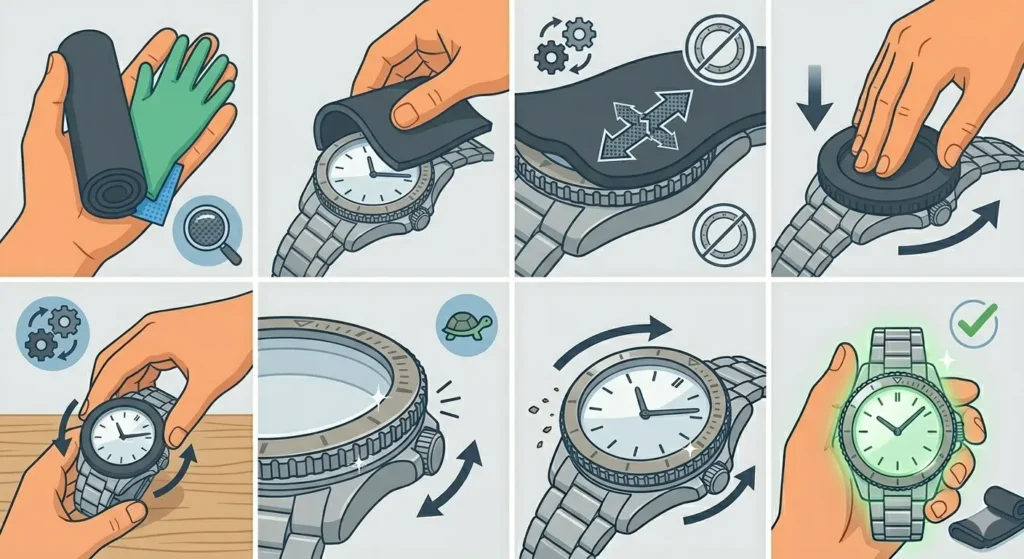
Better grip on smooth bezels can provide the leverage needed to overcome sticking.
- Step 1: Find a rubber jar opener, rubber glove, or similar grippy material
- Step 2: Place the rubber material over the bezel surface
- Step 3: This provides better friction without scratching the bezel
- Step 4: Apply steady rotational force through the rubber layer
- Step 5: The improved grip allows for controlled force application
- Step 6: Work slowly to avoid sudden movements that could damage the mechanism
Tips for Preventing Future Bezel Sticking
- Rinse the watch with fresh water after exposure to saltwater or chlorinated pools
- Rotate the bezel regularly, even when not actively using its function
- Keep the bezel area clean by wiping with a damp cloth weekly
- Avoid exposing the watch to excessive sand, dirt, or dusty environments
- Have the watch professionally serviced every 3-5 years for proper lubrication
- Store watches in a clean, dry environment away from extreme temperatures
- Use the clock tab feature to track regular maintenance schedules
Pro-Tip: Most watchmakers recommend rotating the bezel through its full range at least once per week for watches in regular use. This simple habit prevents lubricant from settling and keeps the mechanism functioning smoothly for years.
Common Problems and Troubleshooting
Bezel Moves But Feels Gritty
This indicates debris or degraded lubricant in the mechanism. Perform multiple warm water soaks with gentle rotation, followed by thorough rinsing. The gritty feeling should gradually diminish as particles flush out.
Bezel Clicks Are Inconsistent
Inconsistent clicking suggests debris interfering with the click spring mechanism. Use isopropyl alcohol flush method to dissolve sticky residue. Rotate the bezel extensively during the cleaning process to ensure alcohol reaches all components.
Bezel Only Sticks in Certain Positions
Position-specific sticking often results from localized corrosion or a bent component. Apply the targeted pressure method while positioning the stuck area at different angles. If the problem persists in the same spots, professional inspection is recommended.
Bezel Became Stuck After Water Exposure
Salt or mineral deposits from water typically cause this issue. Perform an extended warm water soak (30-40 minutes) with gentle dish soap. Work the bezel continuously during soaking to help dissolve and flush deposits.
Bezel Freed But Feels Loose
A loose bezel after freeing may indicate a damaged retaining spring or worn components. While the bezel functions, this requires professional attention to prevent complete failure. Continue using the watch but schedule service soon.
Methods Work Temporarily But Bezel Sticks Again
Recurring sticking suggests either persistent contamination or component wear. After freeing the bezel, perform a thorough cleaning with multiple alcohol flushes. Track recurrence timing with an online stopwatch to provide detailed information for a watchmaker.
Frequently Asked Questions
Can forcing a stuck bezel damage the watch?
Yes, excessive force can crack the bezel, damage the case, or break internal click spring mechanisms. Always start with gentle methods like soaking and gradually increase pressure only if needed. The goal is controlled, steady force rather than sudden yanking or twisting.
How long should a warm water soak take to work?
Most stuck bezels respond to 15-20 minutes of warm water soaking. For heavily corroded or salt-encrusted bezels, extending the soak to 30-40 minutes provides better results. The water temperature should remain warm throughout the process for maximum effectiveness.
Is it safe to use WD-40 or similar penetrating oils on a watch bezel?
No, penetrating oils like WD-40 should never be used on watches. These products can contaminate the movement, damage gaskets, and attract dust. Isopropyl alcohol or professional watch lubricants are the only appropriate solutions for watch maintenance.
What causes a watch bezel to become stuck in the first place?
Common causes include salt deposits from ocean water, accumulated dirt and sand, dried or degraded lubricant, corrosion from moisture exposure, and mineral buildup from tap water. Regular cleaning and maintenance prevent most sticking issues.
Can a stuck bezel indicate other problems with the watch?
Sometimes a stuck bezel signals compromised water resistance, as moisture that causes bezel sticking may have also entered the case. After freeing the bezel, monitor the watch for condensation under the crystal. Any internal moisture requires immediate professional service.
Should vintage watches be treated differently when fixing stuck bezels?
Yes, vintage watches require gentler handling due to potentially fragile components and aged materials. Avoid the freezer method on vintage pieces, as gaskets and adhesives may not tolerate temperature extremes. Warm water soaking remains safe for most vintage watches with adequate water resistance.
How often should watch bezels be cleaned to prevent sticking?
For daily wear watches, a quick rinse under warm water weekly prevents most buildup. Dive watches or sports watches exposed to salt or chlorine should be rinsed immediately after each exposure. Deep cleaning with isopropyl alcohol can be performed every 3-6 months as preventive maintenance.
When should professional service be sought for a stuck bezel?
Seek professional help if gentle methods fail after several attempts, if forcing the bezel causes concerning sounds like cracking or grinding, if the bezel feels unusually loose after freeing, or if the watch shows signs of internal moisture. Professional watchmakers have specialized tools and expertise for complex repairs.
Can all watch bezels be safely submerged in water?
Only watches rated for at least 50 meters (5 ATM) water resistance should be fully submerged. Dress watches, vintage pieces without confirmed water resistance, and watches with damaged gaskets should not be soaked. For these watches, use the isopropyl alcohol method instead, applying liquid carefully around the bezel edge only.
Why does the bezel stick more in cold weather?
Cold temperatures cause lubricants to thicken and metal components to contract slightly, both of which can increase friction and stiffness. Additionally, moisture can freeze between the bezel and case. Warming the watch to room temperature before attempting to rotate the bezel helps prevent damage in cold conditions.