
Changing the strap on a Timex Weekender is a simple process that takes just minutes. This popular watch features a slip-thru strap design that makes swapping bands quick and tool-free, allowing anyone to customize their watch style instantly.
Quick Summary
- Timex Weekender uses a slip-thru strap that slides through spring bars
- No tools required – the process is completely hands-on
- Takes 2-3 minutes to complete
- Works with any 20mm NATO-style or slip-thru strap
- Reversible – straps can be worn with either side facing out
Understanding the Timex Weekender Strap System
The Timex Weekender uses a unique slip-thru strap design where the band passes underneath fixed spring bars on the watch case. Unlike traditional watches that require spring bar tools, this system allows the entire strap to slide through in one continuous piece. The design originated from NATO military watch straps and provides extra security since the watch stays attached even if one spring bar fails.
Most Timex Weekender models use 20mm straps, though some variants use 18mm. Checking the current strap width ensures compatibility with replacement bands. The watch features two fixed spring bars – one between each lug pair – that the new strap will thread through.
Removing the Old Strap
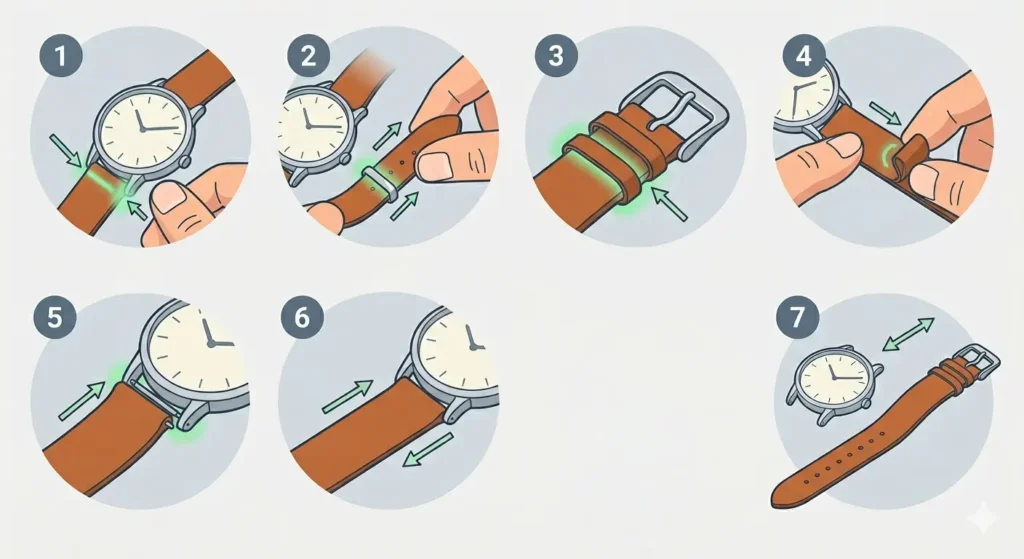
Start by placing the watch face-down on a soft surface to prevent scratches. This position provides clear access to the strap and protects the crystal.
- Step 1: Locate where the strap passes through the metal keeper (the small loop holding the excess strap)
- Step 2: Pull the loose end of the strap completely out of the metal keeper
- Step 3: Find where the strap loops back on itself near the buckle hardware
- Step 4: Pull the strap to unfold this loop completely
- Step 5: Slide the entire strap out from under the spring bar closest to the buckle end
- Step 6: Pull the strap through and away from under the second spring bar
- Step 7: Remove the strap completely from the watch case
The strap should slide freely without resistance. If it feels stuck, double-check that all loops and keepers have been fully released.
Installing the New Strap
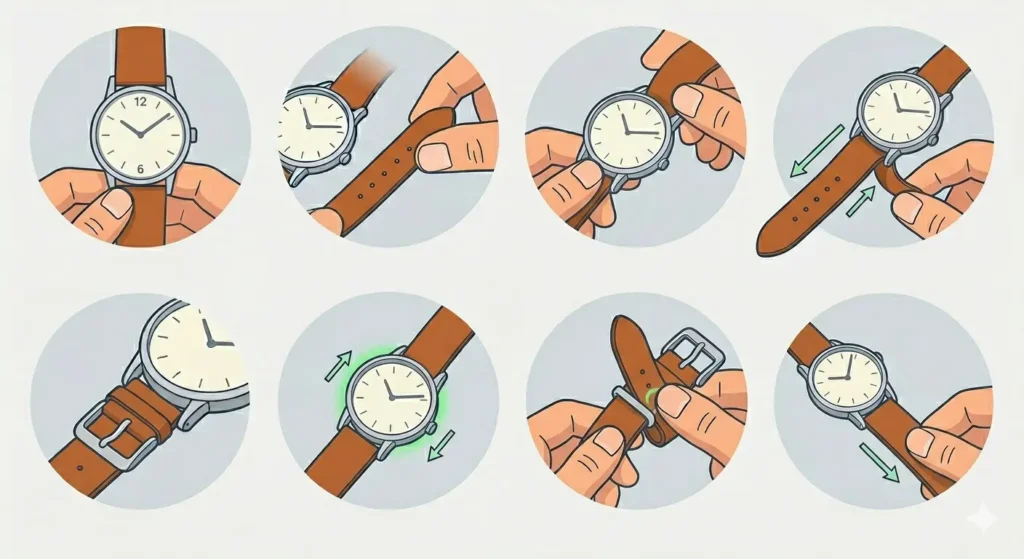
Position the new strap with the desired side facing up. Most straps have different patterns or colors on each side, so choose the preferred look before installation.
- Step 1: Hold the watch case with the 12 o’clock position pointing away
- Step 2: Take the longer end of the strap (the section without the buckle)
- Step 3: Thread this end underneath the spring bar at the top of the watch (near 12 o’clock)
- Step 4: Pull the strap through until several inches extend past the watch case
- Step 5: Guide the same end underneath the bottom spring bar (near 6 o’clock)
- Step 6: Continue pulling until the buckle section sits comfortably at the bottom
- Step 7: Adjust the strap so equal lengths extend from both sides of the watch
- Step 8: Fold the long end back and loop it through the metal keeper near the buckle
- Step 9: Pull the strap tight to secure everything in place
Pro Tip: Before fully tightening, spin the watch case to ensure the strap sits flat and untwisted under both spring bars. A twisted strap causes discomfort and looks unprofessional. Taking an extra moment to check alignment now saves frustration later.
Adjusting for Proper Fit
Once installed, the strap needs proper adjustment for comfortable wear. Put the watch on and fasten the buckle at the hole that feels snug but not tight. The watch should sit firmly on the wrist without sliding around, yet allow one finger to slip underneath the band.
The excess strap length should thread through the metal keeper to prevent flopping. If too much material bunches up, consider a shorter strap or tuck the excess underneath. Some people prefer to check the time across different zones when traveling, making a comfortable watch fit essential for all-day wear.
Test the fit by moving the wrist through a full range of motion. The watch should stay in place during normal activities without feeling restrictive. Adjust the buckle hole up or down as needed until achieving the perfect balance.
Tips for Strap Selection and Maintenance
Choosing quality replacement straps extends the life of both the band and the watch. Look for straps with reinforced stitching at stress points and durable buckle hardware. Genuine leather develops character over time but requires occasional conditioning, while nylon and canvas options offer water resistance and easy cleaning.
Seasonal rotation helps preserve strap condition. Lighter colors and breathable materials work well for summer, while darker leather bands suit professional settings. Keeping multiple straps on hand allows quick style changes – a useful feature when using a clock tab to track tasks throughout different parts of the day.
Regular cleaning prevents buildup of dirt and oils. Nylon straps wash easily with mild soap and water, then air dry completely before reinstalling. Leather requires specialized cleaners and should never be soaked. Remove straps periodically to clean the spring bars and case back, areas where debris accumulates.
Store unused straps flat or rolled loosely to maintain shape. Avoid folding sharply or storing in direct sunlight, which degrades materials over time. Proper storage keeps backup straps ready for quick changes.
Common Problems and Solutions
Strap Feels Loose or Slides Around
This usually indicates the spring bars need cleaning or the strap material has stretched. Remove the strap and inspect the spring bars for debris or corrosion. Clean with a soft cloth and ensure they sit flush in the lug holes. If the strap itself has stretched, replacement becomes necessary as the material has lost elasticity.
Difficulty Threading the Strap Through
Stiff new straps sometimes resist threading, especially thicker materials. Gently work the material back and forth while applying steady pressure. Never force the strap, as this can damage the spring bars. If resistance continues, check that the spring bars rotate freely and are not bent or corroded.
Buckle Hardware Feels Loose
Loose buckles result from worn stitching or hardware failure. Inspect the stitching where the buckle attaches to the strap. If threads show wear or breakage, the strap needs replacement before the buckle detaches completely. Quality straps use reinforced stitching at this critical point.
Watch Sits at Wrong Angle
The watch case should sit flat against the wrist with the face perfectly perpendicular to the arm. If angled, the strap likely twisted during installation. Remove and reinstall, paying careful attention that the material lies completely flat under both spring bars before tightening.
Strap Shows Rapid Wear
Premature wear usually stems from exposure to water, chemicals, or excessive friction. Remove the watch before swimming, showering, or applying lotions. For timing activities, using an online stopwatch instead keeps the watch protected during intense workouts. Rotate between multiple straps to allow each time to dry and recover between wears.
Frequently Asked Questions
What size strap does a Timex Weekender use?
Most Timex Weekender models use 20mm straps, though some variants use 18mm. Measure the current strap width or check the space between the lugs to confirm the correct size before purchasing a replacement.
Can any NATO strap fit a Timex Weekender?
Yes, any NATO-style or slip-thru strap in the correct width (typically 20mm) fits the Timex Weekender. The standard slip-thru design works with countless aftermarket options from various manufacturers.
Do you need tools to change a Timex Weekender strap?
No tools are required. The slip-thru design allows complete strap changes using only hands. This makes the Weekender one of the easiest watches to customize.
How tight should a Timex Weekender strap be?
The strap should fit snugly enough that the watch does not slide more than an inch up or down the wrist, but loose enough to fit one finger comfortably underneath. This balance provides security without restricting circulation.
Can leather straps be used on a Timex Weekender?
Yes, leather NATO-style straps work perfectly with the Weekender. However, leather requires more maintenance than nylon and should be removed before water exposure to prevent damage and odor.
How often should you change a Timex Weekender strap?
Replace straps when they show visible wear like fraying, stretching, discoloration, or odor that cleaning cannot remove. With proper care, quality nylon straps last 1-2 years of regular wear, while leather typically lasts 6-12 months.
Why does the strap keep sliding loose after installation?
If the strap slides loose, check that it passed completely under both spring bars and that the material is not twisted. Also verify that the spring bars are not bent or dirty, which prevents the strap from seating properly.
Can you install the strap with the buckle on either side?
Yes, the strap can be installed with the buckle at either the top or bottom of the watch. Most people prefer the buckle at the bottom (6 o’clock position) for traditional watch orientation, but personal preference varies.
Are all Timex Weekender spring bars the same?
Timex Weekender models use fixed spring bars that are integrated into the case design. Unlike removable spring bars on traditional watches, these are permanent and do not require replacement under normal use.
Can you use a two-piece strap instead of a NATO strap?
The Timex Weekender is specifically designed for one-piece slip-thru straps. Two-piece straps that attach to individual spring bars do not work with this watch design due to the fixed spring bar configuration.