
Understanding watch etiquette helps select the perfect timepiece for every occasion, from boardroom meetings to black-tie events. Knowing when to wear what watch demonstrates sophistication and respect for social norms while showcasing personal style.
Quick Summary Table
| Occasion | Recommended Watch Style | Key Features |
|---|---|---|
| Formal Events | Dress Watch | Thin profile, leather strap, minimal complications |
| Business/Office | Classic/Sports Luxury | Versatile design, metal or leather band, reliable |
| Casual Outings | Sports/Field Watch | Durable, casual aesthetic, various strap options |
| Athletic Activities | Sports/Digital Watch | Water-resistant, shock-proof, fitness features |
| Beach/Pool | Dive Watch | High water resistance, rubber strap, rotating bezel |
Formal Events and Black-Tie Occasions
Formal events demand understated elegance. The dress watch represents the pinnacle of refined timepiece selection for weddings, galas, and evening functions.
Characteristics of Formal Watches
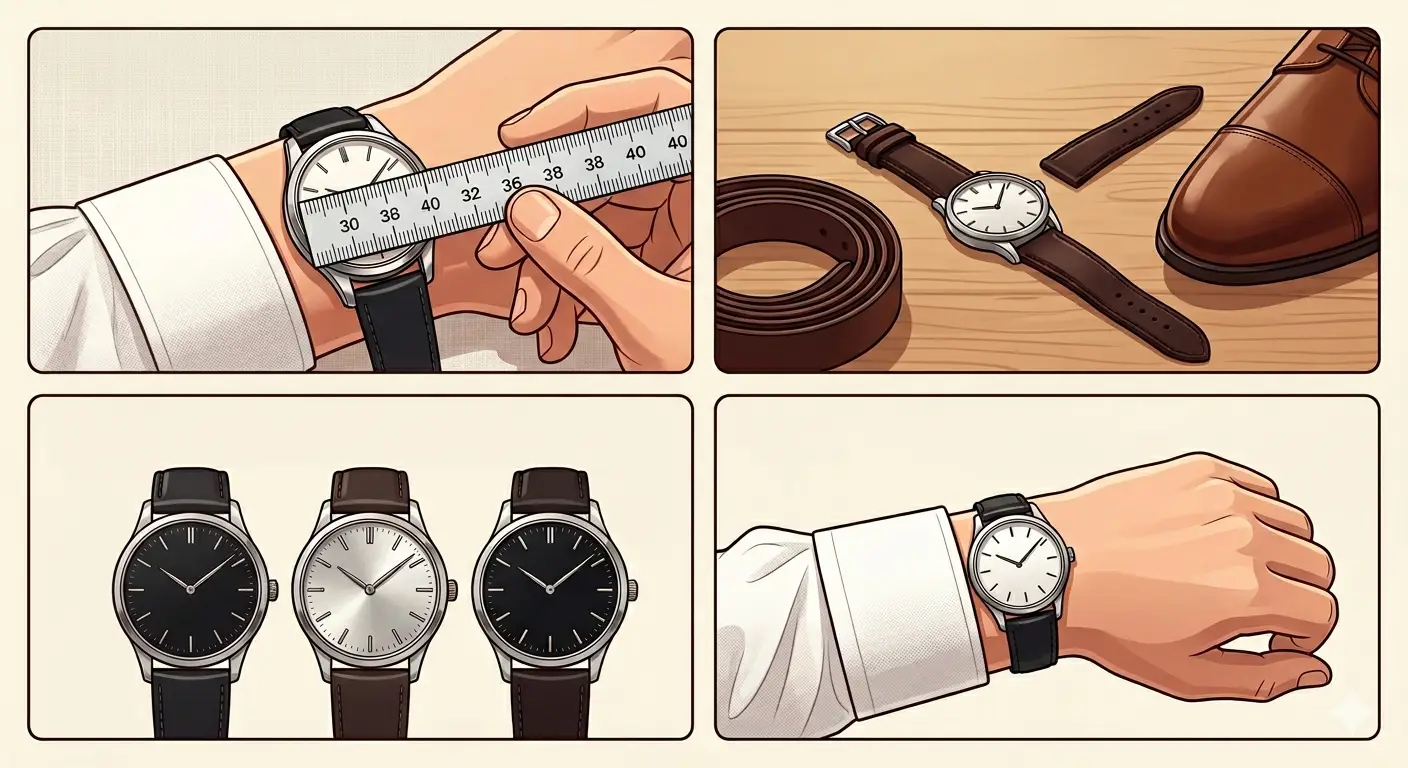
A proper formal watch features a thin case (typically under 10mm), allowing it to slide effortlessly under a dress shirt cuff. The dial should display clean lines with minimal complications—stick to time-only or simple date functions. Metal cases in gold, rose gold, or platinum work best, paired with black or brown leather straps.
- Step 1: Choose a watch with a case diameter between 36-40mm for balanced proportions
- Step 2: Select a leather strap that matches belt and shoe color
- Step 3: Ensure the dial has a white, silver, or black face with minimal text
- Step 4: Verify the watch fits snugly under the shirt cuff without bulging
Pro Tip: Never wear a sports watch or smartwatch to black-tie events. The chunky profile and casual aesthetic clash with formal attire and signal unfamiliarity with dress codes.
Business and Professional Settings
Professional environments require watches that balance sophistication with versatility. The timepiece should complement business attire without drawing excessive attention.
Office-Appropriate Watch Selection
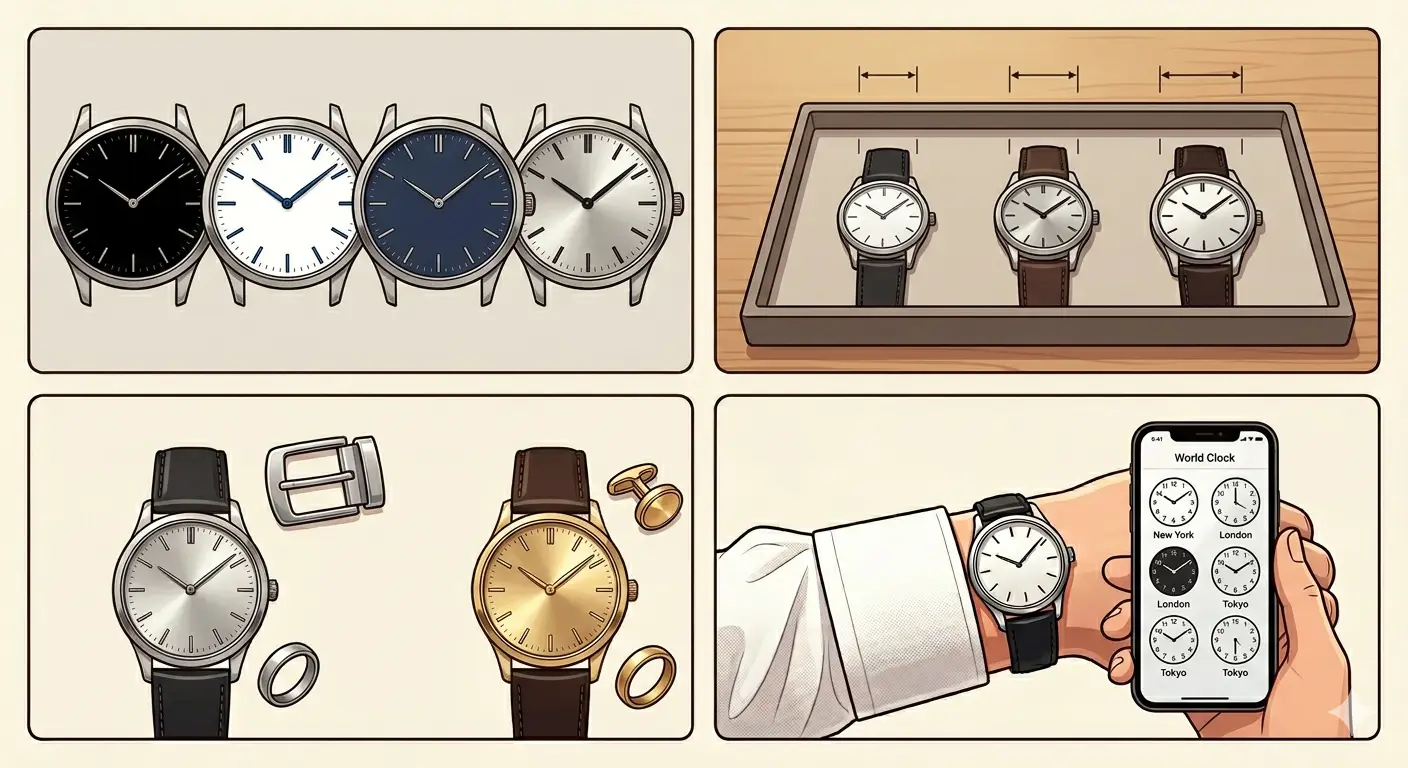
Classic three-hand watches or elegant chronographs suit most business contexts. Stainless steel cases with either metal bracelets or leather straps provide professional polish. Avoid overly flashy designs, bright colors, or oversized cases that distract during meetings and presentations.
- Step 1: Opt for neutral dial colors like black, white, navy, or silver
- Step 2: Select case sizes between 38-42mm for professional appearance
- Step 3: Match metal tone to other accessories (belt buckle, cufflinks, rings)
- Step 4: Ensure the watch runs accurately—use world time comparison tools if managing international clients
Industry-Specific Considerations
Conservative industries like law, finance, and consulting favor traditional designs. Creative fields allow more expression through vintage pieces, unique complications, or interesting strap combinations. Tech environments embrace smartwatches and modern designs without restriction.
Casual and Weekend Wear
Relaxed settings provide freedom to experiment with different styles. Casual occasions welcome field watches, pilot watches, and even some dive watches when paired with appropriate attire.
Selecting Casual Timepieces
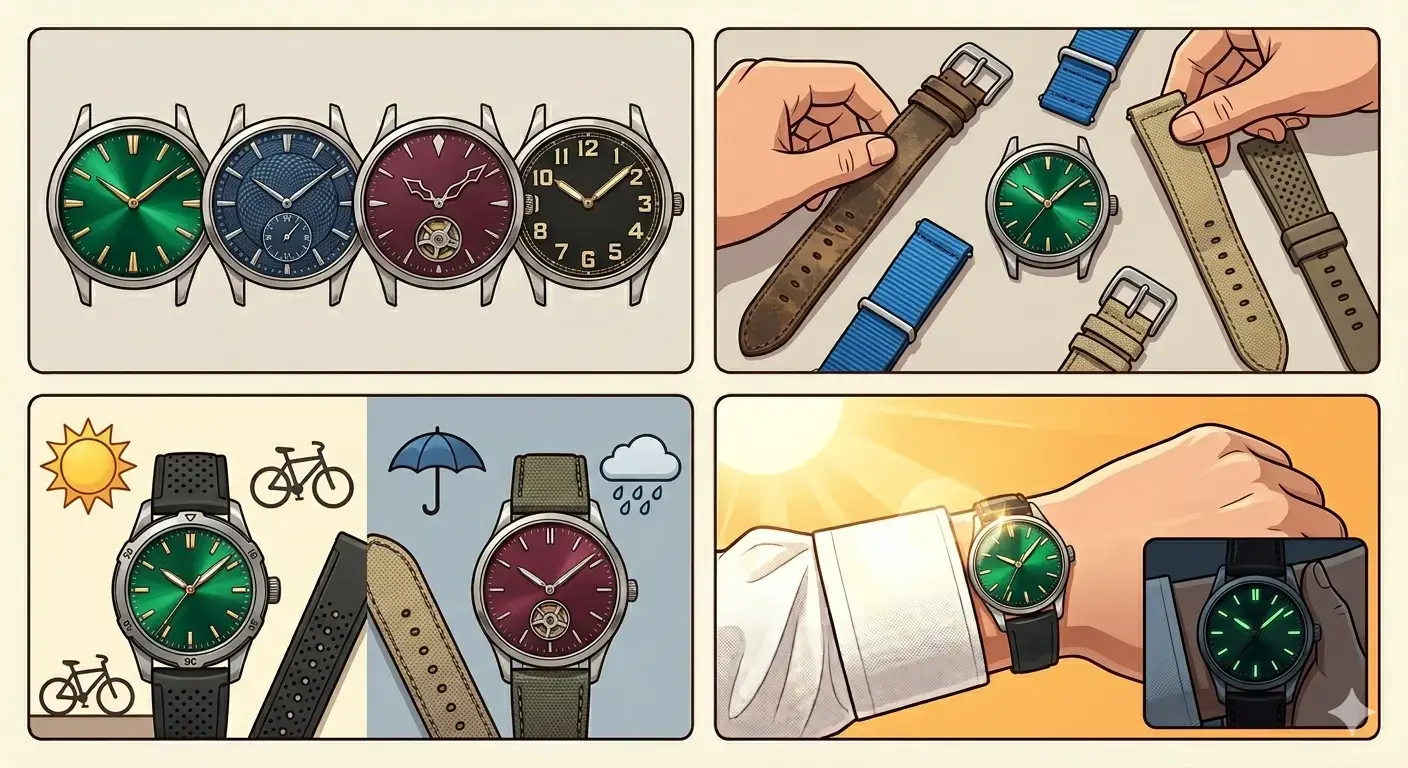
Weekend watches can feature larger cases, colorful dials, and varied strap materials. Canvas, NATO, and rubber straps work perfectly for casual environments. This category offers the most flexibility in personal expression while maintaining good taste.
- Step 1: Choose watches with personality—unique dial colors or interesting complications
- Step 2: Experiment with strap changes to match different casual outfits
- Step 3: Consider weather and activity level when selecting materials
- Step 4: Ensure readability in various lighting conditions
Sports and Athletic Activities
Physical activities demand robust timepieces built to withstand movement, sweat, and impact. Sports watches prioritize function over form while maintaining attractive designs.
Athletic Watch Requirements
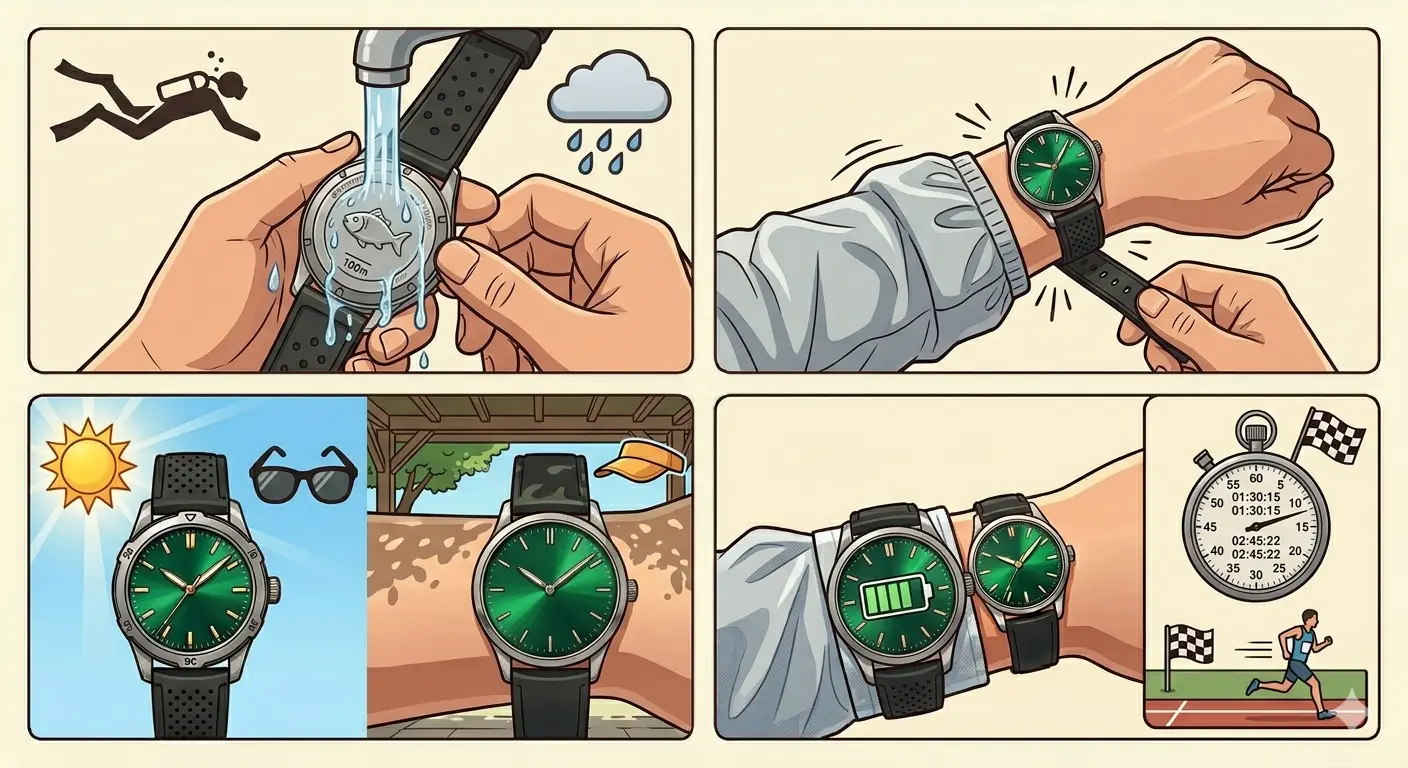
Proper sports watches feature shock resistance, water resistance (minimum 50 meters), and secure straps that stay put during movement. Digital displays work well for tracking intervals and split times. Features like heart rate monitoring, GPS, and stopwatch functions enhance athletic performance.
- Step 1: Verify water resistance rating matches intended activities
- Step 2: Test strap security—it should not shift during vigorous movement
- Step 3: Confirm visibility of display in bright outdoor conditions
- Step 4: Check battery life for extended training sessions or competitions
Beach, Pool, and Water Activities
Aquatic environments require specialized timepieces with serious water resistance. Dive watches serve this purpose while offering rugged good looks for various settings.
Water-Resistant Watch Guidelines
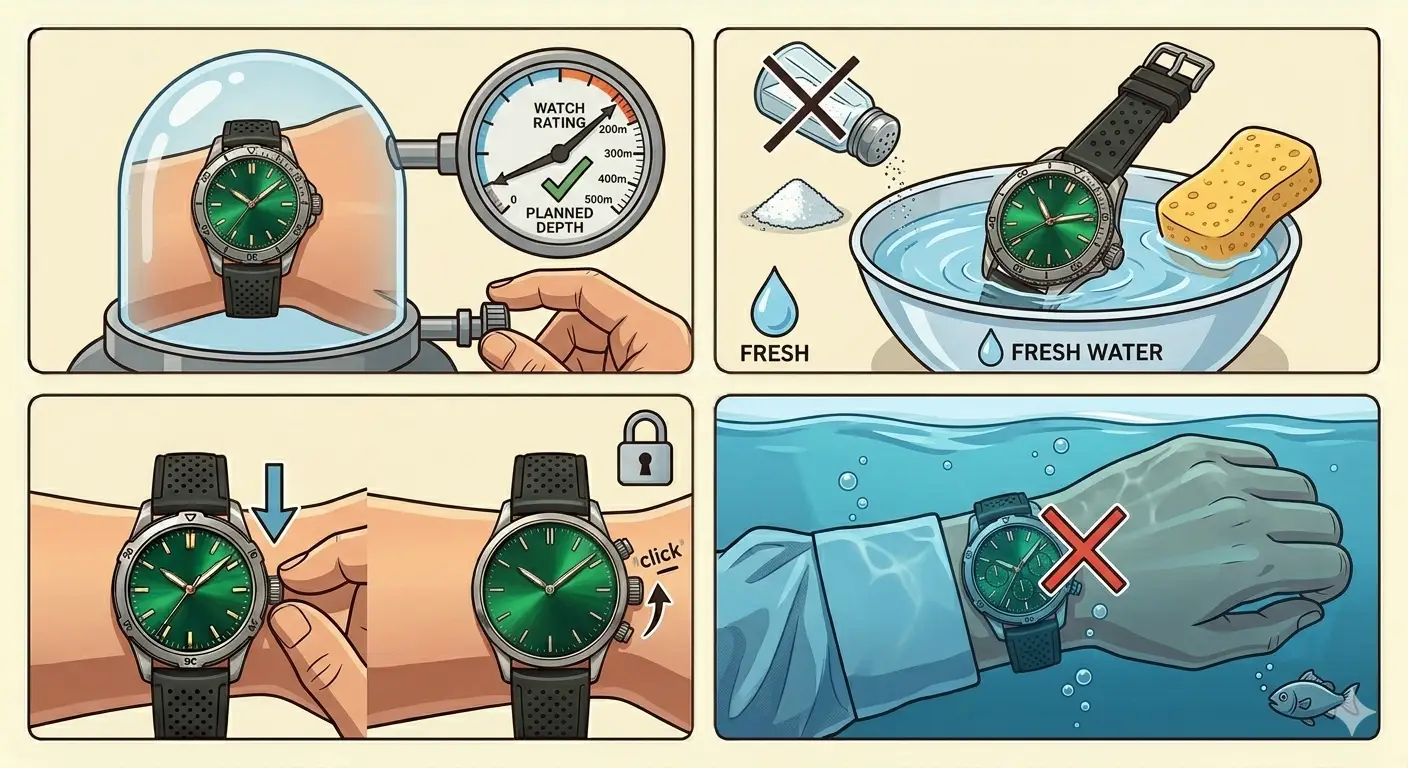
True dive watches carry water resistance ratings of 200 meters or higher. Screw-down crowns, unidirectional rotating bezels, and rubber or silicone straps ensure reliable performance. These watches transition seamlessly from water activities to casual summer wear.
- Step 1: Confirm water resistance exceeds planned depth by significant margin
- Step 2: Rinse watches with fresh water after saltwater exposure
- Step 3: Ensure crown is fully screwed down before water contact
- Step 4: Avoid operating chronograph pushers or crowns while submerged
Travel and International Settings
Traveling across time zones requires practical timepiece features. GMT complications or world time functions simplify schedule management when dealing with multiple time zones.
Travel Watch Selection
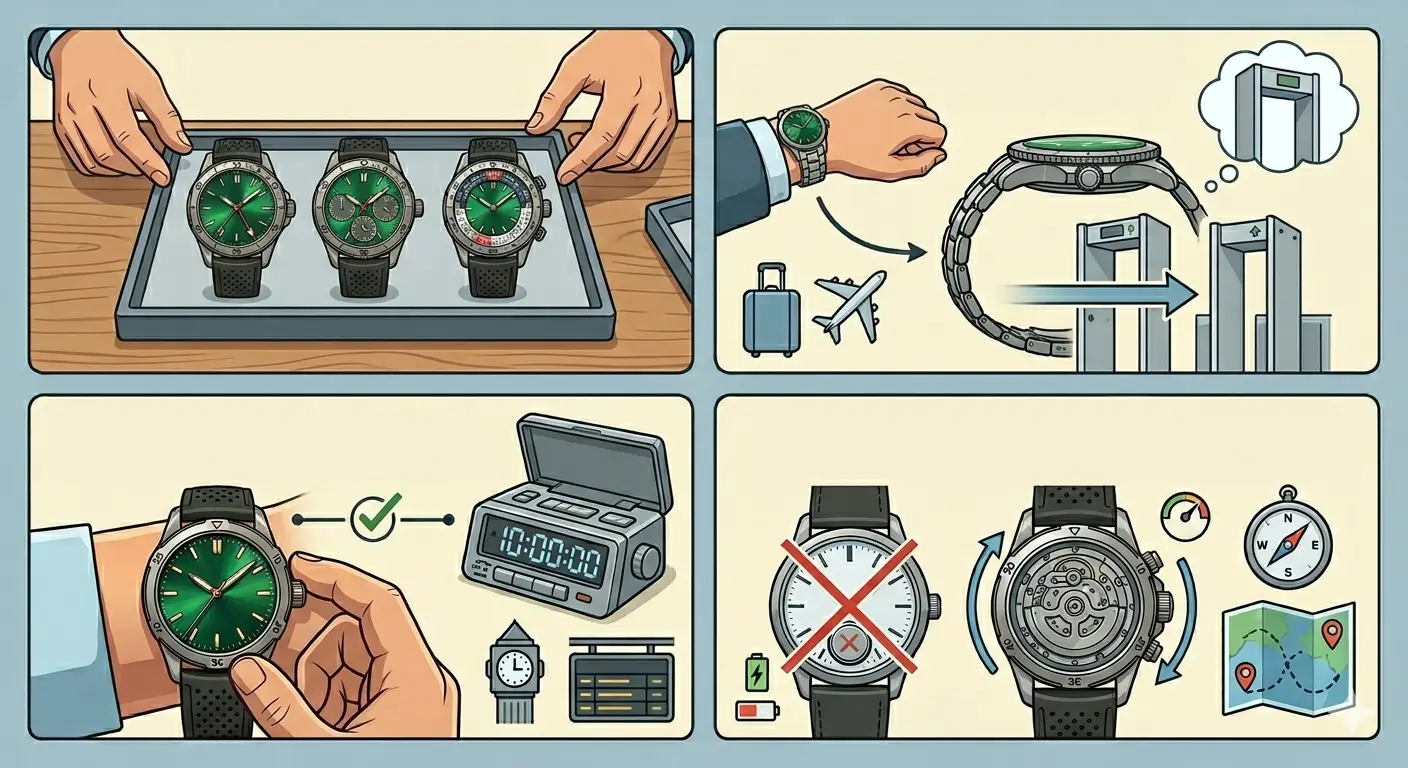
Versatile travel watches combine durability with multiple time zone displays. The ability to quickly reference home time while displaying local time prevents missed connections and appointments. Robust construction withstands the rigors of frequent travel.
- Step 1: Select watches with GMT hands or multiple time zone subdials
- Step 2: Choose metal bracelets for airport security convenience
- Step 3: Verify accuracy using reliable time references before departure
- Step 4: Consider automatic movements to avoid battery concerns during extended trips
Pro Tip: Wearing conspicuously expensive watches while traveling can attract unwanted attention in certain destinations. Consider bringing a quality mid-range timepiece instead of rare or valuable pieces when visiting unfamiliar areas.
Cultural and Religious Considerations
Different cultures maintain varying attitudes toward watch wearing. Understanding these nuances demonstrates respect and cultural awareness.
Regional Watch Etiquette
Some conservative cultures view expensive watches as inappropriate displays of wealth. Certain religious settings discourage flashy accessories altogether. Researching local customs before attending cultural events or visiting religious sites prevents unintentional offense.
Size and Fit Guidelines
Proper watch sizing affects both comfort and appearance. The case should suit wrist proportions while the strap allows appropriate movement.
Achieving Proper Fit
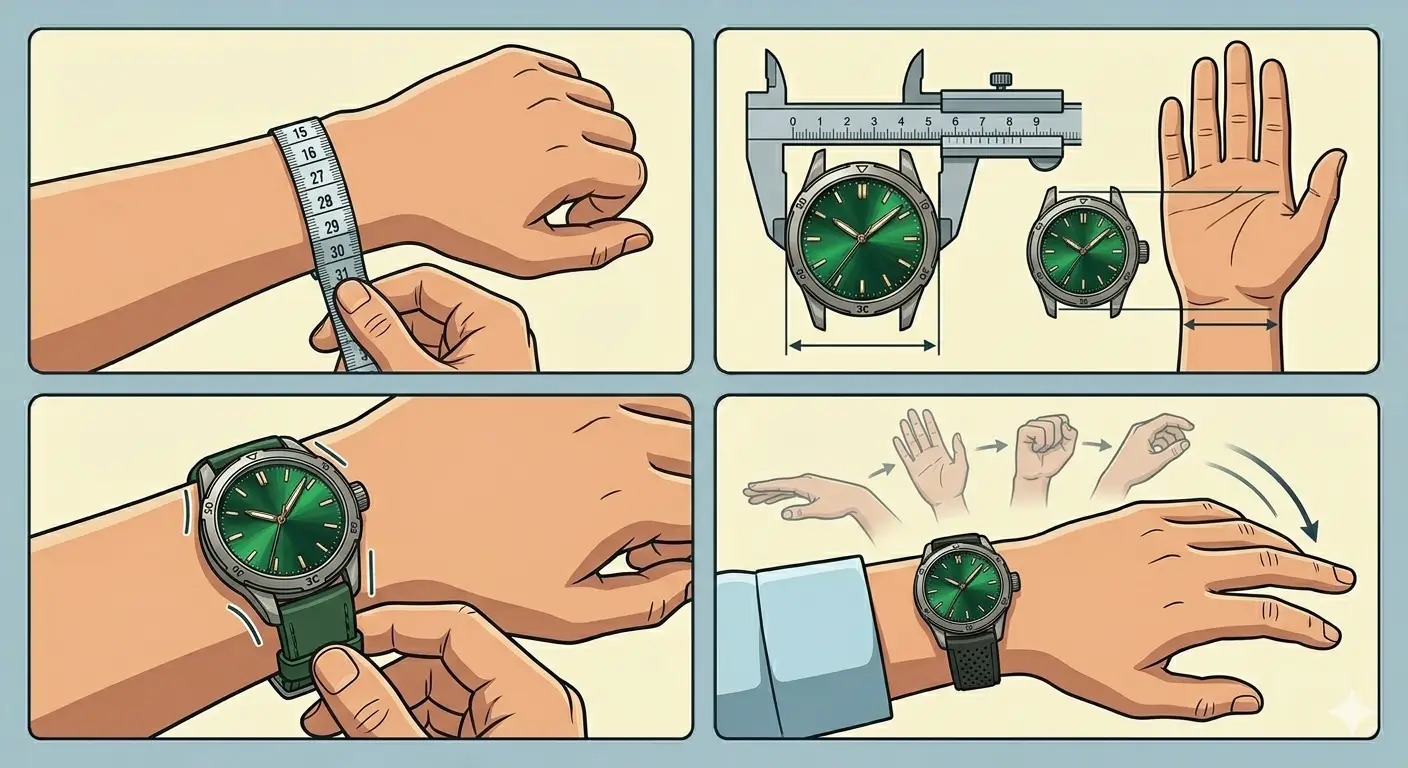
Measure wrist circumference to determine appropriate case diameters. Smaller wrists (under 16cm) suit cases from 36-40mm. Medium wrists (16-18cm) accommodate 40-44mm cases. Larger wrists (over 18cm) can handle 44mm and above. The strap should fit snugly without restricting circulation—typically allowing one finger to slide underneath.
- Step 1: Measure wrist at the point where the watch sits
- Step 2: Compare lug-to-lug distance against wrist width
- Step 3: Adjust strap so watch sits flush against wrist without gaps
- Step 4: Check comfort during typical daily movements
Common Watch Etiquette Mistakes
Avoiding these frequent errors helps maintain appropriate watch selection across various situations.
Oversized Watches in Formal Settings
Large sports watches disrupt the clean lines of formal wear. The bulky profile prevents proper cuff draping and draws attention away from overall presentation. Reserve oversized timepieces for casual or athletic contexts.
Smart Watches at Formal Events
Despite their functionality, smartwatches lack the refined aesthetic formal occasions demand. The glowing screens and notifications disrupt elegant settings. Traditional mechanical or quartz dress watches remain the appropriate choice.
Wearing Damaged or Dirty Watches
Scratched crystals, worn straps, or dirty cases signal neglect. Regular maintenance keeps watches presentable. Replace damaged components and clean timepieces regularly to maintain proper appearance.
Matching Metals Incorrectly
Mixing gold watches with silver jewelry creates visual discord. Coordinate watch metal tones with wedding rings, belt buckles, and other accessories for cohesive styling.
Tips for Building a Versatile Watch Collection
Strategic watch selection creates options for any occasion without excessive spending.
Essential Watch Categories
Start with three core pieces: one dress watch for formal events, one versatile daily wearer for business and casual settings, and one sports watch for active pursuits. This foundation covers most situations encountered in typical lifestyles.
Budget Allocation Strategy
Invest more heavily in the daily wearer since it receives the most use. The dress watch can be more affordable since formal events occur less frequently. Choose durable, serviceable sports watches that withstand rough treatment without concern.
Strap Versatility
Quality watches with interchangeable straps multiply outfit options. A single watch with leather, NATO, and metal bracelet options serves multiple dress codes and seasons.
Frequently Asked Questions
Can the same watch be worn to both business meetings and casual outings?
Yes, versatile watches like simple three-hand models on leather or metal bracelets transition seamlessly between professional and casual settings. Avoid overly formal dress watches for casual wear and skip sports watches for important business meetings.
Is it acceptable to wear a dive watch with a suit?
Many modern dive watches work with business casual attire, but they typically appear too sporty for formal business settings or black-tie events. Reserve dive watches for business casual at most, choosing dress watches for formal professional occasions.
How many watches should a well-dressed person own?
Three watches cover most needs: one dress watch, one daily versatile piece, and one sports watch. Enthusiasts often expand collections based on interests, but these three categories address the majority of situations encountered in daily life.
Should watch size be adjusted based on outfit formality?
Generally, thinner and smaller watches suit formal occasions while larger watches work for casual settings. Dress watches typically range from 36-40mm with slim profiles, whereas sports and casual watches can extend to 44mm or larger with thicker cases.
Are smartwatches appropriate for professional environments?
Smartwatches have gained acceptance in many professional settings, particularly in tech and creative industries. However, conservative fields like law and finance still favor traditional timepieces. Formal events and black-tie occasions always require traditional watches.
What color watch dial works best for versatility?
White, black, and navy dials offer maximum versatility across different settings and outfits. These neutral colors complement various clothing styles and suit both professional and casual occasions without clashing with other accessories.
Can women follow the same watch etiquette guidelines as men?
The core principles apply universally—formal events require elegant timepieces, casual settings allow more freedom, and professional environments need appropriate styling. However, women often have more flexibility in incorporating decorative elements and varied case sizes based on personal preference.
How should watch metal be coordinated with other jewelry?
Match watch metal to other prominent accessories like wedding rings, belt buckles, and cufflinks. Mixing metals can work in casual settings but appears less polished in formal or professional contexts. Consistent metal tones create cohesive, intentional styling.
Is it rude to check a watch during social interactions?
Frequently checking the time during conversations signals disinterest or impatience. Glance discreetly when necessary, but avoid repeated time-checking during important discussions, dates, or business meetings. The action can be perceived as dismissive or rude.
Should watch choice change with seasonal clothing?
Seasonal adaptation makes sense—lighter straps like NATO or perforated leather work better in summer heat, while metal bracelets and solid leather suit cooler months. However, the watch itself can remain consistent if strap options are changed seasonally for comfort and style.