
Stacking bracelets with a watch creates a stylish, personalized look that balances function and fashion. This guide walks through the exact steps to layer bracelets alongside a watch, covering placement, material pairing, and proportion tips for a polished wrist stack that complements any outfit.
Key Takeaways
- Start with the watch as the anchor piece on your dominant or non-dominant wrist
- Layer 2-4 bracelets around the watch for balanced visual weight
- Mix textures (metal, leather, beads) while keeping similar color tones
- Thinner bracelets sit closest to the watch; chunky pieces go furthest
- Leave slight gaps between pieces to avoid overcrowding
Method 1: Positioning Your Watch First
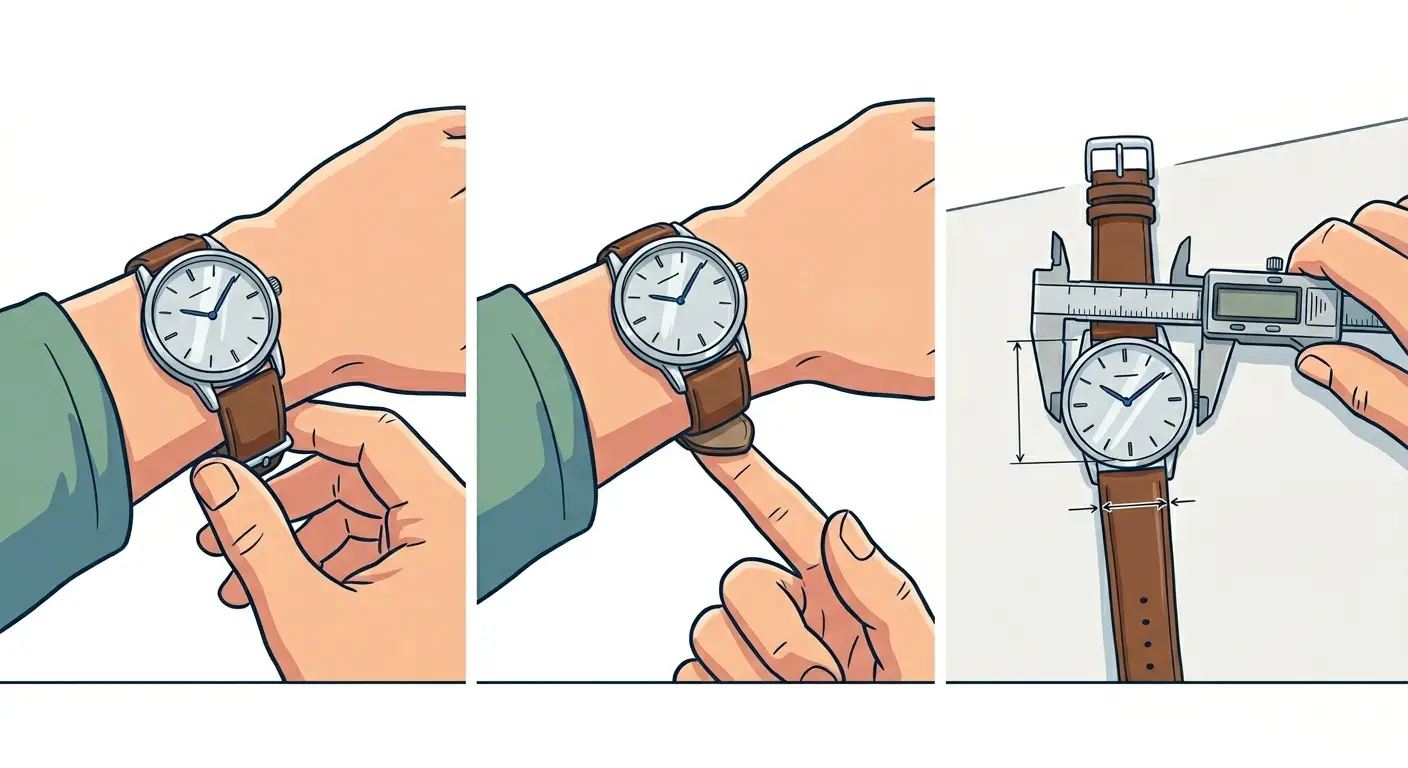
The watch serves as the foundation for any bracelet stack. Place it where it normally sits on the wrist—most people wear watches on the non-dominant hand to avoid scratches during daily tasks.
- Step 1: Fasten the watch at the usual position, ensuring the face sits on top of the wrist bone
- Step 2: Check that the band fits snugly but allows one finger to slide underneath
- Step 3: Note the watch case size and band width—these dimensions determine bracelet proportions
For reference, keeping track of time becomes easier when the watch face remains unobstructed by bracelets.
Method 2: Selecting Bracelets That Complement the Watch
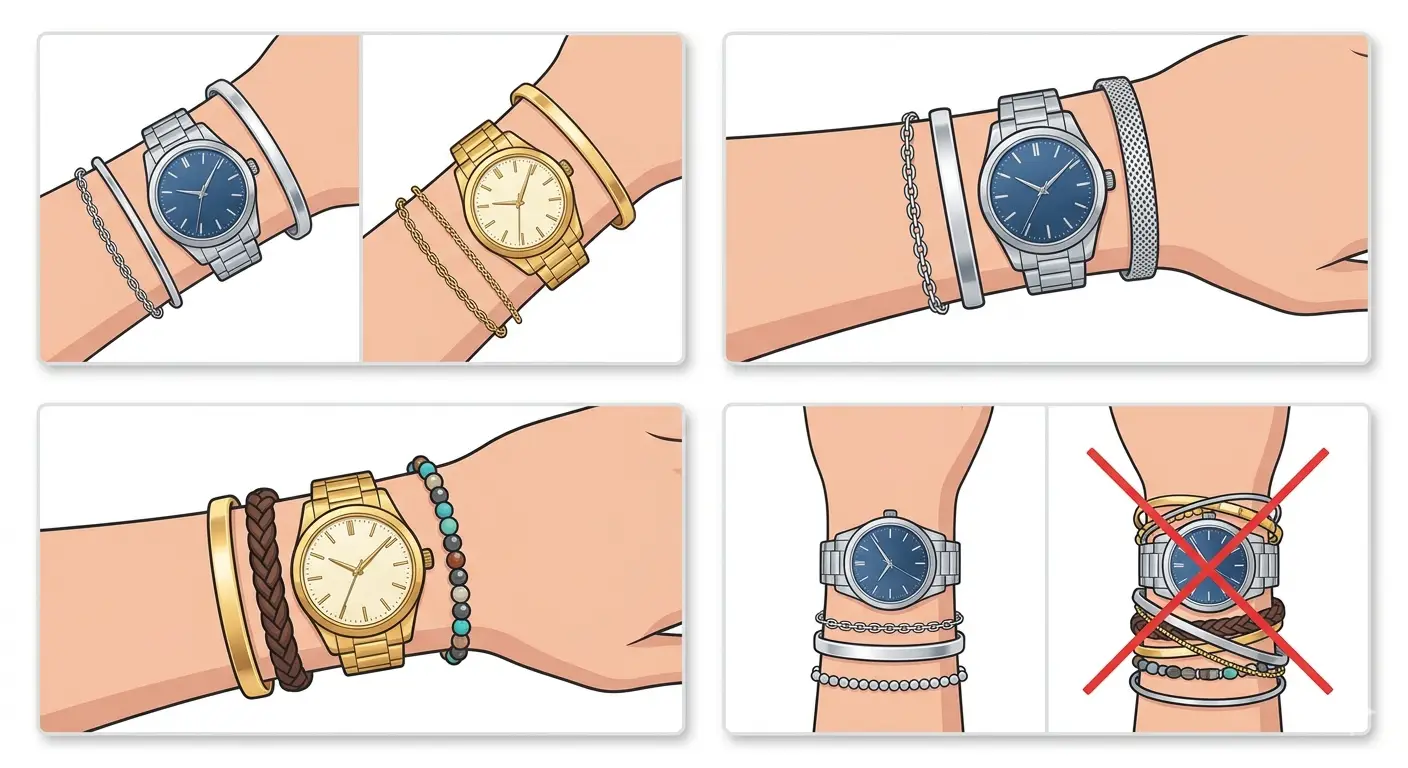
Choose bracelets based on the watch’s style, material, and color. A sports watch pairs well with casual leather or woven pieces, while a dress watch looks sharp with sleek metal bangles.
- Step 1: Match metal tones—silver watches work with white gold or platinum bracelets; gold watches pair with yellow or rose gold
- Step 2: Select 2-4 bracelets in varying thicknesses (mix thin chains with medium-width cuffs)
- Step 3: Include at least one texture contrast (smooth metal, braided leather, or gemstone beads)
- Step 4: Keep total bracelet count under five to avoid visual clutter
Material Pairing Guidelines
Leather watch bands coordinate beautifully with beaded or woven bracelets. Metal watch bands shine alongside other metal bracelets in the same finish. Rubber or silicone sport watch bands balance with casual fabric or cord bracelets.
Method 3: Arranging Bracelets Around the Watch
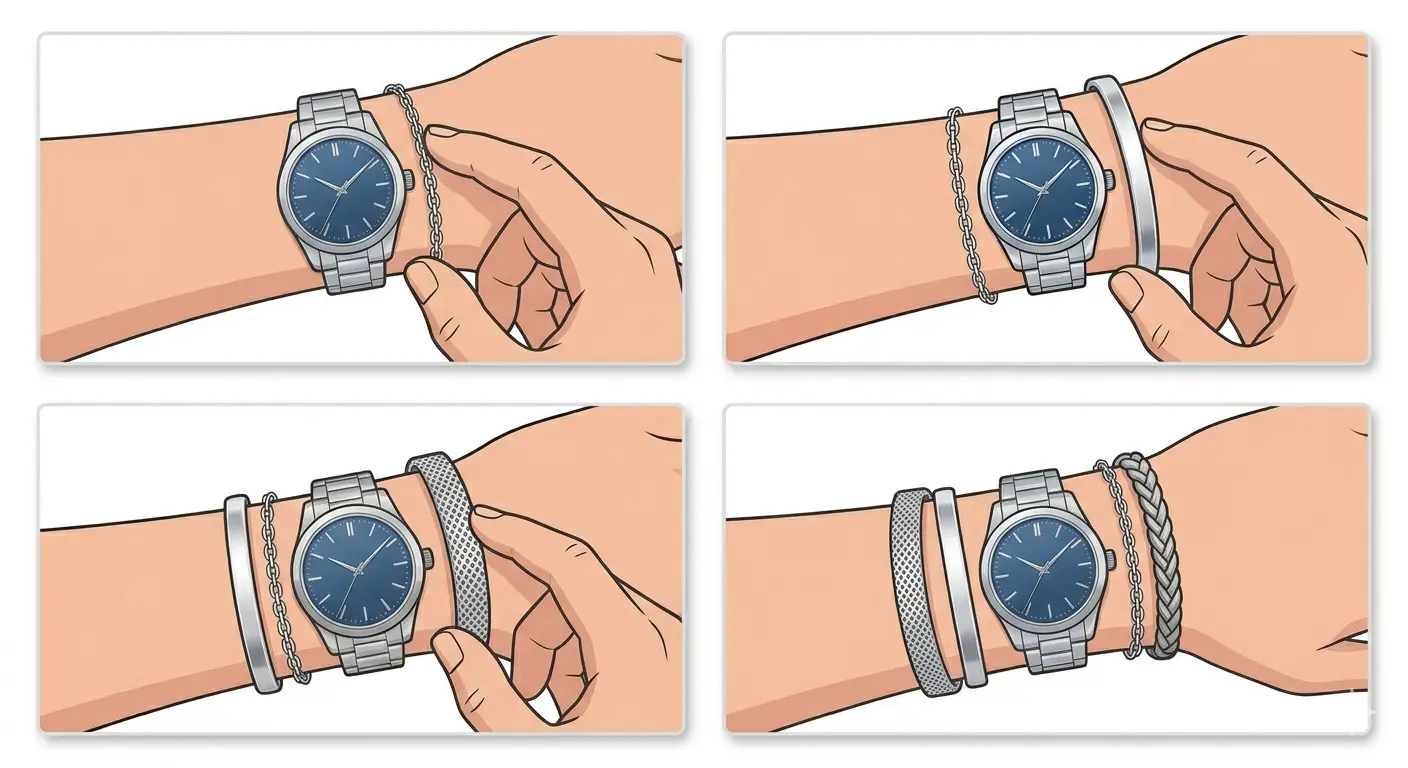
Placement order affects both comfort and appearance. Thin, delicate bracelets sit directly next to the watch, while bolder statement pieces go further up or down the wrist.
- Step 1: Place the thinnest bracelet immediately beside the watch (on either the hand side or elbow side)
- Step 2: Add a medium-width bracelet next, leaving a small gap for wrist movement
- Step 3: Position the chunkiest or most decorative bracelet farthest from the watch
- Step 4: Alternate sides if stacking on both sides of the watch—one bracelet on the hand side, two on the elbow side creates asymmetric balance
Pro-Tip: Leave at least a quarter-inch gap between the watch and the first bracelet. This prevents scratching the watch case and allows natural wrist flexion without pinching skin.
Method 4: Balancing Proportions for Different Wrist Sizes
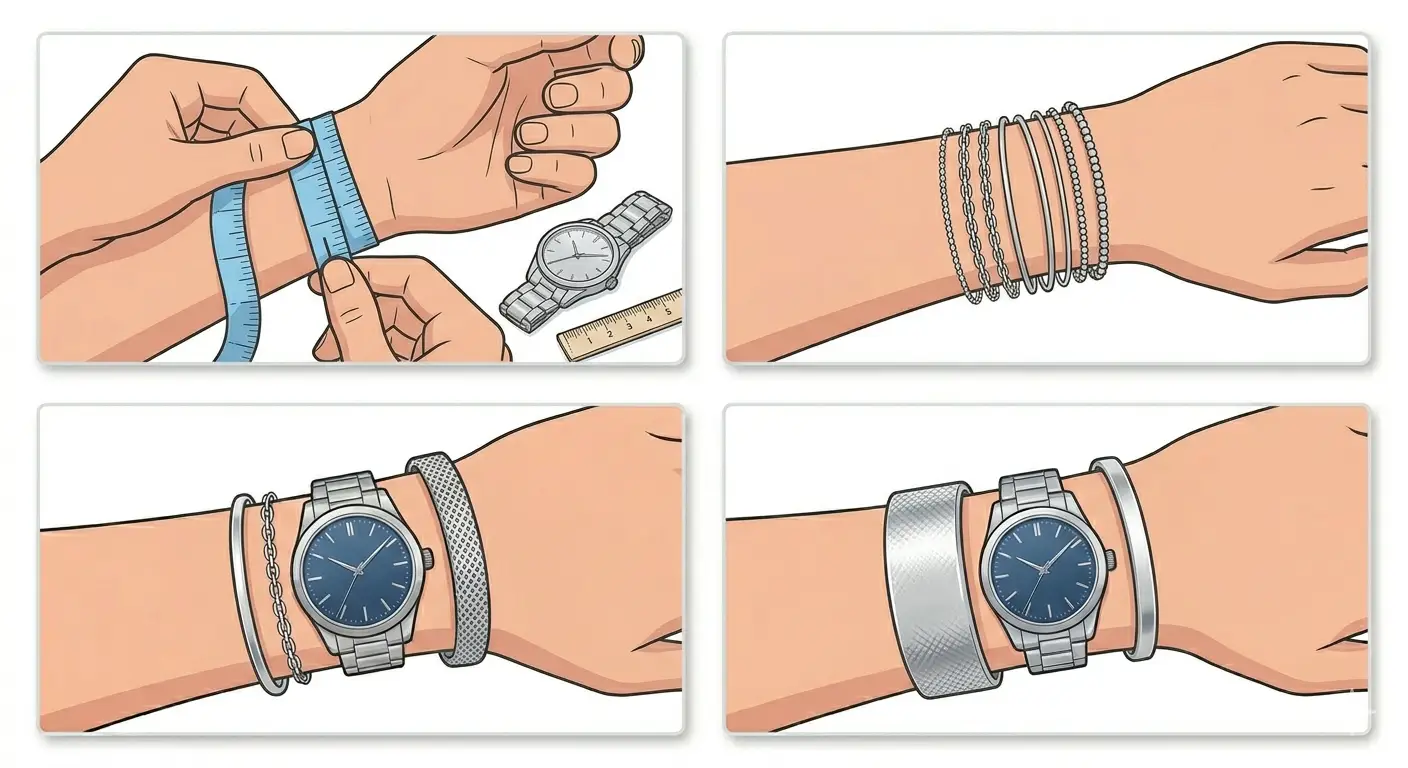
Wrist circumference dictates stack density. Smaller wrists (under 6.5 inches) look best with 2-3 delicate pieces, while larger wrists (over 7 inches) can support 4-5 bracelets without overwhelming the arm.
- Step 1: Measure wrist size with a soft tape measure or string marked against a ruler
- Step 2: For petite wrists, choose slim bangles under 5mm wide
- Step 3: For average wrists (6.5-7 inches), mix widths from 3mm to 10mm
- Step 4: For larger wrists, incorporate at least one statement cuff 12mm or wider
Method 5: Creating Color Harmony
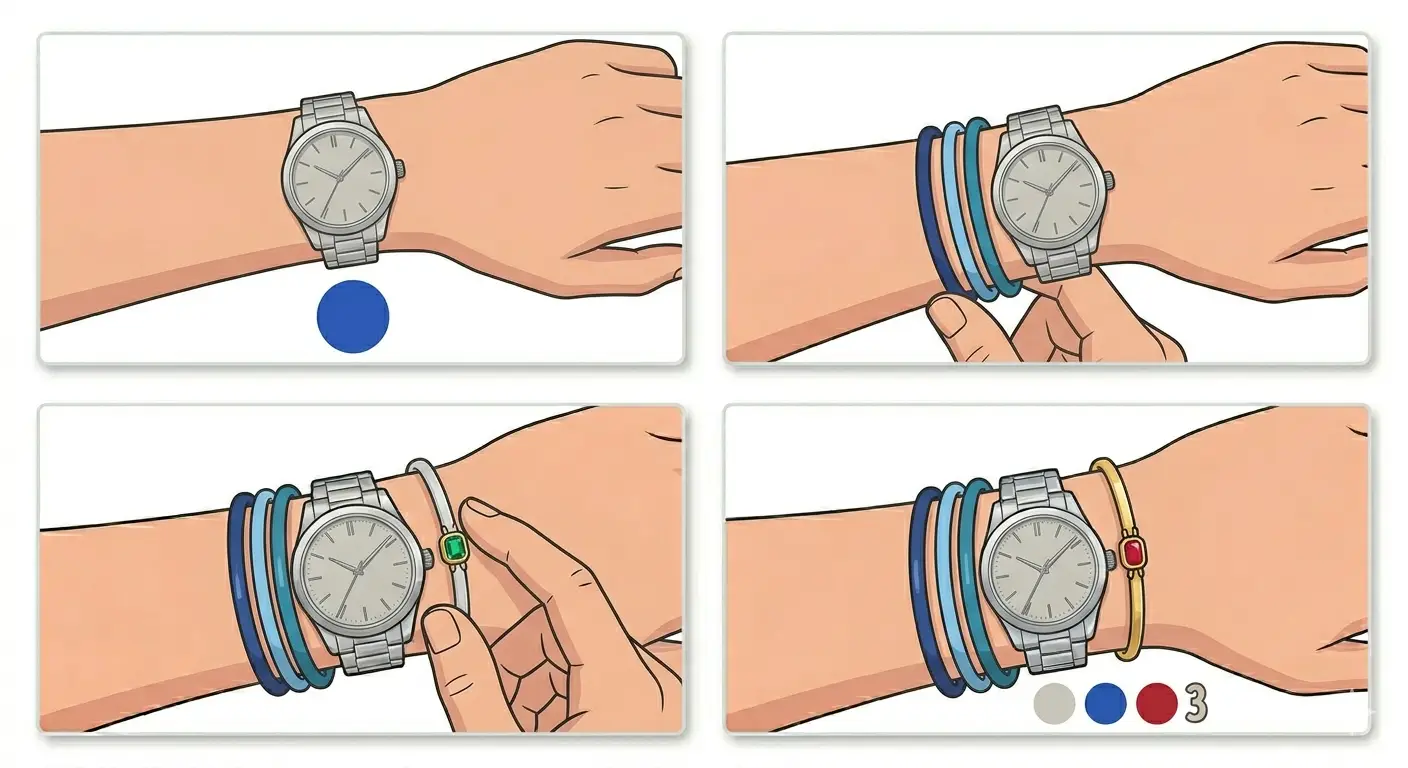
Color coordination ties the stack together visually. Monochromatic schemes (all silver, all gold) deliver classic elegance, while complementary colors (blue and orange, purple and yellow) add playful contrast.
- Step 1: Identify the dominant color in the watch band or dial
- Step 2: Select bracelets in the same color family (e.g., navy, sky blue, teal for a blue watch)
- Step 3: Add one accent color through a single gemstone or enamel detail
- Step 4: Stick to three total colors maximum to maintain cohesion
Method 6: Adjusting Stack Tightness
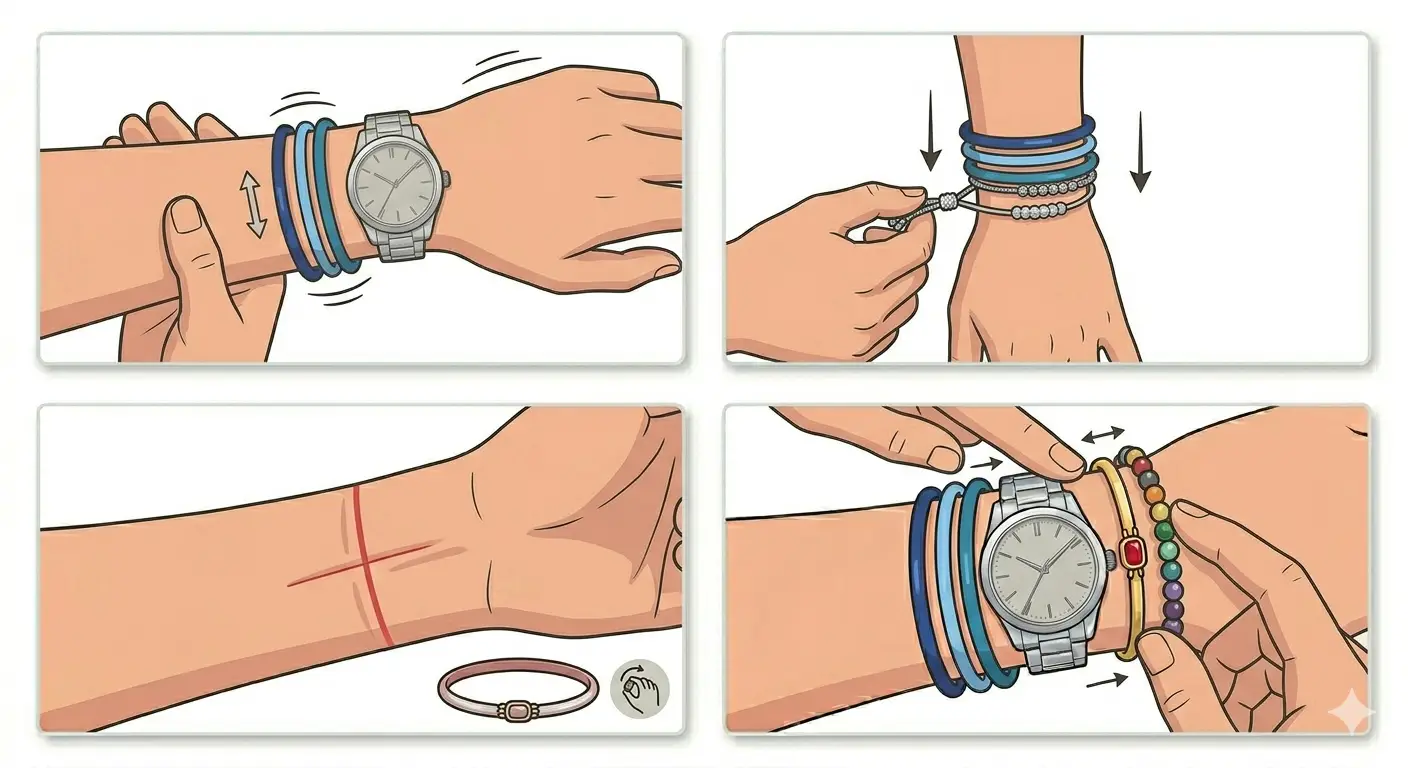
Proper fit prevents bracelets from sliding excessively or binding the wrist. Each piece should move slightly but not spin completely around the arm.
- Step 1: Shake the wrist gently—bracelets should shift about half an inch up and down
- Step 2: Tighten any pieces that slide over the hand when the arm hangs down
- Step 3: Loosen bracelets that leave red marks or indentations after 30 minutes of wear
- Step 4: Re-check fit after adding each new bracelet, as total weight affects how the stack sits
Tips for Maintaining Your Bracelet Stack
Regular care keeps both watch and bracelets looking sharp. These practices prevent tarnish, scratches, and tangling.
- Remove the entire stack before showering, swimming, or exercising to avoid moisture damage
- Store bracelets separately in a jewelry box with dividers to prevent chain tangling
- Wipe metal pieces with a soft cloth after each wear to remove oils and dirt
- Inspect clasps monthly for loose springs or bent prongs that could cause loss
- Rotate bracelet combinations weekly to distribute wear evenly across the collection
- Polish metal bracelets every 2-3 months with appropriate cleaners (silver polish for sterling, gold cleaner for gold-plated)
Pro-Tip: Take a photo of favorite bracelet combinations for quick reference. This saves time when getting ready and ensures consistent style across outfits.
Common Problems and Solutions
Bracelets Scratching the Watch Case
Hard metal bracelets often scuff watch cases during normal movement. Place a soft leather or fabric bracelet as a buffer between the watch and metal pieces. Alternatively, apply clear nail polish to the inside edges of metal bracelets to create a protective barrier.
Stack Sliding Up and Down the Arm
Loose bracelets migrate toward the elbow or hand throughout the day. Add a tighter-fitting bracelet closest to the watch to anchor the stack in place. Adjustable sliding knot bracelets work particularly well for this purpose.
Clasp Catching on Clothing
Lobster clasps and toggle closures snag sweater fibers and loose-knit fabrics. Rotate clasps to the underside of the wrist where they contact skin rather than fabric. Choose bracelets with magnetic or friction clasps for snag-free wear.
Overcrowded Appearance
Too many bracelets create visual noise and distract from the watch. Remove one or two pieces until the wrist looks intentionally styled rather than cluttered. A good rule: if the question arises whether it is too much, it probably is.
Mismatched Metals Looking Disjointed
Mixing silver and gold requires careful balance. Use a two-tone watch (with both silver and gold accents) as the bridge piece, or add a bracelet that incorporates both metals. Another approach: separate warm and cool tones to opposite wrists entirely.
Frequently Asked Questions
How many bracelets should be stacked with a watch?
Two to four bracelets create a balanced stack without overwhelming the wrist. Fewer pieces suit minimalist styles, while more can work for bohemian or maximalist aesthetics, but exceeding five often appears excessive.
Should bracelets go on the same wrist as the watch?
Yes, stacking bracelets on the same wrist as the watch creates a cohesive focal point. Some people prefer wearing the watch alone on one wrist and bracelets on the other for a cleaner separation, but same-wrist stacking is the standard approach for layered looks.
Can leather and metal bracelets be mixed?
Absolutely. Leather adds warmth and texture that complements metal’s shine. Pair a leather watch strap with metal chain bracelets, or mix leather cord bracelets with a metal watch band for contrast.
Do bracelets damage the watch over time?
Constant contact between hard bracelets and the watch case can cause scratches. Softer materials like leather, fabric, or silicone minimize this risk. Leaving small gaps between pieces and periodic inspection prevent most damage.
What bracelet width works best with different watch sizes?
For watches under 38mm, stick to bracelets 3-6mm wide. Mid-size watches (38-42mm) pair well with 5-10mm widths. Larger watches over 42mm can handle chunkier bracelets up to 15mm without looking unbalanced.
How tight should stacked bracelets fit?
Each bracelet should slide an inch or two along the wrist but not fall off when the hand points downward. Too tight causes discomfort and skin irritation, while too loose leads to constant repositioning and potential loss.
Can a smartwatch be stacked with bracelets?
Yes, smartwatches stack just like traditional watches. Since most smartwatches have silicone or metal bands, pair them with contrasting textures like beaded or leather bracelets. Avoid stacking near the sensor on the back of the watch to maintain heart rate accuracy.
Should bracelet clasps face the same direction as the watch clasp?
Not necessarily. Rotating clasps to the underside of the wrist (opposite the watch face) hides hardware and creates a cleaner look. This also reduces snagging on clothing and accidental unclasping.
What is the best way to stack bracelets for formal occasions?
Limit the stack to one or two thin, elegant bracelets in precious metals. Avoid chunky, colorful, or overly casual pieces. A simple tennis bracelet or delicate chain alongside a dress watch maintains sophistication without distraction.
How can the stack be prevented from making noise?
Choose bracelets with snug fits that minimize movement. Rubberized or fabric spacers between metal pieces dampen clinking sounds. Leather, silicone, and beaded bracelets naturally make less noise than metal chains or bangles, and planning activities with timed intervals helps avoid disruptions during quiet settings.