
How to wear a large watch on a small wrist requires smart styling choices and proper adjustment techniques. Large watches can look stylish and sophisticated on smaller wrists when worn correctly, avoiding the common pitfalls of oversized timepieces that appear clunky or slide around constantly.
Quick Summary Table
| Key Factor | Recommendation |
|---|---|
| Watch Case Size | 38-42mm ideal for small wrists (under 6.5 inches) |
| Lug-to-Lug Distance | Should not exceed wrist width |
| Band Adjustment | Remove 2-3 links for proper fit |
| Positioning | Slightly above wrist bone, snug but comfortable |
| Best Band Type | NATO, leather, or slim metal bracelet |
Method 1: Adjust the Watch Band Properly
The most critical step in wearing a large watch on a small wrist involves adjusting the band to achieve the perfect fit. A properly fitted band prevents the watch from sliding around and creates a more proportional appearance.
Remove Excess Links from Metal Bracelets
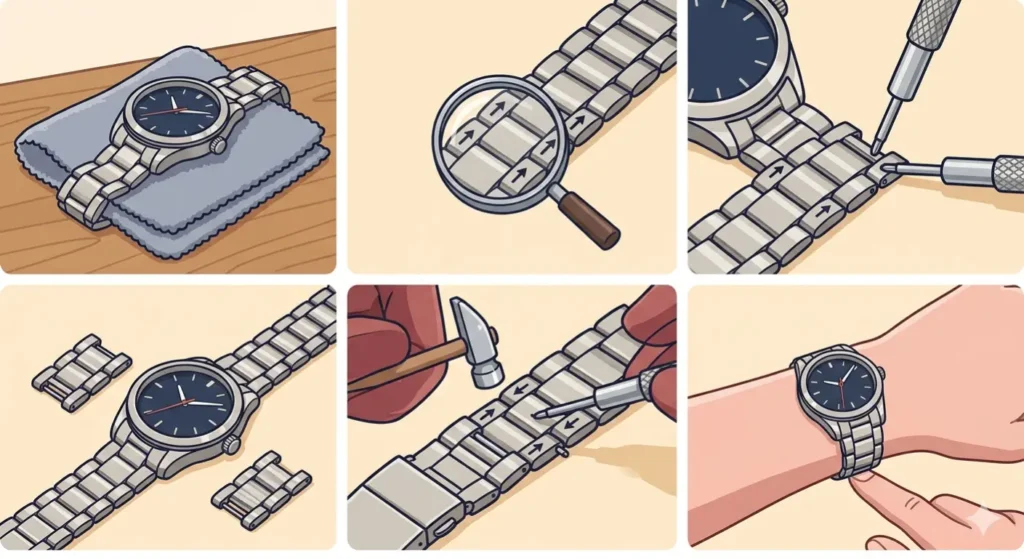
- Step 1: Place the watch on a soft cloth to protect the case from scratches
- Step 2: Locate the arrows on the bracelet links indicating the direction for pin removal
- Step 3: Use a spring bar tool or pin pusher to remove the connecting pins
- Step 4: Remove 2-4 links depending on wrist size, keeping an equal number from each side
- Step 5: Reconnect the bracelet by inserting pins in the opposite direction of the arrows
- Step 6: Test the fit – the watch should sit snug but allow one finger to slide underneath
Pro-Tip: Always remove links symmetrically from both sides of the clasp to keep the watch centered on the wrist. Removing links only from one side causes the watch to sit off-center and look unbalanced.
Adjust Leather or Rubber Straps
- Step 1: Thread the strap through both spring bars on the watch case
- Step 2: Wrap the strap around the wrist to find the most comfortable hole
- Step 3: Fasten the buckle, ensuring the watch sits just above the wrist bone
- Step 4: Trim excess strap length if it extends too far past the keeper loops
Method 2: Choose the Right Watch Position
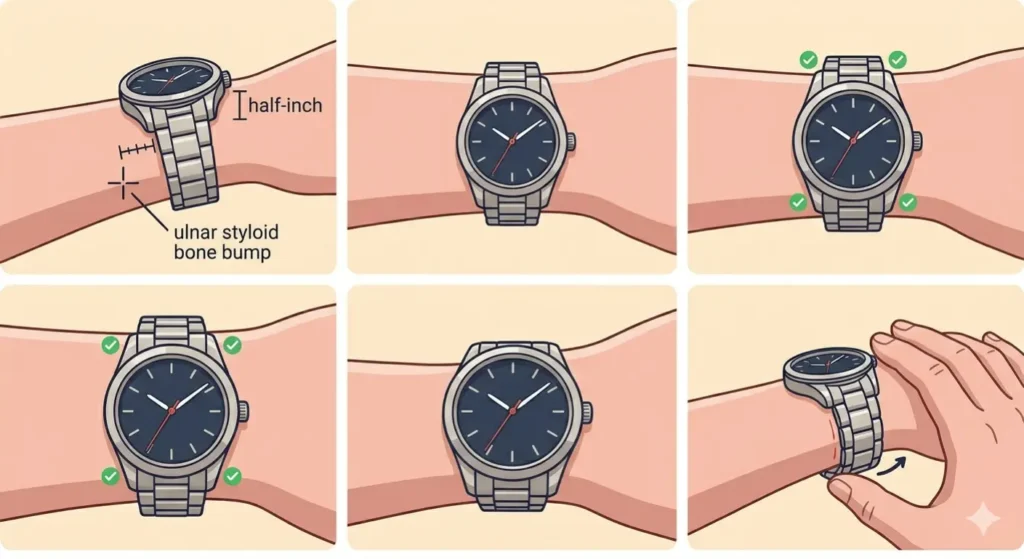
Where the watch sits on the wrist dramatically affects how proportional it appears. Proper positioning makes even oversized watches look intentional rather than ill-fitting.
- Step 1: Place the watch approximately half an inch above the wrist bone (ulnar styloid)
- Step 2: Ensure the watch case does not overhang the sides of the wrist
- Step 3: Check that the lugs (where the band connects) do not extend past the wrist edges
- Step 4: Adjust tightness so the watch stays in place during hand movement but does not leave marks
The watch should rotate slightly when the wrist moves but should not slide up and down the arm. This balance between security and comfort creates the most flattering appearance.
Method 3: Select the Appropriate Band Style
The band style significantly impacts how a large watch appears on a small wrist. Certain band types minimize bulk and create better visual balance.
NATO Straps for Reduced Bulk
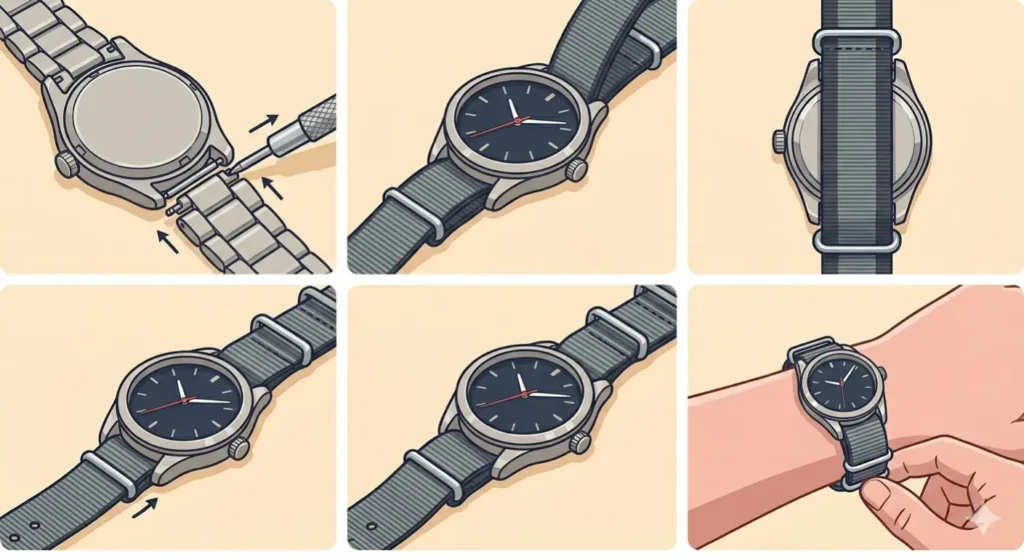
NATO straps pass through the spring bars and create a slimmer profile than traditional metal bracelets. The single-layer design sits flatter against the wrist and reduces the overall thickness of the watch.
- Step 1: Remove the existing watch band by compressing the spring bars
- Step 2: Thread the NATO strap through the top spring bar opening
- Step 3: Pull the strap through until the hardware piece sits behind the watch case
- Step 4: Thread the strap through the bottom spring bar opening
- Step 5: Adjust the strap length and secure with the buckle
Slim Leather Bands for Elegant Proportion
Leather straps, particularly those 18-20mm wide, create visual balance by contrasting with the larger case diameter. Thinner bands make the watch appear more refined rather than bulky.
Method 4: Consider Lug-to-Lug Measurement
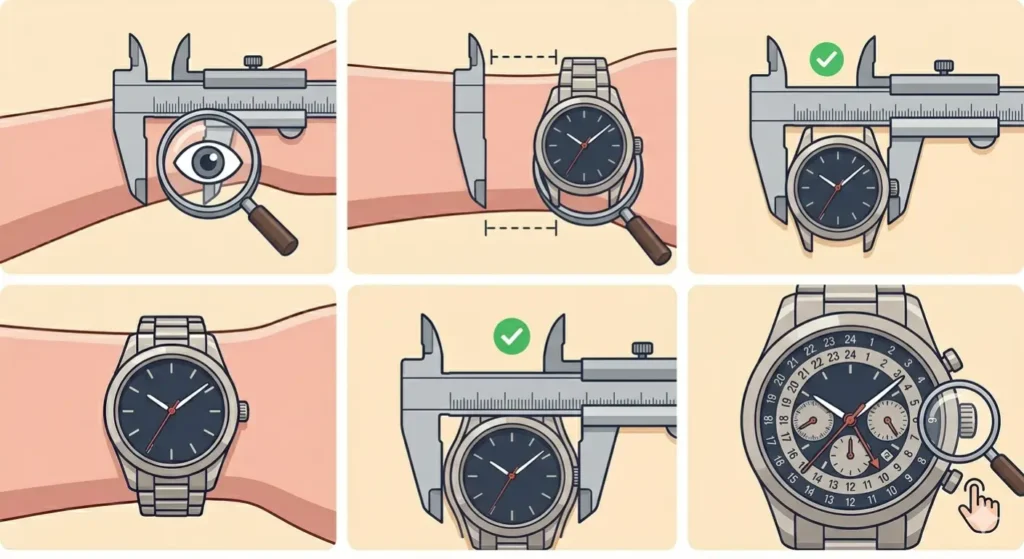
The lug-to-lug distance (the vertical measurement from top to bottom of the watch case) matters more than case diameter for small wrists. This measurement determines whether the watch actually fits the wrist properly.
- Step 1: Measure the wrist from side to side at its widest point
- Step 2: Compare this measurement to the watch’s lug-to-lug distance
- Step 3: Ensure the lug-to-lug measurement does not exceed the wrist width
- Step 4: Check time zone settings if the watch has multiple time displays to avoid visual clutter
A watch with a 44mm case diameter but short lugs (48mm lug-to-lug) fits better on a small wrist than a 40mm watch with long lugs (52mm lug-to-lug).
Tips for Wearing Large Watches on Small Wrists
- Choose watches with curved lugs that follow the wrist contour rather than straight lugs that stick out
- Opt for thinner cases (under 12mm) to reduce bulk and improve comfort
- Select watches with darker bezels or cases that create visual slimming effects
- Avoid extremely thick rubber straps that add unnecessary bulk
- Consider dress watches or field watches rather than dive watches, which tend to have larger proportions
- Use timing functions built into the watch rather than constantly checking phones
- Position long sleeves to cover part of the watch case for a more streamlined look
- Match the watch finish (polished, brushed, matte) to clothing formality
Pro-Tip: The ‘two-finger rule’ provides a reliable fit test. After fastening the watch, two fingers should slide comfortably between the band and wrist. Tighter causes discomfort and circulation issues, while looser allows excessive movement.
Common Problems and Solutions
Watch Slides Around the Wrist
This occurs when the band is too loose or the watch is too heavy for the adjustment. Remove additional links from metal bracelets or punch a new hole closer to the buckle on leather straps. Some watches benefit from switching to NATO straps that distribute weight differently.
Watch Lugs Extend Past Wrist Edges
When lugs overhang the wrist, the watch is genuinely too large for proper wear. Consider trading for a model with shorter lug-to-lug distance or curved lugs that wrap around the wrist better. No adjustment technique fixes this fundamental sizing mismatch.
Watch Feels Top-Heavy or Uncomfortable
Heavy watches with large cases create discomfort on small wrists during extended wear. Switch to lighter materials like titanium, use perforated leather straps for reduced contact area, or simply wear the watch for shorter periods until acclimated to the weight.
Watch Catches on Shirt Cuffs
Large watches frequently snag on clothing, particularly dress shirts with narrow cuffs. Wear the watch slightly higher on the forearm, choose shirts with French cuffs that accommodate larger watches, or reserve oversized timepieces for casual outfits.
Clasp Leaves Marks or Irritation
Metal clasps pressing against the wrist bone cause discomfort and skin marks. Position the watch so the clasp sits on the softer underside of the wrist rather than directly over the bone. Leather or fabric straps eliminate this issue entirely.
Frequently Asked Questions
What is the maximum watch size for a 6-inch wrist?
A 6-inch wrist typically accommodates watches up to 40mm in diameter with a lug-to-lug measurement under 48mm. Larger cases appear disproportionate and uncomfortable. Focus on lug-to-lug distance rather than case diameter alone for the best fit determination.
Can women wear large men’s watches on small wrists?
Absolutely. Many women prefer the bold statement of larger watches. The same fitting principles apply regardless of gender – proper band adjustment, appropriate lug-to-lug measurement, and positioning above the wrist bone create a stylish, intentional look rather than an ill-fitting appearance.
Should the watch case touch the wrist bone?
No. The watch should sit approximately half an inch above the wrist bone (ulnar styloid process) on the forearm side. This positioning prevents the watch from interfering with hand movement and creates the most comfortable wearing experience throughout the day.
How tight should a watch band be on a small wrist?
The band should allow one to two fingers to slide comfortably underneath when fastened. This prevents circulation restriction while keeping the watch secure enough to stay in place during normal arm movement. Too loose causes sliding and potential damage from impacts.
Do NATO straps make large watches look smaller?
NATO straps reduce the visual bulk by eliminating the space between the case back and wrist, creating a flatter profile. The thin, single-layer design and tapered appearance draw less attention to the watch’s size, making it appear more proportional on smaller wrists.
What watch case thickness works best for small wrists?
Cases under 12mm thick provide the most comfortable fit for small wrists. Thinner cases reduce the overall bulk, prevent snagging on sleeves, and create better visual proportion. Dive watches and chronographs often exceed this measurement and appear bulkier.
How do curved lugs help with large watch fit?
Curved lugs (also called ‘downturned lugs’) follow the natural contour of the wrist rather than protruding straight out. This design allows larger cases to sit flush against the wrist surface, reducing the effective lug-to-lug distance and improving both comfort and appearance.
Can watch position affect how large it appears?
Yes. Wearing the watch higher on the forearm (further from the hand) makes it appear smaller because this area of the arm is typically wider. However, comfort and practicality usually favor the traditional position just above the wrist bone for checking the current time easily.
Should both sides of the bracelet have equal links removed?
Always remove an equal number of links from both sides of the clasp to maintain centered positioning on the wrist. Asymmetrical link removal causes the watch to sit off-center, creating an unbalanced appearance and potentially causing the clasp to dig into the wrist uncomfortably.
Do larger watches look better on toned or thinner wrists?
Muscle tone and wrist shape affect watch appearance more than overall size. A well-defined, slightly wider wrist accommodates larger watches better than a thin, flat wrist of the same circumference. The three-dimensional shape of the wrist matters as much as the measured diameter.