
Wearing a watch with a suit requires attention to detail and understanding of proportions, placement, and style compatibility. How to wear a watch with a suit involves selecting the right timepiece, positioning it correctly, and ensuring the combination enhances professional appearance without disrupting the clean lines of formal attire.
Key Takeaways
- The watch should sit just behind the wrist bone, allowing shirt cuffs to cover it when arms are at rest
- Dress watches with thin profiles (under 10mm) work best with suit sleeves
- Metal bracelets or leather straps in black, brown, or navy complement formal wear
- Watch diameter should be proportional to wrist size, typically 36-42mm for dress watches
- Conservative designs without excessive complications suit business environments
Understanding Watch and Suit Compatibility
The relationship between a watch and suit involves proportion, formality, and visual balance. Dress watches feature thin cases that slide easily under shirt cuffs without creating bulk or catching fabric. Sports watches and chronographs with thick cases often disrupt the streamlined appearance formal attire requires.
Case thickness determines compatibility more than any other factor. A watch measuring 8-10mm thick allows shirt cuffs to button comfortably while maintaining smooth fabric drape. Anything exceeding 12mm creates visible protrusions that break the suit’s silhouette.
Choosing the Right Watch Style
Dress watches typically feature simple dials with minimal complications. A time-only display or date function suits most business situations. Avoid chronographs, dive bezels, or digital displays when wearing formal attire.
Case materials should complement suit hardware. Silver-tone stainless steel matches most business environments, while gold or rose gold works for warmer occasions. The metal should coordinate with belt buckles, cufflinks, and other accessories.
Dial Color Selection
White, cream, or light-colored dials provide maximum versatility with suit colors. Navy suits pair well with silver or white dials, while charcoal and black suits accommodate nearly any dial color. Brown suits work best with warm dial tones like champagne or cream.
Step-by-Step Guide to Wearing a Watch with a Suit
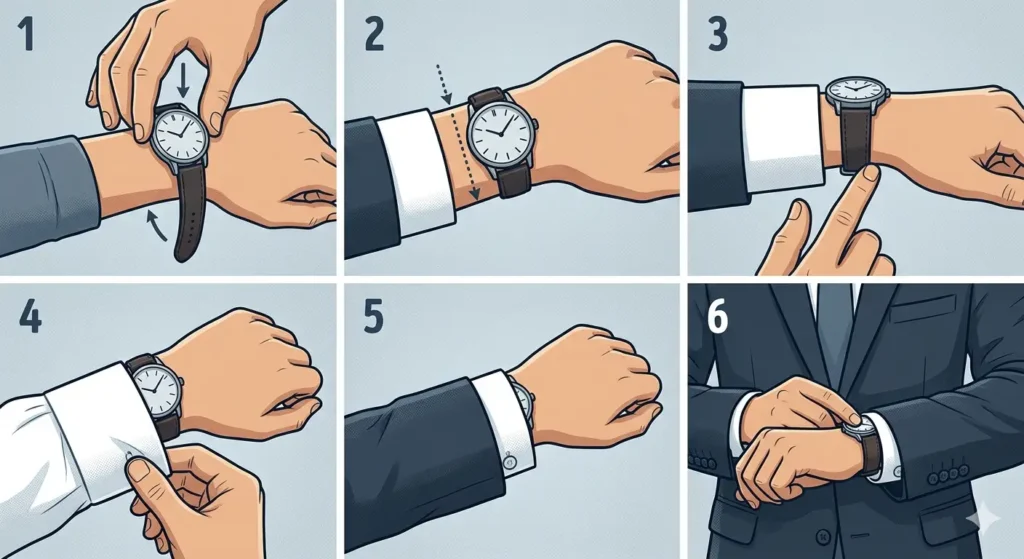
- Step 1: Place the watch on the left wrist (or non-dominant hand) with the crown facing your hand’s back
- Step 2: Position the watch case just behind the prominent wrist bone, not on top of it or too far up the forearm
- Step 3: Adjust the strap so one finger can slide between the band and wrist – tight enough to stay in place but loose enough to move slightly
- Step 4: Button the shirt cuff completely, ensuring the watch sits underneath when your arm hangs naturally
- Step 5: Test the sleeve length by bending your wrist – the watch should peek out only when you move your arm forward or check the time
- Step 6: Put on the suit jacket and check that the watch doesn’t create bulk at the cuff or prevent the sleeve from sitting flat
Proper Watch Placement and Positioning
The watch sits behind the ulnar styloid process – the bony prominence on the pinky side of the wrist. This position allows maximum mobility while keeping the watch secure. Placing it too high on the forearm looks awkward, while positioning it over the wrist bone causes discomfort and restricted movement.
When arms rest at the sides, shirt cuffs should completely cover the watch. During normal hand movements like checking time across different zones, the watch becomes visible as the cuff rides up naturally. This subtle reveal maintains formality while allowing functional access.
Managing Shirt Cuff Length
Shirt cuffs should extend approximately half an inch beyond the suit jacket sleeve. This measurement creates the proper foundation for watch placement. Cuffs that are too short expose the watch constantly, while excessively long cuffs bunch up and create bulk.
The watch case thickness must work within this cuff extension. A 9mm watch fits comfortably under most dress shirt cuffs, while a 14mm case requires cuff adjustments that often look unnatural.
Strap and Bracelet Selection
Leather straps offer the most formal appearance with suits. Black leather suits evening wear and very formal business settings. Brown leather provides versatility for business casual and daytime events. Navy or burgundy straps add subtle personality while maintaining professionalism.
Metal bracelets work well in corporate environments. Polished stainless steel creates a sleek, modern look, while brushed finishes offer understated elegance. Three-link and five-link bracelets are traditional choices that complement suit formality.
Strap Width Proportions
Strap width should match lug width precisely – typically 18-22mm for dress watches. Straps narrower than the lugs create visual gaps, while wider straps cannot attach properly. The strap width also affects overall watch presence on the wrist.
Pro-Tip: Keep a second strap in a different color to match various suit colors throughout the week. A simple strap change takes minutes and dramatically improves coordination between watch and outfit.
Watch Size and Proportion Guidelines
Wrist circumference determines appropriate watch diameter. For wrists measuring 6-7 inches, cases between 36-40mm provide balanced proportions. Larger wrists (7.5-8 inches) accommodate 40-42mm cases comfortably.
Lug-to-lug distance matters more than diameter for some wearers. The lugs should not extend beyond the wrist’s edges. A watch with 48mm lug-to-lug measurement suits most average wrists, while measurements exceeding 52mm require larger wrists.
Coordinating Watch with Suit Colors
Navy suits pair with silver-tone watches and black or brown leather straps. The cool tones of navy fabric complement stainless steel cases naturally. Charcoal and gray suits offer maximum flexibility, working with both silver and gold-tone watches.
Black suits demand conservative watch choices. Silver or white gold cases with black leather straps maintain appropriate formality. Brown suits require warmer metals – gold, rose gold, or bronze cases coordinate with the suit’s warm undertones.
Seasonal Considerations
Lighter dial colors and metal bracelets suit spring and summer months. The reflective quality of steel matches the season’s brightness. Darker dials and leather straps work better for fall and winter when heavier fabrics and richer colors dominate wardrobes.
Tips for Wearing a Watch with Different Suit Styles
Single-breasted suits allow more watch visibility during normal movement. The simpler front closure means less fabric restriction at the wrists. Double-breasted suits require thinner watches since the overlapping fabric adds bulk at the torso, making any wrist bulk more noticeable.
Three-piece suits with vests reduce watch visibility significantly. The vest adds a layer that makes checking time less convenient. Choose watches with excellent legibility since glimpses become brief and less frequent.
During important meetings or presentations when frequent time monitoring becomes necessary, wearing the watch slightly looser allows easier access without adjusting the cuff repeatedly. This small accommodation maintains professionalism while improving functionality.
Watch Etiquette in Formal Settings
Checking the time during conversations or meetings can appear rude or impatient. The subtle wrist turn should be quick and discrete. Avoid raising the wrist dramatically or holding it up to examine the watch face.
Black-tie events require maximum restraint. Ultra-thin dress watches in precious metals suit these occasions, though many formal purists suggest avoiding watches entirely with tuxedos, as pocket watches were traditionally correct.
Common Problems and Troubleshooting
Watch Creates Cuff Bulge
This issue stems from case thickness exceeding cuff accommodation. Solutions include selecting a thinner watch (under 10mm), having shirt cuffs tailored with slight extra room, or switching to French cuffs which naturally provide more space.
Watch Slides Around Wrist
Loose straps cause this problem. Tighten the band until only one finger fits between strap and skin. Metal bracelets may need link removal for proper fit. Tapered straps also reduce sliding by creating friction against wrist contours.
Crown Digs Into Hand
The watch sits too far forward on the wrist. Move it behind the wrist bone where natural contours create space. Some watches feature left-handed crown configurations that eliminate this issue entirely.
Cuff Catches on Crown
This occurs with oversized crowns or incorrect watch placement. Position the watch so the crown angles slightly toward the hand’s back, away from the cuff edge. Guards around the crown also prevent fabric catching.
Watch Leaves Marks on Wrist
Excessively tight bands cause skin indentation and discomfort. Loosen the strap one hole and allow slight movement. Leather straps break in over time and conform to wrist shape, reducing pressure points.
Maintaining Watch and Suit Coordination
Regular watch servicing ensures reliable timekeeping and maintains appearance. Leather straps require replacement every 1-2 years with regular wear, as they absorb moisture and show wear. Metal bracelets need occasional professional cleaning to remove dirt buildup between links.
Store watches properly when not wearing them. Watch rolls or boxes with individual compartments prevent scratches and strap creasing. Automatic watches benefit from winders that maintain power reserve between wears.
Keep watches away from strong magnets found in laptops, phones, and speakers. Magnetization affects accuracy and requires professional demagnetization. When using a stopwatch function or chronograph, ensure the watch returns to neutral position correctly to maintain long-term mechanism health.
Frequently Asked Questions
Which wrist should a watch be worn on with a suit?
The left wrist is standard for most people, as it keeps the dominant right hand free for writing and handshakes. Left-handed individuals often wear watches on the right wrist for similar convenience. The choice depends on personal comfort and dominant hand.
How tight should a dress watch be?
One finger should slide between the strap and wrist comfortably. This tightness prevents the watch from spinning while allowing circulation and comfort during long wear. Metal bracelets and leather straps may require different adjustments as leather stretches slightly over time.
Can sports watches be worn with suits?
Sports watches generally appear too casual for formal suits, especially in conservative business environments. However, slim dive watches or minimalist sports models without excessive bulk can work with business casual attire. Context and industry norms determine appropriateness.
What watch size looks best with a suit?
Dress watches between 36-42mm diameter suit most wrists when wearing suits. Smaller wrists (under 7 inches) look best with 36-40mm cases, while larger wrists accommodate 40-42mm comfortably. Case thickness under 10mm ensures proper fit under shirt cuffs.
Should the watch match the belt?
The watch case metal should coordinate with belt hardware and other accessories like cufflinks. Silver-tone watches pair with silver belt buckles, while gold-tone watches match gold hardware. Leather strap color should complement or match shoe and belt leather when possible.
Is it acceptable to wear a smartwatch with a suit?
Modern business environments increasingly accept sleek smartwatches with professional appearance. Choose metal cases and leather bands rather than sport bands. Traditional formal settings and conservative industries still favor mechanical dress watches.
How much of the watch should show below the cuff?
None of the watch should show when arms hang naturally at rest. The watch becomes visible only during arm movement when the cuff rides up naturally. This subtle appearance maintains formal aesthetic while allowing functional access to the timepiece.
Can gold watches be worn with silver suit buttons?
Mixing metal tones generally looks uncoordinated in formal wear. Match watch metal to suit hardware when possible – silver suits silver, gold suits gold. In mixed situations, choose the metal that appears more prominently in the overall outfit.
What if the suit sleeve is too short for the watch?
Suit sleeves should end at the wrist bone, allowing shirt cuffs to extend half an inch beyond. If sleeves are too short, tailoring can add functional buttonholes that allow cuff adjustment, or the jacket requires sleeve lengthening if fabric allows.
Should vintage watches be worn with modern suits?
Vintage watches pair excellently with suits when properly serviced and sized appropriately. Their classic designs often complement formal wear better than contemporary sports watches. Ensure the watch maintains accurate time and the strap appears well-maintained for professional settings.