
Learning how to wear a watch properly ensures comfort, prevents damage, and maintains the timepiece’s accuracy. The right wrist placement and tightness level depend on dominant hand preference, watch type, and personal comfort. Most people wear their watch on the non-dominant wrist with enough space to fit one finger between the band and skin.
Quick Summary Table
| Aspect | Recommendation |
|---|---|
| Which Wrist | Non-dominant wrist (left for right-handed people) |
| Tightness Level | One finger fits between band and wrist |
| Position on Wrist | Just behind the wrist bone (ulna) |
| Activity Adjustment | Tighter for sports, looser for desk work |
| Common Mistake | Wearing too tight or too loose |
Method 1: Choosing the Correct Wrist
The traditional rule for watch placement centers on hand dominance. Right-handed individuals typically wear watches on the left wrist, while left-handed people prefer the right wrist. This convention exists for practical reasons rather than fashion rules.
Standard Wrist Selection
Wearing a watch on the non-dominant wrist reduces interference with daily tasks. Writing, typing, and handling objects becomes easier when the dominant hand remains unobstructed. The watch crown, typically positioned on the right side of the case, becomes more accessible when worn on the left wrist.
Athletes and active individuals often follow this guideline strictly. Tennis players, golfers, and basketball players benefit from keeping their dominant wrist free of accessories. The watch stays protected from impacts while the primary hand maintains full range of motion.
Alternative Wrist Placement
Some people prefer wearing their watch on the dominant wrist despite conventional wisdom. Personal comfort trumps tradition in modern watch wearing. Certain professions, like medical professionals checking pulses, may find dominant-wrist placement more practical.
Smartwatch users sometimes choose based on functionality. Fitness tracking accuracy, touchscreen accessibility, and notification viewing angles influence wrist selection for digital timepieces.
Method 2: Adjusting Watch Tightness Properly
The one-finger rule provides the golden standard for watch fit. Sliding one finger comfortably between the band and wrist indicates proper tightness. This spacing prevents circulation restriction while keeping the watch secure.
Testing the Fit
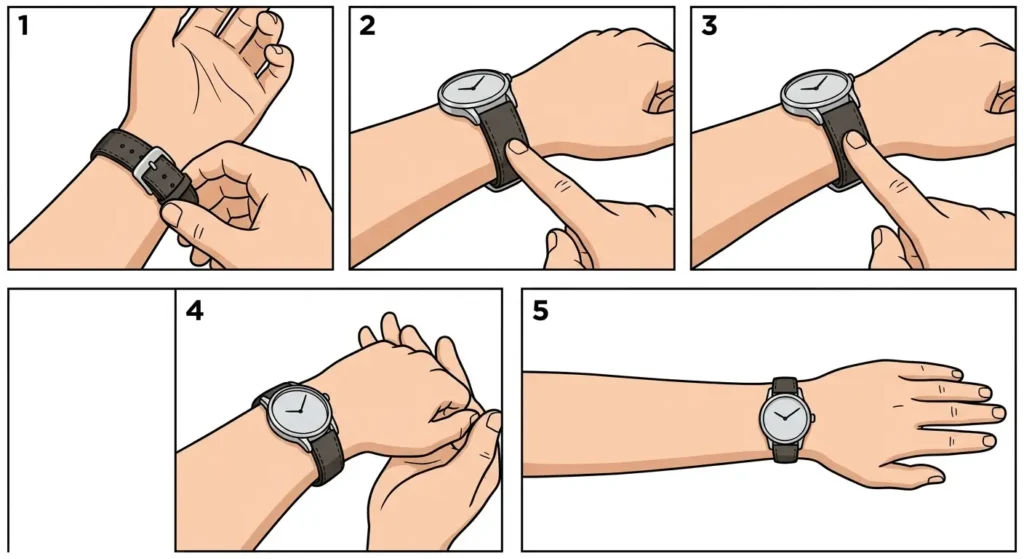
- Step 1: Put the watch on and fasten it at the middle hole or clasp position
- Step 2: Slide the index finger between the band and the inside of the wrist
- Step 3: The finger should fit snugly without forcing or excessive looseness
- Step 4: Rotate the wrist in all directions to test movement
- Step 5: Check that the watch face stays centered on top of the wrist
The watch should move slightly with arm motion but never slide past the wrist bone. Excessive movement indicates a loose fit that can damage both the watch and wrist over time.
Signs of Incorrect Tightness
Too tight: Red marks remain on the skin after removal, numbness or tingling occurs in the hand, or the band creates visible indentations. These symptoms indicate restricted blood flow and require immediate adjustment.
Too loose: The watch spins freely around the wrist, slides toward the hand during movement, or the face turns to the side or underside of the wrist. Loose watches accumulate scratches and suffer impact damage more frequently.
Positioning the Watch on the Wrist
The watch case should sit just behind the ulna (the protruding wrist bone on the pinky side). This location provides stability and comfort while allowing natural wrist flexion. Positioning too far up the forearm restricts movement and looks awkward under long sleeves.
Proper Placement Guidelines
Place the watch so the case rests flat against the top of the wrist when the hand is relaxed. The wrist bone acts as a natural barrier preventing the watch from sliding toward the hand. This position works for both formal dress watches and casual sports watches.
Professional settings often require the watch to sit slightly higher on the wrist. This placement allows the watch to peek from under a dress shirt cuff without catching on the fabric. Casual environments permit more flexible positioning based on personal preference.
Activity-Based Adjustments
Different activities demand specific watch positions and tightness levels:
Sports and exercise: Tighten the band one notch to prevent sliding during motion. Heart rate monitors and fitness trackers need firm contact with skin for accurate readings. Position remains just behind the wrist bone but with minimal movement allowance.
Office work: Standard one-finger tightness works best. The watch should move slightly when typing but never catch on keyboards or desk edges. Position slightly higher if long sleeves are worn regularly.
Sleep: Remove the watch entirely or loosen significantly. Nighttime wear can restrict circulation and damage the band through constant pressure and sweat exposure.
Pro-Tip: The Two-Position Method
Professional watch wearers often use different tightness settings throughout the day. Morning placement starts slightly looser to accommodate wrist swelling that occurs naturally. By afternoon, when the body retains more fluid, the same setting feels tighter. Adjusting one hole looser during hot weather or after meals prevents discomfort and maintains proper fit.
Watch Band Material Considerations
Different band materials require specific fitting approaches. Metal bracelets need professional sizing for optimal comfort, while leather and fabric straps offer more flexibility through multiple holes or micro-adjustments.
Metal Bracelets
Stainless steel, titanium, and precious metal bands achieve proper fit through link removal. Jewelers and watch retailers provide this service, often free with purchase. The bracelet should drape naturally over the wrist without pinching or excessive looseness.
Expansion bracelets offer built-in flexibility but still require proper sizing. These vintage-style bands stretch to accommodate wrist movement but need adjustment to prevent over-stretching and metal fatigue.
Leather Straps
Leather requires a break-in period before achieving optimal comfort. New leather straps feel stiff and may need wearing at slightly different holes initially. After several weeks, the leather conforms to wrist shape and settles into a preferred position.
Quality leather breathes better than synthetic materials, making it ideal for all-day wear. The material does stretch over time, eventually requiring tightening by one hole to maintain proper fit.
NATO and Fabric Straps
Nylon NATO straps pass under the watch case, creating a double-layer design. These straps should fit snugly enough that the watch doesn’t shift but loose enough to accommodate the extra material thickness. The tail end should tuck through the keepers neatly without bunching.
Fabric straps work well in hot weather due to superior breathability. Quick-dry materials prevent moisture buildup and allow comfortable wearing during water activities or intense exercise.
Tips for Different Watch Types
Various watch styles require specific wearing considerations. Dress watches, dive watches, and smartwatches each have unique fitting requirements based on their intended purpose and design characteristics.
Dress Watches
Thin dress watches slip easily under formal shirt cuffs when positioned correctly. Wear these watches slightly higher on the wrist, allowing them to slide partially under the cuff during normal arm movement. The watch should appear when checking the time but remain mostly hidden during formal occasions.
Dive and Sports Watches
Larger cases and thicker profiles characterize sports watches. These timepieces tolerate slightly looser fits since their robust construction handles more movement. However, during actual sports activities, tightening ensures the watch stays secure during rapid arm movements.
Smartwatches and Fitness Trackers
Digital wearables with heart rate sensors require consistent skin contact. Position these devices according to manufacturer guidelines, typically one finger-width above the wrist bone. Tightness needs adjustment based on activity – loose for daily wear, snug for workouts.
Many smartwatches feature customizable clock faces that can be adjusted throughout the day. The device should sit firmly enough for accurate sensor readings without causing discomfort during extended wear.
Common Problems and Solutions
Fix 1: Watch Leaves Marks on Skin
Deep impressions or red marks indicate excessive tightness. Loosen the band by one hole and monitor for improvement. If marks persist, consider hypoallergenic band materials or rotating between multiple watches to give skin recovery time.
Green discoloration comes from metal oxidation reacting with sweat, not tightness. Clean the case back regularly and apply clear nail polish as a barrier between skin and metal.
Fix 2: Watch Slides Toward Hand
Constant sliding means the band is too loose. Tighten by one hole or remove links from metal bracelets. The watch should stay behind the wrist bone consistently, moving only slightly with normal arm motion.
Tapered wrists present special challenges since the wrist is narrower near the hand. Custom-fitted straps or adjustable clasps solve this issue better than standard hole-based sizing.
Fix 3: Discomfort During Computer Work
Watches can press against desk edges during typing, causing wrist pain. Position the watch slightly higher on the wrist or rotate it toward the inner wrist when working. Some people prefer removing their watch entirely during extended keyboard sessions.
Using an online stopwatch for timing tasks eliminates the need to constantly check the wrist-worn timepiece, reducing strain.
Fix 4: Band Irritation or Rash
Skin reactions often result from moisture trapped under the band. Remove the watch periodically to allow skin to breathe and dry. Clean both the band and wrist regularly with mild soap.
Switching to perforated straps or mesh bracelets improves airflow. Genuine leather typically causes fewer reactions than synthetic materials or certain metal alloys containing nickel.
Fix 5: Watch Feels Different at Various Times
Wrist size fluctuates throughout the day due to temperature, hydration, and activity level. Morning wrists are typically thinner, expanding slightly by evening. Adjust the band accordingly or choose the hole that feels comfortable most of the day.
Extreme temperature changes affect both wrist size and band materials. Leather shrinks in cold weather while expanding in heat. Metal bracelets contract in cold, potentially feeling looser.
Tips for Long-Term Watch Wearing Comfort
Maintaining proper fit requires regular attention and minor adjustments. These practices ensure the watch remains comfortable and secure over years of wear.
Regular Maintenance
Check band condition monthly for signs of wear, stretching, or damage. Leather straps need conditioning every few months to prevent cracking. Metal bracelets require periodic cleaning to remove dirt and oils that accumulate in links.
Inspect clasps and buckles for proper function. Worn springs or bent pins compromise security and increase the risk of losing the watch.
Seasonal Adjustments
Temperature and humidity affect both wrist size and band materials. Summer heat causes wrist swelling, requiring looser settings. Winter cold has the opposite effect, often needing one hole tighter for proper fit.
Switching between summer and winter straps accommodates these changes while protecting valuable bands from extreme weather damage.
Multiple Watch Rotation
Alternating between different watches gives bands time to recover from daily wear. This practice extends band life and allows wrists to adjust to slightly different sizes and weights.
Comparing world time zones becomes easier when wearing GMT watches or dual-time complications properly fitted for comfortable all-day wear.
Break-In Patience
New watches and bands need wearing time before achieving optimal comfort. Leather requires several weeks to conform to wrist shape. Metal bracelets may need fine-tuning through link removal or micro-adjustment after initial wear reveals pressure points.
Resist the urge to over-tighten new watches. Starting slightly loose allows the band to settle naturally while preventing unnecessary discomfort during the break-in period.
Frequently Asked Questions
Should the watch move freely on the wrist?
The watch should move slightly but not freely. Proper fit allows minimal rotation and vertical movement while preventing the watch from sliding past the wrist bone. Complete immobility indicates excessive tightness, while free spinning means the band is too loose.
Can wearing a watch too tight cause health problems?
Yes, overly tight watches restrict blood circulation, potentially causing numbness, tingling, or nerve compression over time. Proper fit with one-finger spacing prevents these issues while maintaining comfort during extended wear.
Which wrist do left-handed people wear watches on?
Left-handed individuals typically wear watches on the right wrist, keeping their dominant hand free for writing and daily tasks. However, personal preference ultimately determines placement regardless of hand dominance.
How tight should a smartwatch be for accurate heart rate reading?
Smartwatches need snug contact during exercise for accurate sensor readings but can be worn slightly looser during rest. The device should not move during arm motion but should allow comfortable blood flow. Most manufacturers recommend tightening one notch before workouts.
Does watch tightness need adjustment throughout the day?
Wrist size fluctuates due to temperature, activity, and fluid retention. Many people find their watch feels tighter in the evening. Adjusting one hole looser during afternoon hours or in hot weather maintains consistent comfort without compromising security.
Can you wear a watch over a shirt sleeve?
Wearing a watch over clothing is generally not recommended as it prevents accurate timekeeping, looks unprofessional, and can damage both the watch and fabric. Pilots occasionally wear watches over flight suit sleeves for quick access, but this remains a specialized exception.
How do you know if a metal bracelet fits correctly?
A properly fitted metal bracelet drapes naturally over the wrist without pinching or excessive gaps. The clasp should sit centered on the underside of the wrist. One finger should fit between the bracelet and wrist, just like leather or fabric straps.
Should the watch face stay centered on top of the wrist?
Yes, the watch face should remain centered on the top of the wrist during normal movement. If the face rotates to the side or underside, the band is too loose and needs tightening. Proper fit keeps the dial visible without constant adjustment.
Is it better to wear a watch above or below the wrist bone?
Watches should sit just above the wrist bone (ulna) on the hand-side. This position provides stability, comfort, and proper aesthetic placement. Wearing too far up the forearm restricts movement and appears awkward under clothing.
How long does it take for a new watch band to feel comfortable?
Leather bands typically require 1-3 weeks to break in and conform to wrist shape. Metal bracelets may need professional adjustment but feel comfortable immediately once properly sized. Fabric straps usually feel comfortable from the first wear with minimal break-in needed.
Conclusion
Wearing a watch correctly combines practical functionality with personal comfort. The non-dominant wrist provides the traditional placement, while one-finger spacing ensures proper tightness. Position matters as much as fit – keeping the watch just behind the wrist bone prevents unnecessary movement while maintaining comfort during daily activities. Different watch types, band materials, and activities may require slight adjustments to these baseline rules. Regular monitoring and seasonal adjustments help maintain optimal fit as wrist size naturally fluctuates. Taking time to find the perfect position and tightness level protects both the timepiece and ensures comfortable wearing for years to come.