

Winding a Rolex watch properly ensures accurate timekeeping and maintains the longevity of this precision timepiece. Whether dealing with an automatic or manual-wind model, understanding the correct winding technique prevents damage and keeps the watch running smoothly. This guide provides clear, step-by-step instructions for winding a Rolex watch correctly.
Quick Summary Table
| Watch Type | Winding Method | Number of Turns |
| Manual-Wind Rolex | Clockwise crown rotation | 30-40 full turns |
| Automatic Rolex | Clockwise crown rotation or wrist movement | 30-40 turns when stopped |
| Crown Position | Position 0 (pushed in fully) | Screw down after winding |
Understanding Your Rolex Watch Type
Before beginning the winding process, identifying the type of Rolex movement is essential. Most modern Rolex watches feature automatic movements that wind themselves through wrist motion, while vintage models may have manual-wind movements requiring daily winding. Automatic Rolex watches contain a perpetual rotor that winds the mainspring as the wearer moves throughout the day.
Manual-wind Rolex models, typically found in vintage collections or specific dress watch lines, require deliberate winding by rotating the crown. Both types use the same basic winding motion, but automatic watches only need manual winding when they’ve stopped running or after extended periods without wear.
How to Wind a Manual-Wind Rolex Watch
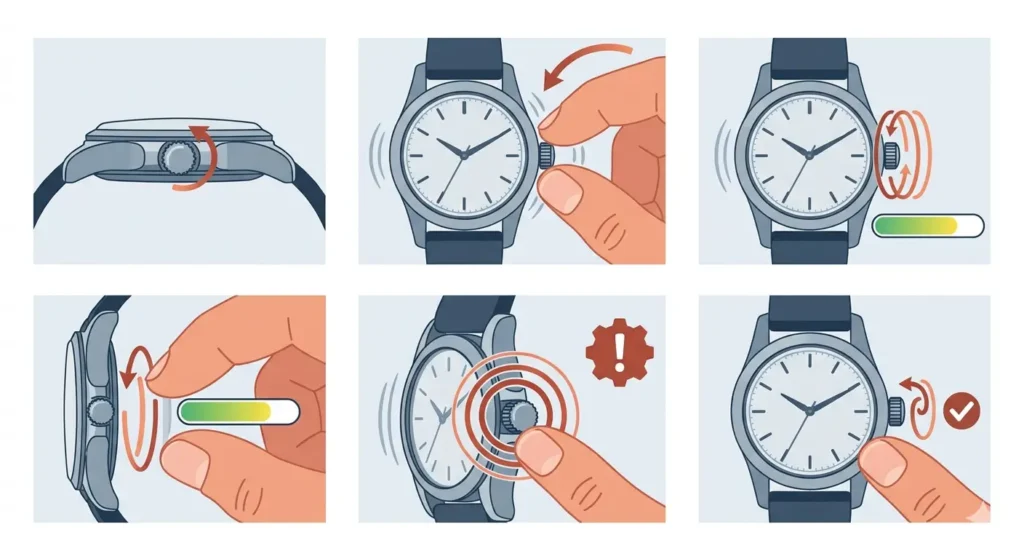
Manual-wind Rolex watches require regular winding to maintain power reserve and accurate timekeeping. The process is straightforward but requires gentle, consistent motion.
- Step 1: Unscrew the crown by turning it counterclockwise until it pops out slightly to position 0 (the winding position).
- Step 2: Gently rotate the crown clockwise using the thumb and index finger, feeling for smooth resistance.
- Step 3: Continue winding for approximately 30-40 full rotations until resistance increases noticeably.
- Step 4: Stop winding when resistance becomes firm – never force the crown past this point.
- Step 5: Push the crown back in and screw it down clockwise until hand-tight against the case.
Pro-Tip: Wind the watch at the same time each day to establish a consistent power reserve routine. This habit ensures the watch never runs low on power and maintains optimal accuracy throughout the day.
How to Wind an Automatic Rolex Watch
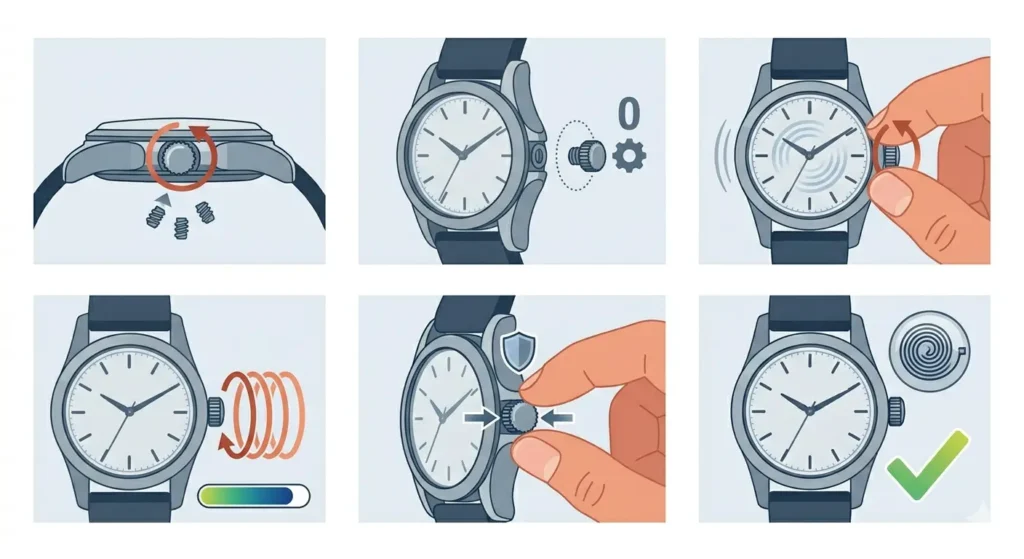
Automatic Rolex watches wind themselves during regular wear, but manual winding becomes necessary after the watch has stopped or been stored for several days.
- Step 1: Unscrew the crown by rotating it counterclockwise approximately 3-4 turns until it releases from the threads.
- Step 2: Keep the crown in position 0 (the first position out, closest to the case).
- Step 3: Rotate the crown clockwise smoothly and consistently, using gentle pressure.
- Step 4: Perform 30-40 complete clockwise rotations to fully wind the mainspring.
- Step 5: Press the crown firmly against the case and screw it down clockwise until secure.
The automatic winding mechanism engages during daily wear, so manual winding is typically only needed to restart the watch after it has stopped. Regular wrist movement throughout the day keeps the power reserve full without additional manual intervention.
Proper Crown Handling Technique
The crown is the most delicate external component of a Rolex watch and requires careful handling during winding. Always ensure fingers are clean and dry before touching the crown to prevent slipping and potential damage.
When unscrewing the crown, use gentle counterclockwise rotation without pulling outward forcefully. The crown should release naturally after several turns. During winding, maintain steady, smooth rotations rather than quick, jerky movements. This approach reduces wear on the internal winding mechanism and ensures even distribution of tension in the mainspring.
After winding, verify the crown is fully screwed down by checking that it sits flush against the case with no gap visible. A properly secured crown maintains the watch’s water resistance and protects internal components from moisture and dust.
Optimal Winding Frequency
Manual-wind Rolex watches benefit from daily winding at consistent times, preferably in the morning when starting the day. This routine ensures maximum power reserve and prevents the watch from stopping unexpectedly.
Automatic Rolex watches worn daily rarely need manual winding since normal arm movement provides sufficient energy. However, after removing the watch for more than 40-72 hours (depending on the specific model’s power reserve), manual winding becomes necessary to restart the movement. For watches in rotation or stored in collections, winding before wearing ensures immediate accuracy.
Pro-Tip: Never wind a Rolex watch while it’s on the wrist. Remove the watch and hold it securely in one hand while winding with the other. This prevents undue stress on the crown and stem, which can lead to misalignment or damage over time.
Tips for Maintaining Your Rolex While Winding
- Always wind the crown in a clockwise direction only – counterclockwise rotation does not engage the winding mechanism
- Apply consistent, gentle pressure throughout the winding process rather than varying force
- Stop immediately when resistance increases significantly to avoid overwinding damage
- Keep track of winding using a reliable timing tool to establish a consistent daily routine
- Clean hands thoroughly before handling the crown to prevent oil and dirt buildup
- Avoid winding in humid or dusty environments where particles could enter the case
- Store the watch in a stable environment when not wearing it to preserve the movement
- Service the watch every 5-10 years to maintain optimal winding mechanism performance
Common Problems When Winding a Rolex
Crown Won’t Unscrew
When the crown refuses to unscrew, debris or dried lubricants may be blocking the threads. Avoid forcing the crown, as this can strip the threads or damage the tube. Instead, try cleaning around the crown area with a soft brush and warm soapy water. If the crown remains stuck after cleaning, professional service is necessary to prevent further damage.
No Resistance When Winding
A crown that spins freely without any resistance indicates a disconnected or broken winding stem. This issue requires immediate professional attention, as continued winding attempts can worsen the internal damage. Stop using the watch and take it to an authorized Rolex service center for repair.
Crown Difficult to Screw Down
Cross-threading occurs when the crown is not aligned properly with the case tube threads. If resistance is felt immediately when screwing down the crown, unscrew it completely and start again, ensuring the crown is pressed straight against the case before rotating. Misaligned threading can permanently damage both the crown and case tube if forced.
Watch Stops Shortly After Winding
A watch that stops running within hours of a full wind likely has mainspring issues or requires cleaning and servicing. The power reserve may be compromised due to old lubricants or worn components. Schedule a service appointment with an authorized Rolex technician to diagnose and resolve the problem. Using a clock tab helps monitor exactly how long the watch runs after winding.
Frequently Asked Questions
How many times should a Rolex watch be wound?
A Rolex watch should be wound approximately 30-40 complete clockwise rotations when starting from a fully unwound state. This provides a full power reserve for most Rolex movements. Stop winding when noticeable resistance is felt to avoid damaging the mainspring.
Can a Rolex watch be overwound?
Modern Rolex watches cannot be technically overwound because they include a slipping clutch mechanism that disengages when the mainspring reaches full tension. However, forcing the crown past the point of resistance can damage the winding mechanism, so stop winding when resistance increases significantly.
Which direction should a Rolex crown be turned for winding?
Always turn a Rolex crown clockwise (toward the 12 o’clock position) for winding. Counterclockwise rotation does not engage the winding mechanism and serves only for unscrewing the crown from its threaded position.
How often should an automatic Rolex be manually wound?
An automatic Rolex worn daily does not require manual winding, as normal wrist movement keeps it powered. Manual winding is only necessary when the watch has stopped after being unworn for 40-72 hours, depending on the specific model’s power reserve capacity.
Should a Rolex be wound daily?
Manual-wind Rolex watches benefit from daily winding at the same time each day to maintain consistent power reserve. Automatic Rolex watches worn regularly do not need daily manual winding, as the automatic rotor maintains the power reserve through normal movement.
What happens if a Rolex watch is not wound?
An unwound Rolex will simply stop running once the mainspring loses all stored energy. This does not damage the watch, but it will need to be wound and reset to the correct time before wearing again. Extended periods without running do not harm modern Rolex movements.
Can winding damage a Rolex watch?
Proper winding technique does not damage a Rolex watch. However, forcing the crown past natural resistance, winding while the watch is on the wrist, or using excessive force can damage the crown, stem, or winding mechanism. Always use gentle, consistent pressure and stop when resistance is felt.
How long does a fully wound Rolex run?
Most modern Rolex movements provide a power reserve of approximately 48-72 hours when fully wound, depending on the specific caliber. Some newer models feature extended power reserves of up to 70 hours. The watch will run continuously throughout this period without additional winding.
Why does the crown on a Rolex need to be screwed down?
The screw-down crown creates a watertight seal that protects the movement from moisture, dust, and other contaminants. This feature is essential for maintaining the watch’s water resistance rating and preventing internal damage. Always ensure the crown is fully screwed down after winding or setting.
Is it better to wind a Rolex in the morning or evening?
Winding a manual Rolex in the morning is generally preferred, as it provides a full power reserve for the entire day ahead. Consistent timing helps establish a reliable routine and ensures the watch never runs low on power during daily wear. The specific time matters less than maintaining consistency.