

Learning how to manually wind a Seiko Prospex (6R35, etc.) ensures the watch maintains accurate timekeeping and optimal power reserve. The Seiko 6R35 automatic movement, found in many Prospex models, features manual winding capability alongside its automatic winding mechanism. This guide provides clear, step-by-step instructions for properly winding these reliable dive watches.
Key Takeaways
- The Seiko 6R35 movement allows manual winding through the crown at position 0
- Approximately 40-50 clockwise rotations fully wind the watch
- Manual winding is safe and will not damage the movement due to built-in slip mechanism
- A fully wound 6R35 provides approximately 70 hours of power reserve
- Wind the watch in the morning for best results and consistent timekeeping
Step-by-Step Guide to Manually Winding Your Seiko Prospex
Preparing the Watch for Winding
Before beginning the winding process, ensure the watch is in the correct position. The crown should be fully pushed in against the case, which is known as position 0 or the normal wearing position. This is the only position where manual winding can occur on the 6R35 movement.
Remove the watch from the wrist if currently wearing it. While manual winding can technically be done while wearing the watch, holding it in hand provides better control and prevents accidental pulling of the crown to other positions.
The Winding Process
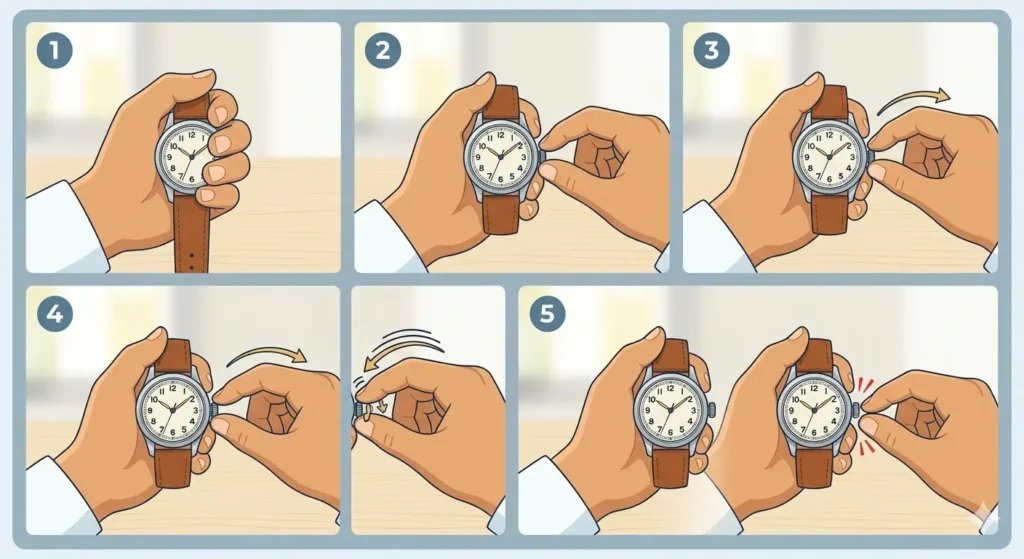
Manual winding the Seiko Prospex follows a straightforward process that takes just a minute to complete:
- Step 1: Hold the watch firmly in one hand with the dial facing toward the palm
- Step 2: Grip the crown gently between thumb and index finger of the other hand
- Step 3: Rotate the crown clockwise (away from the body when holding the watch) in smooth, deliberate turns
- Step 4: Continue winding for approximately 40-50 complete rotations
- Step 5: Stop winding once resistance is felt or after reaching 50 rotations
The crown should turn smoothly with minimal resistance throughout the winding process. Each rotation engages the mainspring, storing energy that powers the movement. Unlike some vintage movements, the 6R35 features a slip mechanism that prevents overwinding damage.
Pro-Tip: Count rotations during the first few winding sessions to develop a feel for how many turns bring the watch to full power. Most Seiko Prospex owners find that 45-50 rotations fully wind the movement from a completely unwound state.
Verifying Proper Winding
After completing the winding process, the second hand should begin moving immediately if the watch was previously stopped. Listen closely to the watch – a properly wound movement produces a consistent ticking sound at a rate of 6 beats per second (21,600 beats per hour).
Set the time if needed by pulling the crown out to position 2, adjusting the hands, and pushing the crown back in firmly. The watch is now ready to wear and should run for approximately 70 hours on a full wind.
When to Manually Wind Your Seiko Prospex
Understanding optimal winding timing helps maintain consistent accuracy and extends the movement’s lifespan. Manual winding serves specific purposes even though the 6R35 is an automatic movement.
After Extended Non-Wear Periods
When a Seiko Prospex has not been worn for several days and has stopped running, manual winding provides the initial power needed to restart the movement. This ensures the watch runs with sufficient amplitude immediately rather than relying solely on wrist motion to build power gradually.
Give the watch a full manual wind (40-50 rotations) before setting the time and wearing it again. This practice ensures all components receive proper lubrication distribution and the watch maintains optimal accuracy from the start.
Before Important Timing Events
Manual winding proves valuable before situations requiring precise timekeeping. Athletes, professionals with time-sensitive schedules, or anyone needing reliable timing can benefit from ensuring maximum power reserve. Tools like the online stopwatch can help verify the watch’s accuracy after winding.
Wind the watch the morning of important events, even if wearing it regularly. This tops off the power reserve and ensures peak performance throughout the day.
During Low Activity Days
Days involving minimal wrist movement may not provide sufficient motion to keep the automatic winding mechanism fully engaged. Office workers, those recovering from injuries, or anyone experiencing reduced physical activity can supplement automatic winding with occasional manual winding.
A quick 20-30 rotation wind session each morning maintains adequate power reserve during low-activity periods. Checking the world time comparison tool while winding can become part of a morning routine for those tracking multiple time zones.
Tips for Optimal Manual Winding
Following best practices ensures longevity and maintains the precision Seiko Prospex watches are known for throughout their service life.
Establish a Consistent Routine
Wind the watch at the same time each day, preferably in the morning. Consistent winding timing helps establish predictable power reserve patterns and makes it easier to track the watch’s performance over time.
Many Prospex owners wind their watches while checking the clock tab during morning routines, creating a natural habit that prevents the watch from running down unexpectedly.
Use Gentle, Controlled Motions
Apply smooth, even pressure when rotating the crown. Avoid rapid or forceful winding motions that could cause unnecessary wear on the crown stem and winding mechanism. The goal is deliberate, measured rotations rather than speed.
Quality over quantity matters – 40 smooth rotations provide better results than 60 rushed ones. The movement responds best to consistent, controlled input.
Maintain Clean Hands and Crown
Dirt, moisture, and debris can compromise the crown’s sealing and introduce contaminants into the movement. Wash and dry hands before handling the crown, especially after swimming or exposure to saltwater.
Periodically clean around the crown area with a soft, dry cloth. This simple maintenance step prevents grit accumulation that could affect crown operation or water resistance.
Pro-Tip: Never attempt to wind or operate the crown when the watch is wet or submerged. The Prospex line features excellent water resistance, but crown operation should only occur when the watch is completely dry to maintain seal integrity.
Avoid Overwinding Concerns
The 6R35 movement includes a slip mechanism that prevents mainspring damage from overwinding. Once the mainspring reaches full tension, the mechanism disengages, allowing the crown to continue rotating without adding more power or causing harm.
This design feature means there is no need to count rotations precisely or worry about doing ‘too much’ winding. However, stopping around 50 rotations remains good practice as it reduces unnecessary wear on the slip mechanism.
Common Problems and Solutions
Crown Feels Extremely Tight or Won’t Turn
If the crown offers unusual resistance or refuses to rotate, stop immediately. This likely indicates the crown is pulled out to position 1 (date adjustment) or position 2 (time setting), where manual winding is not possible on the 6R35 movement.
Push the crown firmly against the case until it clicks into position 0. The crown should now rotate freely with normal winding resistance. Never force a crown that won’t turn – this can damage the stem or movement.
Watch Stops Shortly After Manual Winding
A watch that stops running within hours of manual winding may have insufficient power transfer or mechanical issues. First, verify the winding technique by trying a full 50-rotation winding session while ensuring the crown is fully pushed in.
If the watch continues stopping prematurely after proper manual winding, the movement may require professional service. Mainspring issues, worn components, or lubrication breakdown typically cause this symptom after years of use.
Crown Rotates But No Resistance Felt
The absence of any winding resistance throughout the entire rotation range suggests a disconnection in the winding mechanism. This could involve a broken clutch wheel, damaged crown wheel, or other internal component failure.
This condition requires immediate attention from a qualified watchmaker. Continuing to operate the watch may cause additional damage. Seiko Prospex watches are built to last decades with proper care, but mechanical watches eventually need professional maintenance.
Second Hand Moves Erratically After Winding
Irregular second hand motion following manual winding, such as stuttering or jumping multiple seconds at once, indicates insufficient power reaching the escapement. This differs from the normal smooth sweep motion characteristic of mechanical movements.
Try giving the watch a more thorough winding session with 60-70 rotations. If erratic motion persists, the movement may have magnetization issues, balance wheel problems, or need cleaning and lubrication from a professional.
Frequently Asked Questions
How many times should a Seiko 6R35 be manually wound?
A Seiko 6R35 movement requires approximately 40-50 clockwise rotations of the crown to achieve a full wind from a completely stopped state. This provides the maximum 70-hour power reserve the movement is designed to deliver.
Can manual winding damage a Seiko automatic movement?
No, manual winding cannot damage the Seiko 6R35 or similar automatic movements because they incorporate a slip mechanism that prevents overwinding. Once the mainspring reaches full tension, the mechanism disengages automatically, protecting the movement from excessive force.
Should a Seiko Prospex be manually wound every day?
Daily manual winding is not necessary if the watch is worn regularly and receives sufficient wrist motion to maintain the automatic winding function. However, manual winding each morning ensures maximum power reserve and can be beneficial during periods of low physical activity.
Why won’t the crown turn when trying to wind the watch?
The crown only enables manual winding when fully pushed in at position 0. If the crown is pulled out to position 1 (date adjustment) or position 2 (time setting), it will not rotate for winding purposes. Push the crown completely in until it clicks, then attempt winding again.
How long does a fully wound Seiko 6R35 run?
A fully manually wound Seiko 6R35 movement provides approximately 70 hours of power reserve. This means the watch will continue running for nearly three full days without any additional winding or wrist motion, making it excellent for weekend non-wear periods.
Is it better to wind a Seiko Prospex manually or let it auto-wind?
Both methods are equally safe and effective for the 6R35 movement. Manual winding provides immediate full power and control over the power reserve, while automatic winding maintains power during daily wear. Many owners use a combination of both methods depending on their activity levels and wearing patterns.
Can a Seiko Prospex be wound while wearing it?
Yes, manual winding can be performed while wearing a Seiko Prospex, though removing it provides better control and visibility. The key is ensuring the crown remains at position 0 and rotates smoothly without pulling outward during the winding process.
What direction should the crown turn for manual winding?
The crown must rotate clockwise (forward, away from the body when holding the watch) for manual winding on Seiko 6R35 movements. Counterclockwise rotation does not engage the winding mechanism and simply freewheels without adding power to the mainspring.
How can you tell when a Seiko 6R35 is fully wound?
A fully wound 6R35 may offer slightly increased resistance, though the slip mechanism prevents a hard stop. The most reliable method is counting approximately 50 rotations from a stopped watch. After this point, additional winding does not increase power reserve due to the slip mechanism engagement.
Does manual winding affect the accuracy of a Seiko Prospex?
Manual winding itself does not negatively impact accuracy. In fact, maintaining optimal power reserve through manual winding can improve consistency in timekeeping, as mechanical movements typically perform best with higher mainspring tension within their designed operating range.