
Navigating a watch auction requires careful preparation, strategic bidding, and thorough knowledge of authentication processes. Whether participating in live events or online platforms, understanding the auction mechanics ensures confident purchases and helps avoid common pitfalls that trap inexperienced bidders.
Quick Summary Table
| Step | Key Action | Time Required |
|---|---|---|
| Research & Registration | Review catalog, register with auction house | 1-2 weeks before |
| Preview & Inspection | Examine watches in person or request condition reports | 3-7 days before |
| Set Budget Limits | Determine maximum bid including buyer’s premium | 1 day before |
| Bidding Strategy | Choose bidding method and execute plan | During auction |
| Post-Auction | Complete payment and arrange shipping | Within 5-7 days |
Register with the Auction House
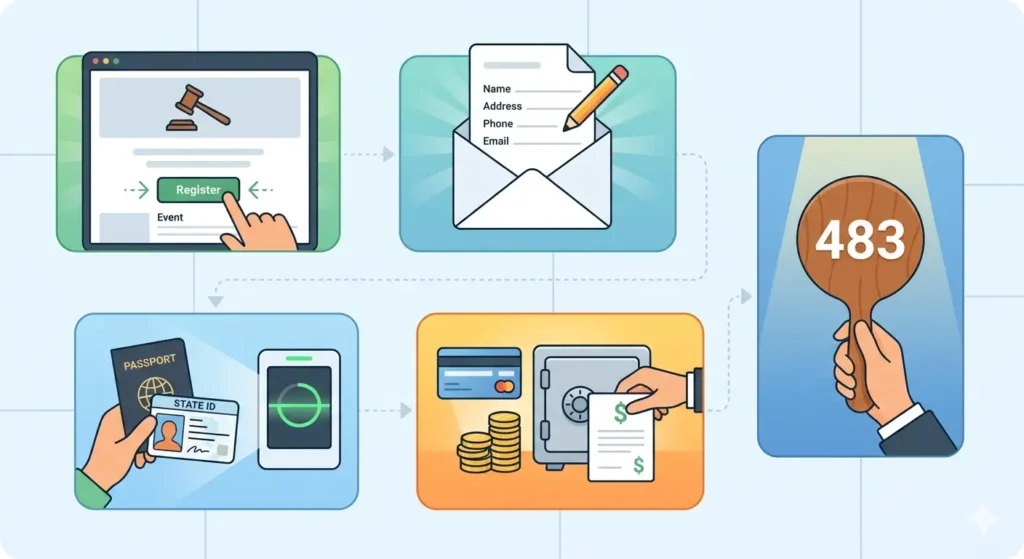
Registration serves as the entry point to any watch auction. Most auction houses require advance registration, sometimes weeks before the event.
- Step 1: Visit the auction house website and locate the registration section for the specific auction event
- Step 2: Complete the registration form with personal information, including full name, address, phone number, and email
- Step 3: Submit identification documents such as a government-issued ID or passport for verification purposes
- Step 4: Provide payment information or proof of funds, as many auction houses require financial verification for high-value watch auctions
- Step 5: Obtain the bidder number or paddle number, which will be used during the actual bidding process
Some prestigious auction houses conduct background checks and may request bank references for first-time bidders. This process typically takes 2-5 business days, so early registration prevents last-minute complications.
Research the Auction Catalog
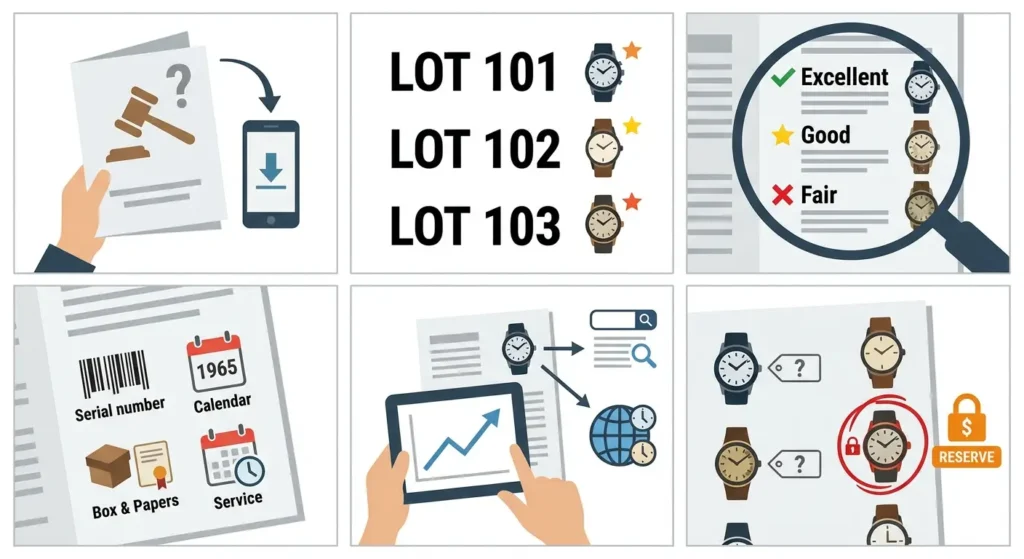
The auction catalog provides detailed information about every watch available for bidding. Thorough research separates successful bidders from those who overpay or purchase problematic pieces.
- Step 1: Download or request the printed catalog from the auction house, usually available 2-4 weeks before the event
- Step 2: Review each lot number that matches the desired watch models or brands
- Step 3: Read the condition descriptions carefully, noting terms like ‘excellent,’ ‘good,’ or ‘fair’ which indicate different states of preservation
- Step 4: Check for important details such as serial numbers, production years, box and papers inclusion, and service history
- Step 5: Cross-reference catalog estimates with recent market prices using online databases or timing tools to track global auction results across different time zones
- Step 6: Make note of watches with reserves, which are minimum prices that must be met for the sale to complete
Pay special attention to catalog disclaimers and condition reports. These documents reveal restoration work, replaced parts, or authenticity concerns that significantly impact value.
Pro-Tip
Auction catalogs often use subtle language to indicate problems. Phrases like ‘sold as is’ or ‘authenticity not guaranteed’ signal red flags. Always request additional photographs and detailed condition reports for any serious contender.
Inspect the Watches in Person
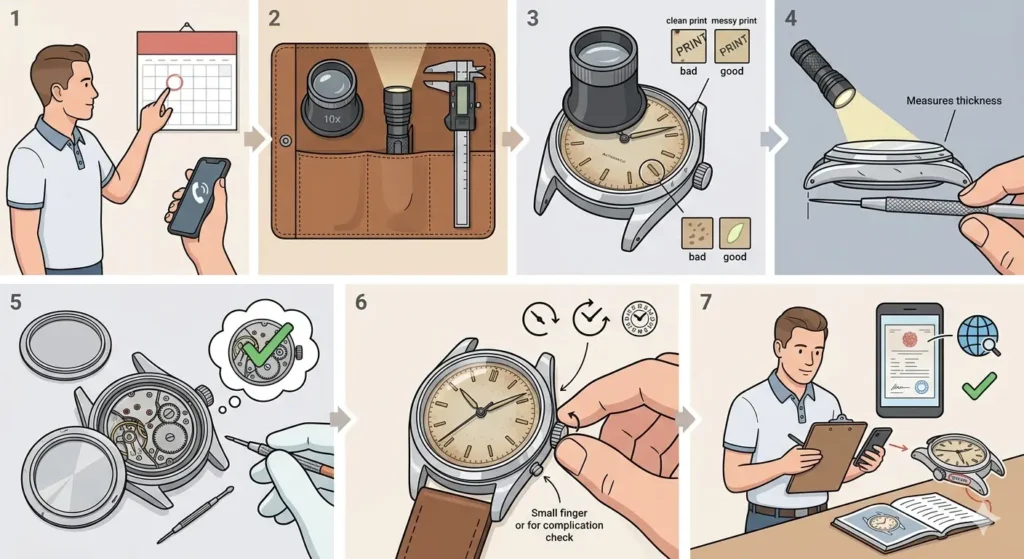
Physical inspection remains the most reliable way to assess a watch before bidding. Most auction houses offer preview days where potential buyers can examine the pieces firsthand.
- Step 1: Schedule an appointment for the preview session, typically held 2-3 days before the auction date
- Step 2: Bring essential tools including a loupe (10x magnification minimum), flashlight, and measuring tools for case dimensions
- Step 3: Examine the dial for signs of restoration, reprinting, or refinishing by checking the printing quality, lume condition, and patina consistency
- Step 4: Inspect the case for scratches, dents, polishing marks, or signs of case thickness reduction from over-polishing
- Step 5: Check the movement by requesting to see the caseback opened (if the auction house permits) to verify caliber authenticity and condition
- Step 6: Test the crown functions, including winding, time setting, and any complications like date changes or chronograph operations
- Step 7: Verify serial numbers match catalog descriptions and check against known stolen watch databases
For online-only auctions where physical inspection isn’t possible, request detailed videos showing the watch running, close-ups of dial details, and movement shots. Reputable auction houses accommodate these requests.
Determine Your Maximum Bid

Setting a firm budget prevents emotional overspending during competitive bidding situations. The maximum bid should include all associated costs.
- Step 1: Research recent sales data for identical or similar watch models to establish fair market value
- Step 2: Calculate the buyer’s premium, typically ranging from 15% to 25% of the hammer price depending on the auction house
- Step 3: Add estimated taxes, which vary by location and can reach 10% or more of the total purchase price
- Step 4: Include shipping costs, insurance during transit, and any import duties for international purchases
- Step 5: Set the absolute maximum amount and commit to stopping at that number regardless of auction excitement
- Step 6: Write down this number and keep it visible during bidding as a reminder of the predetermined limit
Conservative bidders typically set maximums at 10-15% below perceived market value to account for potential hidden issues or market fluctuations. This approach leaves room for post-purchase servicing costs that often arise with vintage watches.
Choose a Bidding Method
Modern watch auctions offer multiple bidding channels, each with distinct advantages and limitations.
Method 1: Live In-Person Bidding
Attending the auction in person provides the most control and immediate feedback. Bidders can read the room, adjust strategies in real-time, and respond instantly to competing bids.
- Step 1: Arrive at least 30 minutes before the auction starts to familiarize yourself with the venue and atmosphere
- Step 2: Collect the bidder paddle or number from the registration desk
- Step 3: Find a seat with clear visibility of both the auctioneer and the display screens showing lot numbers and current bids
- Step 4: Signal bids clearly by raising the paddle when ready to bid, using the clock tab feature to track bidding durations and pace
- Step 5: Maintain composure and avoid reactive bidding against specific competitors
Method 2: Telephone Bidding
Telephone bidding suits buyers who cannot attend in person but want live participation. An auction house representative executes bids based on real-time instructions.
- Step 1: Request telephone bidding when registering, specifying which lots to participate in
- Step 2: Provide multiple contact numbers to ensure connectivity during the auction
- Step 3: Be available 15-20 minutes before the scheduled lot comes up for bidding
- Step 4: Clearly communicate bid intentions to the representative using simple ‘yes’ or ‘no’ responses
- Step 5: Inform the representative immediately when reaching the maximum bid to prevent overshooting
Method 3: Online Bidding
Online platforms offer convenience and accessibility, allowing participation from anywhere with internet access. Most major auction houses now provide sophisticated online bidding systems.
- Step 1: Log into the auction platform using verified credentials at least 10 minutes before bidding starts
- Step 2: Navigate to the specific lot and verify all details match expectations
- Step 3: Test the bidding interface by placing practice bids if the platform offers this feature
- Step 4: Monitor the live feed showing current bid amounts and competing bidder activity
- Step 5: Place bids using increment buttons, ensuring each click registers before the next action
- Step 6: Stay logged in until receiving confirmation of either winning the lot or being outbid
Method 4: Absentee Bids
Absentee or advance bids allow participation without attending the live event. The auction house bids on behalf of the buyer up to a predetermined maximum.
- Step 1: Submit absentee bids through the auction house website, email, or written form
- Step 2: Specify the exact lot number and maximum bid amount
- Step 3: Submit bids at least 24 hours before the auction to ensure processing
- Step 4: Receive confirmation from the auction house acknowledging the absentee bid
- Step 5: Understand that the auctioneer will bid incrementally on behalf of the bidder, using only enough to secure the lot if possible
Execute the Bidding Strategy
Strategic execution often determines success more than budget size. Understanding auction dynamics creates significant advantages.
- Step 1: Wait for the auctioneer to fully describe the lot and open bidding before entering
- Step 2: Consider entering early with a strong opening bid to discourage casual bidders and establish presence
- Step 3: Alternatively, wait until bidding slows to assess competition levels before joining
- Step 4: Bid confidently and decisively rather than hesitantly, which can embolden other bidders
- Step 5: Use odd increments when allowed, such as bidding $10,250 instead of $10,000, to throw off competitors’ calculations
- Step 6: Stay alert for auctioneer tactics like ‘fair warning’ or ‘last chance’ which signal imminent hammer fall
- Step 7: Stop bidding immediately upon reaching the predetermined maximum regardless of how close victory seems
Experienced bidders often employ ‘sniping’ tactics, waiting until the final seconds to place decisive bids. This approach works particularly well in online auctions with fixed end times.
Pro-Tip
Auction fever causes more regrettable purchases than any other factor. Taking deep breaths between bids and using an online stopwatch to pace responses helps maintain emotional control and prevents reactive decision-making.
Complete Payment and Shipping
Winning the bid triggers immediate financial obligations and logistical responsibilities. Prompt action ensures smooth transaction completion.
- Step 1: Receive the invoice from the auction house, typically sent within 24 hours of the auction ending
- Step 2: Review the invoice carefully, verifying the hammer price, buyer’s premium, taxes, and any additional fees
- Step 3: Submit payment within the specified timeframe, usually 5-7 business days, using the auction house’s accepted methods
- Step 4: Wire transfers are most common for high-value watches, though some auction houses accept credit cards with additional processing fees
- Step 5: Arrange shipping or collection once payment clears, coordinating with the auction house’s logistics department
- Step 6: Purchase insurance for the full value of the watch during transit, as standard carrier coverage rarely suffices
- Step 7: Request signature confirmation and tracking for all shipments
Many auction houses offer in-house shipping services with specialized watch packaging and insurance. These services cost more but provide accountability and protection through established channels.
Verify Authenticity Upon Receipt
Final authentication protects against misrepresented or problematic pieces that escaped detection during preview.
- Step 1: Inspect the watch immediately upon delivery, documenting its condition with photographs before removing protective packaging
- Step 2: Compare the received watch against catalog descriptions and preview photographs
- Step 3: Verify serial numbers match invoices and certificates
- Step 4: Consider professional authentication from an independent watchmaker or brand service center for significant purchases
- Step 5: Review the auction house’s return policy, which typically offers limited windows (3-5 days) for authenticity claims
- Step 6: Document any discrepancies immediately and contact the auction house before the claim period expires
Reputable auction houses stand behind their descriptions and offer remedies for material misrepresentations. However, buyers bear responsibility for due diligence, and minor condition variations rarely qualify for returns.
Tips for Successful Watch Auction Navigation
- Start with lower-value lots to gain experience with the auction house’s processes and bidding dynamics before pursuing grail pieces
- Build relationships with auction house specialists who can provide insights about upcoming lots and market trends
- Track watch values across multiple auction houses to identify pricing patterns and spot undervalued opportunities
- Avoid bidding wars with specific individuals, as emotional competition drives prices beyond rational limits
- Consider lots that appear near the end of lengthy auctions when bidder fatigue can create value opportunities
- Research the provenance history, as watches with famous previous owners or interesting stories command premiums
- Join collector communities and forums where members share auction experiences and warning signs about specific lots
- Factor in service costs when bidding on vintage pieces, as complete overhauls can cost $1,000-$5,000 depending on complications
- Save catalog pages and correspondence for future reference, creating a personal database of auction results and market movements
- Remember that passing on a watch is often the best decision, as auctions occur regularly and better opportunities always emerge
Common Problems When Navigating Watch Auctions
Problem 1: Registration Rejection
Auction houses may decline registration for first-time bidders or those without sufficient financial credentials. This occurs when background checks reveal concerns or when bidding limits seem inadequate for intended purchases.
Solution: Contact the auction house directly to discuss concerns. Provide additional documentation such as bank statements, references from other auction houses, or letters from financial institutions. Consider starting with smaller, regional auction houses that have less stringent requirements to build a bidding history.
Problem 2: Technical Difficulties During Online Bidding
Internet connectivity issues, platform crashes, or login problems can prevent bid placement during critical moments.
Solution: Test the online bidding platform thoroughly before the auction using practice sessions if available. Maintain backup internet connections such as mobile hotspots. Register for telephone bidding as a backup option for high-priority lots. Contact the auction house’s technical support team before the auction to verify account functionality.
Problem 3: Winning Bid Exceeds Budget
Excitement and competitive pressure lead some bidders to exceed predetermined maximums, creating financial stress and buyer’s remorse.
Solution: Bring a trusted friend to physically stop bidding when limits are reached. Use absentee bids with strict maximums instead of participating live. Set platform limits on online bidding systems that automatically stop participation at specific amounts. Remember that auction houses rarely accept bid retractions, making overspending legally binding.
Problem 4: Watch Condition Worse Than Described
Received watches sometimes show damage, restoration, or authenticity issues not disclosed in catalog descriptions.
Solution: Document everything immediately with photographs and videos. Contact the auction house within 24 hours with specific concerns and evidence. Request independent authentication reports to support claims. Understand that most auction houses offer limited return windows (3-5 days) and ‘as is’ sales may exclude recourse for condition issues.
Problem 5: Failed Payment Processing
Payment rejections occur due to wire transfer errors, credit card limits, or international banking complications.
Solution: Verify payment methods with the auction house before bidding. Alert banks about large upcoming transactions to prevent fraud blocks. Use bank wire transfers for significant purchases rather than credit cards. Keep confirmation numbers and transaction records for all payment attempts. Contact the auction house immediately if payments fail to arrange alternative methods before deadlines expire.
Frequently Asked Questions
What documents are needed to register for a watch auction?
Most auction houses require government-issued photo identification (passport or driver’s license), proof of address (utility bill or bank statement dated within three months), and payment information (credit card details or bank references). High-value auctions may additionally request financial verification such as bank statements or credit references to establish bidding capacity.
How much is the buyer’s premium at watch auctions?
Buyer’s premiums typically range from 15% to 25% of the hammer price, varying by auction house and sale format. Major international auction houses charge around 25% for lots under specific thresholds, dropping to 20% or lower for higher-value lots. Some regional auction houses offer lower premiums around 15-18%. This premium is separate from applicable taxes and shipping costs.
Can bids be retracted after placement?
Bid retractions are generally not permitted once the auctioneer acknowledges the bid. Winning bids create legally binding contracts obligating payment. Some auction houses allow cancellations only in extraordinary circumstances such as proven errors or misrepresentation, requiring immediate contact with auction management and typically involving penalties or bidding privilege suspension.
How long does payment need to be completed after winning a lot?
Payment deadlines typically range from 5 to 7 business days after auction conclusion, with specific terms outlined in the auction house’s conditions of sale. Late payments may incur storage fees, interest charges, or penalties. Persistent payment delays can result in lot resale, legal action for breach of contract, and permanent bidding privilege revocation.
What happens if a watch fails authentication after purchase?
Reputable auction houses provide limited return windows (usually 3-5 days) for authenticity disputes backed by independent expert documentation. Buyers must immediately contact the auction house with specific concerns and supporting evidence from recognized authentication services. The auction house reviews claims and may offer refunds, replacements, or price adjustments depending on the nature of the misrepresentation and their terms of sale.
Are reserve prices disclosed before bidding?
Reserve prices are rarely disclosed publicly, though auction estimates typically indicate the range within which reserves are set. Reserves usually fall at or below the low estimate. Some auction houses note ‘no reserve’ in catalog descriptions when watches will sell regardless of final bid amount. Specialists sometimes share reserve information with serious bidders during private consultations.
How can absentee bids be modified or canceled?
Absentee bid modifications require contacting the auction house directly before the lot comes up for sale. Most auction houses accept changes via email or phone until the auction begins, with confirmations sent acknowledging updates. Once the auctioneer opens bidding on a specific lot, previously submitted absentee bids become active and cannot be withdrawn or changed.
What shipping options are available for international purchases?
Auction houses offer in-house shipping services with specialized watch packaging, full insurance, and customs handling. Buyers can also arrange private shipping through specialized carriers experienced with valuable timepieces. International shipments require customs declarations, and buyers bear responsibility for import duties, taxes, and clearance fees in destination countries. Shipping typically costs 2-5% of watch value depending on destination and insurance requirements.
Do auction houses guarantee watch condition and authenticity?
Guarantees vary significantly by auction house and sale type. Major international houses typically guarantee authenticity for a limited period (1-5 years) but sell watches ‘as is’ regarding mechanical condition unless specific warranties are stated. Catalog descriptions represent the auction house’s opinion but do not constitute absolute guarantees. Buyers should carefully read the conditions of sale section in auction catalogs for specific warranty terms.
Can watches be returned if they stop working after purchase?
Mechanical condition issues discovered after purchase typically do not qualify for returns, as most watches are sold ‘as is’ without warranties of working condition. Exceptions exist only when auction houses specifically guarantee functionality in catalog descriptions. Vintage watches often require service regardless of auction house representations, and bidders should factor potential repair costs into maximum bid calculations before participating.