
Choosing the right watch for a specific occasion can elevate an entire outfit and demonstrate attention to detail. Whether attending a black-tie gala, heading to a casual weekend brunch, or navigating business meetings, the watch on your wrist sends a clear message about personal style and appropriateness. This comprehensive guide covers watch selection strategies for every major occasion, from formal events to everyday wear.
Quick Summary Table
| Occasion | Best Watch Type | Key Features |
|---|---|---|
| Black Tie/Formal | Dress Watch | Thin profile, leather strap, simple dial, precious metals |
| Business/Professional | Classic Dress or Sport-Elegant | Versatile design, metal bracelet or leather strap, professional colors |
| Business Casual | Sport-Elegant or Dive Watch | Moderate size, versatile styling, metal or leather |
| Casual/Weekend | Field Watch or Dive Watch | Durable, readable, NATO strap or rubber, larger case acceptable |
| Athletic/Outdoor | Sport Watch or Smartwatch | Water-resistant, durable materials, functional complications |
| Creative/Informal | Any Style | Express personality, bold colors acceptable, unique designs |
Understanding Watch Categories and Formality Levels
Before diving into specific occasions, understanding the basic watch categories helps make informed decisions. Watches fall into several distinct styles, each with varying levels of formality.
Dress Watches
Dress watches represent the most formal category. These timepieces feature thin cases (typically under 10mm thick), simple dials without excessive complications, and leather straps in black or brown. The case diameter usually ranges from 36mm to 40mm, and precious metals like gold or platinum often appear in high-end models. Dress watches should slide easily under a shirt cuff without catching.
Sport-Elegant Watches
Sport-elegant watches bridge the gap between formal dress watches and casual sports models. These versatile pieces work in both business and social settings. They feature slightly thicker cases than dress watches, may include a date complication, and often come with metal bracelets that can be swapped for leather straps.
Dive and Sport Watches
Dive watches and sport watches prioritize functionality and durability. These models feature larger cases (40mm-44mm), rotating bezels, high water resistance, and robust construction. While traditionally casual, certain luxury dive watches have gained acceptance in business-casual environments.
Field and Pilot Watches
Field watches and pilot watches emphasize legibility and practicality. These tool watches feature clear, high-contrast dials, durable cases, and often come with fabric NATO straps or leather bands. They suit casual and outdoor occasions perfectly.
How to Choose a Watch for Black Tie Events
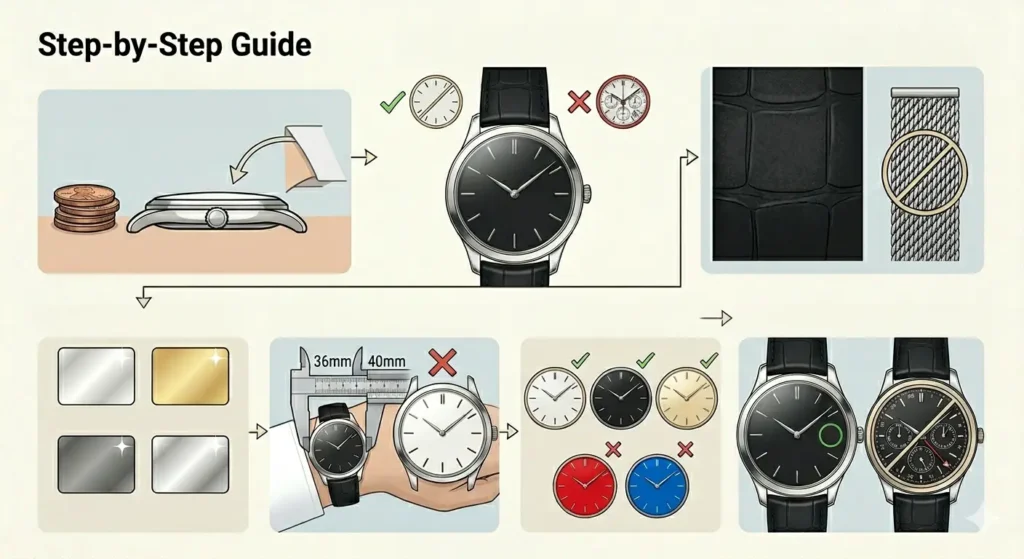
Black tie occasions demand the highest level of formality in watch selection. Most people find that a proper dress watch complements formal attire without drawing attention away from the overall presentation.
- Step 1: Select a thin dress watch with a case thickness under 10mm that slides smoothly under a dress shirt cuff
- Step 2: Choose a watch with a simple, clean dial – avoid chronographs, multiple subdials, or busy designs
- Step 3: Opt for a black leather strap for the most traditional formal look
- Step 4: Consider case materials in white gold, yellow gold, platinum, or polished stainless steel
- Step 5: Keep the case size modest, between 36mm and 40mm for most wrist sizes
- Step 6: Ensure the dial color is white, black, or champagne – avoid bright or unusual colors
- Step 7: Skip complications beyond a simple date window, which itself is optional
Pro-Tip: For true black tie events, many watch connoisseurs prefer no watch at all or a vintage-inspired dress watch in precious metal. The goal is elegance and discretion – the watch should never compete with formal attire for attention.
The key is to remember that black tie events prioritize tradition and restraint. A Patek Philippe Calatrava, Jaeger-LeCoultre Master Ultra Thin, or even a vintage Omega dress watch represents ideal choices. Sport watches, dive watches, and chronographs – no matter how expensive – appear out of place at truly formal occasions.
Selecting Watches for Business and Professional Settings
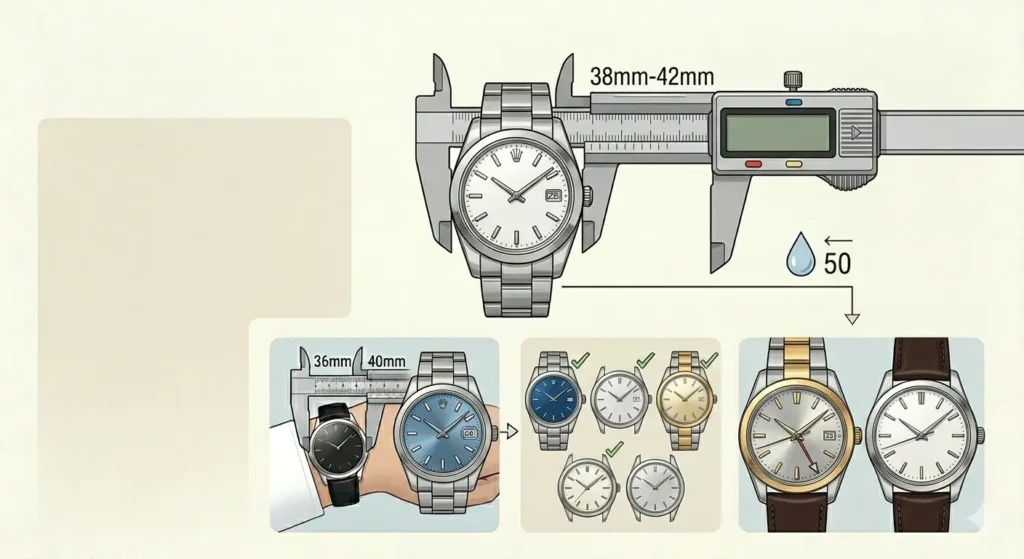
Professional environments require watches that project competence and attention to detail without appearing flashy or distracting. This works best when the watch complements business attire rather than dominating it.
- Step 1: Choose either a classic dress watch or a sport-elegant model that bridges formality levels
- Step 2: Select case sizes between 38mm and 42mm for a professional appearance
- Step 3: Opt for stainless steel cases or two-tone combinations for versatility
- Step 4: Consider a metal bracelet for durability and professional appearance, though quality leather works equally well
- Step 5: Stick with traditional dial colors: white, black, blue, or silver
- Step 6: Include practical complications like date displays or GMT functions if relevant to professional needs
- Step 7: Ensure water resistance of at least 50 meters for daily durability
Professional settings allow more flexibility than formal events. Watches like the Rolex Datejust, Omega Seamaster Aqua Terra, or Grand Seiko dress models work excellently. These pieces project success and reliability without crossing into ostentation.
Conservative industries like finance, law, or corporate management traditionally favor understated luxury watches. Creative fields and tech industries often accept more casual or unique timepieces. Understanding workplace culture helps guide appropriate choices.
Choosing Watches for Business Casual Occasions
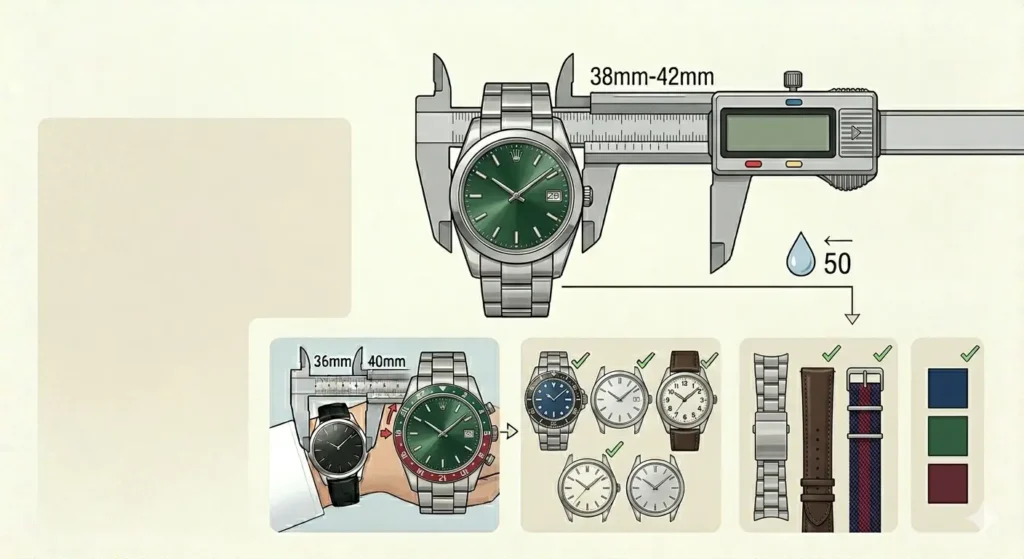
Business casual settings offer the widest range of acceptable watch styles. Most people find that this dress code allows expression of personal style while maintaining professional appropriateness.
- Step 1: Select from sport-elegant watches, luxury dive watches, or refined field watches
- Step 2: Choose case sizes up to 44mm, depending on wrist size and personal preference
- Step 3: Explore various strap options including metal bracelets, leather bands, or high-quality NATO straps
- Step 4: Consider dial colors beyond traditional options – navy, green, or burgundy add personality
- Step 5: Include functional complications like chronographs or GMT bezels without concern
- Step 6: Ensure the watch maintains quality and craftsmanship even if styling is more casual
Business casual environments welcome watches with character. A Tudor Black Bay, TAG Heuer Aquaracer, or even a quality field watch from Hamilton or Oris fits perfectly. The relaxed dress code permits experimentation while still requiring good taste and quality.
Selecting Watches for Casual and Weekend Activities
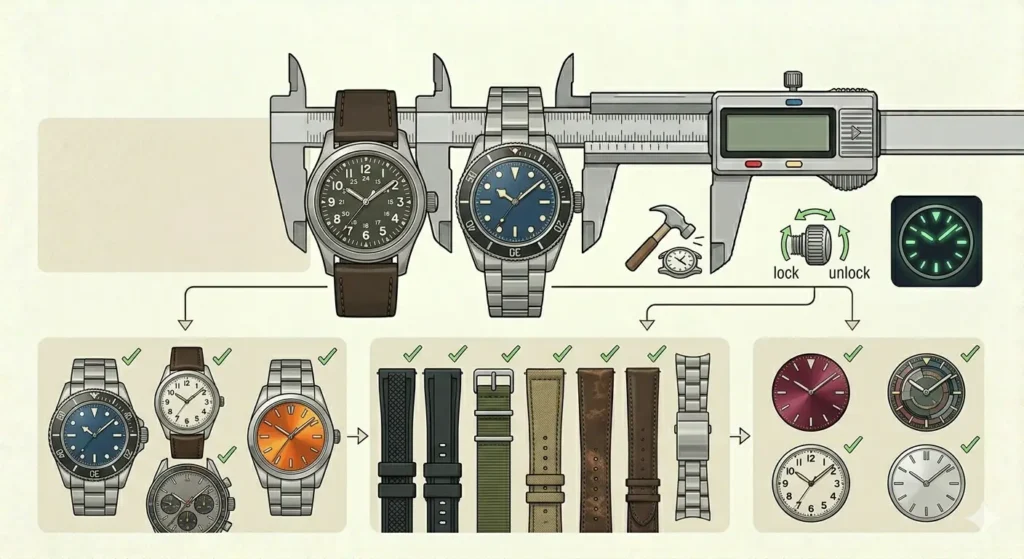
Casual occasions provide maximum freedom in watch selection. Whether running errands, meeting friends, or enjoying leisure time, the watch can prioritize personal preference and comfort over formality.
- Step 1: Choose watches that reflect personal style without formality constraints
- Step 2: Select durable watches that can handle daily activities – dive watches, field watches, or sport watches work well
- Step 3: Experiment with strap materials including rubber, NATO fabric, canvas, or distressed leather
- Step 4: Consider larger case sizes if preferred, up to 45mm or beyond
- Step 5: Explore colorful dials, unique designs, or vintage-inspired styling
- Step 6: Prioritize comfort and wearability over prestige or status
- Step 7: Include practical features like good lume, screw-down crowns, or high water resistance
Casual settings welcome everything from affordable Seiko dive watches to vintage military timepieces. Microbrands offering unique designs at accessible prices flourish in casual contexts. The focus shifts from impressing others to enjoying the watch personally.
Weekend watches often become conversation starters. Unique complications, interesting histories, or unusual designs that would seem inappropriate in formal settings shine during casual gatherings. World time features can add practical value for those coordinating with friends or family across time zones.
Picking Watches for Athletic and Outdoor Activities
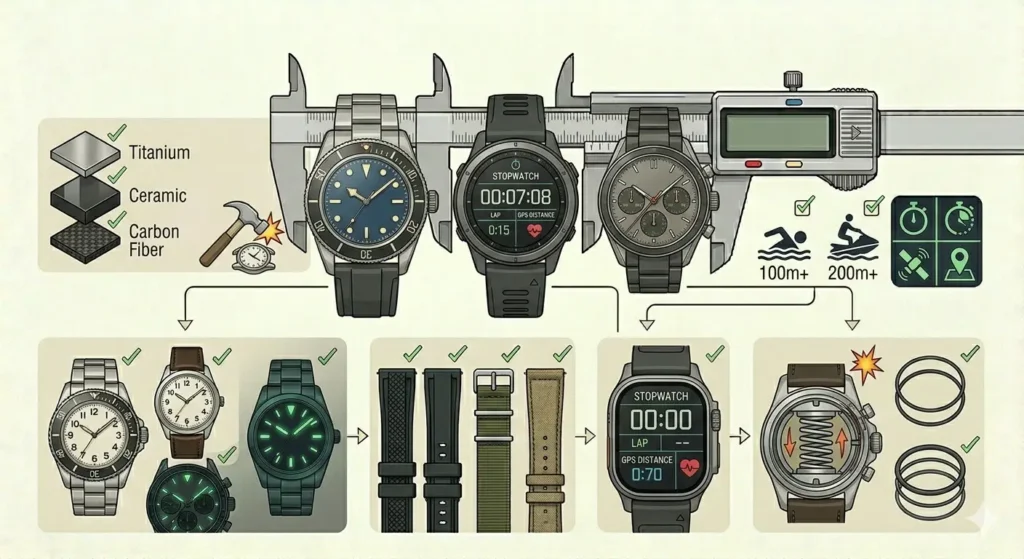
Athletic and outdoor occasions demand watches prioritizing function over form. These situations require timepieces that can withstand physical activity, environmental challenges, and potential impacts.
- Step 1: Select sport watches or smartwatches designed for active use
- Step 2: Ensure water resistance appropriate to activities – at least 100 meters for swimming, 200+ meters for water sports
- Step 3: Choose durable case materials like titanium, ceramic, or carbon fiber
- Step 4: Opt for secure strap materials like rubber, silicone, or heavy-duty NATO straps
- Step 5: Consider practical features like stopwatch functions, lap timers, or GPS tracking
- Step 6: Prioritize legibility with high-contrast dials and strong luminescence
- Step 7: Select watches with shock resistance if activities involve potential impacts
Pro-Tip: For serious athletic training or outdoor adventures, dedicated sport watches or fitness smartwatches provide features traditional mechanical watches cannot match. Save luxury timepieces for other occasions and embrace purpose-built tool watches for demanding activities.
Modern sport watches from Garmin, Suunto, or Apple offer comprehensive fitness tracking, GPS navigation, and durability that mechanical watches cannot provide. For those preferring traditional watches during less intense activities, affordable quartz sports watches from Casio or Timex offer excellent performance without risking expensive timepieces.
Understanding Additional Factors in Watch Selection
Beyond occasion-specific guidelines, several universal factors influence appropriate watch choices across all settings.
Wrist Size Considerations
Wrist size significantly impacts how watches appear and feel. Smaller wrists (under 6.5 inches circumference) generally suit watches from 36mm to 40mm. Medium wrists (6.5 to 7.5 inches) handle 38mm to 44mm comfortably. Larger wrists (over 7.5 inches) can accommodate 42mm to 46mm or larger. The key is ensuring lugs do not overhang the wrist and the watch appears proportional.
Personal Style and Wardrobe
Watches should complement existing wardrobe choices. Someone who primarily wears suits benefits from different watches than someone in jeans and casual shirts. Consider dominant wardrobe colors, typical formality levels, and personal aesthetic preferences when building a watch collection.
Budget and Value
Watches span enormous price ranges from under $100 to millions of dollars. Fortunately, quality timepieces exist at every budget level. Focus on brands with strong reputations, proper construction, and designs that genuinely appeal personally rather than chasing prestige alone.
Watch Collections and Versatility
Building a watch collection strategically ensures appropriate options for various occasions. A basic three-watch collection might include a dress watch for formal occasions, a sport-elegant piece for business wear, and a casual dive or field watch for weekends. This covers most situations without requiring excessive spending.
Tips for Matching Watches to Specific Events
Beyond general guidelines, specific event types have particular watch considerations worth noting.
Weddings
Wedding watch selection depends on the event’s formality and whether attending as a guest or participating in the wedding party. Formal weddings call for dress watches similar to black tie events. Casual or outdoor weddings allow sport-elegant or even dive watches. Wedding participants should avoid anything that might distract in photos or clash with formal attire.
Job Interviews
Job interviews benefit from conservative watch choices that project professionalism without distraction. A classic dress watch or understated sport-elegant model in stainless steel works universally well. Avoid anything too flashy, oversized, or casual that might create negative impressions.
First Dates
First date watch selection should reflect authentic personal style while remaining appropriate to the venue. A watch that generates conversation without appearing pretentious works ideally. Quality pieces from approachable brands often work better than obvious luxury watches that might seem boastful.
Funerals and Somber Occasions
Somber occasions require restraint and respect. Simple dress watches in conservative colors suit these situations best. Avoid bright colors, flashy designs, or anything that draws attention. The focus should remain on the occasion, not personal accessories.
Travel
Travel watches benefit from practical features and durability. GMT complications help track multiple time zones. Reliable quartz movements eliminate winding concerns. Durable construction withstands travel stresses. Using dedicated time-tracking tools alongside a good travel watch helps manage schedules across time zones.
Common Problems When Choosing Watches for Occasions
Several common mistakes occur when selecting watches for specific occasions. Recognizing these pitfalls helps avoid inappropriate choices.
Wearing Sport Watches to Formal Events
One of the most frequent errors involves wearing sport watches or dive watches to formal occasions. Even luxury models like a Rolex Submariner appear out of place at black tie events. Reserve sports watches for appropriate casual or business-casual settings.
Solution: Invest in at least one proper dress watch for formal occasions. Quality vintage dress watches can be found at reasonable prices, and modern options from Tissot, Orient, or Seiko offer affordable alternatives to luxury brands.
Choosing Oversized Watches for Small Wrists
Oversized watches extending beyond wrist edges create awkward proportions and appear juvenile rather than stylish. This works best when watch size matches wrist dimensions appropriately.
Solution: Try watches in person before purchasing. Ensure lugs do not overhang the wrist and the case sits comfortably without excessive movement. Consider vintage watches, which often feature smaller dimensions suitable for various wrist sizes.
Ignoring Dress Code Signals
Many people underestimate dress code formality and select watches too casual for occasions. ‘Cocktail attire’ differs from ‘business casual,’ and watches should reflect these distinctions.
Solution: Research event dress codes thoroughly. When uncertain, slightly overdressing (with watches and attire) proves safer than appearing too casual. Ask event hosts for clarification when dress code ambiguity exists.
Prioritizing Brand Over Appropriateness
Expensive watches do not automatically suit all occasions. A $10,000 dive watch remains inappropriate for black tie events regardless of cost, while a $500 dress watch fits perfectly.
Solution: Focus on watch style and appropriateness rather than brand prestige or price. Build a collection covering various formality levels rather than investing everything in one expensive piece suitable only for limited occasions.
Neglecting Watch Condition and Maintenance
Scratched crystals, worn straps, or malfunctioning movements undermine even appropriate watch choices. A damaged luxury watch appears worse than a pristine affordable timepiece.
Solution: Maintain watches properly through regular servicing, crystal polishing, and strap replacement. Keep watches clean and functioning correctly. Consider professional restoration for vintage pieces before wearing to important events.
Frequently Asked Questions
Can a dive watch be worn with a suit?
Dive watches can work with business suits in business-casual environments, particularly luxury models from brands like Rolex, Omega, or Tudor. However, they remain inappropriate for formal black tie events. The key is choosing refined dive watches with classic styling rather than overly sporty or colorful models.
What size watch is appropriate for formal occasions?
Formal occasions typically call for watches between 36mm and 40mm in diameter with thin profiles under 10mm thick. These dimensions allow the watch to slide smoothly under dress shirt cuffs without catching or creating bulk. Smaller wrists may prefer 36-38mm, while larger wrists can accommodate up to 40mm comfortably.
Is it acceptable to wear a smartwatch to formal events?
Smartwatches generally appear too casual for truly formal occasions like black tie events. However, they work acceptably in business and business-casual settings. For formal occasions requiring timekeeping, traditional dress watches remain the preferred choice among watch enthusiasts and etiquette experts.
Should watch metal match other accessories like belt buckles?
While not strictly necessary, matching metals creates cohesive styling. Silver or stainless steel watches pair well with silver belt buckles and accessories, while gold watches complement gold accessories. However, mixed metals have become increasingly acceptable in contemporary fashion, particularly in casual settings.
What color watch strap is most versatile?
Black leather straps offer maximum versatility across formal and business settings. Brown leather provides similar versatility with slightly less formality. For metal bracelets, stainless steel works universally well. These neutral options coordinate easily with various outfits and occasions.
Can chronographs be worn to formal events?
Chronographs typically appear too busy and sporty for true formal occasions like black tie events. However, elegant chronographs with clean designs can work in business and business-casual settings. Reserve subdial-heavy chronographs for casual wear and choose simple dress watches for maximum formality.
How many watches should someone own for different occasions?
A practical three-watch collection covers most needs: one dress watch for formal occasions, one sport-elegant or professional watch for business wear, and one casual sports or field watch for weekends and leisure. This provides appropriate options without excessive spending or redundancy.
Are gold watches too flashy for most occasions?
Gold watches suit formal occasions beautifully and project success in professional settings. However, yellow gold appears flashier than rose gold or white gold. The key is choosing refined designs rather than oversized or heavily decorated pieces. Context and personal style also influence appropriateness.
What features make a watch appropriate for business wear?
Business watches should feature professional sizing (38-42mm), classic styling, reliable movements, and durable construction. Practical complications like date displays or GMT functions add value. Avoid excessively casual materials, bright colors, or overly sporty designs that might appear unprofessional.
Should vintage watches be avoided for formal occasions?
Vintage watches can work excellently for formal occasions, often providing superior value and character compared to modern alternatives. Classic vintage dress watches from respected brands like Omega, Longines, or Jaeger-LeCoultre offer timeless elegance. Ensure vintage pieces are properly serviced and maintained before wearing to important events.