
Choosing the right watch material affects durability, weight, appearance, and price. A guide to watch materials (steel, titanium, bronze, ceramic) helps narrow down options based on lifestyle, budget, and style preferences. Each material offers distinct advantages, from the timeless strength of stainless steel to the lightweight comfort of titanium, the unique patina of bronze, and the scratch-resistant finish of ceramic.
Key Takeaways
- Stainless steel offers durability, corrosion resistance, and a polished finish suitable for daily wear
- Titanium provides lightweight comfort with hypoallergenic properties, ideal for sensitive skin
- Bronze develops a unique patina over time, creating a one-of-a-kind appearance
- Ceramic delivers exceptional scratch resistance and maintains color without fading
- Material choice impacts weight, maintenance requirements, and long-term appearance
Understanding Stainless Steel Watches
Stainless steel remains the most common watch case material due to its balance of strength, affordability, and resistance to corrosion. The alloy typically contains chromium, which forms a protective layer preventing rust and tarnish.
Types of Stainless Steel
Watch manufacturers primarily use two grades:
- 316L stainless steel: Standard grade with good corrosion resistance, used in most watches priced under $1,000
- 904L stainless steel: Superior grade with higher nickel and chromium content, more resistant to pitting and corrosion, commonly found in luxury watches
Advantages of Stainless Steel
- Highly durable and resistant to daily wear
- Can be polished to restore original shine
- Maintains value over time
- Compatible with various finishes (brushed, polished, bead-blasted)
- Does not develop patina or color changes
Maintenance Requirements
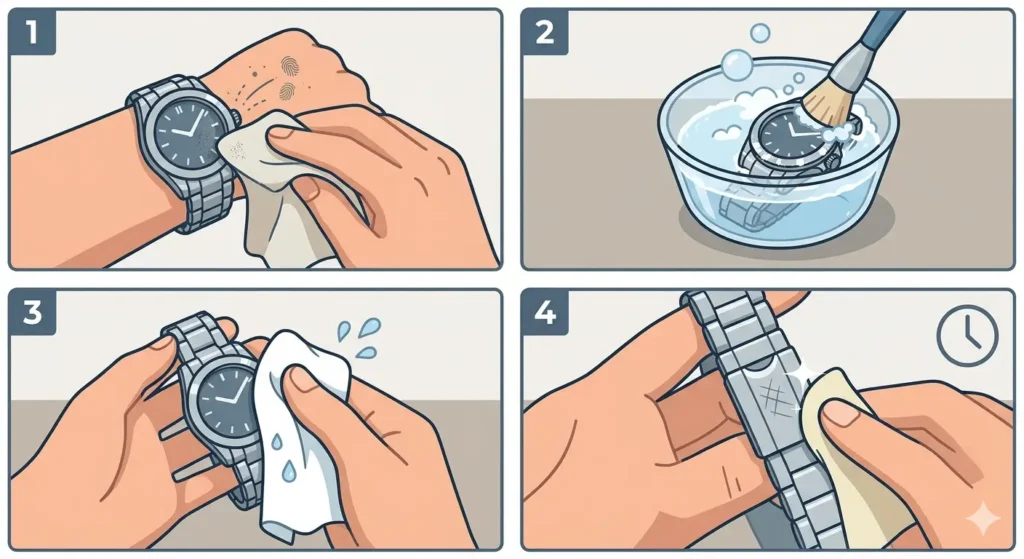
Steel watches require minimal care. Wipe the case with a soft cloth after wearing to remove oils and dirt. For deeper cleaning, use warm soapy water and a soft brush, then dry thoroughly. Polishing removes surface scratches but should be done sparingly to preserve original case dimensions.
Pro-Tip: Brushed steel finishes hide scratches better than polished surfaces. Consider a mixed finish (polished bezel with brushed case) for the best balance of appearance and practicality.
Exploring Titanium Watch Cases
Titanium delivers approximately 40% less weight than stainless steel while maintaining comparable strength. The material naturally forms a protective oxide layer, enhancing corrosion resistance beyond standard steel.
Titanium Grades and Treatments
Common titanium specifications include:
- Grade 2 titanium: Pure titanium with excellent corrosion resistance, softer and more prone to scratches
- Grade 5 titanium (Ti-6Al-4V): Alloyed with aluminum and vanadium for increased hardness, commonly used in higher-end watches
- DLC-coated titanium: Diamond-like carbon coating adds scratch resistance and creates a dark finish
Benefits of Titanium
- Significantly lighter than steel, reducing wrist fatigue
- Hypoallergenic properties benefit those with metal sensitivities
- Naturally resistant to saltwater corrosion
- Warmer feel on the wrist compared to steel
- Non-magnetic properties useful for certain professions
Considerations and Care
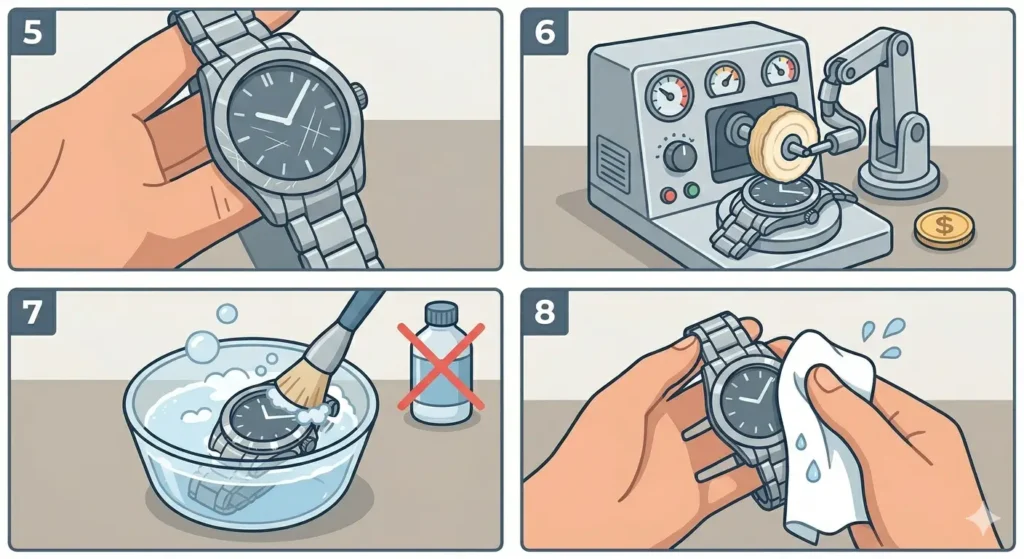
Titanium scratches more easily than steel unless treated with hardening processes. Scratches appear lighter in color against the darker titanium surface. Polishing titanium requires specialized equipment, making professional refinishing more expensive. Clean titanium watches the same way as steel, but avoid harsh chemicals that might damage protective coatings.
The Unique Character of Bronze Watches
Bronze watch cases develop a natural patina through oxidation, creating a unique appearance that evolves with wear. The material consists of copper alloyed with tin, aluminum, or other metals to enhance strength and modify patina characteristics.
Patina Development Process
Bronze oxidizes when exposed to air, moisture, and skin oils. The patina forms gradually, starting with subtle color shifts and progressing to deeper browns, greens, or blues depending on the alloy composition and environmental factors. Each watch develops a distinct pattern based on wearing habits and exposure conditions.
Bronze Alloy Variations
- CuSn8 (tin bronze): Traditional bronze with 92% copper and 8% tin, develops warm brown patina
- Aluminum bronze: Contains aluminum for increased corrosion resistance, creates lighter golden patina
- Silicon bronze: Enhanced strength and reduced green oxidation
Managing Bronze Patina
Bronze watches offer flexibility in appearance maintenance. To preserve the patina, simply wear the watch normally and allow natural oxidation. To restore the original bronze color, use a mild abrasive polish or lemon juice with salt, rubbing gently until the desired brightness returns. Some owners prefer accelerating patina by exposing the case to saltwater or vinegar.
Pro-Tip: Bronze watches look best when the patina matches the wearing style. Desk divers benefit from periodic polishing to maintain a cleaner look, while outdoor enthusiasts often embrace the full aged appearance.
Bronze Watch Considerations
- Heavier than steel, similar in weight to brass
- Patina may transfer slight discoloration to skin (harmless but noticeable)
- Requires acceptance of appearance changes over time
- Not suitable for those preferring consistent aesthetics
- May develop uneven patina with strap changes or irregular wear
Ceramic Watch Cases and Bezels
Ceramic offers exceptional scratch resistance and color stability, maintaining appearance without fading or tarnishing. High-tech ceramic used in watches undergoes sintering at extreme temperatures, creating a material harder than steel.
Ceramic Manufacturing Process
Zirconia ceramic powder gets pressed into shape, then fired at temperatures exceeding 1,400°C (2,552°F). This process creates a dense, hard material. Color gets added during manufacturing by mixing pigments into the powder, ensuring the hue penetrates throughout rather than existing as a surface coating.
Ceramic Advantages
- Ranks 8-9 on Mohs hardness scale (diamond is 10)
- Highly resistant to scratches from daily wear
- Color never fades from UV exposure
- Lightweight compared to steel
- Hypoallergenic and skin-friendly
- Maintains cool temperature on the wrist
Ceramic Limitations
Despite hardness, ceramic can shatter or chip from strong impacts that steel would survive through deformation. Manufacturing complexity results in higher costs. Scratches that do occur cannot be polished out easily. The material’s brittleness makes thin sections challenging to produce, limiting certain design options.
Ceramic Care Instructions
Clean ceramic watches with soap and water without concern for damaging the finish. Avoid dropping or striking the watch against hard surfaces. While ceramic resists scratches from keys, coins, and normal contact, impacts from concrete, tile, or other hard materials can cause chips. Store ceramic watches separately to prevent contact with other timepieces.
Material Comparison for Different Uses
Daily Office Wear
Stainless steel suits professional environments with its classic appearance and durability. The material handles desk contact, keyboard typing, and occasional bumps without showing excessive wear. Polished steel complements formal attire, while brushed finishes work well in business casual settings.
Active and Outdoor Activities
Titanium excels in outdoor conditions due to lightweight comfort during extended wear and superior corrosion resistance in humid or marine environments. The reduced weight prevents fatigue during hiking, climbing, or sports. Bronze develops character in outdoor settings but requires acceptance of patina development. Ceramic provides excellent scratch resistance but needs protection from hard impacts.
Water Sports and Diving
Both stainless steel and titanium perform excellently in saltwater. Steel offers proven reliability at lower price points, while titanium provides better corrosion resistance and lighter weight for extended underwater wear. Bronze requires more frequent rinsing but develops appealing patina in marine environments. Ceramic resists saltwater corrosion but lacks the impact resistance needed for rough diving conditions.
Sensitive Skin Considerations
Titanium and ceramic offer the best options for those with metal allergies or sensitive skin. Both materials are hypoallergenic and non-reactive. Bronze may cause temporary skin discoloration from patina transfer, though this varies by individual chemistry. High-grade stainless steel (904L) generally poses minimal allergy concerns, but nickel-sensitive individuals should choose titanium or ceramic.
Weight and Comfort Comparison
Material density significantly affects wearing comfort, especially for larger watches:
- Stainless steel: Standard weight, approximately 8.0 g/cm³ density
- Titanium: 40-45% lighter than steel, approximately 4.5 g/cm³ density
- Bronze: Similar to or slightly heavier than steel, approximately 8.7 g/cm³ density
- Ceramic: 30-40% lighter than steel, approximately 6.0 g/cm³ density
A 40mm steel watch case weighing 80 grams reduces to approximately 48 grams in titanium or 55 grams in ceramic. This difference becomes noticeable during all-day wear, particularly with larger case sizes above 42mm. Planning extended activities like international travel requiring time zone adjustments makes lightweight titanium especially comfortable.
Price Considerations by Material
Material choice directly impacts watch pricing:
Budget-Friendly Options
Stainless steel offers the most affordable entry point, with quality watches starting around $200-300. The material’s widespread use and efficient manufacturing keep costs reasonable across all price ranges.
Mid-Range Materials
Bronze and ceramic typically appear in watches starting at $500-800. Bronze costs more due to specialized alloys and finishing techniques. Ceramic requires expensive manufacturing equipment and processes, but prices have decreased as production methods improve.
Premium Category
Titanium watches often command premium prices, starting around $800-1,000 for quality pieces. Manufacturing difficulty and material costs contribute to higher pricing. Grade 5 titanium with special coatings pushes prices into luxury territory.
Long-Term Maintenance and Value
Refinishing and Restoration
Steel cases can be refinished multiple times by watchmakers, restoring polished surfaces or reapplying brushed finishes. Cost typically ranges from $50-150 depending on case size and finish complexity. Titanium refinishing requires specialized equipment, costing $100-250. Bronze can be refinished at home with simple polishing compounds. Ceramic cannot be refinished once damaged.
Resale Value Considerations
Stainless steel watches generally maintain the best resale value due to broad appeal and timeless appearance. Titanium pieces retain value well in enthusiast markets. Bronze watches appeal to specific collectors who appreciate patina, potentially limiting buyer pool. Ceramic watches maintain value when undamaged but lose significant worth if chipped or cracked.
Replacement Part Availability
Steel cases have the widest availability for replacement parts like crowns, pushers, and case backs. Titanium parts exist but with more limited availability. Bronze and ceramic replacement parts are often brand-specific and may require ordering directly from manufacturers.
Tips for Choosing the Right Material
- Consider daily activities and environments where the watch will be worn most frequently
- Test wearing different materials in stores to assess comfort and weight preferences
- Evaluate maintenance commitment – some materials require more care than others
- Match material to existing watch collection to ensure variety or maintain consistency
- Factor in climate – humid or coastal environments benefit from titanium’s corrosion resistance
- Consider skin sensitivity issues before purchasing bronze or lower-grade steel
- Assess budget for both purchase and long-term maintenance costs
- Think about desired aging characteristics – some materials change appearance over time
- Verify warranty coverage for material-specific issues like ceramic chips or bronze corrosion
- Research brand reputation for quality control with specific materials
Setting up a dedicated clock tab helps track wearing time for different material watches, ensuring even wear and proper rotation.
Common Problems and Troubleshooting
Issue: Stainless Steel Developing Rust Spots
Rust on stainless steel indicates contamination from ferrous metal particles or damage to the protective chromium layer. Clean the watch thoroughly with soapy water and a soft brush. For persistent spots, use a stainless steel polish. If rust recurs, have the watch inspected for compromised plating or contact with incompatible metals.
Issue: Titanium Watch Showing Light Scratches
Titanium’s softer nature means scratches accumulate faster than steel. Light scratches create a ‘tool watch’ aesthetic many owners prefer. For removal, professional refinishing is required. DLC coating provides better scratch resistance for those wanting pristine appearance longer.
Issue: Bronze Patina Looking Uneven or Blotchy
Uneven patina develops from irregular wear patterns or contact with different substances. This is normal and part of bronze’s character. To even out appearance, remove the entire patina with polish, then allow it to redevelop naturally. Alternatively, accelerate patina in controlled conditions using saltwater or vinegar for more uniform results.
Issue: Ceramic Watch Developing Small Chips
Ceramic chips from impacts cannot be repaired at home. Contact the manufacturer about replacement options. Some warranties cover manufacturing defects but exclude impact damage. Prevention is key – avoid striking ceramic watches against hard surfaces and store them carefully. Using an online stopwatch for timing activities instead of constantly checking a ceramic watch reduces impact opportunities.
Issue: Green Discoloration on Skin from Bronze
Bronze oxidation can transfer to skin, creating temporary green or blue-green marks. This is harmless and indicates normal copper oxidation. Wash skin with soap to remove discoloration. To reduce occurrence, coat the case back with clear nail polish or wax, creating a barrier between metal and skin.
Issue: Watch Feels Too Heavy for Extended Wear
Material density causes discomfort during long wearing periods. Consider switching to titanium or ceramic for lighter weight. Alternatively, use a different strap material – leather or fabric straps weigh less than steel bracelets, reducing overall watch weight. Rotating between watches prevents fatigue from any single piece.
Frequently Asked Questions
Which watch material is most durable for daily wear?
Stainless steel provides the best overall durability for daily wear, offering excellent resistance to corrosion, scratches, and impacts. While ceramic resists scratches better, steel’s ability to deform rather than shatter makes it more practical for everyday scenarios involving potential impacts.
Does titanium scratch easier than stainless steel?
Yes, pure titanium scratches more easily than stainless steel due to lower hardness. However, Grade 5 titanium alloy offers improved scratch resistance, and DLC-coated titanium exceeds steel in hardness. The lightweight comfort often outweighs the scratch concern for most owners.
How long does it take for bronze to develop patina?
Bronze begins showing patina within days to weeks of regular wear, depending on skin chemistry, humidity, and exposure to elements. Full patina development typically occurs over 3-6 months. The process can be accelerated through saltwater exposure or slowed by regular polishing.
Can ceramic watch bezels be polished if scratched?
No, ceramic cannot be polished like metal. The material’s extreme hardness makes traditional polishing ineffective. Deep scratches in ceramic are permanent. However, ceramic’s high scratch resistance means most daily activities won’t mark the surface.
Is titanium worth the extra cost over stainless steel?
Titanium’s value depends on priorities. For those who value lightweight comfort, hypoallergenic properties, or superior corrosion resistance, the premium is worthwhile. However, stainless steel offers excellent performance at lower cost for those without specific sensitivities or weight concerns.
Will bronze patina damage watch mechanisms?
No, bronze patina forms only on external surfaces and does not affect internal mechanisms. Watch movements are sealed and protected from oxidation. However, ensure proper gasket maintenance to prevent moisture ingress, which affects any watch regardless of case material.
Can different watch materials be mixed in a collection?
Absolutely, mixing materials provides variety and suits different occasions. Steel works well for formal settings, titanium for sports, bronze for casual wear, and ceramic for modern styles. Diverse materials ensure appropriate options for various situations.
How do you remove bronze patina completely?
Remove bronze patina using metal polish, applying it with a soft cloth in circular motions until the original bronze color returns. Alternatively, create a paste from lemon juice and salt, apply to the case, let sit for 5-10 minutes, then scrub gently. Rinse thoroughly and dry completely after either method.
Does ceramic feel colder than metal on the wrist?
Ceramic actually maintains a more neutral temperature than metal. Steel and titanium conduct heat away from the wrist quickly, feeling cold initially. Ceramic’s lower thermal conductivity creates a more comfortable temperature sensation against skin.
Are there fake ceramic or titanium watches?
Yes, some manufacturers misrepresent materials. Verify authenticity by checking weight (titanium is noticeably lighter), testing with magnets (neither titanium nor ceramic are magnetic while some fake materials are), and examining quality control standards from reputable brands.