
Using a Cape Cod polishing cloth properly can restore shine to metal surfaces quickly and safely. This specially treated cotton cloth removes tarnish from silver, gold, brass, copper, and other metals without harsh chemicals or complicated procedures. The process takes just minutes and delivers professional results when done correctly.
Quick Summary
- Cape Cod cloths work on silver, gold, brass, copper, and most polished metals
- Each cloth lasts for multiple polishing sessions
- No additional polish or liquid needed – the cloth contains treatment
- The dark residue on the cloth is normal and shows tarnish removal
- Store in the original pouch to preserve effectiveness
- Results appear immediately with light buffing
How to Polish Metal with a Cape Cod Cloth
Preparing the Item
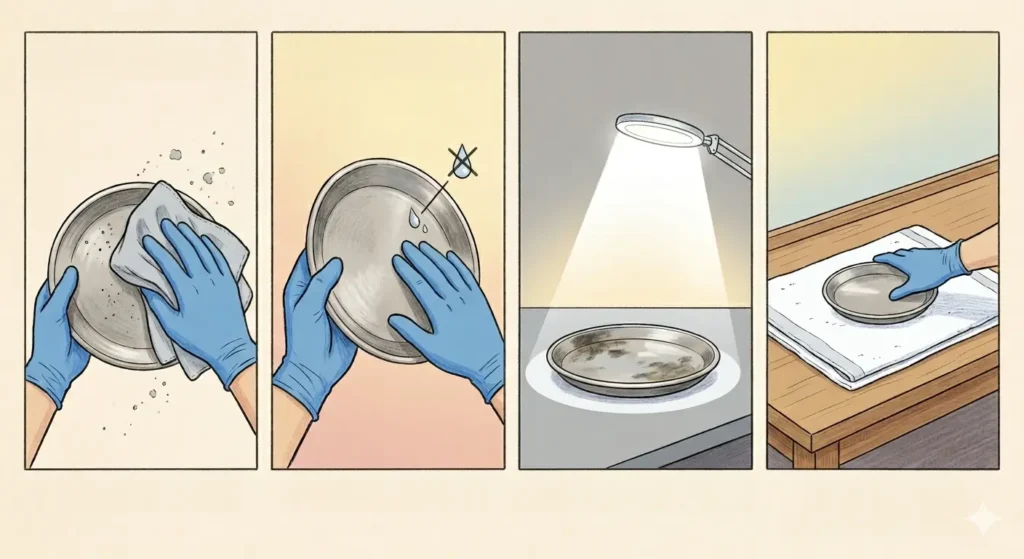
- Step 1: Remove any loose dirt or debris from the metal surface with a dry, soft cloth
- Step 2: Check that the item is dry – moisture can interfere with the polishing compound
- Step 3: Work in a well-lit area to see tarnish clearly and monitor progress
- Step 4: Place the item on a clean, protected surface like a towel or cloth
Using the Polishing Cloth
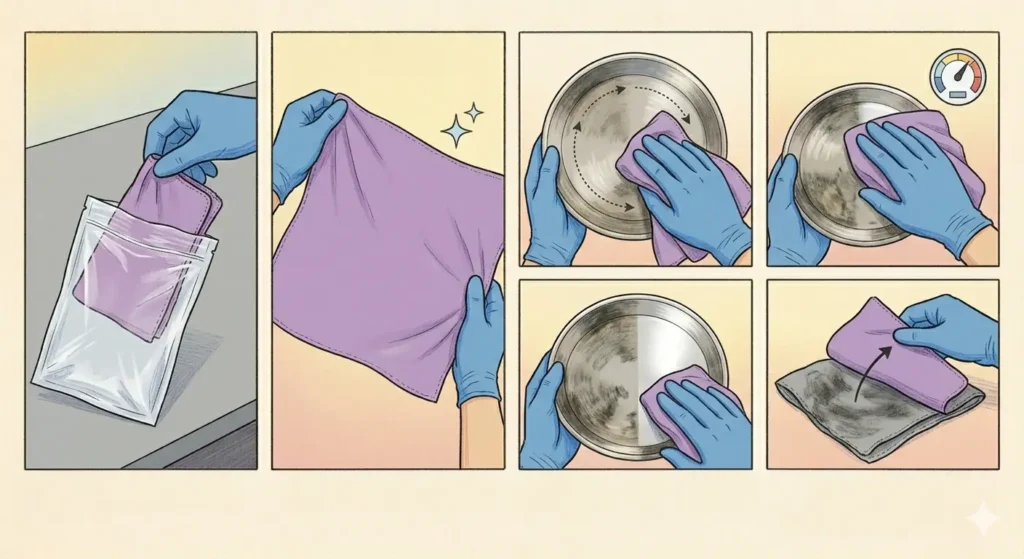
- Step 1: Remove one Cape Cod cloth from the sealed pouch
- Step 2: Unfold the cloth completely to access a clean section
- Step 3: Rub the tarnished area using gentle, circular motions
- Step 4: Apply light to moderate pressure – heavy scrubbing is unnecessary
- Step 5: Continue rubbing until the tarnish disappears and shine returns
- Step 6: Turn the cloth to a fresh section as it darkens with removed tarnish
Pro-Tip: The cloth will turn black as it picks up tarnish – this darkening is completely normal and indicates the cloth is working effectively. Keep using the same cloth until all clean sections are used.
Finishing the Process
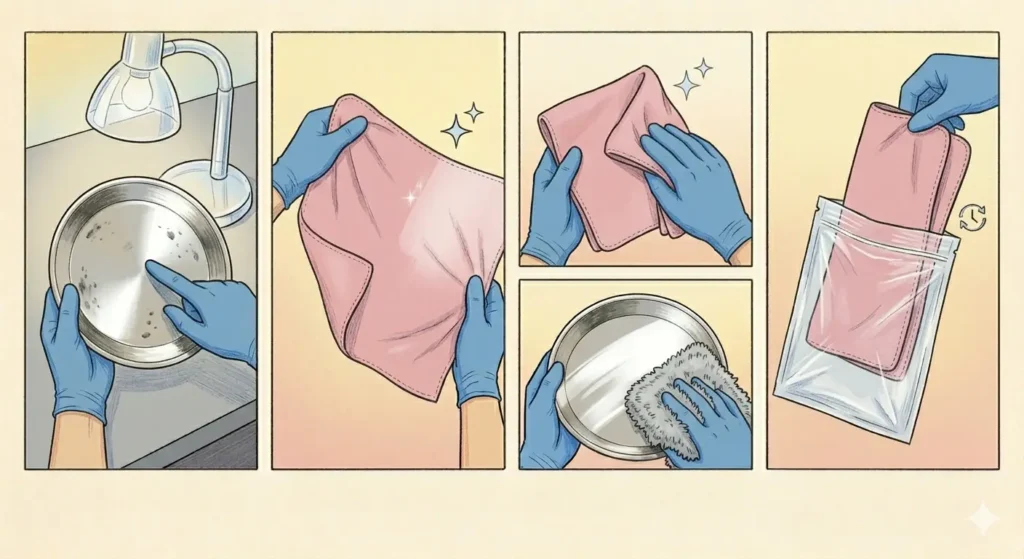
- Step 1: Inspect the polished surface for any remaining tarnish spots
- Step 2: Buff lightly with a clean section of the cloth for extra shine
- Step 3: Wipe away any residue with a clean, dry microfiber cloth
- Step 4: Fold the used Cape Cod cloth and return it to the pouch for future use
What Metals Work with Cape Cod Cloths
Cape Cod polishing cloths safely clean and restore various metal types. Sterling silver responds particularly well, with tarnish disappearing in seconds. Gold jewelry regains its luster without scratching. Brass fixtures and copper cookware shine like new after treatment.
The cloths also work effectively on platinum, pewter, and chrome surfaces. However, avoid using them on plated items where the base metal might show through, or on antiques where patina adds value. When uncertain about a particular metal, test on a small, inconspicuous area first.
Tips for Best Results
Getting maximum shine from a Cape Cod cloth involves some practical techniques. Most people find that working in small sections produces better results than trying to polish an entire large item at once. The cloth maintains contact with the surface more effectively this way.
For intricate details or engraved areas, fold the cloth into a point to reach tight spaces. Time the polishing session if working on multiple items – each piece typically needs 2-5 minutes depending on tarnish severity.
Temperature matters slightly. Room temperature works perfectly, but cold metal sometimes requires a bit more buffing. This works best when the item reaches room temperature before starting.
Pro-Tip: A single Cape Cod cloth remains effective for 6-12 polishing sessions depending on how tarnished the items are. The cloth still works even when it looks completely black.
Storing Your Cape Cod Cloth
Proper storage extends the cloth’s effectiveness significantly. After each use, fold the cloth and seal it back in the original foil pouch immediately. Exposure to air dries out the polishing compound, reducing effectiveness over time.
Keep the sealed pouch in a cool, dry location away from direct sunlight. A drawer or cabinet works perfectly. Some people prefer keeping the cloth near their jewelry box for quick touch-ups, which makes sense for frequent use.
The foil packaging prevents the compound from evaporating. Never store the cloth in plastic bags or open containers, as these don’t provide adequate protection. Track usage timing to know when replacement becomes necessary.
Common Problems and Solutions
Cloth Feels Dry or Stiff
This happens when the cloth has been exposed to air too long. The polishing compound has dried out, making the cloth less effective. Replace with a fresh cloth from a sealed package. Prevention involves always resealing the pouch immediately after use.
Streaks Appear on Metal Surface
Streaking usually indicates residue left behind. Buff the surface with a clean, dry microfiber cloth to remove any remaining compound. For persistent streaks, wash the item gently with mild soap and water, then dry thoroughly before repolishing.
Tarnish Returns Quickly
Rapid re-tarnishing suggests environmental factors rather than cloth problems. Store polished items in anti-tarnish bags or containers. Silver storage pouches prevent sulfur exposure, which causes tarnish. The polishing itself is correct – storage needs adjustment.
Cloth Tears During Use
Tearing occurs from excessive pressure or snagging on sharp edges. Use lighter pressure and smooth the metal edges if possible. A torn cloth still works – simply avoid the damaged section and continue using intact areas.
Frequently Asked Questions
How many times can one Cape Cod cloth be used?
A single cloth typically lasts for 6-12 polishing sessions, depending on the amount of tarnish being removed. The cloth remains effective even when it appears completely black. Replace it only when the treated sections feel dry or stop producing shine.
Can Cape Cod cloths remove scratches from metal?
These cloths remove tarnish and oxidation but do not eliminate scratches or deep marks. The polishing compound is too gentle to affect the metal surface itself. For scratch removal, professional buffing or specialized abrasive compounds are necessary.
Do these cloths work on stainless steel?
Cape Cod cloths can shine stainless steel but work best on metals that tarnish. Stainless steel typically needs different cleaning methods since it doesn’t oxidize the same way. The cloth won’t harm stainless steel but may not produce dramatic results.
Should the metal be washed after polishing?
Washing is optional but recommended for items that contact skin or food. A quick rinse with mild soap and warm water removes any compound residue. Dry thoroughly after washing to prevent water spots. For decorative items, simple buffing with a clean cloth suffices.
Can Cape Cod cloths damage gemstones in jewelry?
The cloth is safe for most hard gemstones like diamonds, rubies, and sapphires. Avoid using it on porous stones like pearls, opals, or turquoise, as the compound may affect their surface. When polishing jewelry, focus on metal areas and avoid rubbing directly on delicate stones.
Why does the cloth turn black so quickly?
The black color comes from the tarnish being removed from the metal. This discoloration is normal and expected – it actually proves the cloth is working correctly. The darker the cloth becomes, the more tarnish it has successfully removed from items.
How should heavily tarnished items be handled?
For severe tarnish, make multiple passes with the cloth rather than applying excessive pressure. Work in sections, turning to clean areas of the cloth frequently. Heavily tarnished items may require using more of the cloth surface, but the process remains the same.
Can these cloths polish gold-plated items safely?
Exercise caution with gold-plated pieces. Light polishing is generally safe, but aggressive rubbing may wear through thin plating over time. Test on an inconspicuous spot first and use very gentle pressure. Solid gold pieces can be polished more vigorously without concern.
What is the shelf life of unopened Cape Cod cloths?
Unopened cloths in sealed foil pouches remain effective for several years when stored properly. Keep them in a cool, dry place away from extreme temperatures. The foil packaging prevents the polishing compound from drying out until the pouch is opened.
Is there a difference between Cape Cod cloths for different metals?
The standard Cape Cod cloth works on multiple metal types. The company does produce some specialized versions, but the original formula handles silver, gold, brass, and copper effectively. No need to purchase different cloths for different metals in most cases.