
Understanding watch water resistance ratings is essential before exposing any timepiece to moisture. The numbers 30m, 50m, and 100m don’t indicate how deep a watch can go underwater – they represent atmospheric pressure resistance, which directly affects what activities are safe for each rating level.
Quick Summary Table
| Water Resistance Rating | Safe Activities | Avoid |
|---|---|---|
| 30m (3 ATM) | Light rain, hand washing, accidental splashes | Swimming, showering, water sports |
| 50m (5 ATM) | Swimming, showering, light water contact | Diving, high-pressure water activities |
| 100m (10 ATM) | Swimming, snorkeling, recreational water sports | Scuba diving, high-impact water activities |
| 200m+ (20+ ATM) | Professional diving, all water activities | None (with proper maintenance) |
Understanding Water Resistance Ratings
Water resistance ratings measure how much static pressure a watch can withstand, not actual diving depth. The testing occurs in controlled laboratory conditions without movement, temperature changes, or aging factors that affect real-world performance.
What ATM Means
ATM stands for ‘atmospheres’ – a unit measuring pressure. One atmosphere equals the air pressure at sea level. Each additional ATM represents the pressure equivalent of being 10 meters deeper underwater under static conditions.
Static vs. Dynamic Pressure
The key difference between ratings and real use comes down to pressure types. Static pressure occurs when a watch sits motionless in water. Dynamic pressure happens during movement – swimming strokes, jumping into water, or being hit by waves create pressure spikes far exceeding the watch’s depth rating.
What 30m Water Resistance Really Means
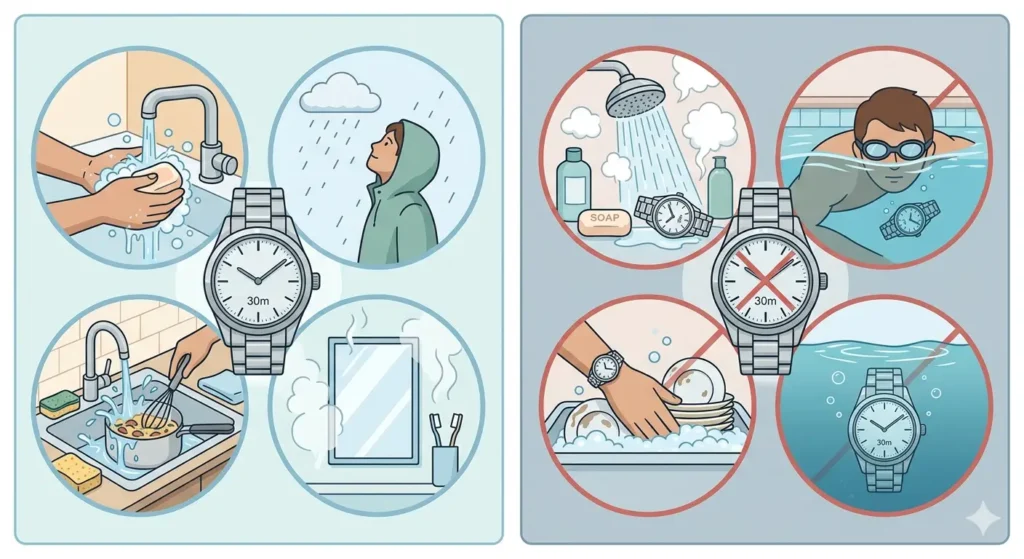
A 30m (3 ATM) rating provides minimal water protection suitable only for everyday moisture exposure. This is the lowest functional water resistance level found on watches.
Safe Activities for 30m Watches
- Hand washing with soap and water
- Light rain exposure during brief periods
- Accidental water splashes while cooking or cleaning
- Humid environments like bathrooms (without direct water contact)
Activities to Avoid
- Showering – steam and soap degrade seals quickly
- Swimming in pools, lakes, or oceans
- Washing dishes with the watch submerged
- Any deliberate water immersion
Pro Tip: Even brief shower exposure can damage 30m watches because hot water creates steam that penetrates seals more easily than liquid water. The temperature changes also cause gaskets to expand and contract, compromising water resistance over time.
What 50m Water Resistance Really Means
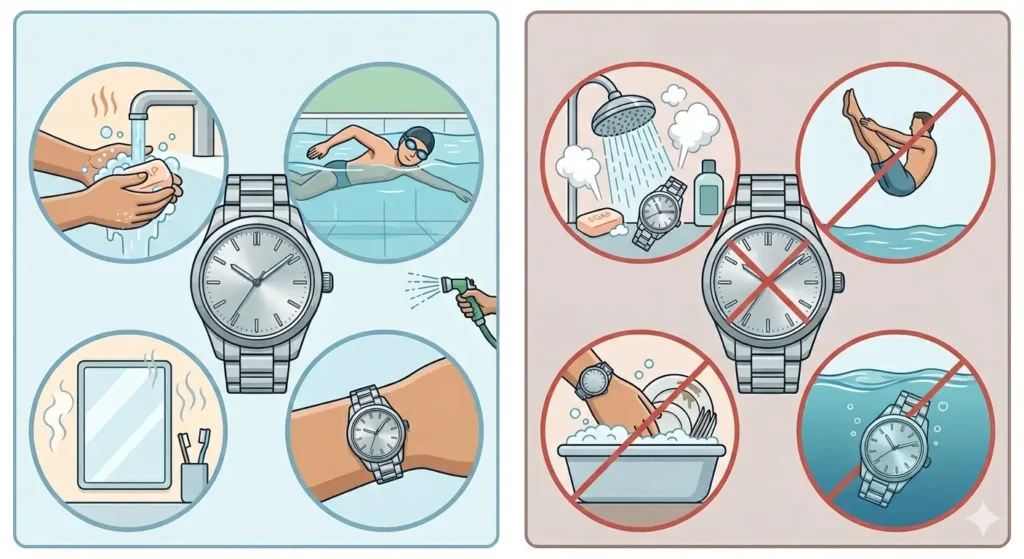
The 50m (5 ATM) rating represents the minimum level for swimming and regular water contact. Most casual water activities become safe at this threshold when performed carefully.
Safe Activities for 50m Watches
- Swimming in pools with normal strokes
- Showering (though removing the watch extends its lifespan)
- Washing cars or doing yard work with water
- Light recreational swimming in calm waters
- Surface water sports without diving or jumping
Activities to Avoid
- Diving of any kind, including shallow pool dives
- High-impact water entry like cannonballs or cliff jumping
- Water skiing, jet skiing, or high-speed water sports
- Snorkeling or underwater swimming
- Operating push buttons or crown while wet
The 50m rating suits swimmers who stay near the surface. Diving creates instant pressure spikes, and pulling the crown underwater bypasses all water resistance regardless of rating.
What 100m Water Resistance Really Means
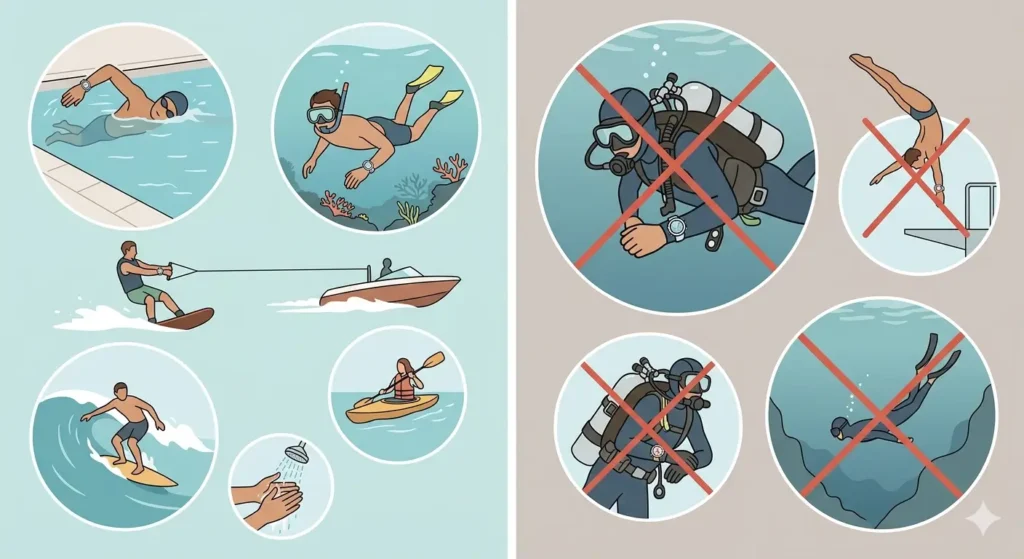
A 100m (10 ATM) rating provides genuine water resistance for recreational aquatic activities. This level accommodates most non-professional water exposure scenarios with adequate safety margins.
Safe Activities for 100m Watches
- Recreational swimming with diving from pool edges
- Snorkeling at moderate depths (10-15 meters)
- Water sports including skiing, wakeboarding, and tubing
- Surfing in normal conditions
- Kayaking, canoeing, and paddleboarding
- Showering and bathing without concern
Activities to Avoid
- Scuba diving below recreational snorkeling depths
- High diving from platforms over 3 meters
- Professional or technical diving operations
- Deep freediving beyond 20 meters
Most people find 100m sufficient for all typical water activities. The rating provides enough buffer for pressure spikes during movement while maintaining reliable protection during extended water exposure. Checking the time regularly with a world time comparison tool helps track dive duration across different time zones.
How Water Resistance Degrades Over Time
Every watch loses water resistance gradually through normal wear. Understanding degradation factors helps maintain protection levels.
Main Degradation Factors
- Gasket aging: Rubber seals dry out and crack after 2-3 years
- Temperature cycling: Repeated hot-cold exposure weakens seals
- Chemical exposure: Chlorine, salt, soap, and perfume damage gaskets
- Crown operations: Frequent time setting wears crown tube threads
- Impact damage: Drops and bumps can misalign case components
Maintenance Schedule
Professional water resistance testing should occur every 2-3 years for regular watches and annually for dive watches. Jewelers test watches using pressure chambers without opening the case, making the service quick and affordable. Gasket replacement during battery changes maintains protection for quartz watches.
Comparing Ratings for Different Watch Types
Different watch styles typically come with specific water resistance levels based on intended use.
Dress Watches
Traditional dress watches often feature 30m ratings since formal occasions rarely involve water exposure. The thin cases required for elegant profiles limit space for robust sealing systems.
Sports Watches
Athletic timepieces usually start at 100m ratings to handle sweat, rain, and occasional swimming. The rugged construction supports higher pressure resistance without sacrificing durability.
Dive Watches
True dive watches begin at 200m (20 ATM) with ISO 6425 certification. These specialized timepieces include screw-down crowns, helium escape valves, and redundant sealing systems designed for underwater reliability.
Common Misconceptions About Water Resistance
Several widespread beliefs about water resistance lead to damaged watches when owners misunderstand their timepiece’s capabilities.
Myth: Meters Equal Diving Depth
The biggest misconception treats the meter rating as maximum safe depth. A 30m watch will leak immediately at 30 meters depth because the rating reflects static pressure testing, not real diving conditions with movement and pressure variations.
Myth: Water Resistance Lasts Forever
Many assume water resistance remains constant throughout a watch’s life. Gaskets degrade continuously, and without periodic testing and seal replacement, even 200m dive watches eventually lose all water protection.
Myth: All 50m Watches Are Swim-Safe
While 50m technically allows swimming, watches at this rating vary significantly in quality. Budget watches with 50m ratings may use inferior gaskets that fail quickly, while premium 50m watches often exceed their rating substantially. Brand reputation matters when trusting lower ratings for water activities.
Testing Water Resistance at Home
Several safe methods check for obvious water resistance problems without expensive equipment, though professional testing remains the only reliable verification.
Condensation Test
- Step 1: Place the watch on a cold metal surface like a refrigerated baking sheet
- Step 2: Leave it for 5 minutes to cool completely
- Step 3: Put a drop of warm water on the crystal
- Step 4: Watch for condensation forming inside the crystal
- Step 5: Remove the water drop immediately and dry the watch
Condensation appearing inside indicates compromised seals requiring immediate service. This test works because moisture already inside the case condenses when the crystal cools, becoming visible when heated by the water drop.
Visual Inspection
Regular visual checks catch problems before water damage occurs. Look for:
- Fog or moisture under the crystal
- Rust or corrosion around the crown or pushers
- Cracked or deteriorating gaskets visible around the case back
- Gaps between the crystal and case that weren’t present before
Timing activities accurately with an online stopwatch during water resistance tests ensures proper duration for reliable results.
Tips for Maintaining Water Resistance
Proper care extends water resistance lifespan and prevents premature seal failure.
Daily Care Practices
- Rinse the watch with fresh water after ocean or pool swimming to remove salt and chlorine
- Avoid operating the crown or pushers while the watch is wet or underwater
- Keep the watch away from extreme temperature changes like hot tubs after cold water
- Remove the watch before applying lotions, perfumes, or cleaning chemicals
- Ensure the crown is pushed in or screwed down completely before water exposure
Long-Term Maintenance
- Schedule pressure testing every 2-3 years regardless of water exposure frequency
- Replace gaskets during battery changes for quartz watches
- Service automatic watches every 5-7 years including seal replacement
- Store watches in stable temperature and humidity environments
- Avoid leaving watches in direct sunlight which accelerates gasket degradation
Pro Tip: Screw-down crowns require specific handling to maintain water resistance. The crown must thread smoothly without force – cross-threading damages both the crown tube and gasket, creating immediate leak paths. Turn the crown counterclockwise until feeling a small click, then clockwise with light pressure until hand-tight. Never force the final turn.
Choosing the Right Water Resistance Level
Selecting appropriate water resistance depends on lifestyle and activities rather than brand or price.
For Office and Casual Wear
People who primarily wear watches in dry environments can function perfectly well with 30m ratings. Hand washing and rain exposure represent the main water risks in office settings, making minimal resistance adequate.
For Active Lifestyles
Anyone exercising regularly, spending time outdoors, or occasionally swimming should choose 50m minimum. The extra protection handles sweat, rain, and unexpected water contact without worry.
For Water Enthusiasts
Regular swimmers, surfers, and water sports participants need 100m ratings as the baseline. The additional pressure resistance accommodates movement-generated pressure spikes during active water use.
For Diving
Actual diving requires 200m minimum with ISO 6425 certification. Anything less lacks the safety margins and features necessary for reliable underwater timekeeping.
Common Problems and Troubleshooting
Recognizing water resistance failures early prevents extensive damage to watch movements and complications.
Problem: Condensation Under Crystal
Moisture inside the watch indicates seal failure or case damage. Remove the watch immediately and place it in a warm, dry location. Do not attempt to open the case – bring it to a watchmaker within 24 hours to prevent rust and corrosion. Timing the watch’s exposure before noticing condensation with a clock tab helps technicians diagnose the leak source.
Problem: Crown Feels Loose or Difficult to Turn
Crown operation changes suggest thread wear or gasket deterioration. Stop using the crown and have it serviced immediately. Forcing a damaged crown destroys the tube threads and gasket, creating expensive repairs.
Problem: Watch Stops After Water Exposure
Complete failure following water contact means the movement has flooded. Remove the watch, do not try to wind or set it, and seek professional service immediately. Quick action sometimes salvages water-damaged movements, but delays cause irreversible corrosion.
Problem: Pusher Buttons Stick After Swimming
Sticky chronograph pushers after water exposure indicate salt, chlorine, or debris buildup. Rinse the watch thoroughly with fresh water, operating the pushers repeatedly under running water. If sticking persists, have the watch serviced to clean and lubricate the pusher mechanisms.
Frequently Asked Questions
Can a 30m watch handle showering?
No, 30m watches should not be worn in the shower. Hot water creates steam that penetrates seals more easily than liquid water, and soap damages gaskets quickly. The temperature changes also cause expansion and contraction that compromises water resistance over time.
Why does my 50m watch fog up after swimming?
Fogging after swimming indicates failed seals allowing moisture inside the case. Even though 50m ratings should handle swimming, gasket degradation or poor manufacturing can cause failures. Have the watch pressure tested and serviced immediately to prevent rust damage to the movement.
How often should water resistance be tested?
Test water resistance every 2-3 years for regular watches and annually for dive watches or timepieces with frequent water exposure. Testing costs minimal amounts compared to movement repairs from water damage, making it worthwhile preventive maintenance.
Can water resistance be restored after it fails?
Yes, replacing gaskets and pressure testing typically restores full water resistance unless case damage exists. Most water resistance failures come from worn seals rather than case defects, making restoration straightforward and affordable through professional service.
Is 100m enough for scuba diving?
No, scuba diving requires 200m minimum with ISO 6425 diver’s watch certification. The 100m rating lacks safety margins for pressure variations during diving, and most 100m watches omit features like screw-down crowns and helium escape valves essential for diving reliability.
Does water resistance decrease with battery changes?
Water resistance can decrease if gaskets aren’t replaced during battery changes. Reputable watchmakers always install new gaskets and pressure test after opening the case. Avoid cheap battery replacement services that skip gasket replacement to save costs.
Can I swim in chlorinated pools with a 50m watch?
Yes, 50m watches handle chlorinated pool swimming, but rinse the watch with fresh water afterward. Chlorine degrades gaskets over time, so minimizing exposure by rinsing extends seal life and maintains water resistance longer.
Why do some dive watches have 300m or higher ratings?
Professional dive watches exceed minimum 200m requirements to provide safety margins for deep diving and extreme conditions. The higher ratings accommodate pressure spikes, aging gaskets, and worst-case scenarios while maintaining reliable protection throughout the watch’s service life.
What happens if I operate the crown underwater?
Operating the crown underwater bypasses all water resistance by creating a direct path for water to enter the case. Even dive watches with screw-down crowns will flood if the crown is pulled out while submerged. Always ensure the watch is dry before operating any controls.
Do leather straps affect water resistance?
Leather straps don’t affect the watch case’s water resistance, but water damages leather bands quickly. Watches with leather straps should avoid water exposure, or the strap should be changed to rubber or metal before swimming to preserve the leather’s condition.