
How to cut and seal a NATO strap that’s too long is a simple process that takes just 10 minutes with the right tools. NATO straps are popular for their durability and style, but they often come in standard lengths that don’t fit every wrist perfectly. Learning to trim and seal the excess material ensures a clean, professional finish that prevents fraying and maintains the strap’s integrity.
Quick Summary Table
| Time Required | 10-15 minutes |
| Difficulty Level | Easy |
| Essential Tools | Sharp scissors, lighter or heat gun, ruler |
| Key Step | Heat-seal the cut edge immediately |
| Cost | Free (using household items) |
Step-by-Step Guide to Cutting Your NATO Strap
What You’ll Need
- Sharp fabric scissors or utility knife
- Lighter or heat gun
- Ruler or measuring tape
- Pen or fabric marker
- Flat surface for cutting
Measuring and Marking the Strap
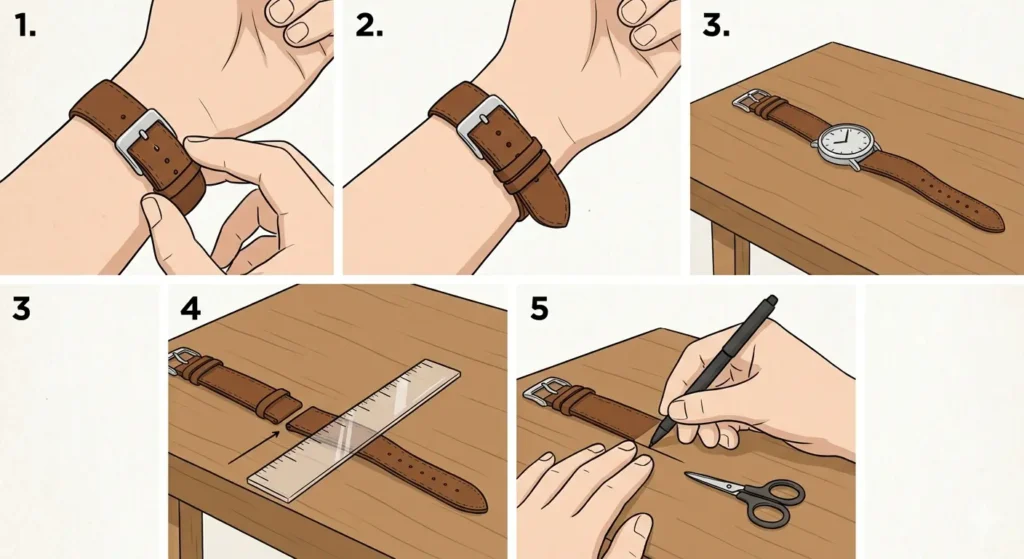
Proper measurement is the foundation of a good trim. Start by wearing the watch with the NATO strap at the desired tightness. Most people find that leaving 2-3 inches of excess tail creates a balanced look without too much bulk.
- Step 1: Put the watch on and fasten it at the most comfortable hole
- Step 2: Pull the excess strap through the keepers and decide how much tail to leave
- Step 3: Remove the watch and lay the strap flat on a hard surface
- Step 4: Measure from the last keeper to your desired endpoint, typically 2-3 inches beyond
- Step 5: Mark the cutting line with a pen, making sure it’s straight and perpendicular to the strap edges
Pro Tip: Always add an extra quarter-inch to your measurement before marking. This gives room for adjustment and accounts for the slight material loss during heat sealing. It’s much easier to trim more later than to realize the strap is too short.
Making the Cut
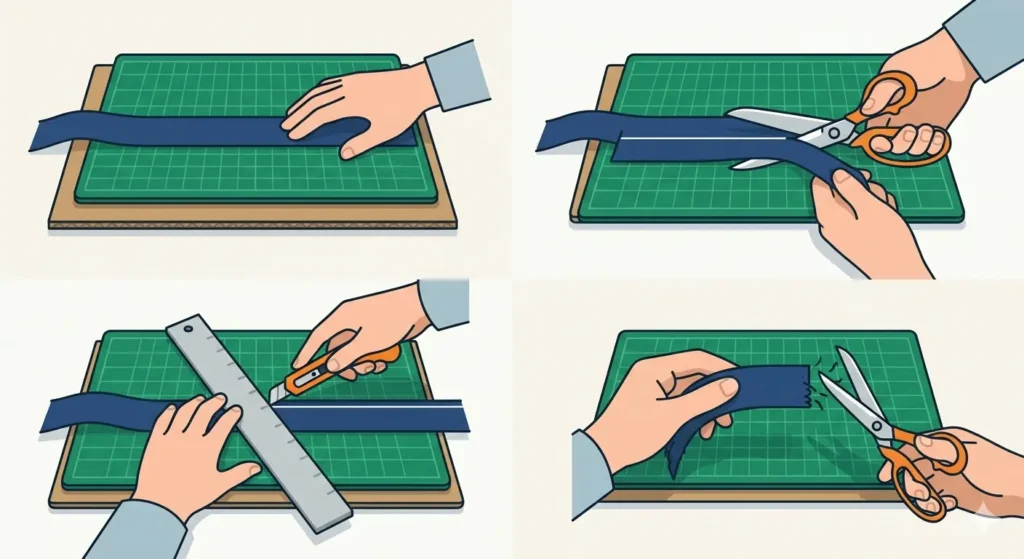
A clean, straight cut makes the sealing process much easier and produces better results.
- Step 1: Place the strap on a cutting mat or thick cardboard to protect the surface underneath
- Step 2: Use sharp fabric scissors to cut straight across the marked line in one smooth motion
- Step 3: If using a utility knife, position a metal ruler along the line and make one firm, complete cut
- Step 4: Inspect the edge to ensure it’s even – trim any uneven spots immediately
The key is to make one decisive cut rather than multiple small snips, which can create a jagged edge that’s harder to seal properly.
Sealing the Cut Edge
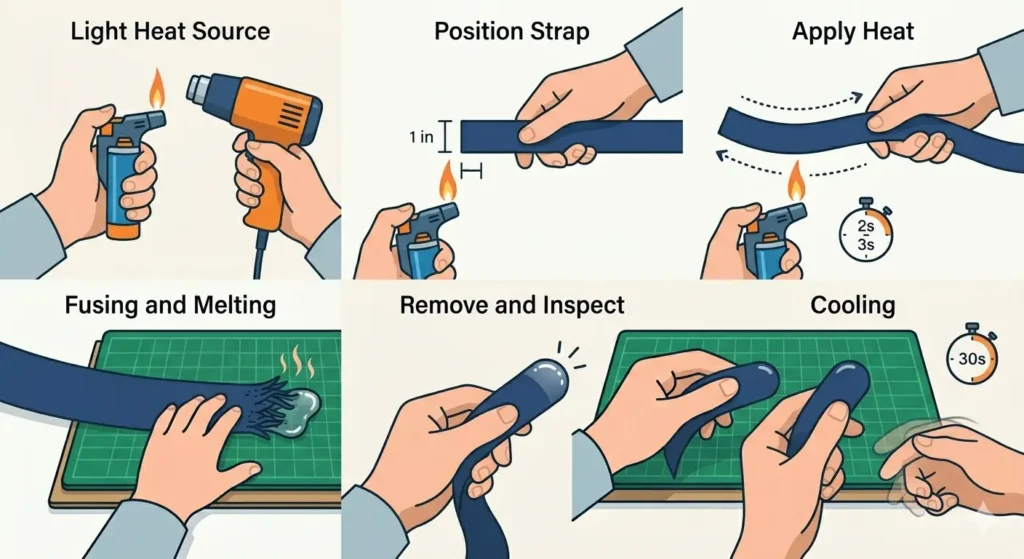
Heat sealing prevents the nylon from fraying and gives the strap a professional, finished appearance. This step should be done immediately after cutting while the edge is still fresh.
- Step 1: Light a lighter or turn on the heat gun to medium setting
- Step 2: Hold the cut end of the strap about 1 inch away from the flame or heat source
- Step 3: Move the strap slowly back and forth through the heat for 2-3 seconds
- Step 4: Watch as the nylon fibers melt and fuse together, creating a sealed edge
- Step 5: Remove from heat as soon as the edge looks smooth and slightly glossy
- Step 6: Allow the sealed edge to cool for 30 seconds before touching
Pro Tip: Don’t hold the flame directly against the strap or leave it in the heat too long. Overheating will cause the nylon to bubble, char, or create an uneven edge. The goal is just enough heat to melt and fuse the fibers, not to burn them. If bubbling occurs, trim off the damaged section and try again with less heat exposure.
Finishing Touches
After the edge has cooled completely, inspect the seal to ensure it’s smooth and even. If there are any rough spots or loose fibers, apply a small amount of additional heat to those areas. Some enthusiasts also use clear nail polish or fabric glue on the sealed edge for extra durability, though this is optional for most NATO straps.
When planning activities that require precise timing, having reliable tools makes all the difference – check out this online stopwatch for accurate time tracking during projects.
Tips for Best Results
- Always cut the strap while it’s off the watch to ensure accuracy and safety
- Use sharp scissors designed for fabric – dull blades create ragged edges that are difficult to seal
- Practice the heat-sealing technique on a scrap piece of nylon strap or fabric first
- Work in a well-ventilated area since melting nylon produces fumes
- Keep a small bowl of water nearby in case the strap gets too hot
- For thicker NATO straps, apply heat in multiple short bursts rather than one long exposure
- Seal both the top and bottom surfaces of the cut edge for maximum durability
- If the strap has multiple layers, ensure all layers are sealed together
For those working on multiple projects throughout the day, keeping track of time zones can be helpful – try this world time comparison tool to stay organized.
Common Problems and Solutions
Uneven or Jagged Cut Edge
This usually happens when scissors are dull or when making multiple small cuts instead of one clean slice. Solution: Use sharper scissors and cut in one smooth motion. If the edge is already jagged, trim it straight before attempting to seal.
Frayed Edges After Sealing
Insufficient heat or moving the strap away from the heat source too quickly causes this issue. Solution: Reapply heat to the frayed areas, holding the strap closer to the flame for slightly longer. Make sure all fibers are melted and fused.
Bubbled or Charred Material
Excessive heat or direct flame contact creates bubbling and charring. Solution: Trim off the damaged section and reseal using less heat. Keep the strap at least 1 inch from the flame and use quick, sweeping motions.
Strap Still Too Long After Cutting
Measurement errors or not accounting for keeper placement causes this. Solution: Repeat the process, removing additional length. Always measure twice before cutting to avoid this issue.
Sealed Edge Feels Sharp or Rough
Overheating can create a hard, sharp edge. Solution: Lightly sand the sealed edge with fine-grit sandpaper or apply another very brief heat treatment to smooth it out. Some prefer to round the corners slightly before sealing for a softer feel.
Need to keep track of time while working on watch modifications? This clock tab provides an easy reference right in the browser.
Frequently Asked Questions
Can any NATO strap be cut and sealed safely?
Yes, most NATO straps are made from nylon material that responds well to heat sealing. However, straps made from leather, rubber, or non-nylon synthetic materials require different techniques and should not be heat-sealed with a flame.
What happens if the strap is cut too short?
Unfortunately, there’s no way to add length back to a NATO strap once it’s cut. This is why measuring carefully and leaving extra length is crucial. If a strap is cut too short, it will need to be replaced entirely.
How long does a properly sealed NATO strap edge last?
A correctly heat-sealed edge should last the entire lifetime of the strap without fraying or unraveling. The melted nylon creates a permanent bond that withstands daily wear, water exposure, and regular cleaning.
Is it better to use a lighter or a heat gun?
Both tools work effectively, but they offer different levels of control. A lighter is more accessible and works well for quick sealing, while a heat gun provides more consistent, controllable heat that’s ideal for beginners or thicker straps.
Can the sealed edge be smoothed if it feels rough?
Yes, a rough sealed edge can be smoothed by lightly sanding with fine-grit sandpaper (220-grit or higher) or by applying very brief additional heat to slightly re-melt and smooth the surface. Be gentle to avoid damaging the seal.
Should both ends of the NATO strap be sealed?
Only the cut end needs sealing. The factory end with the hardware already has a finished edge. However, if both ends are cut for any reason, both should be heat-sealed to prevent fraying.
What’s the ideal tail length to leave after cutting?
Most watch enthusiasts recommend leaving 2-3 inches of tail after the last keeper. This provides enough length to secure properly without excessive bulk. Personal preference and wrist size can influence this measurement.
Can a NATO strap be cut while attached to the watch?
This is not recommended for safety and accuracy reasons. Removing the strap allows for proper measurement, straight cutting, and safe heat sealing without risk of damaging the watch or burning oneself.
Will cutting a NATO strap void any warranty?
Modifying a strap by cutting it typically voids any manufacturer warranty, as it’s considered an alteration. Check the warranty terms before cutting if this is a concern, though most NATO straps are inexpensive enough that warranty coverage is minimal.
How can overheating damage be prevented during sealing?
Keep the strap moving through the heat rather than holding it stationary, maintain at least 1 inch distance from the flame, and apply heat for only 2-3 seconds at a time. Practice on scrap material first to develop a feel for the right amount of heat.