

Learning how to adjust a metal watch clasp using micro-adjustments can transform an uncomfortable timepiece into one that fits perfectly on the wrist. Most metal watch bracelets come equipped with micro-adjustment systems that allow fine-tuning without removing links, making it easier to achieve that ideal fit throughout the day.
Quick Summary Table
| Adjustment Type | Tools Needed | Time Required |
|---|---|---|
| Micro-Adjustment (Clasp) | Small flathead screwdriver or fingernail | 1-2 minutes |
| Typical Adjustment Range | 3-8mm total | N/A |
| Number of Positions | Usually 4-6 holes | N/A |
Step-by-Step Guide to Adjusting Your Metal Watch Clasp
Identify the Micro-Adjustment Mechanism
Different watch brands use various micro-adjustment systems, but most metal clasps feature a small extension piece hidden inside the clasp itself. This extension typically has several holes that allow the bracelet to be lengthened or shortened in small increments.
- Flip the clasp over to examine the underside
- Look for a small flap, lever, or button near the clasp hinge
- Common types include diver’s extensions, push-button systems, and sliding mechanisms
Prepare the Watch for Adjustment
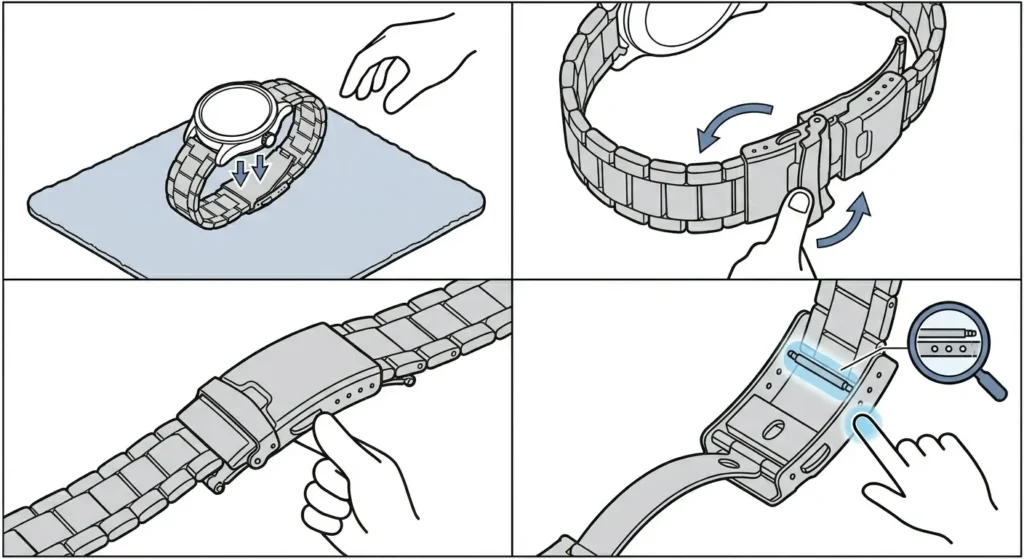
Before making any changes, the watch should be removed from the wrist to get a clear view of the clasp mechanism and prevent accidental damage.
- Step 1: Take the watch off and place it on a soft surface like a mousepad or towel
- Step 2: Open the clasp completely to access the adjustment mechanism
- Step 3: Identify the current position of the micro-adjustment piece
Release the Current Position
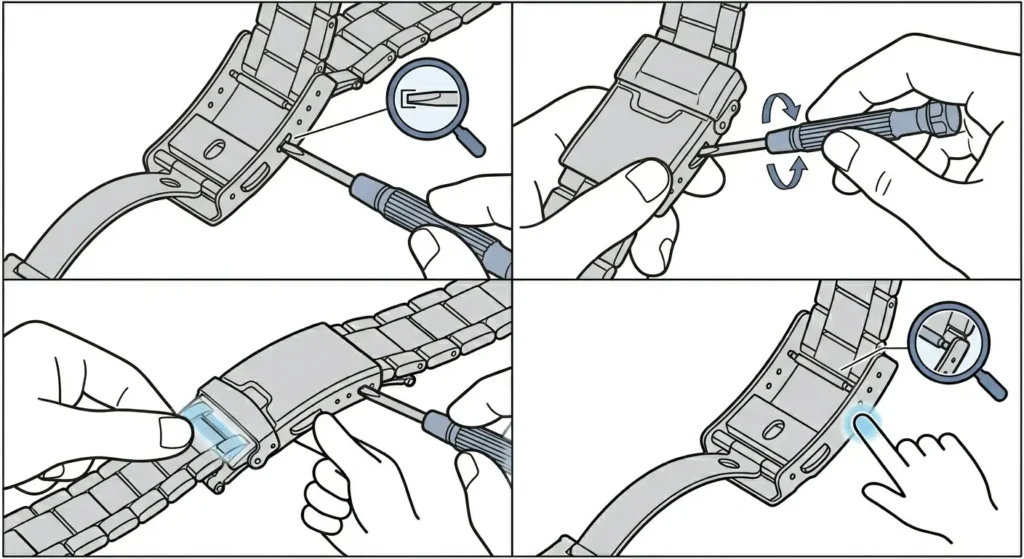
Most micro-adjustment systems use a small catch or spring-loaded pin that holds the extension in place. This needs to be released before adjusting.
- Step 1: Locate the small release button, lever, or slot on the clasp
- Step 2: Use a small flathead screwdriver, toothpick, or fingernail to press or lift the release mechanism
- Step 3: Gently pull on the extension piece while holding the release
Pro-Tip: Apply gentle, steady pressure when releasing the mechanism. Forcing it can damage the spring or catch inside the clasp, leading to a loose fit that won’t hold securely.
Adjust to the Desired Position
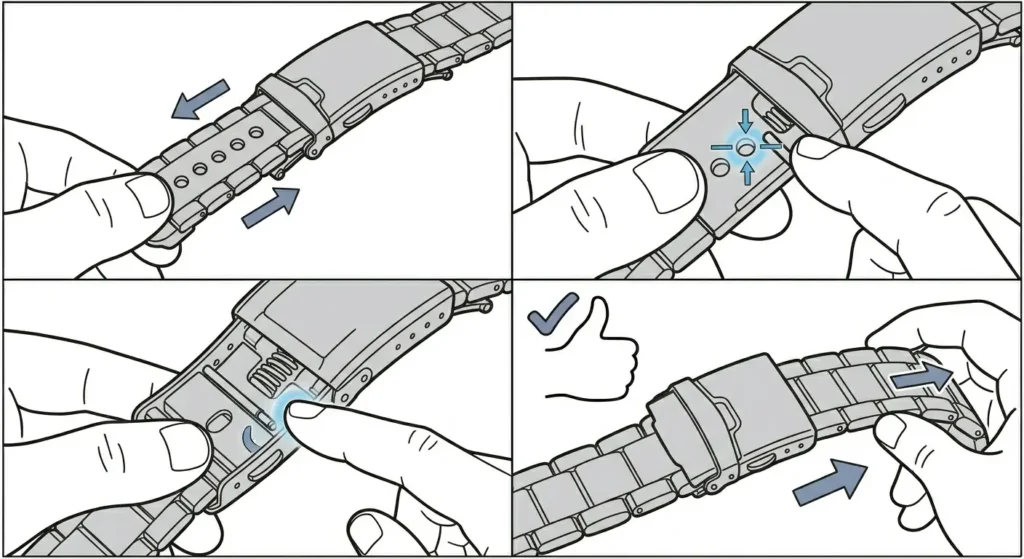
Once the extension is released, it can be moved to a different hole position. Each position typically adjusts the bracelet by 1-2mm.
- Step 1: Slide the extension piece in or out to the next available hole
- Step 2: Align the pin with the desired adjustment hole
- Step 3: Release the mechanism to lock the extension in the new position
- Step 4: Gently tug on the extension to confirm it’s locked securely
Test the Fit
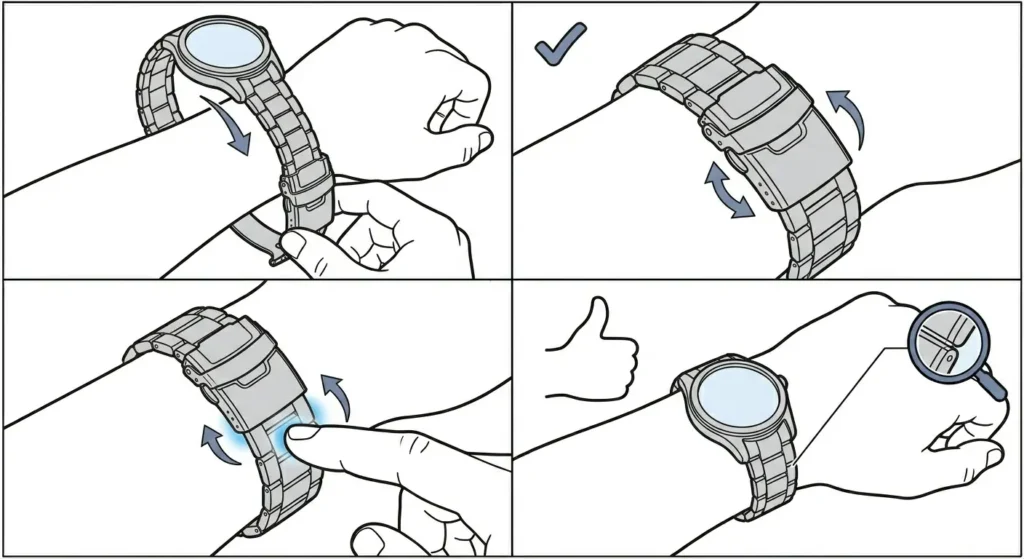
After making the adjustment, the watch should be worn to verify the new fit is comfortable and secure.
- Step 1: Put the watch back on the wrist
- Step 2: Close the clasp and check that it sits comfortably
- Step 3: Slide one finger between the bracelet and wrist – there should be slight movement without being too loose
- Step 4: Wear the watch for several minutes to ensure comfort during normal wrist movement
Tips for Perfect Micro-Adjustment
Timing Your Adjustments
Wrist size naturally fluctuates throughout the day due to temperature changes, physical activity, and fluid retention. Many watch enthusiasts find that their wrists are smallest in the morning and slightly larger in the evening. Using a clock tab to track when adjustments feel necessary can help identify patterns in wrist size changes.
Making Incremental Changes
The key is to adjust one position at a time rather than jumping multiple holes. This prevents over-correction and helps find the sweet spot more quickly.
- Move only one hole position per adjustment
- Wait at least 15-20 minutes before making another change
- Test the fit during different activities (sitting, walking, typing)
Seasonal Considerations
Weather and temperature affect wrist size more than most people realize. During hot summer months, wrists tend to swell slightly, requiring a looser fit. In winter, a tighter adjustment may be more comfortable.
Pro-Tip: Keep track of which micro-adjustment hole works best during different seasons. Using an online stopwatch during adjustment sessions can help time how long it takes for the wrist to settle into a new position, making future adjustments faster.
Maintaining the Mechanism
Micro-adjustment systems are durable but benefit from occasional maintenance. Dust, skin particles, and moisture can accumulate in the clasp mechanism over time.
- Wipe the clasp area with a soft, slightly damp cloth monthly
- Avoid exposing the mechanism to sand, salt water, or harsh chemicals
- Never force the adjustment if it feels stuck – clean it first
Common Problems and Solutions
The Extension Won’t Release
When the micro-adjustment mechanism feels stuck or won’t release, the issue is usually dirt buildup or corrosion in the catch mechanism.
Solution: Clean the area with a soft toothbrush and mild soapy water. Rinse thoroughly and dry completely. If the problem persists, a small amount of watch-safe lubricant can be applied to the mechanism, but use sparingly to avoid attracting more dirt.
The Clasp Keeps Popping Open
A clasp that won’t stay closed typically means the catch is worn or the extension isn’t fully locked into position.
Solution: Ensure the extension piece is fully seated in the adjustment hole. The pin should click audibly into place. If it still opens unexpectedly, the internal spring may be weakened and require professional service.
Limited Adjustment Range
Sometimes the micro-adjustment holes don’t provide enough range to achieve a comfortable fit, leaving the watch either slightly too tight or too loose.
Solution: This situation requires link removal or addition from the bracelet itself, which goes beyond micro-adjustments. Most jewelers or watch repair shops can add or remove half-links to complement the micro-adjustment system.
The Adjustment Feels Loose
If the bracelet moves excessively even after locking the micro-adjustment, the catch mechanism may be damaged or worn.
Solution: Inspect the pin and catch for visible wear or bending. Minor issues can sometimes be resolved by gently adjusting the catch with needle-nose pliers, but significant damage requires professional repair to prevent the watch from falling off the wrist.
Frequently Asked Questions
How tight should a metal watch bracelet be?
A properly fitted metal bracelet should allow about one finger’s width of space between the bracelet and wrist. The watch should be able to move slightly but not slide more than an inch up or down the arm. Too tight restricts circulation and leaves marks; too loose allows the watch to spin around the wrist.
Can micro-adjustments replace link removal?
Micro-adjustments are designed for fine-tuning, not major sizing. They typically provide 3-8mm of total adjustment range. If the bracelet is significantly too large or small, links should be removed or added first, then micro-adjustments used to perfect the fit.
How often should the micro-adjustment position be changed?
There’s no limit to how frequently adjustments can be made. Some people adjust their watches daily based on activities or temperature. The mechanism is designed for regular use and won’t wear out from frequent adjustments when done properly.
Do all metal watch clasps have micro-adjustments?
Not all metal bracelets include micro-adjustment systems. This feature is most common on dive watches, luxury timepieces, and sports watches. Budget watches and some vintage pieces may only offer sizing through link removal. Check the clasp underside for adjustment holes or levers to confirm.
What’s the difference between diver’s extension and micro-adjustment?
A diver’s extension is a type of micro-adjustment specifically designed to extend the bracelet length quickly for wearing over a wetsuit. It typically offers one large adjustment (10-20mm) rather than multiple small increments. Regular micro-adjustments provide finer control with multiple smaller positions.
Can micro-adjustment mechanisms be repaired if broken?
Most micro-adjustment systems can be repaired or replaced by a qualified watchmaker. The cost varies depending on the watch brand and clasp type, but it’s generally more affordable than replacing the entire bracelet. Some manufacturers sell replacement clasp parts directly.
Why does the watch feel tighter at different times of day?
Wrist circumference naturally fluctuates by 5-10% throughout the day due to fluid retention, temperature, physical activity, and blood flow. This is normal physiology. Most people find their wrists are smallest in the morning after sleeping and largest in the evening or after exercise.
Should the watch be adjusted on or off the wrist?
Always remove the watch before adjusting the micro-adjustment mechanism. This provides better visibility, prevents pinching the skin, and allows proper alignment of the adjustment pins with the holes. Attempting adjustments while wearing the watch can damage the mechanism or cause injury.
How can someone tell which adjustment hole is currently being used?
Open the clasp fully and look at the underside of the extension mechanism. The pin will be inserted through one of several holes. Count from the shortest position to identify which setting is active. Some watches have numbered positions or visual indicators.
Is it normal for the micro-adjustment to feel stiff at first?
New watches often have stiffer micro-adjustment mechanisms due to tight manufacturing tolerances and fresh lubricants. The mechanism typically loosens slightly with use over the first few weeks. If it remains extremely difficult to operate after a month, cleaning or professional inspection may be needed.