
Removing links from a watch bracelet is essential when adjusting the fit for comfort and security. Whether dealing with pin and collar systems or screw-type links, understanding the correct method prevents damage to the timepiece. This step-by-step guide covers both techniques, ensuring anyone can resize a metal watch band at home with the right tools and approach.
Quick Summary Table
| Link Type | Tools Needed | Difficulty Level | Time Required |
|---|---|---|---|
| Pin & Collar | Pin pusher tool, hammer, pliers | Moderate | 10-15 minutes |
| Screw Type | Small screwdriver, tape | Easy | 5-10 minutes |
How to Remove Pin and Collar Links
Pin and collar links are commonly found on many metal watch bracelets. These require pushing out small pins that hold the links together, which can be tricky without proper technique.
Identifying Pin Direction
Before starting, examine the bracelet closely. Most pin and collar systems have tiny arrows engraved on the inside of the links, indicating the direction to push the pins out. Always push pins in the direction of the arrows to avoid damaging the mechanism.
Steps to Remove Pin and Collar Links
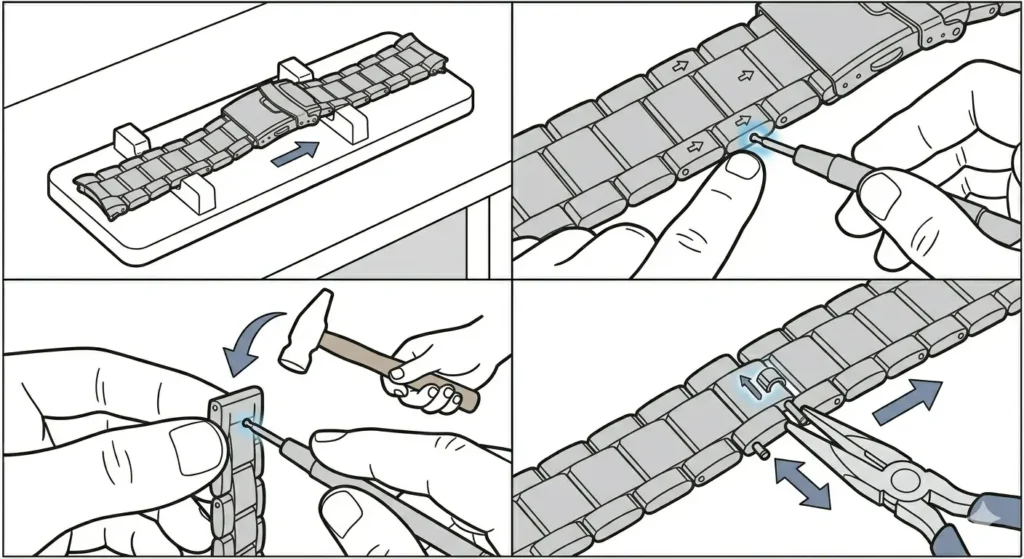
- Step 1: Place the watch on a stable surface or watch holder with the bracelet fully extended.
- Step 2: Locate the arrows on the inside of the links showing pin removal direction.
- Step 3: Position the pin pusher tool against the pin, aligned with the arrow direction.
- Step 4: Gently tap the pin pusher with a small hammer until the pin starts moving out.
- Step 5: Once the pin protrudes slightly, use pliers to pull it out completely along with the collar.
- Step 6: Remove the desired number of links, always taking equal amounts from both sides of the clasp to maintain balance.
- Step 7: Reconnect the bracelet by aligning the remaining links and inserting the pin from the opposite direction.
- Step 8: Push the collar back onto the pin using the pin pusher until it sits flush with the link.
Pro-Tip: Always remove links in pairs (one from each side of the clasp) to keep the watch centered on the wrist. Removing links from only one side causes the watch face to sit off-center, which looks awkward and feels uncomfortable.
How to Remove Screw-Type Links
Screw-type links are easier to work with since they don’t require hammering. These links use tiny screws that thread through the bracelet, making adjustment straightforward with minimal tools.
Identifying Screw-Type Links
Look for small screw heads on one side of the bracelet links. These are usually located on the outer edge and may have a slot or require a specialized screwdriver bit. Check if a timing tool helps track work duration for precision tasks.
Steps to Remove Screw-Type Links
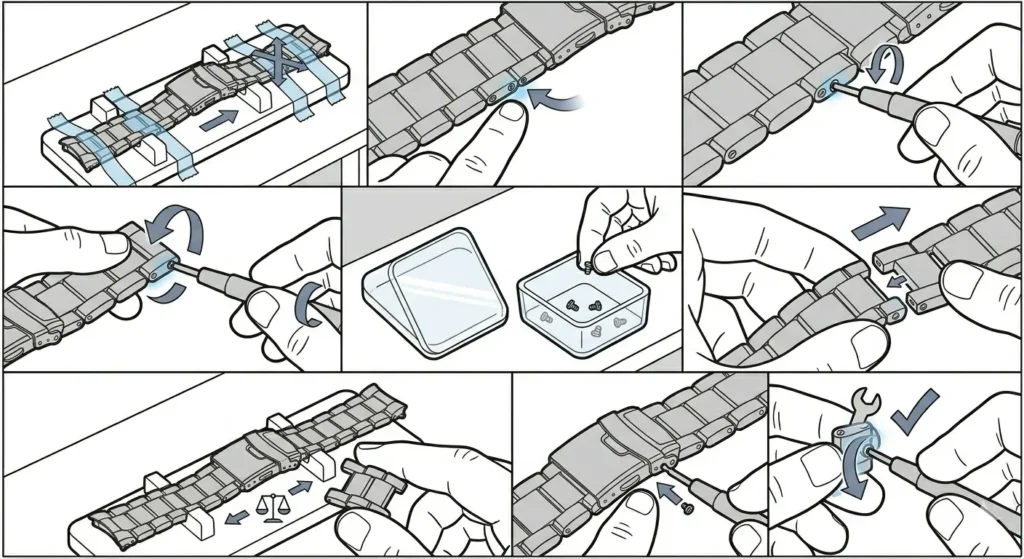
- Step 1: Secure the watch bracelet with tape or place it in a watch holder to prevent movement.
- Step 2: Examine the links to identify which screws need removal (usually marked or positioned near removable sections).
- Step 3: Insert the appropriate screwdriver into the screw head, ensuring a snug fit to prevent stripping.
- Step 4: Turn the screwdriver counterclockwise slowly and steadily until the screw comes out completely.
- Step 5: Set screws aside in a small container to avoid losing them.
- Step 6: Gently separate the link from the bracelet once the screw is removed.
- Step 7: Remove equal numbers of links from both sides of the clasp for balanced fit.
- Step 8: Reconnect the bracelet by aligning the remaining links and threading screws back through.
- Step 9: Tighten screws clockwise until snug, but avoid over-tightening which can strip threads.
Pro-Tip: Place a piece of clear tape over the screw area while working. This catches any screws that might slip during removal, preventing them from rolling away and getting lost.
Essential Tools for Watch Link Removal
Having the right tools makes bracelet adjustment safe and efficient. For pin and collar systems, a dedicated pin pusher tool with interchangeable tips works best, along with a small hammer and needle-nose pliers. Screw-type links require precision screwdrivers, often sold in eyeglass repair kits or specialized watch tool sets.
A watch holder or bracelet block provides stability during the process, though a folded towel on a hard surface works as an alternative. Magnetic trays or small containers keep removed pins and screws organized. Using a time tracking system ensures work stays organized when handling multiple watches.
Tips for Safe Link Removal
Work in good lighting to see small components clearly. Natural daylight or a bright desk lamp prevents eye strain and helps identify pin directions or screw locations accurately.
Apply gentle, steady pressure rather than forceful strikes when removing pins. Excessive force can scratch the bracelet finish, bend pins, or damage the link housing. Most people find that patience yields better results than rushing through the process.
Keep all removed parts organized and labeled if working on multiple watches. Small ziplock bags with notes about which watch and how many links were removed prevent confusion during reassembly.
Test the fit after removing each pair of links. The bracelet should slide over the hand with slight resistance and sit snugly on the wrist without pinching. One finger should fit comfortably between the bracelet and wrist.
Consider using a rubber bracelet holder or watch cushion when working. These accessories grip the watch securely without scratching the case or crystal, providing better control during link removal.
Common Problems and Solutions
Stuck pins are a frequent issue, especially with older bracelets. Apply a small drop of penetrating oil to the pin and let it sit for several minutes before attempting removal. The oil loosens corrosion or debris blocking the pin’s path.
Stripped screw heads occur when using the wrong size screwdriver or applying excessive force. If a screw head becomes damaged, try using a rubber band between the screwdriver and screw for extra grip. Specialized screw extractors work for severely stripped screws.
Bent pins happen when removal direction is incorrect or too much force is applied. Always verify arrow markings before pushing pins. Slightly bent pins can sometimes be straightened with pliers, but replacement is safer for maintaining bracelet integrity.
Links that won’t separate after pin removal usually have debris or slight misalignment. Gently wiggle the links while pulling apart, or use a thin blade to create separation. Never force links apart, as this can crack or break the metal.
Missing arrows or unclear markings make pin direction uncertain. The general rule is that pins push out toward the six o’clock position (buckle side) of the watch. When in doubt, apply minimal pressure from both directions to determine which side yields more easily.
Frequently Asked Questions
How many links should be removed from a watch bracelet?
The number varies based on wrist size, but most people remove between one and four links total. Always remove links in pairs from both sides of the clasp to maintain balance. The bracelet should allow one finger to slide between it and the wrist comfortably.
Can links be removed from any metal watch bracelet?
Most metal bracelets with removable links use either pin and collar or screw systems. However, some bracelets have welded or riveted links that cannot be removed at home. Mesh or expanding bracelets typically require different adjustment methods and should be handled by professionals.
What happens if a pin is pushed out the wrong direction?
Pushing pins against their designed direction can damage the collar mechanism or deform the pin itself. If resistance feels excessive, stop immediately and check for directional arrows. Most bracelets allow some backward movement, but forcing pins can permanently damage the link housing.
Do removed links affect watch value or warranty?
Properly removed links do not affect watch value if kept with the timepiece. Always save removed links in case future resizing is needed or when selling the watch. Most warranties remain valid after link removal, but improper adjustment causing damage may void coverage.
How tight should watch bracelet screws be?
Screws should be snug enough to prevent loosening during normal wear but not so tight that threads strip or deform. Turn until gentle resistance is felt, then add about a quarter turn. Over-tightening damages threads and makes future adjustments difficult.
Can different types of links be mixed on one bracelet?
Mixing pin and screw links on the same bracelet is not recommended. Each system has specific structural requirements, and combining them can create weak points or misalignment. Stick with the original link type designed for the specific bracelet model.
What should be done with extra links after removal?
Store removed links in a small jewelry bag or container labeled with the watch model. Keep them with the watch box or paperwork for future reference. Extra links are valuable for resizing if the wrist size changes or when selling the watch to someone with a larger wrist.
How often do watch bracelet screws need tightening?
Check screw tightness every few months, especially on frequently worn watches. Vibration and daily movement can gradually loosen screws. A quick visual inspection during regular cleaning helps catch loose screws before links separate and become lost.
Is professional help needed for link removal?
Most people can remove links at home with basic tools and patience. However, expensive luxury watches, vintage timepieces, or bracelets with unusual mechanisms benefit from professional adjustment. Jewelers and watch repair shops typically charge minimal fees for this service and ensure proper reassembly.
Can watch link removal damage the bracelet finish?
Careful work with proper tools rarely damages the finish. Using the correct size pin pusher and screwdriver prevents scratches. Working on a soft cloth surface and avoiding excessive force protects the bracelet. Minor scratches can be polished out, but deep gouges may be permanent.