

Changing a watch battery is a simple task that can save time and money when done at home. This step-by-step guide walks through the entire process, from gathering the right tools to sealing the watch case properly. Whether dealing with a snap-back case or a screw-down design, this tutorial provides clear instructions for replacing a watch battery safely and efficiently.
Quick Summary Table
| Task Duration | 10-15 minutes |
| Difficulty Level | Beginner to Intermediate |
| Tools Needed | Case opener, tweezers, new battery, cleaning cloth |
| Cost Savings | $10-20 compared to professional service |
| Common Battery Types | SR626SW, CR2016, CR2032 |
How to Change a Watch Battery
Method 1: Gather the Necessary Tools
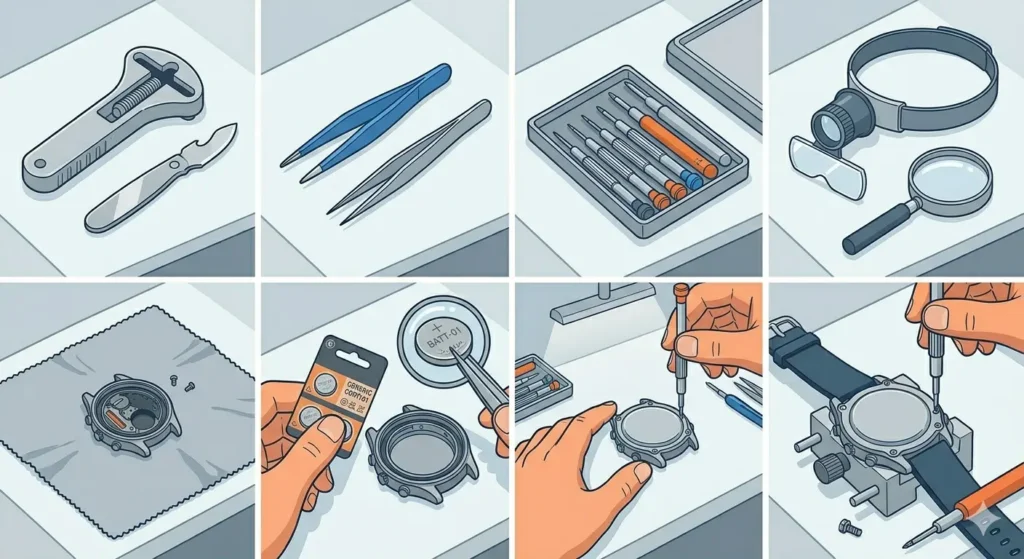
Before starting the battery replacement process, collect all required tools to ensure a smooth workflow. Having everything within reach prevents unnecessary delays and reduces the risk of losing tiny components.
- Step 1: Obtain a watch case opener tool (either a screw-type or knife-type opener depending on the watch design)
- Step 2: Get a pair of non-magnetic tweezers or plastic tweezers to handle the battery
- Step 3: Prepare a small screwdriver set for watches with screw-down case backs
- Step 4: Have a magnifying glass or loupe ready for inspecting small parts
- Step 5: Place a soft cloth on the work surface to protect the watch face and prevent parts from rolling away
- Step 6: Keep the replacement battery nearby (check the old battery number before purchasing)
Method 2: Identify the Watch Case Type
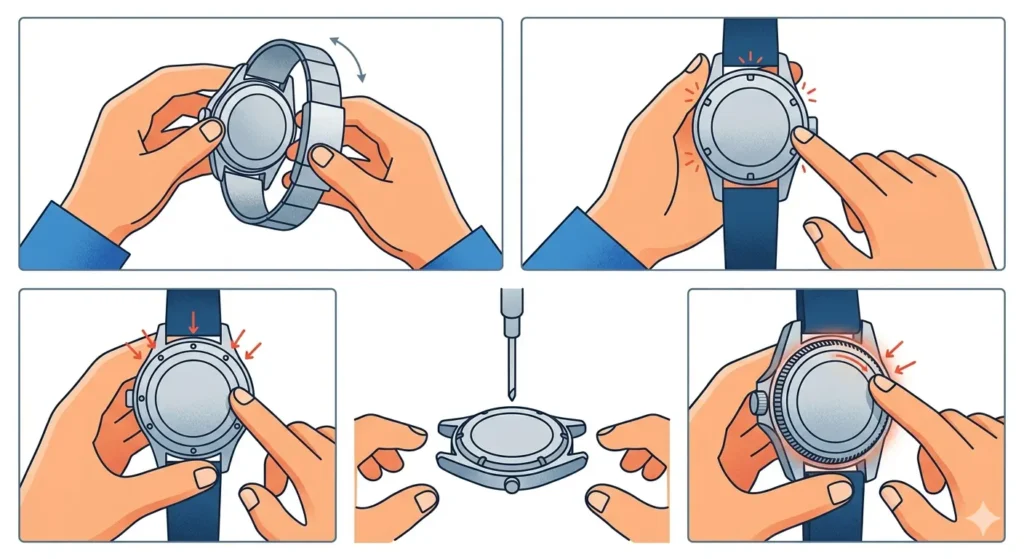
Different watches use different case back designs, and identifying the correct type ensures the proper opening method is used. This step prevents damage to the watch casing.
- Step 1: Turn the watch over and examine the case back closely
- Step 2: Look for small notches or slots around the edge (indicating a snap-back case)
- Step 3: Check for tiny screws around the perimeter (indicating a screw-down back)
- Step 4: Identify ridged edges or grooves (indicating a threaded case back)
- Step 5: Note any special markings or tool requirements listed on the case back
Method 3: Open the Watch Case
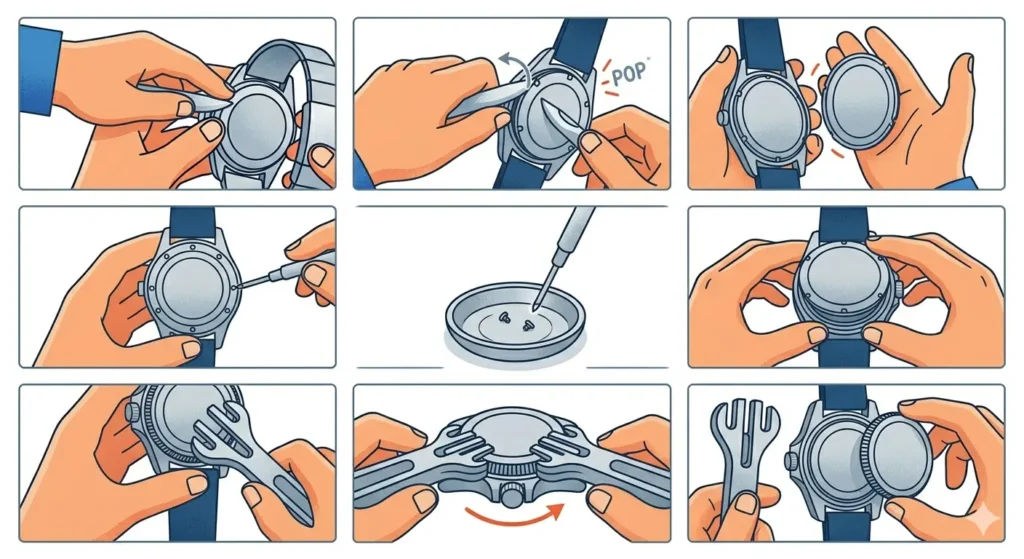
Opening the watch case requires patience and the right technique. Rushing this step can result in scratches or damage to the casing. Using a clock tab can help track how long each step takes during the first attempt.
For Snap-Back Cases:
- Step 1: Insert a case knife into the small notch on the case back edge
- Step 2: Apply gentle, steady pressure while twisting slightly to pop the back open
- Step 3: Catch the case back as it releases to prevent it from flying off
For Screw-Down Cases:
- Step 1: Use the appropriate small screwdriver to remove each screw
- Step 2: Place the screws in a small container to prevent loss
- Step 3: Carefully lift the case back straight up once all screws are removed
For Threaded Cases:
- Step 1: Position the case opener tool in the grooves or ridges
- Step 2: Turn counterclockwise with firm, even pressure
- Step 3: Continue rotating until the back loosens and can be lifted off
Pro-Tip: Always work over a soft, clean surface and in good lighting. Watch components are extremely small, and batteries can easily roll away if dropped. Taking time to set up a proper workspace prevents frustration and lost parts.
Method 4: Remove the Old Battery
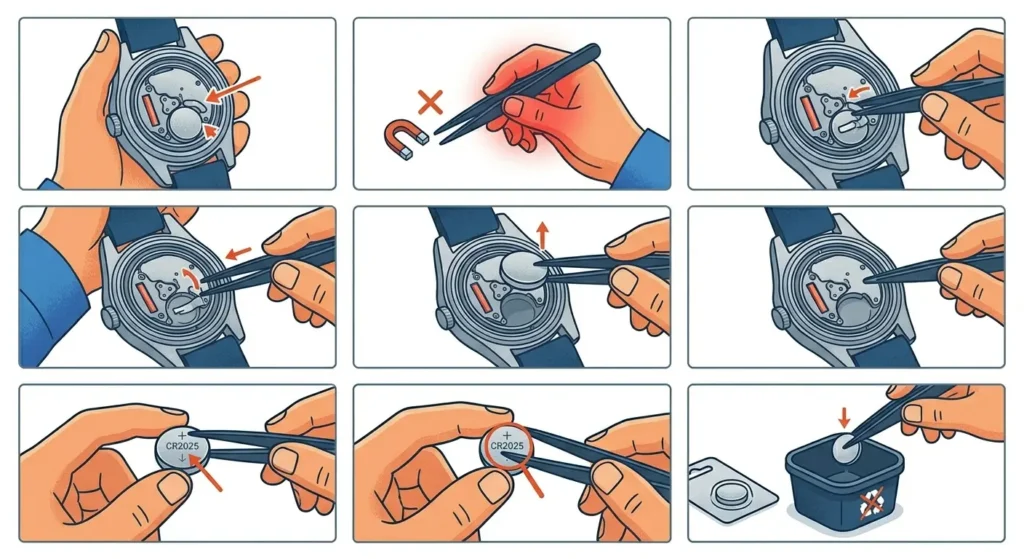
Once the case is open, the battery becomes visible, usually held in place by a small clip or bracket. Removing it carefully prevents damage to surrounding components.
- Step 1: Observe how the battery sits in its compartment and note the position of any clips
- Step 2: Use plastic or non-magnetic tweezers to avoid magnetizing watch parts
- Step 3: Gently push aside any retaining clip or spring holding the battery
- Step 4: Lift the battery straight up from the compartment
- Step 5: Check the battery number (usually printed on the underside) to confirm the replacement size
- Step 6: Set the old battery aside for proper disposal later
Method 5: Clean the Battery Compartment
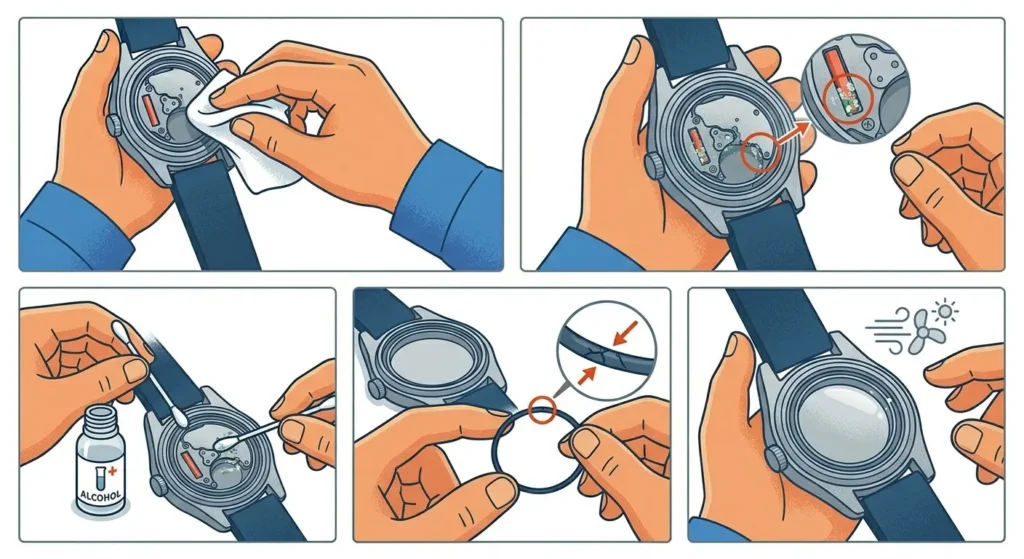
Dirt, dust, or moisture in the battery compartment can affect watch performance and battery life. A quick cleaning ensures optimal contact and function.
- Step 1: Use a clean, lint-free cloth to wipe the battery compartment gently
- Step 2: Check for any visible corrosion or residue from the old battery
- Step 3: If corrosion is present, use a cotton swab lightly dampened with rubbing alcohol to clean the contacts
- Step 4: Allow the compartment to dry completely before inserting the new battery
- Step 5: Inspect the rubber gasket (if present) for any cracks or damage
Method 6: Insert the New Battery
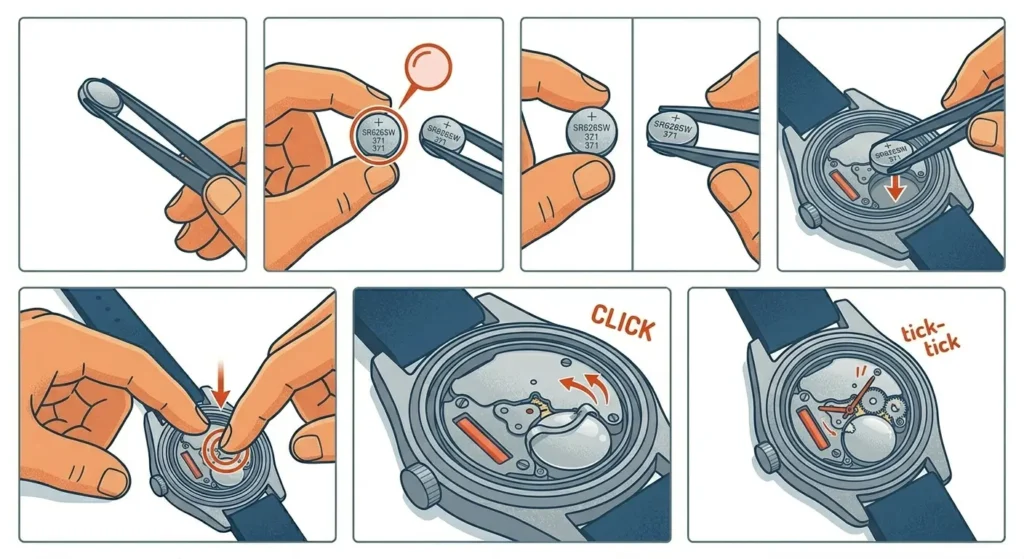
Installing the new battery correctly ensures the watch will function properly. The positive and negative sides must be oriented correctly, matching the original battery placement.
- Step 1: Handle the new battery only with tweezers to avoid oil transfer from fingers
- Step 2: Confirm the battery number matches the old battery exactly
- Step 3: Note which side was facing up on the old battery (usually the side with printing)
- Step 4: Place the new battery in the same orientation as the old one
- Step 5: Gently press down until the battery sits flush in the compartment
- Step 6: Ensure any retaining clip or spring snaps back into place over the battery
- Step 7: Check that the watch starts running (the second hand should begin moving)
Pro-Tip: Never touch the battery contacts with bare fingers. Oils from skin can create resistance and shorten battery life. Always use tweezers or wear clean gloves when handling watch batteries.
Method 7: Close the Watch Case
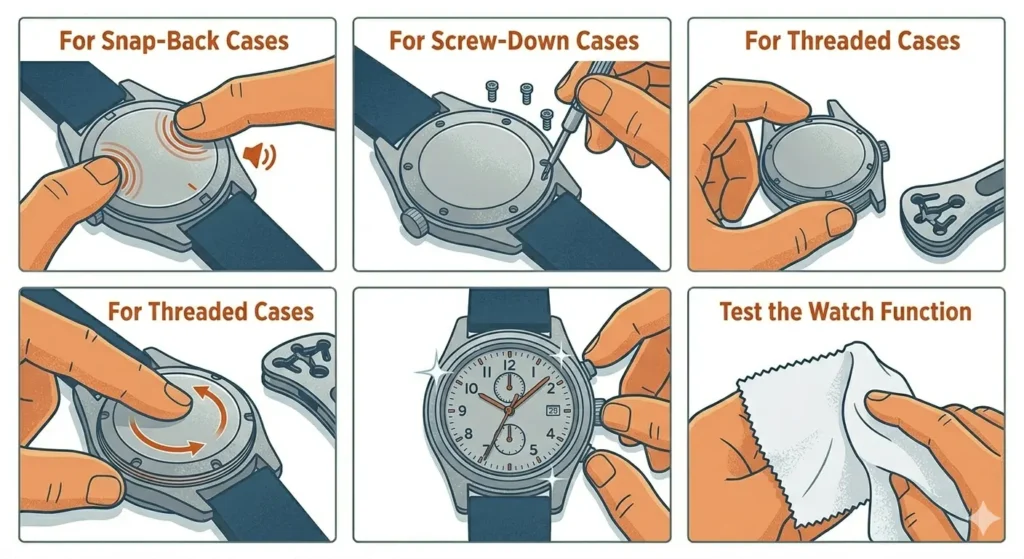
Properly sealing the watch case protects the internal mechanism from dust and moisture. The closing method depends on the original case back type.
For Snap-Back Cases:
- Step 1: Align the case back with the case, matching any alignment marks
- Step 2: Press down firmly with thumbs on opposite sides of the case back
- Step 3: Listen for a clicking sound indicating the back has snapped into place
- Step 4: Check the edges to ensure the back is seated evenly all around
For Screw-Down Cases:
- Step 1: Position the case back carefully, aligning screw holes
- Step 2: Insert all screws loosely first before tightening
- Step 3: Tighten screws in a crisscross pattern to ensure even pressure
- Step 4: Avoid overtightening, which can strip the small threads
For Threaded Cases:
- Step 1: Thread the case back on by hand first, turning clockwise
- Step 2: Once hand-tight, use the case opener tool to secure it firmly
- Step 3: Stop when resistance is felt – do not force it
Method 8: Test the Watch Function
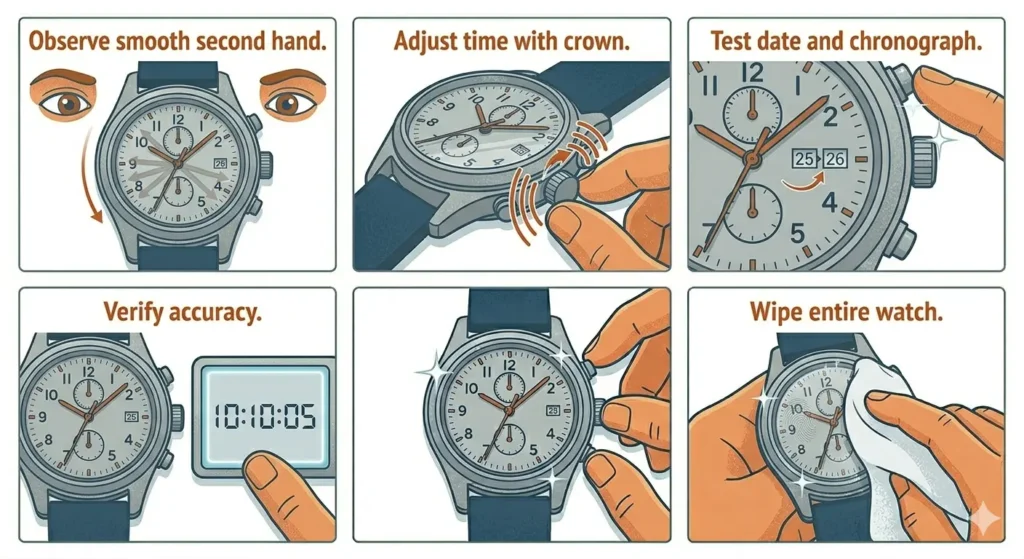
After closing the case, verify that the watch operates correctly and that all functions work as expected.
- Step 1: Observe the second hand to confirm it moves smoothly
- Step 2: Check that the time can be adjusted using the crown
- Step 3: Test any additional features like date display or chronograph functions
- Step 4: Verify the watch keeps accurate time by comparing it to a reliable source like an online stopwatch
- Step 5: Wipe down the entire watch with a clean cloth to remove fingerprints
Tips for Successful Battery Replacement
Following these practical tips can make the battery replacement process smoother and help avoid common mistakes that might damage the watch.
- Purchase Quality Batteries: Invest in name-brand batteries from reputable manufacturers rather than cheap alternatives. Quality batteries last longer and are less likely to leak.
- Work in Daylight: Natural lighting makes it easier to see small components. Using a world time comparison tool can help schedule this task during optimal daylight hours based on location.
- Keep a Battery Chart: Maintain a small notebook with watch models and their corresponding battery numbers for future reference.
- Check Water Resistance: If the watch is water-resistant, consider having it pressure-tested after battery replacement to ensure the seal remains intact.
- Take Photos: Before removing the old battery, take a clear photo of its position and orientation for reference.
- Use Proper Storage: Store replacement batteries in a cool, dry place away from metal objects that could cause short circuits.
- Replace Gaskets When Needed: If the rubber gasket appears worn or damaged, replace it to maintain water resistance.
- Avoid Magnetic Fields: Keep the watch and tools away from strong magnets, which can magnetize watch components and affect accuracy.
Common Problems and Solutions
Even when following all steps carefully, certain issues may arise during or after battery replacement. Here are practical solutions to the most frequent problems.
Watch Does Not Start After Battery Installation
If the second hand does not move after inserting the new battery, several factors could be responsible. First, verify that the battery is seated correctly and making full contact with both terminals. Remove and reinsert the battery, ensuring it sits completely flat. Second, check that the battery orientation matches the original – the positive side should face the same direction as before. Third, confirm the battery number is correct for that specific watch model. Finally, examine the battery contacts for corrosion or debris that might prevent proper electrical connection.
Case Back Will Not Close Properly
When the case back refuses to snap or screw on completely, the gasket or internal components may be misaligned. Remove the case back and inspect the rubber gasket for any twisted or bunched sections. Reposition the gasket evenly in its groove. Check that no wires or components protrude beyond the case edge. For threaded backs, ensure alignment by hand-threading first before applying tools. If resistance continues, do not force it – the threads may be damaged or cross-threaded.
Watch Runs Intermittently or Stops Randomly
Intermittent operation often indicates a loose battery connection or insufficient contact pressure. Open the case and verify that the retaining clip holds the battery firmly in place. Clean both the battery contacts and the battery itself with a lint-free cloth. Check for any corrosion on the terminals that might create poor conductivity. Ensure the battery compartment and all contact points are completely dry.
Case Back Scratches or Damage
Prevention is key when working with watch cases. Always use the correct tool for the specific case type. Place tape over the case opener knife to reduce the risk of slipping and scratching. Work slowly and deliberately rather than applying sudden force. If scratches occur, professional polishing may be needed for valuable watches.
Frequently Asked Questions
How long does a watch battery typically last?
Most watch batteries last between 1 to 3 years, depending on the watch type and features. Watches with additional functions like backlights, alarms, or chronographs drain batteries faster than simple time-only models. High-quality batteries from reputable manufacturers generally provide longer service life.
Can any battery replace the original if the size matches?
No, matching the exact battery type is essential. While batteries may share the same physical dimensions, they can differ in voltage, chemistry, and capacity. Using an incorrect battery type can damage the watch movement or cause it to malfunction. Always check the battery number printed on the old battery and purchase an exact replacement.
What does the battery number on a watch battery mean?
Watch battery numbers indicate the size, chemistry, and specifications of the battery. For example, SR626SW breaks down as: SR (silver oxide chemistry), 6 (6mm diameter), 26 (2.6mm height), and SW (low drain version). This coding system helps ensure exact replacements are purchased.
Is it safe to change a battery on an expensive or luxury watch at home?
For high-value luxury watches, professional service is recommended. These watches often have complex movements, specialized seals, and require pressure testing after battery replacement. Additionally, opening some luxury watch cases without proper tools can void warranties or cause damage that costs more to repair than professional battery service.
Why did the new battery die so quickly?
Rapid battery drain has several possible causes. The battery may have been old stock that sat on a shelf for years before purchase. Touching the battery contacts with bare fingers can transfer oils that create resistance and shorten life. The watch movement itself may have an issue drawing excessive power. Finally, low-quality counterfeit batteries often fail prematurely despite appearing genuine.
Can watch batteries leak and damage the watch?
Yes, old or defective batteries can leak corrosive chemicals that damage watch movements and circuitry. This is why replacing batteries promptly when the watch stops is important. If a battery has leaked, professional cleaning is necessary to remove all corrosive residue before installing a new battery.
How can I tell if my watch needs a new battery or has another problem?
A dying battery typically causes the watch to stop completely or the second hand to jump in 2-second intervals instead of smooth 1-second ticks. If replacing the battery does not restore function, the watch likely has a mechanical or electronic issue requiring professional repair.
Should the watch be set to a specific time before removing the battery?
No special time setting is required before battery removal. However, note the current time so the watch can be reset accurately after the new battery is installed. Some people prefer to stop the second hand at 12 before removal for easier resetting.
Do all watches use the same type of case opener tool?
No, different watch designs require different tools. Snap-back cases need a case knife, screw-down cases require small screwdrivers, and threaded cases need a specialized wrench-type opener. Professional watch tool kits often include multiple opener types to accommodate various watch designs.
What should be done with old watch batteries?
Watch batteries contain heavy metals and should never be thrown in regular trash. Take used batteries to electronics retailers, household hazardous waste facilities, or battery recycling centers. Many jewelry stores and watch repair shops also accept old watch batteries for proper disposal.