
Acrylic watch crystals are lightweight and shatter-resistant, but they scratch more easily than sapphire or mineral glass. The good news is that polishing minor scratches from an acrylic watch crystal is something anyone can do at home with the right materials and a little patience. No watchmaker needed – just follow the steps below.
Key Takeaways
- Acrylic crystals are soft plastic, which makes them easy to scratch but also easy to polish out
- Polywatch or Brasso are the most effective polishing compounds for acrylic crystals
- The entire process takes about 10 to 20 minutes per session
- Deep gouges cannot be fully removed – only fine to moderate surface scratches respond to polishing
- Consistent circular motion and proper pressure are the keys to a clear result
Step-by-Step Guide: How to Polish Minor Scratches from an Acrylic Watch Crystal
What You Will Need
- Polywatch plastic polish (recommended) or Brasso metal polish
- Several clean microfiber cloths
- Masking tape or painter’s tape
- A soft toothbrush (optional, for edges)
- Warm water and mild soap
Preparing the Watch
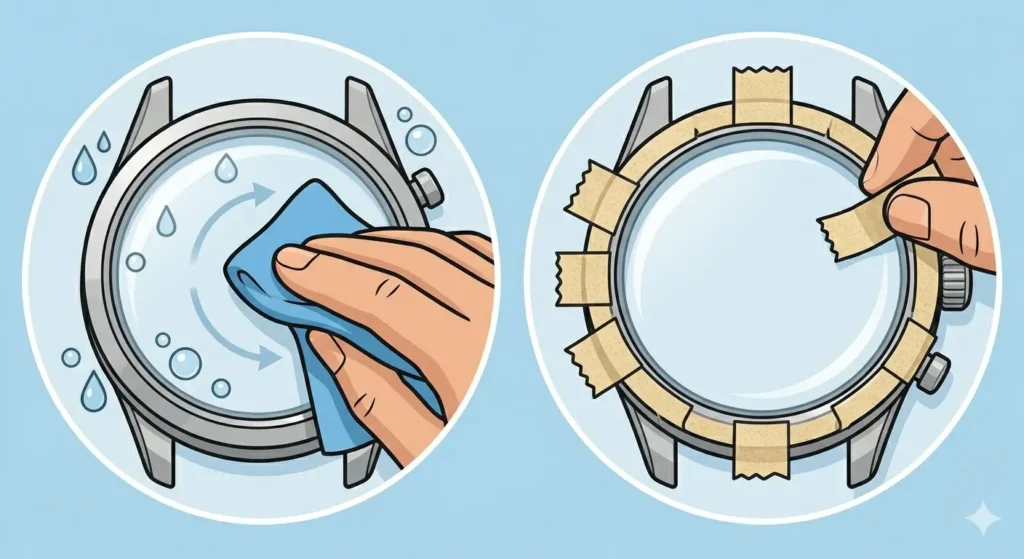
- Step 1: Clean the crystal surface first. Use warm water with a drop of mild dish soap and gently wipe the crystal with a microfiber cloth. This removes any dirt, dust, or debris that could cause additional scratching during polishing. Pat dry completely before moving on.
- Step 2: Protect the watch case and bezel. Tear small strips of masking tape and apply them around the edges of the crystal, covering the bezel and any exposed metal. This prevents accidental scuffing of the case while working on the crystal.
Applying the Polish
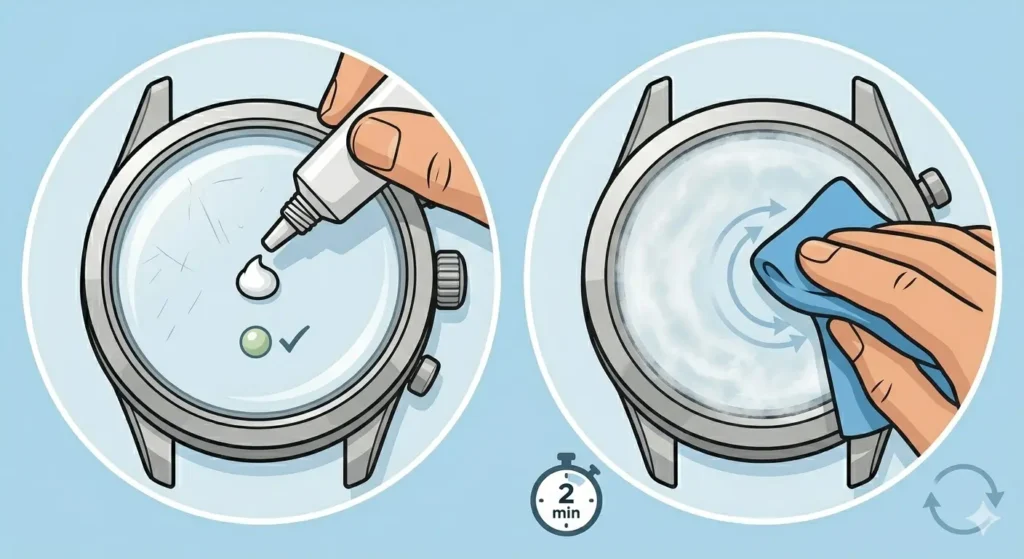
- Step 3: Apply a small pea-sized amount of Polywatch or Brasso directly onto the scratched area of the crystal. Less is more here – using too much compound just creates extra mess without improving results.
- Step 4: Using a clean section of microfiber cloth, begin rubbing the polish into the crystal using firm, small circular motions. Apply moderate pressure – not too light, not aggressive. The goal is to gently abrade the surface layer of the plastic, leveling out the scratch.
- Step 5: Continue polishing in circular motions for 2 to 3 minutes without stopping. The crystal will appear cloudy or hazy during this process – that is completely normal. The abrasive compound is doing its job.
Pro-Tip: Keep the motion consistently circular rather than back-and-forth. Linear rubbing can create fine directional scratches that become visible once the compound is wiped away. Circular buffing gives an even, clear result.
Buffing and Inspecting
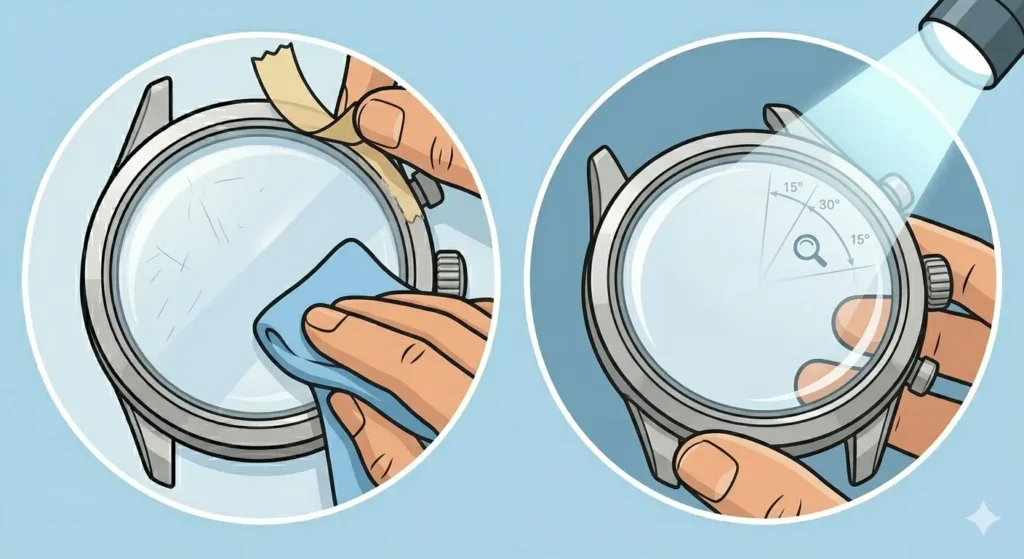
- Step 6: Wipe away the polishing compound with a fresh, clean microfiber cloth. Use light pressure and broad strokes to remove all residue from the surface.
- Step 7: Hold the watch under a bright light or natural daylight and inspect the crystal from different angles. This is where timing matters – checking carefully now saves repeating the whole process unnecessarily. If scratches are still visible, repeat Steps 3 through 6 for one or two more rounds.
- Step 8: Once satisfied with the clarity, remove the masking tape carefully from the bezel. Give the crystal one final wipe with a dry microfiber cloth to bring out the shine.
Pro-Tip: Two shorter polishing sessions often work better than one long aggressive session. Overworking the surface without checking progress can thin the crystal unevenly.
Tips for Best Results
- Always work in a well-lit area so scratches are easy to see during and after polishing
- Use Polywatch as the first choice – it is specifically formulated for acrylic and plastic watch crystals and tends to outperform general-purpose metal polish
- If the watch has a stopwatch or timing function, use it to keep track of polishing intervals – 2 to 3 minutes per pass is the sweet spot
- Store the watch face-up on a soft cloth while working to avoid adding pressure on the case
- Avoid paper towels at all stages – they are too rough for acrylic surfaces and can leave micro-scratches
- For scratches near the crystal edge, a soft toothbrush loaded with polish can reach tight spots the cloth cannot
Common Problems and How to Fix Them
The Crystal Looks Cloudier After Polishing
This usually means residual compound was not fully wiped away. Buff the surface again with a completely clean, dry microfiber cloth using light pressure. The haziness should clear up.
The Scratch Is Still Visible After Multiple Rounds
Run a fingernail lightly across the scratch. If it catches noticeably, the groove is too deep for home polishing to fully remove. At that point, a crystal replacement is the practical solution – acrylic crystals are inexpensive and widely available for most watch models.
The Polish Is Leaving Swirl Marks
Swirl marks appear when the cloth is too rough, the pressure is uneven, or the compound has partially dried before buffing. Use a fresh microfiber cloth, add a tiny drop of polish to re-moisten, and continue with consistent circular pressure.
Polish Got on the Watch Bezel or Case
Wipe it off immediately with a damp cloth before it dries. Brasso in particular can leave residue on metal if left to sit. For textured bezels, use a soft toothbrush dipped in warm water to dislodge any dried compound from crevices.
The Crystal Has a Rainbow Sheen After Polishing
A slight iridescent sheen immediately after polishing is normal and usually disappears once the surface fully dries and is buffed clean. If it persists, it may indicate the crystal was over-polished in one area – buff lightly across the entire crystal surface to even it out.
Keeping an eye on time zones and scheduling while waiting between polishing rounds is a good way to stay patient and let each pass work fully before checking results.
Frequently Asked Questions
Can Polywatch remove deep scratches from an acrylic watch crystal?
Polywatch works best on light to moderate surface scratches. Deep gouges that catch a fingernail significantly are usually beyond what polishing compounds can fully eliminate. In those cases, replacing the crystal is the more effective option.
How long does it take to polish scratches off an acrylic crystal?
Most minor scratches can be improved or removed within 10 to 20 minutes of active polishing. Deeper or more widespread scratches may require two to three separate sessions over a day or two for best results.
Is Brasso safe to use on acrylic watch crystals?
Yes, Brasso can be used on acrylic crystals in small amounts and with controlled pressure. However, Polywatch is the preferred choice because it is specifically designed for plastic and acrylic surfaces, making it gentler and more effective for watch crystals specifically.
Will toothpaste work instead of Polywatch or Brasso?
White non-gel toothpaste is sometimes used as a substitute, and it can reduce the appearance of very fine surface scratches. That said, it is far less effective than dedicated plastic polish. For reliable results, Polywatch or Brasso are the better tools.
How often can an acrylic crystal be polished before it gets too thin?
Acrylic crystals can handle multiple polishing sessions over their lifespan, but excessive polishing over the same area can gradually thin the crystal. As a general rule, polishing when scratches appear rather than on a routine schedule keeps the crystal in good condition for much longer.
Can this method be used on mineral glass or sapphire crystals?
No. Mineral glass and sapphire are significantly harder materials than acrylic. Polishing compounds like Polywatch have no effect on them. Sapphire and mineral glass crystals require professional-grade diamond polishing if scratched, or crystal replacement.
Will the polished area look different from the rest of the crystal?
When done correctly, the polished area should blend seamlessly with the rest of the crystal. The key is to feather the polishing motion slightly beyond the scratched area so there is no visible edge between the treated and untreated sections.
Does polishing an acrylic crystal affect its anti-reflective coating?
Some acrylic crystals have a thin anti-reflective coating applied to the surface. Polishing can potentially remove or diminish this coating in the treated area. If the crystal has a coating, test a very small inconspicuous area first to assess the effect before polishing the full surface.
What is the difference between an acrylic crystal and a plastic crystal?
There is no meaningful difference – acrylic and plastic are used interchangeably when referring to watch crystals. Acrylic (also called hesalite or plexiglass in some contexts) is the specific type of plastic commonly used for watch crystals due to its optical clarity and light weight.
How can scratches on an acrylic crystal be prevented after polishing?
The most practical prevention is mindful wear – avoiding contact with rough surfaces, hard edges, and abrasive materials during daily activities. Some people apply a thin layer of Polywatch as a light protective coat after polishing, though this needs to be reapplied periodically as it wears off.