
Rubber and silicone watch straps are popular for a reason – they are durable, water-resistant, and comfortable for everyday wear. But because they sit directly against the skin, they collect sweat, dirt, and bacteria faster than most people expect. Knowing how to safely clean a rubber or silicone watch strap the right way keeps it looking fresh, smelling clean, and lasting longer without causing damage to the material.
Quick Summary: What You Need to Know
- Use mild dish soap and lukewarm water for regular cleaning
- A soft toothbrush is the best tool for scrubbing without scratching
- Clean the strap at least once a week if worn daily
- Always dry thoroughly before reattaching to the watch case
- Avoid bleach, alcohol, and harsh solvents – they degrade silicone and rubber over time
- Baking soda paste works well for stubborn stains and odors
Step-by-Step Guide to Cleaning a Rubber or Silicone Watch Strap
What You Will Need
- A small bowl of lukewarm water
- Mild dish soap (a small drop is enough)
- A soft-bristle toothbrush (unused or dedicated for cleaning)
- A clean microfiber cloth or lint-free towel
- Optional: baking soda for tough stains or odor
The Cleaning Steps
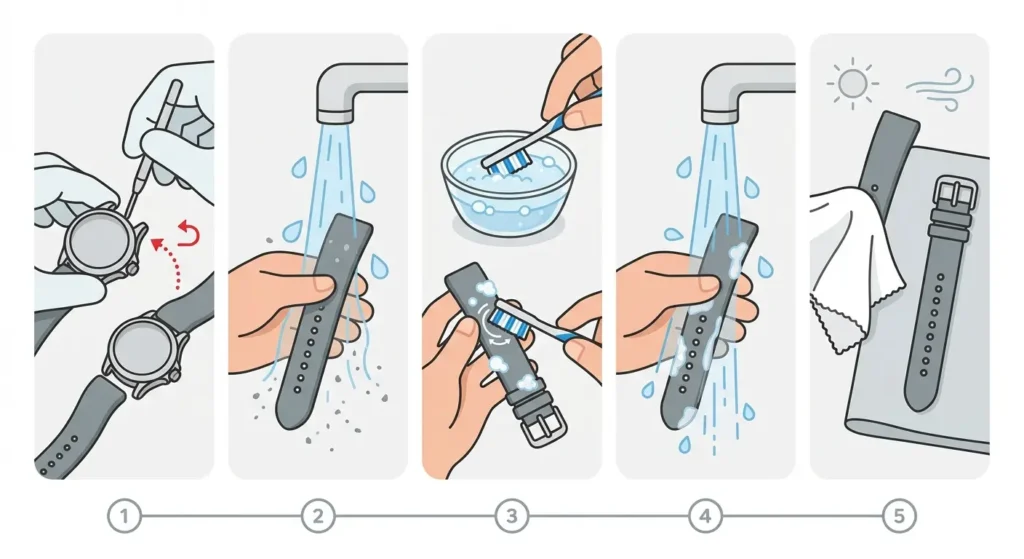
- Step 1: Remove the strap from the watch case if possible. Most rubber and silicone straps use a standard spring bar pin that can be released with a spring bar tool or even a thin flathead screwdriver. This keeps water and soap away from the watch movement and buckle mechanism.
- Step 2: Rinse the strap under lukewarm running water. This removes surface dirt and loose debris before applying any cleaning solution. Avoid hot water – it can cause the material to lose elasticity over time.
- Step 3: Mix a small drop of mild dish soap into a bowl of lukewarm water. Dip the toothbrush into the soapy water and begin scrubbing the strap gently in circular motions. Pay extra attention to the underside, the holes along the strap, and the buckle area – these spots trap the most sweat and grime.
- Step 4: Rinse the strap thoroughly under running water to remove all soap residue. Leftover soap can cause skin irritation and attract more dirt if not washed off completely.
- Step 5: Pat the strap dry with a clean microfiber cloth. Then leave it flat on a dry towel and allow it to air dry completely before putting it back on the watch. Even slightly damp straps can cause moisture buildup under the case.
Pro-Tip: Always remove the strap before cleaning when possible. Submerging the full watch – even if it is water-resistant – exposes the crown and case back to soapy water that can weaken seals over time. A clean strap is not worth a damaged movement.
How to Remove Stubborn Stains and Odors
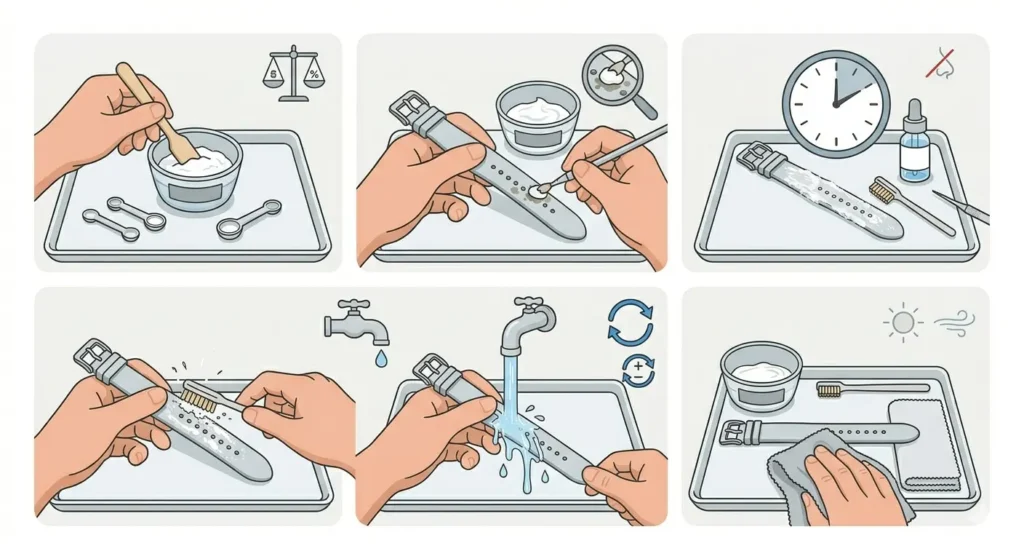
Regular soap and water handles most everyday buildup. But if the strap has developed a persistent smell or visible discoloration, a baking soda paste is the go-to solution. The key is using it correctly so it lifts the stain without being too abrasive.
- Step 1: Mix one part baking soda with one part water to form a thick paste.
- Step 2: Apply the paste directly onto the stained or odor-affected areas of the strap.
- Step 3: Let the paste sit for 10 to 15 minutes. This gives it time to break down sweat residue and neutralize bacteria that cause odors.
- Step 4: Scrub gently with the toothbrush, then rinse completely under running water.
- Step 5: Dry thoroughly with a microfiber cloth and air dry before reattaching.
Most people find that after one or two baking soda treatments, even older straps return to a noticeably cleaner and fresher state. It works best when applied before the odor becomes deeply embedded in the material.
How Often to Clean a Rubber or Silicone Watch Strap
The answer depends on how and where the strap is worn. For someone wearing the watch during workouts or in hot weather, a quick rinse every two to three days and a full soap cleaning once a week is a practical routine. For light daily use in an office setting, a full cleaning every one to two weeks is usually sufficient.
Think of it the same way as cleaning workout gear – the more sweat exposure, the more frequent the maintenance needed. Keeping a consistent schedule also prevents buildup from hardening into the texture of the material, which makes it harder to clean later.
If tracking daily schedules feels difficult, tools like an online stopwatch can help build a quick timed routine for cleaning – some people find that setting a short timer makes the habit easier to maintain consistently.
Pro-Tip: After any swim, gym session, or outdoor activity, give the strap a quick rinse under plain water right away. This 30-second habit removes chlorine, salt, and sweat before they have a chance to break down the material or cause staining.
Tips for Keeping a Rubber or Silicone Strap Clean Longer
- Rotate between two straps if the watch is worn daily – this gives each one time to fully dry and breathe between uses
- Store the watch in a cool, dry location away from direct sunlight when not in use – UV exposure causes rubber and silicone to yellow and become brittle over time
- Avoid contact with sunscreen, perfume, and hand lotions directly on the strap – these products degrade the surface and cause discoloration
- Use a microfiber cloth for a quick daily wipe-down, especially on the underside that contacts the skin
- Avoid resting the watch face-down on rough surfaces – this does not affect the strap directly, but it keeps the overall watch in better condition
Common Problems When Cleaning Rubber and Silicone Straps
The strap still smells after cleaning
This usually means bacteria have penetrated deeper into the material. Apply a baking soda paste and let it sit for 15 to 20 minutes before scrubbing. Repeat the process two to three times over consecutive days. Extremely porous or older rubber straps may hold odors permanently if cleaning has been neglected for a long time.
White residue appears after drying
This is typically leftover soap that was not rinsed out completely. Rinse the strap again under running water while scrubbing lightly with the toothbrush, then dry again. Making sure to rinse thoroughly every time prevents this from recurring.
The strap looks faded or discolored
Fading is usually caused by prolonged UV exposure, contact with chemicals like sunscreen or perfume, or the use of harsh cleaners like bleach. Unfortunately, discoloration from UV damage is not reversible. Using milder cleaning solutions going forward and storing the strap away from sunlight slows further fading.
The strap feels sticky after cleaning
Stickiness after washing is a sign of material breakdown, usually from cleaning with alcohol-based products or solvents. The silicone or rubber surface has started to degrade. At this point, continued cleaning will not restore the texture and replacing the strap is the practical solution.
The buckle area is hard to clean
The metal buckle traps grime in its hinge and teeth. Use the toothbrush at an angle to scrub inside those crevices directly. For very tight spots, a cotton swab dipped in soapy water works well. Make sure the buckle is fully dry before wearing to avoid rust or corrosion on the metal components.
Staying on a reliable cleaning routine is easier when managing a consistent schedule. A simple clock tab can help track time spent on quick maintenance tasks without disrupting a workflow.
Frequently Asked Questions
Can rubbing alcohol be used to clean a silicone watch strap?
Rubbing alcohol is not recommended for regular cleaning. While it does kill bacteria, it dries out and degrades silicone and rubber over time, causing the material to become brittle, sticky, or cracked. Mild soap and water is safer and just as effective for routine cleaning.
Is it safe to put a rubber or silicone watch strap in the dishwasher?
No. The high heat and harsh detergents used in dishwashers can warp, fade, and damage rubber and silicone straps. Hand washing with mild soap is the safest and most effective method.
How long does it take for a silicone strap to dry after cleaning?
After patting dry with a cloth, most silicone and rubber straps air dry fully within 30 to 60 minutes at room temperature. Thicker straps or those with textured surfaces may take slightly longer. Never use a hairdryer or place the strap in direct sunlight to speed up drying, as heat accelerates material degradation.
Can a rubber strap be cleaned without removing it from the watch?
Yes, but it is not ideal. If removing the strap is not possible, dampen a cloth or toothbrush with soapy water and clean carefully around the case. Avoid getting soapy water near the crown, pushers, or case back seams. Rinse by wiping with a damp cloth – not by running the watch under water unless it is confirmed water-resistant to a suitable depth.
Why does a silicone strap attract so much lint and dust?
Silicone has a slightly sticky surface texture that naturally attracts particles. This is normal for the material. Regular wiping with a dry microfiber cloth reduces buildup. Some people apply a very thin layer of cornstarch to the outside of the strap to reduce tackiness, though this is optional and needs to be reapplied occasionally.
Can bleach be used to disinfect a rubber watch strap?
Bleach should not be used on rubber or silicone straps. It causes discoloration, weakens the material structure, and can leave chemical residue against the skin. For disinfecting, a diluted white vinegar solution (one part vinegar to three parts water) is a safer alternative. Rinse thoroughly after use.
What causes a rubber watch strap to turn yellow over time?
Yellowing is primarily caused by prolonged UV light exposure. Light-colored or translucent silicone straps are the most vulnerable. Sunscreen, sweat, and certain chemicals can also contribute to yellowing. Storing the watch out of direct sunlight when not in use significantly slows this process.
How can a white or light-colored silicone strap be cleaned without making it look worse?
White and light-colored straps require extra care. Use the mildest dish soap available and a very soft brush. For staining, a baking soda paste is effective. Avoid scrubbing too hard in one spot, as uneven abrasion can create visible marks on lighter materials. Rinse thoroughly and dry in a shaded area.
How often should the strap be replaced entirely?
With proper care and regular cleaning, a quality rubber or silicone strap can last one to two years or more. Signs that replacement is needed include persistent odor that cleaning does not resolve, cracking or tearing, stickiness that does not go away, and visible deformation or loss of elasticity.
Does cleaning a silicone strap affect its water resistance?
The strap itself is not rated for water resistance – that is a property of the watch case. Cleaning the strap with water and mild soap does not affect the strap’s ability to handle moisture. However, if cleaning involves submerging the full watch, always check the manufacturer’s water resistance rating and avoid exposing the crown to soapy water.